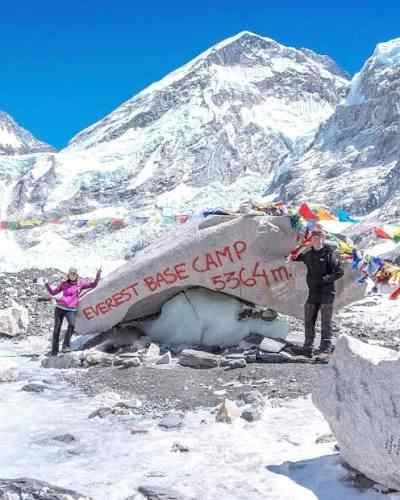
Before the airstrip at Lukla existed, the walk from Jiri to Everest Base Camp was simply how everyone reached the mountain. The 1953 expedition that put Hillary and Tenzing on the summit marched for weeks from the Kathmandu valley, and the trail through Jiri carried every expedition and almost every trekker into the Khumbu for decades. Today fewer than one trekker in a hundred takes this route, which is exactly why it is worth writing about properly. I have guided groups in from Jiri, and it changes how people arrive at Base Camp: fitter, better acclimatised, and with a week of green, quiet Nepal behind them that the Lukla crowd never sees.
The short version: the Jiri to Everest Base Camp route adds five to seven walking days and roughly 90 kilometres before joining the standard trail near Lukla, crosses two significant passes below 3,600 metres, needs one extra permit, and turns the standard two week trek into a 20 to 22 day journey. Walking from Jiri to Everest Base Camp is the single best acclimatisation strategy that exists for this trek, and it is also simply a beautiful walk.
Table of Contents
The Jiri Route at a Glance
| Fact | Detail |
|---|---|
| Start point | Jiri, 1,905m, or Bhandar by jeep |
| Drive from Kathmandu | About 184 km, 7 to 8 hours |
| Extra walking | 5 to 7 days, roughly 90 km, before the main EBC trail |
| Highest point before the Khumbu | Lamjura La, 3,530m |
| Total trip length | 20 to 22 days, flying out of Lukla at the end |
| Extra permit | Gaurishankar Conservation Area Permit, NPR 3,000 |
| Character | Ridge and valley walking through Solu villages, very quiet |
Why Walk In From Jiri
Acclimatisation that actually works. The Lukla start drops you at 2,860 metres on day one. The Jiri route spends a week crossing ridges between 1,500 and 3,530 metres before you ever sleep in the Khumbu, and by the time you reach Namche your body has already practised climbing and recovering a dozen times. Guests who walk in from Jiri move noticeably better above 4,000 metres, and the pattern repeats every season. If altitude worried you on a previous trek, this route is the answer; our guide to altitude sickness on the EBC trek explains why gradual gain beats everything else.
No Lukla flight lottery on the way in. The Lukla flight is weather dependent and cancellations stack up in every season. Walking in removes half of that uncertainty from your plan; most Jiri trekkers still fly out at the end, when a delay costs a hotel night rather than the whole trek.
The Nepal most trekkers never see. Below the national park the trail runs through Solu, the lower Sherpa heartland: terraced millet fields, forests that hold red pandas whether or not you are lucky enough to see one, and monasteries like Thubten Chholing near Junbesi with hundreds of monks and nuns in residence. Teahouses here host a handful of guests a night, and dinner is cooked for you, not for a dining hall of eighty.
Planning Your Everest Trek?
Get local expert advice on cost, itinerary and the best time to go.
Getting to the Trailhead
Buses to Jiri leave early morning from Kathmandu and take 7 to 9 hours on a winding hill road; a private jeep does it in closer to 7 and spares you the aisle seat. The road now continues past Jiri toward Shivalaya, and a rough jeep track reaches Bhandar, so you can trim the first day or two of walking if your schedule is tight. On our Everest Base Camp trek from Jiri with jeep we drive guests to the practical roadhead and start walking where the trail becomes worth walking.
Stage by Stage: Jiri to the Main EBC Trail
| Day | Stage | High point | Hours |
|---|---|---|---|
| 1 | Kathmandu to Jiri or Shivalaya by road | 1,905m | 7 to 9 by vehicle |
| 2 | Shivalaya to Bhandar over the Deurali pass | 2,705m | 5 to 6 |
| 3 | Bhandar to Sete, dropping to the Likhu Khola and climbing again | 2,575m | 6 to 7 |
| 4 | Sete over the Lamjura La to Junbesi | 3,530m | 7 to 8 |
| 5 | Junbesi to Nunthala over the Taksindu La | 3,071m | 6 to 7 |
| 6 | Nunthala across the Dudh Koshi to Bupsa | 2,360m | 6 to 7 |
| 7 | Bupsa past Surke to Phakding, joining the main trail | 2,610m | 6 to 7 |
From Phakding the route is the standard one: Namche, Tengboche, Dingboche, Lobuche, Gorakshep, Base Camp, and Kala Patthar. The full breakdown of the upper trail is in our EBC trek distance guide.
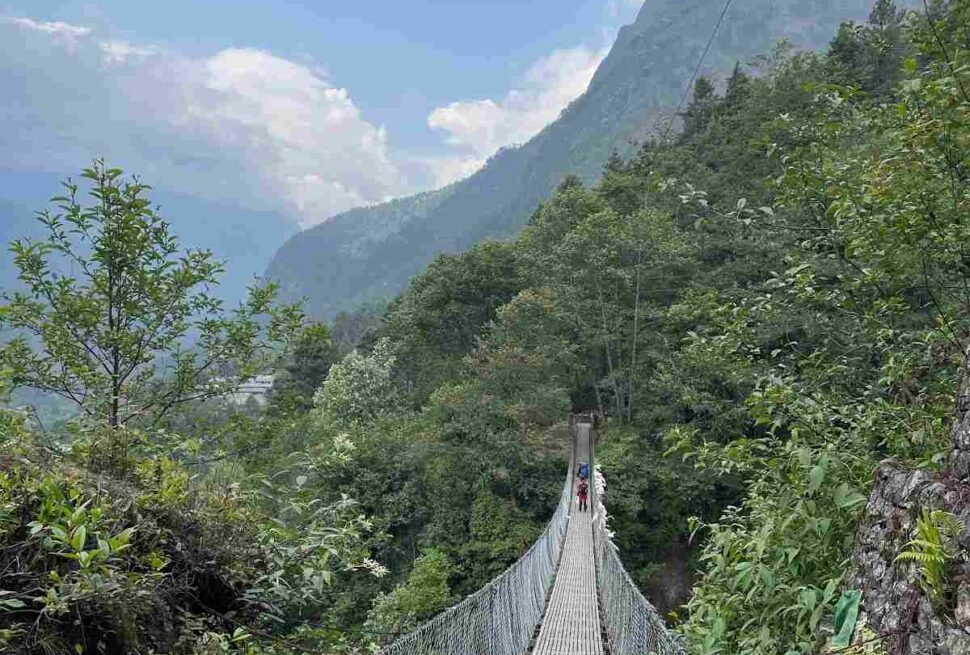
Read that table carefully and you will notice the trap: the Jiri section never goes very high, but it never stays flat either. The trail crosses the grain of the land, dropping to a river and climbing to a ridge over and over. Most days involve 800 to 1,200 metres of ascent, which is more daily climbing than the famous stages up in the Khumbu. People expect a gentle warm up and find a leg workout; that workout is precisely what makes them strong later.
Permits for the Jiri Route
| Permit | Cost | Checked at |
|---|---|---|
| Gaurishankar Conservation Area Permit | NPR 3,000 | Shivalaya |
| Sagarmatha National Park permit | NPR 3,000 | Monjo |
| Khumbu Pasang Lhamu Rural Municipality fee | NPR 2,000 | On entry to the Khumbu |
The Gaurishankar permit is the one Lukla trekkers never encounter, and forgetting it means paying at the Shivalaya checkpost anyway, so arrange all three together. When you trek with us they are organised before departure along with everything else.
Teahouses and Food on the Lower Route
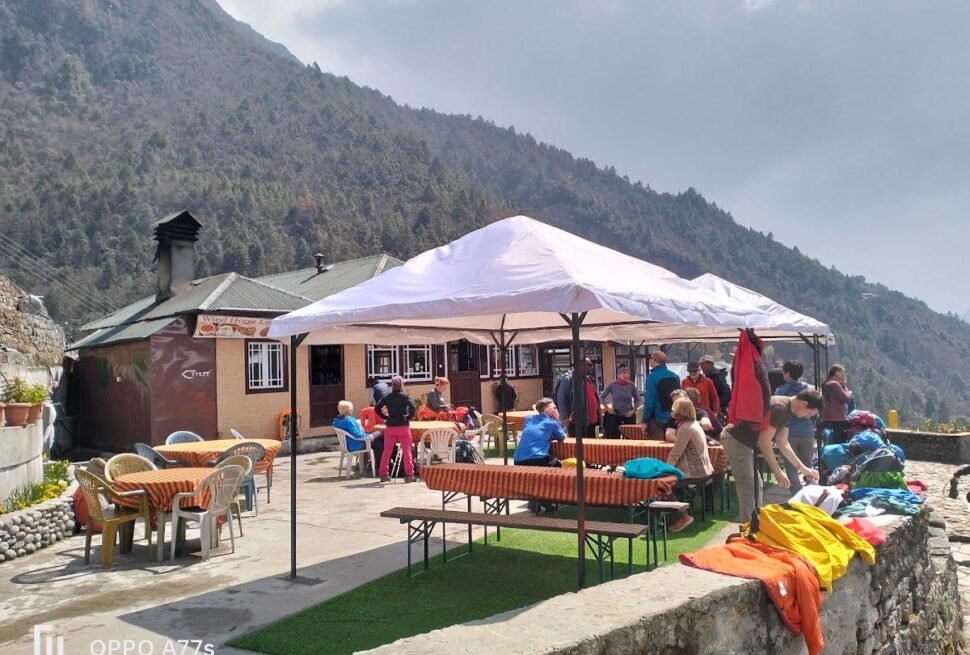
Accommodation between Jiri and Phakding is simpler than the Khumbu standard but warmer in spirit: family lodges with wood stoves, thick blankets, and menus built around dal bhat, potatoes, eggs, and homemade bread. Prices are noticeably lower than above Namche because nothing here arrives by porter from an airstrip. Do not expect attached bathrooms or reliable hot showers on this section; do expect the best dal bhat of the whole trip, usually in Junbesi. The Khumbu side of the question is covered in our guide to EBC trek accommodation.
How Hard Is the Jiri Route
Physically, Jiri to Everest Base Camp is the hardest version of the trek that does not involve a climbing permit, simply because of the accumulated ascent: the ridge and valley profile adds several thousand metres of climbing across the week. Technically it is easy walking on good trails the whole way. The altitude risk is actually lower than the standard route because your sleeping elevation rises so gradually. If you can train for it, and our advice in how to prepare for the EBC trek applies directly, the route rewards fitness more generously than any other approach to Everest. For an honest comparison with the standard itinerary, see the EBC trek difficulty guide.
Who Should Choose the Jiri to Everest Base Camp Route
- Trekkers with 3 weeks or more who want the strongest possible acclimatisation
- Anyone who reacted badly to altitude on a previous trek and wants to stack the odds
- Walkers who value quiet trails and village culture over ticking off the shortest route
- People nervous about weather delays on the flight in
- Anyone drawn to walking the same ground as the 1953 expedition
It is the wrong route if you have exactly two weeks, if knee trouble makes big daily descents miserable, or if your goal is the fastest possible photo at Base Camp. In those cases fly to Lukla, or look at the alternative routes in the Everest region for something between the two.
When to Go
The Jiri to Everest Base Camp season windows are the same as the main trail: March to May and late September to November. The lower route adds one consideration each way. In spring the rhododendron forest between Sete and Junbesi is in full bloom through April, and it is one of the finest flowering forests in Nepal. In autumn the harvest is coming in across Solu and the villages are at their liveliest. Monsoon walking here means leeches and mud; winter is possible and very quiet, with the Lamjura La holding snow after storms. Match the details against our month by month EBC guide.
The Villages, One by One
Shivalaya (1,790m). A single street of lodges beside a rushing tributary, and the site of the Gaurishankar permit checkpost. Most modern itineraries begin walking here rather than in Jiri town, and the first climb starts a hundred metres from the last shop.
Bhandar (2,190m). A Sherpa village on a wide saddle with a gompa and mani walls, reached over the Deurali pass with its long wall of carved prayer stones. The dairy here made the village mildly famous; local cheese and butter still appear at breakfast.
Sete (2,575m). A small cluster of lodges partway up the enormous Lamjura hill, existing mostly so that trekkers can break the 1,900 metre climb into two sane days. Quiet, forested, cold at night, and exactly where you want to sleep before the pass.
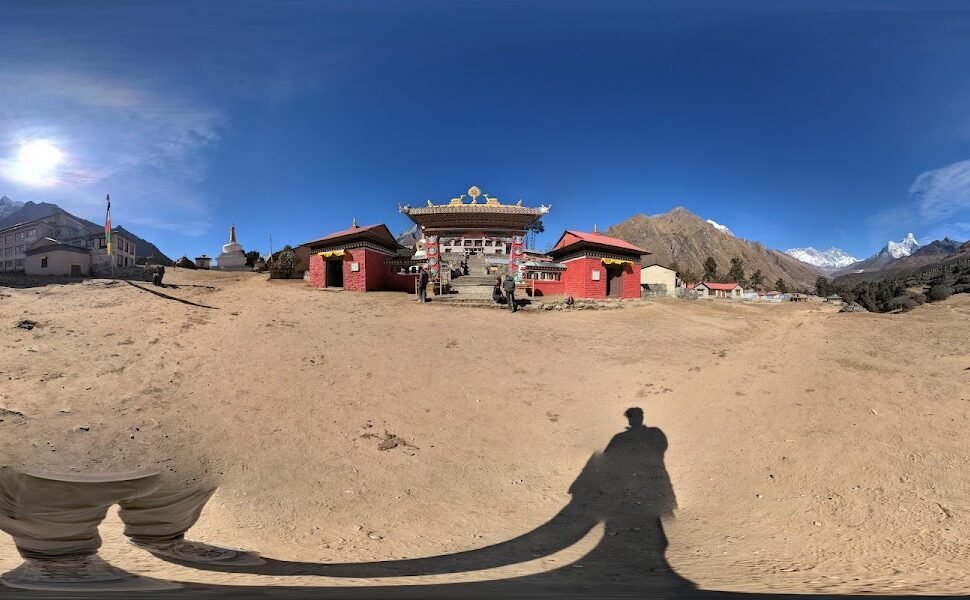
Junbesi (2,700m). The finest village of the lower route and one of the finest in Solu Khumbu: whitewashed houses with carved windows, an old gompa at the centre, apple orchards, and real Sherpa village life going about its business. An hour and a half above the village sits Thubten Chholing, a working monastery founded by Trulshik Rinpoche after 1959, home to hundreds of monks and nuns. The side trip costs half a day and most guests name it the cultural high point of the entire three weeks.
Nunthala (2,220m). The overnight after the Taksindu La, on the long descent toward the Dudh Koshi. From the pass on a clear day you get your first sight of the big eastern peaks, and the psychological shift is real: the white wall on the horizon is where you are going.
Bupsa and Surke (2,360m and 2,290m). The final lower valley stops, where the trail begins collecting porters and mule trains supplying the Khumbu, the traffic thickening as you converge with the freight route below Lukla. At Chheplung the Jiri trail merges with the crowds walking down from the airstrip, and the quiet week is over.
A Road Built by Switzerland, a Trail Walked by Legends
Jiri owes its place in trekking history to two things: a Swiss aid project and an airstrip that did not exist yet. Swiss development cooperation built the road from the Kathmandu valley to Jiri in stages through the 1970s and 1980s, along with the dairy and technical school that gave the town its Alpine nickname. When the road opened, Jiri became the trailhead for everything east, and every load of expedition gear and every trekker bound for Everest passed down its main street.
Before the road, the walk started at the edge of Kathmandu itself. The 1953 British expedition marched 17 days from Bhadgaon with 350 porters; reading their accounts today, you can still match their campsites to villages on the current trail. Lukla changed everything after Hillary built the airstrip in 1964, and the Jiri approach faded from necessity into choice. What did not change is the ground itself: the ridges, the rivers, and the villages are the ones the mountaineering generation walked through, minus the crowds that arrived by air.
Planning Your Everest Trek?
Get local expert advice on cost, itinerary and the best time to go.
Jiri to Everest Base Camp Itinerary, Day by Day
| Day | Stage | Sleep at |
|---|---|---|
| 1 | Drive Kathmandu to Shivalaya | 1,790m |
| 2 | Shivalaya to Bhandar over the Deurali pass | 2,190m |
| 3 | Bhandar to Sete | 2,575m |
| 4 | Sete over the Lamjura La (3,530m) to Junbesi | 2,700m |
| 5 | Junbesi rest morning or Thubten Chholing visit, walk to Ringmu | 2,720m |
| 6 | Over the Taksindu La to Nunthala | 2,220m |
| 7 | Nunthala to Bupsa across the Dudh Koshi | 2,360m |
| 8 | Bupsa to Phakding, joining the main trail | 2,610m |
| 9 to 10 | Phakding to Namche Bazaar, acclimatisation day | 3,440m |
| 11 | Namche to Tengboche | 3,860m |
| 12 to 13 | Tengboche to Dingboche, acclimatisation day | 4,410m |
| 14 | Dingboche to Lobuche | 4,940m |
| 15 | Lobuche to Gorakshep, Everest Base Camp | 5,164m |
| 16 | Kala Patthar sunrise, descend to Pheriche | 4,371m |
| 17 to 19 | Descend to Namche, then Lukla | 2,860m |
| 20 | Fly Lukla to Kathmandu, buffer day held | 1,400m |
Compare this with any standard EBC itinerary and one design difference stands out: by the time a Jiri trekker sleeps in Namche on day nine, they have nine walking days behind them and have twice been over 3,000 metres. A Lukla trekker at the same point has two. Everything the upper route then demands, described stage by stage in our EBC distance guide, lands on a body that is already trail hardened.
Jiri to Everest Base Camp Trek Cost
| Item | Typical cost | Note |
|---|---|---|
| Bus Kathmandu to Jiri or Shivalaya | USD 8 to 12 | Local bus, early departure |
| Private jeep to the roadhead | USD 150 to 200 per vehicle | Splits well between 4 to 6 trekkers |
| Teahouse room, lower route | NPR 300 to 500 per night | Often waived if you eat dinner and breakfast |
| Dal bhat, lower route | NPR 350 to 500 | Roughly half the upper Khumbu price |
| Teahouse room, upper route | NPR 500 to 1,000 | Rising with altitude |
| Lukla flight out | USD 180 to 210 | Book with a buffer day |
| Full guided package, 20 to 22 days | USD 1,500 to 2,200 | Guide, porter, permits, accommodation, transport |
The paradox of the Jiri route is that the extra week barely moves the total price. Lower route lodges cost half of Khumbu prices, the bus replaces one flight, and the biggest package cost drivers, guide and porter wages, are the only line that scales with the days. Trekkers comparing quotes should read our full EBC trek cost breakdown and then add roughly 20 to 30 percent for the Jiri version, not the 50 percent the extra days would suggest.
Phaplu and Salleri: The Middle Options
Between the full Jiri walk in and the Lukla flight there is a middle road, literally. The district road now reaches Salleri and Phaplu, a day and a half of walking south of the Lukla trail junction, and jeeps run there from Kathmandu in 10 to 12 hours.
Starting from Phaplu keeps two to three days of quiet lower valley walking, including the beautiful stretch through Taksindu and Nunthala, while cutting the four biggest ridge days. It has become our recommended compromise for trekkers with 17 or 18 days who want the acclimatisation advantage without the full ridge and valley workout. The Phaplu variant slots into the same itinerary table above, joining it at day six.
Packing Differences for the Low Route
The standard Khumbu kit, item by item in our packing list guide, covers the upper two weeks unchanged. The Jiri week adds a warm weather problem the Lukla start never has: the valley bottoms sit near 1,500 metres and afternoons are hot for most of the year. Add a second lightweight hiking shirt, sun protection you would trust at the beach, and blister supplies sized for a week of big descents in warm socks. In spring and early autumn, add a light rain layer within reach at all times, because the lower hills catch showers that the high Khumbu never sees. Leech socks earn their place only in the monsoon months.
Culture on the Trail: Solu Etiquette
The lower route passes through living villages rather than trekking infrastructure, and small courtesies matter more here. Pass mani walls and chortens on the left, the direction the prayer wheels turn. Ask before photographing people, and expect a yes with a smile almost every time. In monastery rooms remove shoes and hats and leave a small donation if you are shown around; at Thubten Chholing, where hundreds of monastics live and study, visitors are welcome but silence near the practice halls is the whole entrance fee.
Learning three Sherpa or Nepali greetings before the trip pays out in warmth for the entire week, and this is the section of Nepal where you will actually use them; the Sherpa culture context we cover in Khumbu region and Sherpa culture applies from Bhandar onward.
The whole route runs toward Sagarmatha National Park, a UNESCO World Heritage Site whose listing details are published at whc.unesco.org, and the conservation rules apply from the Monjo gate; below it, the same principles are simply good manners.
The Lamjura La Day in Detail
Day four is the queen stage of the lower route and deserves its own briefing. From Sete the trail climbs through rhododendron and moss forest for three to four hours, cool and shaded, with teashops at Dagchu and Goyom breaking the climb. The forest thins near the top and the Lamjura La arrives as a wide, prayer flagged saddle at 3,530 metres, often windy, sometimes dusted with snow as early as November. This is the highest point between the road and Namche Bazaar, and for most guests it is the first time the trip feels Himalayan.
The descent to Junbesi is long, 800 vertical metres through fir and birch, and it teaches the lesson the whole route keeps teaching: downhill is work. Poles out, laces tightened, steady pace. The reward arrives at the bottom, where the Junbesi valley opens wide and white and the village gompa roof catches the afternoon sun. Walkers who paced the day well arrive by mid afternoon with energy left for apple pie, which the lodges here bake from their own orchards.
| Lamjura La day segment | Time | Character |
|---|---|---|
| Sete to Dagchu | 1.5 to 2 hours | Steady forest climbing, morning cool |
| Dagchu to the pass | 2 to 2.5 hours | Thinning forest, steeper switchbacks |
| Pass stop | 20 to 30 minutes | Prayer flags, first big views east, wind |
| Descent to Taktor | 1.5 hours | Steep forest trail, poles essential |
| Taktor to Junbesi | 1 to 1.5 hours | Gentle valley walking into the village |
Forests, Farms, and What Lives in Them
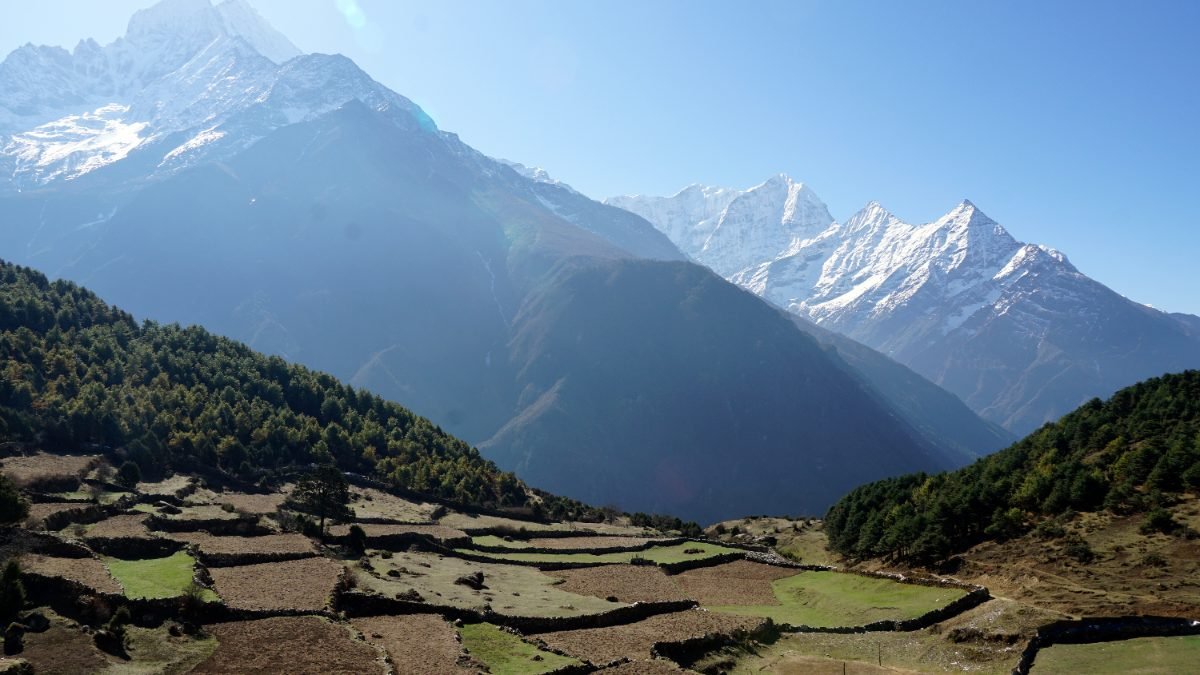
The Solu hills hold some of the richest mid altitude forest in eastern Nepal, and walking through it for a week is a different natural experience from the rock and ice theatre higher up. Between 2,000 and 3,500 metres the trail passes through oak and rhododendron woods that flower red and pink through April, stands of blue pine, and high pasture where dzos and cows graze the summer grass.
The forests around the Lamjura La are prime red panda habitat; sightings are rare and the animals are real, along with Himalayan langurs, martens, and pheasants including the danphe, the national bird of Nepal, which explodes out of the undergrowth in an iridescent panic once or twice on most treks.
The farmed valleys tell their own story. Terraces of millet, barley, and potatoes step down every hillside, apples grow around Junbesi, and the dairies between Jiri and Bhandar still produce cheese from the Swiss era recipes. October walkers pass the harvest coming in on people’s backs; spring walkers see the terraces being ploughed behind oxen. None of this exists on the flight to Lukla.
Fitness for the Jiri Route Specifically
Train for this route as if the trek were nine days longer than the standard one, because in ascent terms it is. The full program in our Everest Base Camp training program applies with one change of emphasis: descents. The Jiri week loses and regains the same thousand metres day after day, and untrained quadriceps fail on the third consecutive big downhill, not the first. Add downhill walking to the long weekend hikes, train step downs as well as step ups, and arrive with legs that treat a 900 metre descent as a normal afternoon. Trekkers who do this find the upper Khumbu, where daily ascents are shorter, almost restful by comparison.
Who We See Choose This Route, and What They Say After
The Jiri walk in attracts three kinds of guests in our experience: returners who did the standard route years ago and want the fuller version, trekkers with a history of altitude trouble making a strategic choice, and walkers for whom the journey itself outranks the destination. What they report afterward is remarkably consistent.
The lower week becomes the part they talk about most, the crowds above Lukla feel briefly shocking after the quiet, and Base Camp day feels physically easier than they expected, which is the acclimatisation doing exactly what this article promised. Several have told us the route corrected an imbalance they felt on other treks: two weeks in the mountains, but only a handful of conversations with people who actually live there.
Common Mistakes on the Jiri Route
Four errors repeat among people planning Jiri to Everest Base Camp independently. First, treating the lower week as a warm up and scheduling the biggest stages back to back; the Lamjura day followed immediately by a rushed double stage breaks more trekkers than the altitude ever does. Second, skipping the Junbesi rest morning to save half a day, which trades the best cultural experience of the route for an afternoon of sitting in a lodge further along.
Third, carrying Khumbu clothing logic into the warm valleys and overheating for a week in expedition layers. Fourth, booking the Lukla flight out with no buffer day, so that one morning of cloud at the airstrip cascades into a missed international connection. Every one of these is free to avoid at the planning stage, and a good operator will design them out before you ever see the itinerary.
FAQs About the Jiri to Everest Base Camp Trek
How long is the Jiri to Everest Base Camp trek?
Plan 20 to 22 days in total: 5 to 7 days from the roadhead to the main trail near Phakding, then the standard route through Namche, Dingboche, and Lobuche to Base Camp, flying out of Lukla at the end. The walk in covers roughly 90 kilometres before Phakding.
How do I get to Jiri from Kathmandu?
By bus or private jeep on a 184 kilometre hill road, taking 7 to 9 hours. The road now extends past Jiri toward Shivalaya, and a jeep track reaches Bhandar, so many itineraries drive to the practical roadhead and save a day of road walking.
What extra permit do I need for the Jiri route?
The Gaurishankar Conservation Area Permit at NPR 3,000, checked at Shivalaya. You still need the Sagarmatha National Park permit at NPR 3,000 and the Khumbu municipality fee of NPR 2,000, the same as every EBC trekker.
Is the Jiri route harder than the normal EBC trek?
It is longer and involves more total climbing, because the trail repeatedly drops to rivers and climbs over ridges, with 800 to 1,200 metres of ascent on most days. The altitude risk is lower though, since you gain sleeping elevation far more gradually than trekkers who fly to Lukla.
Why did trekkers stop using the Jiri route?
The Lukla airstrip cut a week off the approach, and most modern schedules follow the shortest path. The trail itself never stopped being excellent; it simply became quiet, which is now its biggest attraction.
Are there teahouses the whole way from Jiri?
Yes, every overnight stop has family run lodges. They are simpler than Khumbu teahouses, with shared bathrooms and wood stove dining rooms, and cheaper because supplies come by road rather than by air and porter.
What are the highest passes on the Jiri route?
The Lamjura La at 3,530 metres between Sete and Junbesi, and the Taksindu La at 3,071 metres beyond Junbesi. Both are walking passes with no technical ground, and both offer the first big mountain views of the trip.
Can I walk in from Jiri and fly back from Lukla?
Yes, and that is exactly how most people do it. Walking in removes flight uncertainty at the start, and flying out means a weather delay at the end costs you a hotel night in Lukla rather than a missed international connection. Book the outbound flight with a buffer day.
Is the Jiri route good for acclimatisation?
It is the best acclimatisation available for Everest Base Camp. A week of ridge walking between 1,500 and 3,530 metres trains your body through repeated climb and recover cycles before you ever sleep above 3,000 metres, and it shows in how Jiri trekkers perform higher up.
Can I start from Phaplu instead of Jiri?
Yes. Jeeps reach Phaplu and Salleri from Kathmandu in 10 to 12 hours, and starting there keeps two to three days of lower valley walking while cutting the four biggest ridge days. It is the practical compromise for trekkers with about 17 days who still want better acclimatisation than the Lukla start gives.
How much does the Jiri to EBC trek cost?
Roughly 20 to 30 percent more than a standard EBC package despite the extra week, because lower route lodges and food cost about half of Khumbu prices and the bus replaces one flight. Full guided packages typically run USD 1,500 to 2,200 including transport, permits, guide, and porter.
Is the Jiri route safe to walk?
Yes. It is a populated, farmed, walked landscape with villages every few hours, lodges at every overnight stop, and road access at several points. The mandatory guide rule applies as everywhere in the region, and the altitude risk is lower than on the standard route because elevation gain is so gradual.
What is there to see at Junbesi?
Junbesi is the cultural centre of the lower route: a classic Sherpa village with an old gompa, apple orchards, and carved window houses. The half day side trip to Thubten Chholing monastery, home to hundreds of monks and nuns, is the reason to build a rest morning into the itinerary here.
When did trekkers switch from Jiri to Lukla?
Gradually after the Lukla airstrip opened in 1964 and sharply once flights became routine. By the 2000s the Jiri approach carried only a small fraction of Everest trekkers, and today fewer than one in a hundred walks in, which has preserved exactly the quiet the route is now valued for.
Is there phone signal and wifi on the Jiri route?
Yes, better than most people expect. The lower route villages sit within Nepali mobile coverage for most of the week, with NTC generally the stronger network, and many lodges offer wifi of variable quality. Coverage above Namche follows the usual Khumbu pattern described in our connectivity guide.
What wildlife can I see between Jiri and Lukla?
Himalayan langurs, danphe pheasants, and forest birds are regular sightings; martens and red pandas live in the Lamjura forests but show themselves rarely. The route also crosses working farm country with dzos, mules, and the last cheese dairies of the Swiss project era.
Do I need previous trekking experience for the Jiri to Everest Base Camp route?
No previous Himalayan experience is required, but this should not be a first ever multi day trek. The route rewards people who have carried a pack for at least two or three consecutive days somewhere before, understand their own pace on long descents, and have done twelve weeks of structured preparation. Fit first timers who train seriously complete it every season; untrained walkers find the ridge days punishing long before altitude becomes a factor.
Planning Your Everest Trek?
Get local expert advice on cost, itinerary and the best time to go.