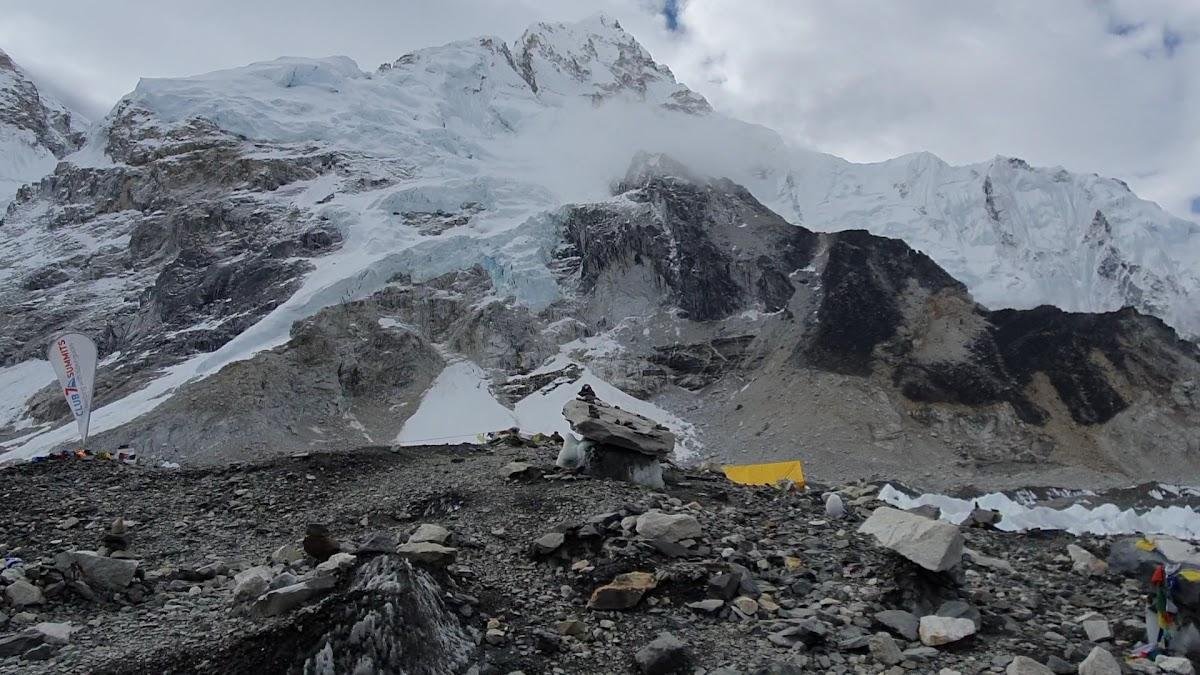
One of the most practical questions about the Everest Base Camp trek is how far you actually walk. The total distance, daily distances, elevation changes, and cumulative ascent all matter enormously for training, packing, and understanding the physical challenge ahead. This guide breaks down every number.
EBC Trek Distance: Key Numbers
| Total round-trip distance (Lukla to EBC to Lukla) | ~130 km (80 miles) |
| One-way distance (Lukla to EBC) | ~65 km (40 miles) |
| Average daily walking distance | 8 to 14 km per day |
| Total elevation gain (ascent) | ~4,700 m from Lukla |
| Highest point reached (Kala Patthar) | 5,545 m |
| Altitude of Everest Base Camp | 5,364 m |
| Total walking days | 12 to 14 (standard itinerary) |
| Shortest daily stage | ~5 km (Gorak Shep to EBC and return) |
| Longest daily stage | ~15 km (Namche to Tengboche on some itineraries) |
Day-by-Day Distance Breakdown
| Day | Stage | Distance | Hours Walking | Net Elevation Change |
|---|---|---|---|---|
| Day 1 | Fly Kathmandu to Lukla; trek to Phakding | 8 km | 3-4 hrs | -210 m (descent) |
| Day 2 | Phakding to Namche Bazaar | 11 km | 5-6 hrs | +830 m (ascent) |
| Day 3 | Namche Bazaar (acclimatization) | 4-7 km | 3-4 hrs | +400 m up / down (hike to viewpoint) |
| Day 4 | Namche Bazaar to Tengboche | 10 km | 5-6 hrs | +420 m (with descent/ascent) |
| Day 5 | Tengboche to Dingboche | 10 km | 5-6 hrs | +550 m |
| Day 6 | Dingboche (acclimatization) | 6-8 km | 3-4 hrs | +400 m up / down (hike to Nangkartshang) |
| Day 7 | Dingboche to Lobuche | 8 km | 4-5 hrs | +530 m |
| Day 8 | Lobuche to Gorak Shep, then EBC | 13 km | 6-7 hrs | +510 m |
| Day 9 | Gorak Shep to Kala Patthar, then descent to Pheriche | 14 km | 7-8 hrs | +405 m / -1,120 m |
| Day 10 | Pheriche to Namche Bazaar | 16 km | 7-8 hrs | -970 m |
| Day 11 | Namche Bazaar to Lukla | 19 km | 7-8 hrs | -580 m |
| Day 12 | Fly Lukla to Kathmandu | Flight | N/A | N/A |
Note: Itinerary varies by operator. The above represents a standard 12-day itinerary. A 14-day itinerary adds extra rest days at Dingboche and spreads descent stages. The table represents approximate figures; GPS measurements vary by route taken and exact path.
Planning Your Everest Trek?
Get local expert advice on cost, itinerary and the best time to go.
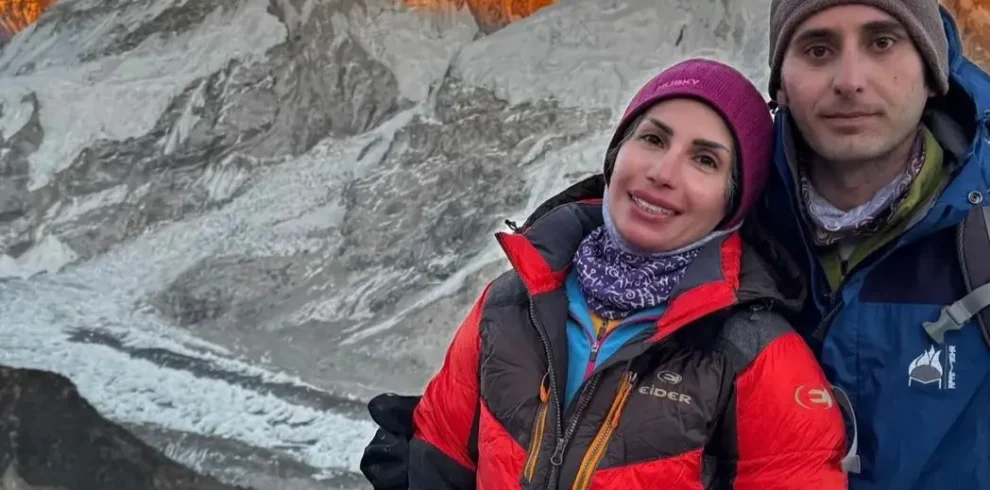
Why EBC Distance Is Harder Than It Looks
130 km sounds modest for a multi-week trek. Many day hikers cover that in a week. The difference on EBC is altitude. At 5,000 m, your body operates on roughly half the oxygen available at sea level. Every kilometre walked at altitude requires far more physiological effort than the same kilometre at sea level.
Research consistently shows that at 5,000 m, perceived exertion for the same pace is approximately double compared to sea level. A 13 km day at Lobuche (4,940 m) equates physiologically to a 25+ km day at sea level. This is why the daily distances seem short on paper but take 6 to 8 hours on the ground.
Total Elevation Profile
| Checkpoint | Altitude | Cumulative Gain from Lukla |
|---|---|---|
| Lukla (start) | 2,860 m | 0 m |
| Namche Bazaar | 3,440 m | +580 m |
| Tengboche | 3,860 m | +1,000 m |
| Dingboche | 4,410 m | +1,550 m |
| Lobuche | 4,940 m | +2,080 m |
| Gorak Shep | 5,140 m | +2,280 m |
| Everest Base Camp | 5,364 m | +2,504 m |
| Kala Patthar (highest trekker point) | 5,545 m | +2,685 m |
How Many Steps per Day?
A useful training and fitness planning metric. Based on average step length at altitude (shorter steps due to terrain and reduced oxygen):
| Stage | Approx Distance | Estimated Steps |
|---|---|---|
| Phakding to Namche (day 2) | 11 km | 14,000-16,000 steps |
| Namche to Tengboche (day 4) | 10 km | 13,000-15,000 steps |
| Lobuche to EBC via Gorak Shep (day 8) | 13 km | 16,000-20,000 steps (shorter steps at altitude) |
| Kala Patthar ascent and EBC descent day (day 9) | 14 km | 18,000-22,000 steps |
Training with a step counter and targeting 15,000 to 20,000 steps per day in the 8 weeks before the trek is an excellent preparation benchmark. The EBC preparation guide covers the complete training programme.
Uphill vs Downhill Distance
A common surprise on EBC is how much descent is on the ascent route and how much ascent is on the descent route. The Khumbu is not a simple slope. The trail goes up and down repeatedly between every village. From Namche to Tengboche the trail descends 600 m before climbing 1,000 m. On the descent day from Pheriche to Namche you still climb several hundred metres despite losing nearly 1,000 m net.
Total cumulative ascent on the round trip from Lukla is approximately 7,000 to 8,000 m. Total cumulative descent is similar. This is significantly more vertical movement than the net altitude gain figures suggest and is a key reason why the knees and quads take punishment on the descent. Trekking poles are essential on descent stages.
Distance Comparison With Other Nepal Treks
| Trek | Total Distance | Duration | Max Altitude |
|---|---|---|---|
| Everest Base Camp Trek | ~130 km | 12-14 days | 5,545 m (Kala Patthar) |
| EBC + Gokyo Lakes Trek | ~160 km | 15-17 days | 5,545 m |
| Everest Three Passes Trek | ~200 km | 18-20 days | 5,535 m (Kongma La) |
| Everest View Trek | ~65 km | 5-7 days | 3,880 m |
| EBC from Jiri | ~210 km | 20-22 days | 5,545 m |
Frequently Asked Questions
How many km is the Everest Base Camp trek?
The round trip from Lukla to Everest Base Camp (5,364 m) and back to Lukla is approximately 130 km (80 miles). One way is approximately 65 km. If you add the Kala Patthar ascent (5,545 m), total distance increases slightly.
How many hours of walking is EBC per day?
Most trail days involve 5 to 8 hours of actual walking time, not including rest stops, lunch breaks, and acclimatization pauses. Plan 8 to 10 hours from when you leave one teahouse to when you arrive at the next.
Can I track my distance with a fitness app on EBC?
Yes. GPS fitness watches and phone apps (Garmin, Suunto, Strava, AllTrails) work well on the EBC trail. Many trekkers use AllTrails offline maps to track their progress. Cell signal is available at most villages above Namche. GPS recording works everywhere.
Daily Distance Breakdown: Full EBC Trek Route
| Day | Start | End | Distance | Elevation Change | Avg Time |
|---|---|---|---|---|---|
| Day 1 | Lukla (2,860m) | Phakding (2,610m) | 8 km | -250m | 3-4 hours |
| Day 2 | Phakding (2,610m) | Namche Bazaar (3,440m) | 11 km | +830m | 5-6 hours |
| Day 3 | Namche Bazaar (acclimatization) | Return to Namche | 5-8 km | +400m / -400m | 3-4 hours |
| Day 4 | Namche Bazaar (3,440m) | Tengboche (3,860m) | 10 km | +420m | 5-6 hours |
| Day 5 | Tengboche (3,860m) | Dingboche (4,360m) | 10 km | +500m | 5-6 hours |
| Day 6 | Dingboche (acclimatization) | Return to Dingboche | 4-6 km | +400m / -400m | 3-4 hours |
| Day 7 | Dingboche (4,360m) | Lobuche (4,940m) | 9 km | +580m | 4-5 hours |
| Day 8 | Lobuche (4,940m) | Gorak Shep (5,140m) then EBC (5,364m) | 12 km | +420m | 6-8 hours |
| Day 9 | Gorak Shep (5,140m) | Kala Patthar (5,545m) then Pheriche (4,240m) | 14 km | +400m / -1,300m | 7-9 hours |
| Day 10 | Pheriche (4,240m) | Namche Bazaar (3,440m) | 16 km | -800m | 6-7 hours |
| Day 11 | Namche Bazaar (3,440m) | Lukla (2,860m) | 16 km | -580m | 6-7 hours |
| Total (excluding acclimatization) | ~120 km | +4,350m / -4,350m | 55-70 hours |
EBC Distance by Trek Variant
| Trek Route | Total Distance | Duration | Key Difference vs Standard EBC |
|---|---|---|---|
| Standard EBC Trek (Lukla-EBC-Lukla) | ~120 km | 12-14 days | Benchmark |
| EBC + Kala Patthar | ~130 km | 14 days | Adds 7 km for Kala Patthar side trip |
| EBC + Gokyo Lakes | ~170 km | 17-19 days | Adds Gokyo valley route (longer) |
| EBC via Jiri (overland start) | ~230 km | 20-24 days | Adds 7-8 days walking from Jiri instead of flying to Lukla |
| EBC + Three Passes | ~180 km | 18-20 days | Adds Kongma La, Cho La, Renjo La passes |
| EBC Helicopter Return | ~65 km (one way) | 9-11 days | Heli back from EBC saves 5-7 days of descent |
How Long Should I Walk Each Day?
| Fitness Level | Daily Distance | Daily Walking Hours | Suitable Itinerary |
|---|---|---|---|
| Average fitness | 8-12 km | 5-6 hours | Standard 14-day itinerary |
| Good fitness | 12-16 km | 6-8 hours | 12-day itinerary possible |
| Very fit (athlete) | 16-20 km | 8-10 hours | 10-day sprint possible but not recommended |
| Older trekkers / beginners | 6-10 km | 4-5 hours | 16-day itinerary for extra rest |
Note: The EBC trail is not flat. Every kilometre on the trail involves elevation change, rocky terrain, and altitude effects. Trekking 10 km at 4,500m altitude feels like 20 km at sea level in terms of effort. Never rush the acclimatization days regardless of fitness level.
Distance FAQ
How many steps is the EBC trek?
Approximately 250,000-300,000 steps for the full 120 km round trip. Based on an average step length of 40-50 cm on mountain terrain, 120 km equates to roughly 240,000-300,000 steps. Many trekkers use GPS watches to track their daily step counts, averaging 25,000-30,000 steps on full days.
What is the longest single day of hiking on EBC?
Day 9 (Gorak Shep to Kala Patthar to Pheriche) is typically the longest at around 14 km and 7-9 hours of hiking with 1,700m of combined elevation change. It starts before sunrise for the Kala Patthar climb, then descends all the way to Pheriche.
Is the EBC distance too much for older trekkers?
The distance itself is manageable for most healthy people regardless of age. The key adaptations for older trekkers are taking extra acclimatization days, shortening some daily sections, and allowing more time per kilometre. A 16-day itinerary adds valuable buffer time without increasing total distance.
Conclusion
The Everest Base Camp trek covers approximately 130 km of Himalayan terrain over 12 to 14 days. The distance is not exceptional. The altitude is. Plan your fitness training for altitude-equivalent output rather than flat-ground distances. Train with a weighted pack on hilly terrain, target 15,000 steps per day in peak training weeks, and build strong legs for the significant cumulative descent on the return. Book through an experienced everest trekking company for guidance on training and realistic daily stage expectations.
EBC Trek Distance: How Far Do You Actually Walk?
One of the most common planning questions for prospective EBC trekkers is: how far is the Everest Base Camp trek in total? The answer depends on which route you follow, which side trips you include, and how you measure distance (straight-line GPS distance vs. actual trail distance accounting for the constant ups and downs of the Khumbu terrain). The short answer: approximately 130 km round trip from Lukla to EBC and back, covering approximately 9–10 km per day on average over 14 days.
But distance alone tells less than the full story. What matters more for trek planning is the elevation change associated with each section. The Khumbu trail is not flat — it is a series of ascents and descents in a deeply corrugated mountain landscape, and the cumulative elevation change over the full trek significantly exceeds the simple net gain from Lukla (2,860 m) to EBC (5,364 m) of 2,504 m. Total cumulative elevation gain on the standard EBC route (Lukla to EBC and back): approximately 8,500–9,000 m gain and an equivalent amount of descent. This is the equivalent of climbing from sea level to the summit of Kilimanjaro — and then doing it again — over 14 days.
Daily Distance and Elevation Breakdown
| Day | Section | Distance | Net Elevation Change | Duration |
|---|---|---|---|---|
| Day 1 | Lukla → Phakding | ~8 km | -250 m | 3–4 hrs |
| Day 2 | Phakding → Namche | ~11 km | +830 m | 5–6 hrs |
| Day 3 | Namche (rest + acclimatisation hike) | ~6 km | +440 m / -440 m | 3–4 hrs optional |
| Day 4 | Namche → Tengboche | ~10 km | +420 m (net) | 4–5 hrs |
| Day 5 | Tengboche → Dingboche | ~10 km | +550 m | 4–5 hrs |
| Day 6 | Dingboche (rest + Nagarjun hike) | ~8 km | +690 m / -690 m | 4–5 hrs optional |
| Day 7 | Dingboche → Lobuche | ~9 km | +500 m | 4–5 hrs |
| Day 8 | Lobuche → Gorak Shep → EBC → Gorak Shep | ~16 km | +454 m / -254 m (net) | 7–9 hrs |
| Day 9 | Kala Patthar → Pheriche | ~14 km | +381 m / -1,381 m (net descent) | 6–7 hrs |
| Day 10 | Pheriche → Namche | ~16 km | -980 m (net descent) | 5–6 hrs |
| Day 11 | Namche → Lukla | ~19 km | -580 m (net descent) | 6–7 hrs |
Note: actual daily distances vary by route variation, side trips, and individual walking speed. GPS tracking on the standard EBC route typically records 125–140 km total, depending on which acclimatisation hikes are completed and whether the Dingboche-to-Nagarjun acclimatisation option is taken.
Speed and Pace on the EBC Trail
The appropriate walking pace for the EBC trek is significantly slower than most trekkers’ normal hiking pace, particularly above 4,000 m. The Nepali concept of “bistari bistari” — slowly, slowly — captures the correct approach perfectly. Racing on the EBC trail is counterproductive and potentially dangerous: it elevates heart rate, increases breathlessness, and accelerates AMS symptom onset. The correct pace at altitude is the pace at which you can maintain a conversation without gasping.
Experienced guides at Everest Trekking Company set pace by the “rest step” method at high altitude — a deliberate pause between each step to allow controlled breathing — above 5,000 m. This method, used by mountaineers on all 8,000 m peaks, dramatically reduces the perceived effort of walking in severely oxygen-depleted air. Trekkers who learn and apply the rest step technique on the section above Lobuche consistently report a better summit-day experience than those who fight the altitude with speed.
Planning Your Everest Trek?
Get local expert advice on cost, itinerary and the best time to go.
The Return Journey: How Distance Feels Different Going Down
The return walk from EBC to Lukla covers the same 65+ km but feels completely different from the ascent. The altitude decreases — and with it, oxygen availability increases and breathing effort decreases. The mountain views appear from new angles as you look back at the peaks you have been approaching for days. The pace is typically faster as the body is no longer fighting altitude. However, the descent creates its own physical demands: knee stress from descending rocky terrain is significant over the 4–5 day return, and trekkers who neglected lower-body training often find the descent days the most physically uncomfortable of the trek.
The EBC Trek with Helicopter Return eliminates the return walk entirely by flying from Gorak Shep to Lukla or Kathmandu after reaching Base Camp and Kala Patthar. This option is particularly valued by trekkers with time constraints, knee concerns, or who simply want to maximise the high-altitude portion of the trek without spending 4–5 days walking back through terrain already seen on the ascent.
Training Distance Targets
To prepare effectively for 9–16 km of mountain hiking per day over 14 days, your training should progressively build toward being able to complete 5–6 hour hikes on consecutive days without being unable to function the following morning. Specific weekly training volume targets: Week 1–4 of preparation: 20–25 km per week of hiking or walking, including at least one 2–3 hour continuous session. Week 5–8: 30–40 km per week, with two sessions per week on hilly terrain. Week 9–12: 40–50 km per week, including two consecutive days of 4+ hour hiking to simulate the back-to-back days on the EBC trail.
Trekking poles reduce lower-body impact significantly over long distances and daily EBC distances — if you plan to use them on the trek (strongly recommended), train with them so your shoulders and wrists adapt to pole use. Book your Everest Base Camp Trek with Everest Trekking Company and receive a personalised training plan from our pre-departure support team, including distance targets, terrain recommendations, and weekly mileage benchmarks tailored to your current fitness and your trek start date.
GPS Tracking and Navigation on the EBC Trail
The EBC trail is well-marked and heavily trafficked in peak season, but navigation challenges do arise — particularly at trail junctions above Namche and in poor visibility conditions above 4,000 m. GPS tracking using a smartphone app (Maps.me with offline Khumbu maps downloaded pre-departure is the most widely used option; AllTrails also has a Khumbu dataset) provides confidence at junctions. A dedicated GPS device (Garmin eTrex or InReach series) adds battery reliability and a satellite communication function — the InReach models can send and receive text messages via satellite from any elevation on the trek, eliminating the communication blackout above Namche’s mobile network coverage.
The Khumbu trail uses a system of colour-coded trail markers — orange and red painted stones or arrows at key junctions. The main EBC route is signposted in English at all major villages and forks. For trekkers who have booked with Everest Trekking Company, navigation is handled entirely by our guides — but understanding the trail markers and having offline maps downloaded is good practice for any mountain environment.
How Distance Affects Trek Scheduling and Booking
Understanding the daily distances and cumulative trail distance helps trekkers make better decisions about booking: specifically about how many days to allocate and whether additional acclimatisation days are worth the extra time and cost. The answer for most trekkers is: yes, extra days pay dividends in comfort and safety. The difference between a 14-day and a 16-day EBC itinerary is two rest days — typically an extra day at Namche and an extra day at Dingboche or Pheriche. Those two days add approximately 12 km of optional acclimatisation hiking while allowing the cardiovascular system more time to adapt. Success rates (measured as reaching both EBC and Kala Patthar) on 16-day itineraries are measurably higher than on compressed 12–13 day itineraries.
Everest Trekking Company offers EBC treks in 14-day, 16-day, and custom-length formats. For trekkers with time constraints who want maximum efficiency, the 14-day standard itinerary is carefully designed to provide adequate acclimatisation within the minimum reasonable timeframe. For trekkers who prefer more margin and a less demanding daily schedule, the 16-day version adds the extra acclimatisation time that most altitude medicine specialists recommend for optimal safety. Discuss the right duration for your specific fitness and acclimatisation response history when booking with our team.
Altitude Gain Profile: Visualising the EBC Distance
A useful way to understand the EBC trail distance in context is to compare total elevation-adjusted distance (sometimes called “equivalent flat distance”) rather than simple horizontal kilometres. In mountain hiking, the conventional adjustment for elevation gain adds 10 minutes per 100 m of ascent to calculate equivalent flat distance. By this metric, the standard EBC route with approximately 8,500 m of cumulative elevation gain adds the equivalent of 14 additional flat hours of walking — meaning the 130 km of actual horizontal trail distance feels physically like approximately 180–200 km on flat terrain. This recalibrated understanding helps explain why the EBC trek demands more fitness preparation than its 130 km distance might initially suggest to trekkers used to flat-terrain hiking or running.
The terrain type also compounds the effective difficulty: trail surfaces on the Khumbu range from smooth stone-paved paths through lower villages, to rocky glacial moraine above 4,500 m where every step requires careful foot placement, to the boulder-strewn approach to EBC itself where straight-line walking at any reasonable pace is impossible. The 16 km loop from Lobuche to Gorak Shep to EBC and back — the longest and highest day of the trek — takes 7–9 hours despite covering distances that on flat terrain would take 3–4 hours. Book your Everest Base Camp Trek with Everest Trekking Company with accurate expectations about what the distance means in practice, and you will be adequately prepared for every section of the trail.
Summary: EBC Trek Distance by the Numbers
For those who want the quick reference: total EBC round-trip distance from Lukla: approximately 130 km. Maximum daily distance: approximately 16–19 km (return days from Gorak Shep and the Namche-to-Lukla final day). Minimum daily distance: 6–8 km (first day Lukla-to-Phakding and acclimatisation rest days). Average daily distance: 9–12 km per active trekking day. Cumulative elevation gain: approximately 8,500 m. Total trek duration on the standard itinerary: 14 days including 2 rest days.
Every kilometre of the EBC trail passes through scenery that no map, number, or photograph can fully prepare you for. The glacially carved valleys, the prayer-flag-draped suspension bridges, the yak trains, the monastery bells, and the gradually growing presence of the world’s highest mountain as you approach its foot — these elements transform 130 km of walking into one of the world’s truly great adventure experiences. Book your Everest Base Camp Trek with Everest Trekking Company and discover for yourself what makes this particular stretch of mountain terrain so unforgettable.
Comparing EBC Distance to Other Great Treks
Context helps calibrate expectations. How does the EBC trek’s 130 km compare to other famous multi-day treks worldwide? The Tour du Mont Blanc covers approximately 170 km at a maximum elevation of 2,665 m — similar distance but far less altitude-related challenge. The Annapurna Circuit covers 160–200 km with a high point of 5,416 m — similar to EBC in altitude challenge, somewhat longer in distance. The GR20 in Corsica covers approximately 180 km at much lower elevations but with exceptionally rugged terrain. Peru’s Inca Trail to Machu Picchu covers just 43 km — a fraction of EBC’s distance. The EBC trek’s 130 km at altitude makes it one of the more physically demanding multi-day treks in the world by any honest comparison metric.
That said, the EBC trail’s physical demands are widely achievable with adequate preparation. The combination of teahouse accommodation (no camping gear, no tents, no cooking duties), porter service (no heavy pack), and experienced guided support removes the logistical burden that makes some remote treks genuinely beyond most people’s reach. The physical challenge of the EBC trek is altitude management and sustained daily walking — both addressable through training and preparation. Contact Everest Trekking Company to plan your Everest Base Camp Trek and receive the preparation support that makes this iconic 130 km walk safely achievable.
Frequently Asked Questions About EBC Trek Distance
How many steps is the EBC trek? At an average step length of 65–70 cm on mountain terrain, the 130 km EBC round trip equals approximately 185,000–200,000 steps. For fitness trackers and step counters: expect 12,000–18,000 steps per active trekking day, with higher step counts on the shorter, rougher days above 4,000 m where boulder terrain reduces stride length significantly.
What is the longest day on the EBC trek by distance? The Namche-to-Lukla return day (Day 11 in the standard itinerary) covers approximately 19 km — the longest single day by horizontal distance. However, it is a net descent and relatively straightforward terrain compared to the upper trail, so it feels less demanding than the shorter but higher-elevation days near Base Camp. Most trekkers complete this final descent day in 6–7 hours at a comfortable pace.
Can the EBC trek be shortened in distance? For trekkers with limited time, the EBC Trek with Helicopter Return reduces total walking distance by approximately 65 km — the entire return journey is covered by helicopter from Gorak Shep. This option is popular with trekkers who have knee concerns, time constraints, or who simply want to spend more of their time at altitude than on the lower return trail. Contact Everest Trekking Company to discuss the helicopter return option and whether it suits your schedule and budget.
Ready to walk one of the world’s most iconic mountain routes? Book your Everest Base Camp Trek with Everest Trekking Company today and take the first step toward 130 km of the most spectacular scenery on Earth — from Lukla’s famous airport all the way to the foot of Everest itself.
Distance Planning for Different EBC Packages
Different EBC package options from Everest Trekking Company involve different total walking distances. The classic Everest Base Camp Trek (14 days, standard route) covers approximately 130 km round trip. The EBC with Gokyo Lakes adds approximately 20–25 km via the Gokyo Valley detour and Cho La pass crossing. The Three High Passes Trek covers approximately 180–200 km total. The EBC from Jiri adds 100+ km of approach trekking for a total of approximately 230–240 km.
All these distances are meaningful achievements. The EBC trail system offers a perfect scaling of distance-to-ability across its various route options — the standard 130 km suits the prepared general trekker, while the extended circuits provide the additional distance and challenge that returning Khumbu visitors seek. Whatever your distance comfort level, Everest Trekking Company has the right EBC package and the right team to get you there and back safely. Contact our team to discuss the option that matches your ability and goals.
What Experienced Trekkers Say About the EBC Distance
Every experienced EBC trekker describes the same surprising discovery: the distance is manageable, but the altitude is humbling. Runners who can complete a marathon in under 4 hours have found themselves reduced to a careful shuffle above 5,000 m. Hikers who have traversed the Alps find themselves amazed at how much each additional 100 m of altitude affects effort above 4,500 m. The EBC distance — 130 km — is achievable for almost any prepared trekker. The elevation profile that comes with it requires adaptation, patience, and the wisdom to go slowly when every competitive instinct says go faster.
The trekkers who most enjoy the EBC distance experience are those who have internalised “bistari bistari” — the Nepali philosophy of moving slowly and deliberately in the mountains. Walking slowly, resting often, breathing consciously, and arriving at each teahouse with energy remaining rather than exhausted on the doorstep. This approach produces better acclimatisation, better mood, better appetite, and ultimately a safer and more enjoyable trek at every stage of the 130 km journey. Book your Everest Base Camp Trek with Everest Trekking Company — Nepal’s most trusted Everest trekking company — and walk each kilometre with the confidence of an expert team behind you.
Distance Summary and Final Thoughts
The numbers: 130 km, 14 days, 8,500 m of cumulative elevation gain, and one of the world’s most extraordinary mountain landscapes at the end of every walking day. The EBC distance is not meant to be rushed — it is meant to be experienced, absorbed, and remembered. Each kilometre brings new views, new altitudes, and new encounters with the Sherpa culture that has inhabited this region for centuries. The trail teaches patience through its distance and respect through its altitude.
Book your Everest Base Camp Trek with Everest Trekking Company — Nepal’s most respected Everest trek company — and begin the journey that turns 130 km of mountain trail into one of the most significant experiences of your life. Our team of expert guides, experienced porters, and dedicated operations staff will support every step of every kilometre from Lukla to Base Camp and back. Contact us today to reserve your place on the next departure.
130 km. 14 days. One of the world’s greatest journeys. Book the Everest Base Camp Trek with Everest Trekking Company and start walking toward Everest Base Camp — one deliberate, perfectly-paced step at a time.
Every step of the 130 km EBC trail has been walked by thousands of trekkers and guided by Everest Trekking Company. None have regretted the distance. Many have returned to walk it again. Book today.
130 km. Everest Base Camp. The journey of a lifetime. Book with Everest Trekking Company today.
The numbers don’t lie: Everest Trekking Company trekkers consistently rate the EBC trail’s distance as challenging but entirely manageable with the right preparation. Let us help you every step of the way.
Planning Your Everest Trek?
Get local expert advice on cost, itinerary and the best time to go.