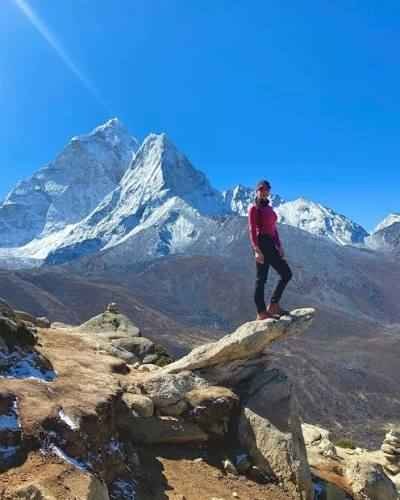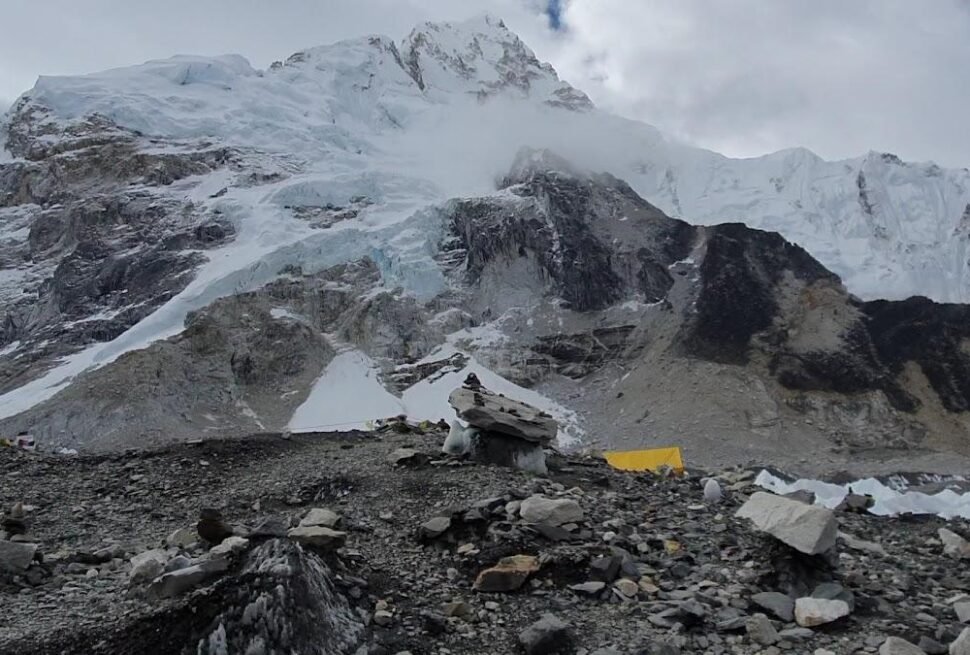
The Renjo La pass, at roughly 5,360 meters, is widely regarded as the most scenic and least technically demanding of the three high passes that give the Everest Three Passes Trek its name, and many experienced guides consider the view from its summit the single best panorama in the entire Khumbu region. Crossing Renjo La links the turquoise Gokyo Lakes valley on its eastern side with the quieter Thame valley to the west, giving trekkers a way to experience two dramatically different parts of the Everest region, the glacial lake basin below Gokyo Ri and the historic, less-visited Sherpa homeland around Thame, in a single continuous route.
This guide covers everything you need to know before attempting Renjo La: exactly how high it is and what the crossing actually involves, how it compares to the other two passes on the Three Passes circuit, the best season and itinerary structure, and the acclimatization, gear, and safety considerations that make the difference between an incredible day and a genuinely dangerous one at this altitude.
Where Renjo La Is and What It Connects
Renjo La sits on the ridge separating the Gokyo Valley, home to the famous chain of Gokyo Lakes and the viewpoint of Gokyo Ri, from the Bhote Koshi valley that runs up toward Thame and eventually the Nangpa La trade route into Tibet. Most trekkers cross the pass from east to west, starting in Gokyo village after acclimatizing around the lakes, climbing to the pass, and descending into Lungden or Marulung in the Thame valley, though it can be crossed in either direction depending on how an itinerary is structured.
How High Is Renjo La and How Difficult Is the Crossing
At approximately 5,360 meters, Renjo La is comparable in altitude to Kongma La and only slightly lower than Cho La, but it has a real technical advantage: unlike Cho La, the standard Renjo La route does not cross a glacier, which removes one of the more hazardous and weather-dependent elements from the day. The trail to the pass is well defined, with a long, steady, switchbacking climb rather than the scrambling and loose rock sections found on the other two passes, which is why many operators and guidebooks describe Renjo La as the easiest of the three technically, even though it is by no means an easy day.
The crossing itself typically takes between six and nine hours of active trekking, depending on your pace, the weather, and how well-acclimatized you are, and it is a long day regardless of technical difficulty simply because of the sustained altitude gain and the distance covered before you reach a lower, safer place to rest. Good weather is essential; the final approach and the pass itself are fully exposed to wind, and poor visibility can make the initially straightforward trail considerably harder to follow safely.
The View From the Top of Renjo La
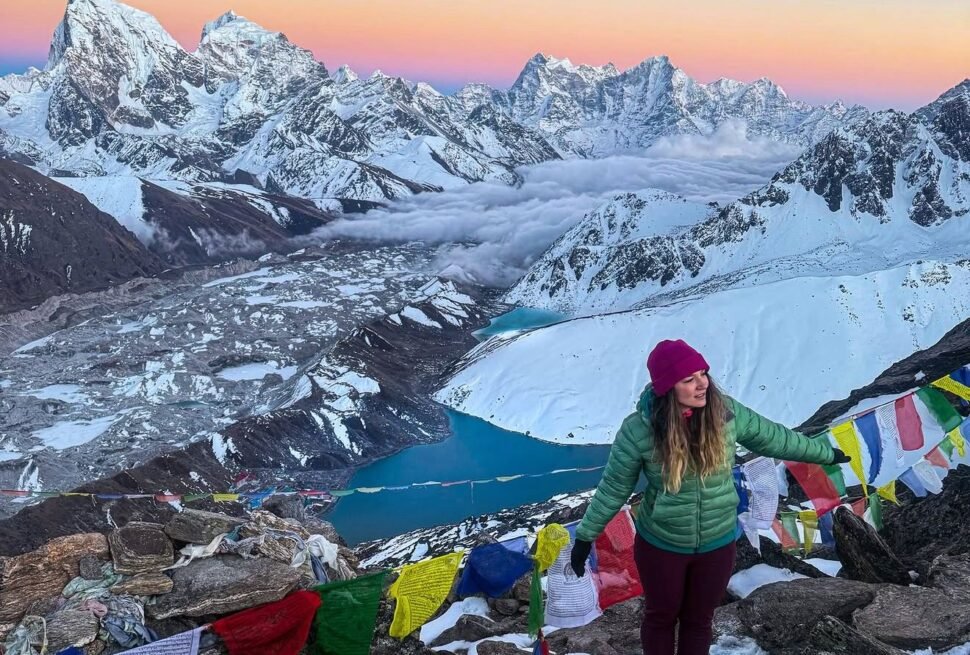
The reward for the effort is, by wide consensus among guides and trekkers who have done all three passes, the best single viewpoint on the entire circuit. From the summit of Renjo La you get an open, uninterrupted panorama that includes Mount Everest, Lhotse, Makalu, and Cho Oyu along the horizon, while looking back the way you came reveals the full chain of Gokyo Lakes laid out in brilliant turquoise far below, a combination of high peaks and glacial lakes that most trekkers who have done the route describe as more dramatic than the view from Cho La or Kongma La.
Renjo La Compared to Cho La and Kongma La
The Everest Three Passes Trek gets its name from Renjo La, Cho La, and Kongma La, three high crossings that together link the Gokyo Valley, the Everest Base Camp trail, and the Chukhung and Imja valleys into one continuous loop instead of the simple out-and-back structure of the standard Everest Base Camp trek. Of the three, Cho La at around 5,420 meters involves a genuine glacier crossing with loose rock and, depending on conditions and time of year, the need for microspikes or even crampons on icy sections, making it the most technically involved of the three. Kongma La, at close to 5,535 meters, is the highest of the three and includes a long, steep, boulder-strewn descent on its Chukhung side that many trekkers find harder on the knees and harder underfoot than either of the other two passes.
Renjo La, by contrast, involves neither a glacier crossing nor a serious boulder field, which is why it is consistently ranked as the most approachable of the three even though its altitude puts it firmly in the same demanding category. Trekkers doing the full Three Passes circuit typically find that crossing all three back to back, usually in the order Kongma La, Cho La, then Renjo La or the reverse, is significantly harder than any one pass in isolation, because the cumulative altitude exposure and consecutive long days compound fatigue in a way that a single pass crossing does not.
Best Season to Cross Renjo La
Autumn, from late September through November, is generally considered the best season for Renjo La, offering the most consistently stable weather and the clearest views of the peaks that make the crossing worthwhile in the first place. Spring, from March through May, is the second strong option, with slightly warmer temperatures and blooming rhododendrons lower down the trail, though afternoon cloud buildup is somewhat more common than in autumn.
Winter crossings are possible for well-prepared, well-guided parties but come with a higher risk of snow obscuring the trail and considerably colder temperatures at the pass itself, while the monsoon season from June through August is best avoided entirely, since heavy cloud cover eliminates the views that are the main reason to cross Renjo La in the first place, and wet, slippery trail conditions add unnecessary risk on the steeper sections near the top.
Standard Itinerary for Crossing Renjo La
Renjo La is most commonly crossed as part of a longer Gokyo Lakes or Everest Three Passes itinerary rather than as a standalone objective, since reaching Gokyo itself already requires roughly a week of trekking and acclimatization from Lukla. A typical structure follows the standard route through Phakding, Namche Bazaar, and up the Gokyo side valley through Dole and Machhermo to Gokyo village, with acclimatization days built in around Namche and again around Gokyo, often including the side trip up Gokyo Ri for a first taste of the high-altitude panorama before the pass itself.
From Gokyo, the crossing day to Lungden or Marulung on the Thame side is long, and most itineraries schedule it as a dedicated day with an early start, sometimes with a short acclimatization or exploration day at Gokyo immediately beforehand to ensure trekkers are properly adjusted before attempting the pass. From Lungden, the route descends through Thame, a village with real historical significance as the home of several famous Everest summiteers including Tenzing Norgay’s family lineage, before rejoining the main Khumbu trail back toward Namche Bazaar and Lukla.
Acclimatization and Altitude Safety on Renjo La
Renjo La sits high enough that altitude, not technical difficulty, is the real hazard on this crossing, and the pass should never be attempted as an early or rushed part of an itinerary. Trekkers should have already spent at least one full acclimatization day around Namche Bazaar near 3,440 meters and ideally another around Gokyo near 4,750 to 4,800 meters, with the Gokyo Ri side trip to nearly 5,360 meters serving as a useful practical test of how your body is handling altitude before committing to the pass crossing itself, since Gokyo Ri sits at almost exactly the same elevation as Renjo La.
Watch for the standard warning signs of acute mountain sickness in the days leading up to the crossing: persistent headache, nausea, unusual fatigue, and poor sleep. A guide experienced on this route will delay a Renjo La attempt, or route a client back down toward Namche instead, if these symptoms do not improve with rest, since pushing through worsening symptoms at nearly 5,400 meters, on an exposed, weather-dependent trail, is exactly the situation that leads to serious altitude illness requiring emergency evacuation.
What to Pack for the Renjo La Crossing
Because Renjo La does not require technical climbing equipment, the packing list is essentially the standard high-altitude Everest region trekking kit rather than anything specialized: sturdy, broken-in trekking boots, trekking poles for the long climb and the sometimes loose descent toward Lungden, a warm layering system including a proper down jacket, and good sun protection, since the exposed approach and the snow that often lingers near the pass reflect strong ultraviolet light even on a clear, cold day.
Microspikes are worth carrying for early-season, late-season, or post-snowfall crossings, when the trail near the top can ice over even though it does not require full mountaineering crampons. A reliable pair of sunglasses or glacier glasses, a headlamp in case the day runs longer than planned, and enough water and high-energy snacks for a six to nine hour day with limited resupply options are essential, since there is nowhere to buy food or water once you leave Gokyo until you reach Lungden on the far side.
Renjo La as Part of the Everest Three Passes Trek
For trekkers considering the full Everest Three Passes circuit rather than an out-and-back Gokyo Lakes trip, Renjo La is typically the final and easiest of the three passes when the route is walked in the conventional direction starting from Everest Base Camp side. Our comprehensive guide to the Three Passes Trek in Nepal covers the full circuit, including how Kongma La, Cho La, and Renjo La fit together, realistic itinerary lengths, and the fitness and acclimatization demands of combining all three passes into one continuous trek rather than tackling Renjo La as a standalone objective from Gokyo.
Trekkers who are drawn specifically to the Gokyo Lakes and want the option of a dramatic, scenic pass crossing without committing to the full three-pass circuit often choose a Gokyo Lakes and Renjo La combination itinerary instead, which delivers the single best view of the trip without the additional several days and cumulative fatigue of Kongma La and Cho La. Our detailed Gokyo Lakes trek guide covers this itinerary in depth, including the lake system itself, the Gokyo Ri viewpoint, and how a Renjo La crossing extends a standard Gokyo trip into a loop back through Thame rather than retracing the same trail.
Thame Village: The Quiet Side of Renjo La
Descending from Renjo La into the Bhote Koshi valley brings trekkers to Thame, one of the most historically significant villages in the entire Khumbu yet one that sees a fraction of the traffic of Namche Bazaar or the main Everest Base Camp trail. Thame is the ancestral home of Tenzing Norgay, and the village and its surrounding gompa have produced a remarkable number of accomplished Sherpa mountaineers over the decades, giving the short stay here a cultural weight that the busier tourist trail further east has largely lost.
Thame also sits on the old trade route toward the Nangpa La and Tibet, and the village retains a noticeably different, quieter character than the lodges catering to the main Everest Base Camp crowd. Trekkers who cross Renjo La rather than simply doing an out-and-back Gokyo trip get this detour through Thame as a genuine bonus, a chance to see a working Khumbu village that has not been reshaped primarily around trekking tourism in the way some of the busier stops along the main trail have been.
Guides and Safety on Renjo La
A guide is not a strict legal requirement for the Gokyo side of the Everest region in the way it now is for parts of the main Everest Base Camp trail, but attempting Renjo La without an experienced guide is a genuinely risky decision that most operators and past trekkers strongly advise against. The trail above Gokyo, while well defined in good weather, crosses exposed, high-altitude terrain with no villages, no phone signal in many stretches, and rapidly changing weather, and a guide who knows current trail and snow conditions, recognizes altitude sickness early, and can navigate safely in poor visibility is a genuine safety asset, not a convenience.
Our broader Everest Base Camp trek safety guide covers altitude, weather, and emergency evacuation considerations that apply directly to the Gokyo and Renjo La route as well, since the same core risks, thin air, cold, and remoteness from medical care, define both routes even though the trails themselves diverge. Travel insurance that explicitly covers trekking above 5,000 meters and includes helicopter evacuation is essential for anyone planning to cross Renjo La, and our travel insurance guide for the Everest Base Camp trek explains what to check for in a policy before you book.
Fitness and Training for Renjo La
Preparing for Renjo La means preparing for a long, high-altitude trekking day rather than a technical climb, so the training that serves you best is sustained cardiovascular conditioning and multi-hour hiking practice, ideally on varied terrain with some elevation gain, in the months before departure. Our detailed training guide for the Everest Base Camp trek lays out a structured preparation plan that applies directly to a Gokyo and Renjo La itinerary, since both routes demand a similar baseline of fitness, and the extra distance and altitude of a Three Passes circuit simply raises the bar somewhat further.
Trekkers who have already completed the standard Everest Base Camp trek and are considering Renjo La or a full Three Passes circuit as a next step generally find their prior high-altitude experience is a real asset, since knowing how your own body responds to thin air removes some of the uncertainty that first-time high-altitude trekkers face when deciding whether they are ready for a 5,360 meter crossing.
Cost of a Gokyo and Renjo La Trek
A guided Gokyo Lakes and Renjo La itinerary typically runs a similar price range to the standard Everest Base Camp trek for a comparable number of days, since both routes share the same Lukla flight, Sagarmatha National Park and rural municipality permit fees, and broadly similar teahouse pricing along the shared lower sections of trail. Expect a package of roughly 14 to 17 days, including acclimatization days, to run in a comparable range to our published Everest Base Camp trek cost guide, with the main variables being group size, season, and how many rest and acclimatization days are built into the itinerary.
A full Everest Three Passes circuit, which adds Kongma La and Cho La on top of Renjo La and typically extends the trip to 18 to 21 days, costs proportionally more simply due to the additional days of guiding, accommodation, and food, though the permit costs themselves do not change since all three passes fall within the same national park and municipality boundaries as the standard Everest Base Camp trek.
Permits Required for Renjo La
The permits needed for a Gokyo and Renjo La trek are the same two required for the standard Everest Base Camp route: the Sagarmatha National Park entry permit and the Khumbu Pasang Lhamu Rural Municipality entry permit, both purchased in Nepal rather than in advance, typically in Kathmandu or at the park entrance in Monjo depending on how your operator arranges logistics. No special additional permit is required specifically for crossing Renjo La itself, unlike the NMA climbing permits needed for peaks such as Mera Peak or Island Peak, which makes Renjo La accessible to any competent trekker with the right fitness and acclimatization rather than requiring the extra paperwork and cost of a climbing-peak permit.
Is Renjo La harder than the standard Everest Base Camp trek
Yes, meaningfully so. The standard Everest Base Camp trek tops out at Kala Patthar around 5,545 meters on a well-established trail with reliable teahouses at every stage, while a Renjo La crossing adds a long, exposed, less-supported high-altitude day with fewer bailout options if weather turns bad. Trekkers who have comfortably completed Everest Base Camp are generally well prepared for Renjo La, but first-time high-altitude trekkers should think carefully about whether to start with the more straightforward base camp route before attempting a pass crossing.
Can beginners cross Renjo La
Renjo La does not require technical climbing skill, so a physically fit beginner with no prior high-altitude experience can complete it successfully, particularly with a conservative, well-acclimatized itinerary and an experienced guide. That said, the altitude and remoteness mean it is not a casual undertaking, and beginners should prioritize a longer itinerary with generous acclimatization time over a shorter, cheaper option that compresses the schedule.
What happens if the weather is bad on the day scheduled for Renjo La
A good guide will simply wait, which is one of the strongest arguments for building at least one buffer day into any Renjo La or Three Passes itinerary. Attempting the crossing in poor visibility or high wind is genuinely dangerous given the exposed terrain and the risk of losing the trail, and reputable operators would rather delay a day, or in rare cases reroute back the way you came, than push a group across the pass in unsafe conditions.
The Gokyo Lakes and Gokyo Ri Before the Pass
No Renjo La itinerary skips the Gokyo Lakes themselves, a chain of glacially fed lakes at increasing altitude that are among the most photographed features of the entire Everest region, prized for their intense turquoise and emerald color set against the backdrop of Cho Oyu and the Ngozumpa Glacier, Nepal’s largest. Our dedicated Gokyo Lakes trek guide covers the lake system, the village, and the classic Gokyo Ri sunrise climb in detail, and virtually every Renjo La itinerary builds in at least a full day around Gokyo both to enjoy these highlights and to acclimatize properly before the pass.
The climb up Gokyo Ri, a viewpoint just above the village at almost exactly the same altitude as Renjo La itself, is often used deliberately as an acclimatization test: trekkers who handle the Gokyo Ri climb reasonably well are generally well positioned for the Renjo La crossing a day or two later, while those who struggle noticeably may benefit from an extra rest day or a more conservative pace before attempting the pass.
Sample Day-by-Day Itinerary Including Renjo La
While exact itineraries vary by operator, a representative Gokyo Lakes and Renjo La trek runs roughly as follows: a flight from Kathmandu to Lukla followed by a short trek to Phakding, then a climb to Namche Bazaar with a built-in acclimatization day, before the route diverges from the main Everest Base Camp trail toward Dole and Machhermo on the way up the Gokyo side valley. From Machhermo the trail reaches Gokyo village itself, where most itineraries schedule an acclimatization day that typically includes the Gokyo Ri climb, before the long Renjo La crossing day down into Lungden or Marulung.
From the Thame side, the route continues down through Thame village and rejoins the main trail near Namche Bazaar before retracing the familiar path back through Phakding to Lukla for the return flight. A well-paced version of this itinerary runs 14 to 16 days from Kathmandu to Kathmandu, and operators who compress it meaningfully below that range are cutting into acclimatization time in a way that raises real safety concerns given the altitude of both Gokyo Ri and Renjo La itself.
Environmental and Cultural Notes for the Gokyo and Renjo La Route
The Gokyo valley and the trail toward Renjo La pass through some of the most ecologically sensitive terrain in the Khumbu, including the shores of lakes that are considered sacred by local Buddhist communities, and responsible trekking practices matter accordingly. Avoid disturbing the lakeshore areas, pack out all non-biodegradable waste, and be mindful that Gokyo, unlike the busier stops along the main Everest Base Camp trail, has a more limited capacity to absorb the environmental impact of high trekking volumes.
Thame and the smaller settlements on the Renjo La side of the route are quieter, more traditional Sherpa communities where simple courtesies go a long way: ask before photographing people, dress modestly, and remember that the tourism income from trekkers choosing the Renjo La route rather than the busiest sections of the main trail plays a real role in sustaining these smaller, less-visited villages.
Making the Most of Your Renjo La Crossing
Renjo La rewards trekkers who prioritize the crossing over rushing through it: arrive at the pass with enough energy and daylight left to actually take in the view, rather than treating it as a box to check on the way to the next teahouse. Many guides recommend timing the final approach for mid-morning, when visibility is often at its best before afternoon cloud tends to build, and allowing at least twenty to thirty minutes at the top, weather permitting, to properly absorb what is genuinely one of the finest mountain panoramas anywhere in the Himalaya.
If you are deciding between a straightforward Gokyo Lakes trek, a Gokyo and Renjo La combination, or the full Everest Three Passes circuit, our team can help you weigh the extra time, cost, and physical demand of each option against what you most want out of the trip, whether that is the single best view in the region, a full loop through all three passes, or simply the classic, well-supported Everest Base Camp experience.
Common Mistakes When Planning a Renjo La Crossing
The most frequent mistake is treating Renjo La as a simple add-on to a standard itinerary without adding the extra days needed for proper acclimatization around Gokyo, which is a false economy given how much the crossing depends on your body already being adjusted to altitudes above 4,700 meters. A second common mistake is underestimating how long and exposed the crossing day is; trekkers sometimes expect something closer to the shorter days lower down the main trail and are caught off guard by a six-to-nine-hour day with no villages, shops, or shelter along most of the route.
A third mistake is not building in a weather buffer day, which leaves no flexibility if conditions are unsafe on the originally scheduled crossing date and can force a difficult choice between an unsafe attempt and abandoning the pass entirely. Finally, some trekkers underpack for the cold and wind at the pass itself, bringing adequate insulation for teahouse evenings but not for several hours of exposed, high-altitude trekking in conditions that can be considerably colder and windier than anything experienced lower down the main Everest Base Camp trail.
How does Renjo La compare to Kala Patthar
Kala Patthar, the classic Everest Base Camp viewpoint, sits at a broadly similar altitude to Renjo La but is reached via a well-established, heavily trekked trail with teahouses close by at every stage, making it logistically far simpler despite the comparable elevation. Renjo La involves a longer, more remote, and more exposed crossing with a genuine descent into a different valley on the far side, which makes it a meaningfully bigger undertaking than the out-and-back Kala Patthar side trip, even though both sit at a similar height above sea level.
Do I need supplemental oxygen for Renjo La
No, supplemental oxygen is not standard practice for trekking at Renjo La’s altitude; it is used mainly in mountaineering contexts at considerably higher elevations or in medical emergencies rather than as a routine part of a Gokyo and Renjo La trek. Proper acclimatization through a well-paced itinerary is the primary and appropriate tool for managing the altitude, with Diamox sometimes used preventively under guide or medical guidance rather than oxygen.
What is the best direction to cross Renjo La
Most itineraries cross from Gokyo toward Thame, which has the advantage of tackling the climb after the acclimatization benefit of time spent around Gokyo and the Gokyo Ri side trip, arriving at the high point already reasonably adjusted to the altitude. Crossing in the opposite direction, from Thame toward Gokyo, is also done, particularly by trekkers approaching from the Tibet trade route side or combining the crossing with other objectives, but it means tackling the pass earlier in the acclimatization process, which requires extra care with pacing.
Weather and Temperature at Renjo La
Temperatures at Renjo La and along the approach through Gokyo swing widely between direct sun and shade, and between day and night, in the way typical of high-altitude Himalayan terrain. On a clear day in the main spring or autumn seasons, daytime temperatures at the pass itself often sit close to freezing or slightly below even in bright sun, while wind chill can push the effective temperature considerably lower, and any delay caused by cloud or snow can turn a merely cold day into a genuinely dangerous one.
Overnight temperatures in Gokyo and Lungden regularly fall well below freezing during the main trekking seasons, and trekkers should expect conditions broadly similar to what they would encounter near Everest Base Camp itself, given the comparable altitudes involved. Checking a reliable mountain weather forecast in the days before the scheduled crossing, and being willing to adjust the itinerary if a clear window does not look likely, is standard practice among experienced Gokyo and Renjo La operators.
Combining Renjo La With Other Everest Region Objectives
Trekkers with additional time sometimes combine a Gokyo and Renjo La crossing with a visit to Everest Base Camp itself, either by continuing over Cho La to join the main Everest Base Camp trail, which effectively becomes a partial Three Passes route, or by planning two separate but connected loops through the region. Our guide to choosing the right Everest trek for your goals and experience level covers how Renjo La, Gokyo Lakes, the standard Everest Base Camp trek, and the full Three Passes circuit compare, which is a useful starting point if you are still deciding how ambitious to make your itinerary.
For trekkers who have already done Everest Base Camp and are looking for a genuinely different next challenge in the same region rather than repeating familiar ground, a Gokyo Lakes and Renjo La itinerary offers new terrain, a different valley, and arguably better views than the standard route, all without requiring the technical mountaineering equipment or NMA climbing permit needed for a trekking peak like Mera Peak or Island Peak.
How crowded is the Renjo La route compared to the main Everest Base Camp trail
Significantly less crowded. While Namche Bazaar and the lower sections of trail see heavy traffic from all Everest region trekkers regardless of final destination, the Gokyo side valley and the Renjo La crossing itself see a fraction of the numbers that pass through Dingboche and Lobuche on the main Everest Base Camp trail, giving trekkers who choose this route a noticeably quieter, more solitary high-altitude experience.
Plan Your Gokyo Lakes and Renjo La Trek
Renjo La delivers one of the best returns on effort of any single day in the Everest region: no technical climbing skill required, no specialized mountaineering permit, and a summit panorama that regularly gets rated above both Kala Patthar and Everest Base Camp itself by trekkers who have done all three. The trade-off is a long, remote, weather-dependent day that demands real fitness and proper acclimatization, which is exactly why the itinerary and guide team you choose matter as much as your personal preparation.
If a Gokyo Lakes and Renjo La crossing, or the full Everest Three Passes circuit, sounds like the right challenge for your next trip to Nepal, get in touch and we can put together a properly paced itinerary with the acclimatization days, experienced guiding, and weather buffer that give you the best realistic chance of standing on that summit under clear skies.
Health and Altitude Illness Warning Signs
As with any crossing above 5,000 meters, everyone on a Renjo La itinerary should know the early warning signs of acute mountain sickness: headache, nausea, dizziness, loss of appetite, and unusually poor sleep at altitude. Mild symptoms that improve with rest and hydration at the same elevation are common and not automatically a reason to abandon the plan, but symptoms that worsen, or progress to confusion, poor coordination, or breathlessness at rest, are a clear signal to descend immediately rather than push on toward the pass.
A guide experienced on the Gokyo and Renjo La route will check in with trekkers directly about sleep quality and appetite, not just ask if anyone feels unwell, since altitude symptoms are sometimes minimized or hidden by trekkers eager not to hold up the group. Choosing an operator with a genuine safety-first culture, one willing to delay a crossing or send a struggling trekker back down with a support guide rather than pushing the whole group ahead regardless of condition, is one of the most important decisions you make when booking this trek.
Is travel insurance mandatory for Renjo La
It is not legally mandatory in the way permits are, but no responsible operator will take a client onto the Renjo La route without confirmed travel insurance that covers trekking above 5,000 meters and includes helicopter evacuation. Given the remoteness of the Gokyo and Thame valleys and the cost of a helicopter rescue without insurance, arriving without appropriate coverage is a serious and entirely avoidable risk.
What if I cannot complete the Renjo La crossing
A good guide will always have a fallback plan, which usually means turning back toward Gokyo rather than pushing on toward Thame if conditions or a trekker’s condition deteriorate partway up. This is another reason a buffer day and a flexible itinerary matter: a failed first attempt does not have to mean abandoning the pass entirely if there is time built in to rest and try again in better conditions.
Why Choose a Local Operator for Renjo La
Because the Gokyo and Renjo La route is quieter and less infrastructure-heavy than the main Everest Base Camp trail, the value of booking with an operator who knows current conditions on this specific route is higher than it might be for a more heavily trafficked trek. Local guides who cross Renjo La regularly know which teahouses in Lungden and Marulung are currently open and well run, how recent snowfall has affected the trail, and how to adjust pacing in real time if a client is struggling with the altitude, none of which an overseas agency subcontracting the trip at a distance can manage as effectively.
When comparing operators for a Gokyo and Renjo La trip, ask directly how many nights are built in around Gokyo for acclimatization, whether a weather buffer day is included before the pass, and what the plan is if conditions are unsafe on the scheduled crossing date. These questions reveal more about how an itinerary will actually perform on the ground than the headline price or day count alone, and they matter more here than on the standard, well-supported Everest Base Camp trail.
Can I see Renjo La and Cho La on the same trip without doing the full Three Passes trek
Yes. Some itineraries cross Renjo La from Gokyo toward Thame and then loop back rather than continuing over Cho La, while others build a route that includes both Renjo La and Cho La without the third pass, Kongma La, giving a slightly shorter alternative to the full circuit while still including two of the three passes. Discuss your fitness, available time, and appetite for a longer, harder itinerary with your operator to find the right balance between seeing more of the region and keeping the trip manageable.
Photography and What to Expect at the Summit
Photographers planning to capture the Renjo La panorama should aim to arrive at the pass in clear morning light, when visibility is typically best before any afternoon cloud has a chance to build, and should budget extra time at the top beyond what a purely functional crossing would require. The combination of high peaks to the east and the Gokyo Lakes chain visible to the north makes this one of the few spots in the region where a single frame can capture both the mountain skyline and the glacial lakes below, a composition that is difficult to replicate anywhere else on the standard Everest Base Camp route.
Bring spare camera batteries, since cold temperatures at altitude drain battery life significantly faster than at lower elevations, and keep batteries warm in an inner pocket when not in use. Cloud can move in quickly even on an otherwise clear day, so treat any clear window at the summit as valuable and prioritize capturing the view early rather than assuming conditions will hold for the duration of your stay at the pass.
Do I need a Sherpa or porter in addition to my guide for Renjo La
A porter is not strictly required but is strongly recommended, particularly for a longer Gokyo and Renjo La or full Three Passes itinerary, since carrying your own full pack over multiple long, high-altitude days adds meaningfully to fatigue and can affect how well you handle the crossing itself. Most package trips include porter support as standard, and our guide to porters on the Everest Base Camp trek covers hiring, fair wages, and tipping norms that apply equally to a Gokyo and Renjo La itinerary.
What age range is suitable for the Renjo La crossing
There is no strict age limit, but the combination of a long trekking day, high altitude, and exposed terrain means Renjo La is best suited to fit teenagers and adults rather than young children, and most operators recommend participants be at least in their mid-teens with prior trekking experience at moderate altitude. Older trekkers in good cardiovascular health regularly complete Renjo La successfully, provided the itinerary includes adequate acclimatization time and a realistic daily pace rather than an aggressively compressed schedule.
Whatever your age or experience level, an honest conversation with your operator about your fitness, prior altitude experience, and comfort with long, remote trekking days before booking is the best way to ensure the itinerary you choose actually matches what you are capable of on the day.
Is Renjo La more scenic than Cho La
Most trekkers and guides who have crossed both agree that Renjo La offers the more dramatic, open panorama, largely because its summit ridge gives a wide, unobstructed view of both the high peaks and the Gokyo Lakes chain below, while Cho La’s views, though still impressive, are somewhat more enclosed by the glacier and surrounding terrain the trail crosses. This is one reason Renjo La is often recommended as the single pass to prioritize for trekkers who cannot fit the full Three Passes circuit into their schedule but still want the signature high-altitude viewpoint experience.
Ultimately, the choice between doing Renjo La alone, pairing it with Cho La, or completing the full circuit with Kongma La as well comes down to how much time, budget, and appetite for consecutive demanding days you have, and our team is happy to help you weigh these options against what matters most to you for this trip.
Whichever route you choose, crossing Renjo La is a genuine highlight of Everest region trekking, a demanding but achievable day that delivers one of the finest mountain and lake panoramas anywhere in Nepal, and a fitting reward for trekkers who have put in the acclimatization time and physical preparation the crossing deserves.
Reach out to our team with your travel dates and experience level, and we will help you build a Renjo La itinerary, whether standalone, paired with Cho La, or as part of the full Three Passes circuit, that gives you the acclimatization, guiding, and flexibility needed to reach that summit safely and enjoy every minute of it.
Renjo La, the Gokyo Lakes, and the quiet village of Thame together make up one of the most rewarding combinations of scenery, culture, and genuine high-altitude adventure available anywhere in the Everest region, and with the right preparation it is well within reach for any fit, well-acclimatized trekker.
Start planning today, and let the trail decide the rest.