The Everest region of Nepal has more than one path to the mountains. You can trek to Everest Base Camp, wander around the sacred Gokyo Lakes, cross three high Himalayan passes, or take a short attractive route to a panoramic viewpoint. Every route offers a different experience different challenges, different landscapes, and different rewards.
Choosing the wrong trek is one of the most common mistakes trekkers make. Someone who dreams of standing at the foot of the world’s highest mountain ends up on the Gokyo trail. An experienced hiker who needs a challenge picks EBC and feels underchallenged. A traveler with one week takes on Three Passes and collapses at Cho La.
This guide gives you everything you need to make the right decision detailed breakdowns of all four main Everest treks, honest pros and cons, a full comparison table, cost breakdowns, best season guides, and a decision matrix to match your profile to the perfect route.
Everest Trekking Routes: A Quick Comparison
| Trek | Duration | Max Elevation | Difficulty | Best For |
|---|---|---|---|---|
| Everest Base Camp | 12-14 days | 5,545 m (Kala Patthar) | Moderate | First-timers & culture lovers |
| Gokyo Lakes | 12-14 days | 5,357 m (Gokyo Ri) | Moderate-Hard | Nature lovers, fewer crowds |
| Three Passes | 18-21 days | 5,535 m (Kongma La) | Challenging | Experienced, adventure-seekers |
| Everest View Trek | 7-9 days | 3,962 m (Tengboche) | Easy-Moderate | Limited time, first Himalayan trip |
1. Everest Base Camp Trek (EBC)
The Everest Base Camp trek is the most famous high-altitude trek on earth. It follows the same trail used by early Everest expeditions, passing through the heart of Sherpa country and ending at the base of the world’s highest peak Mount Everest at 8,848 m (29,032 ft).
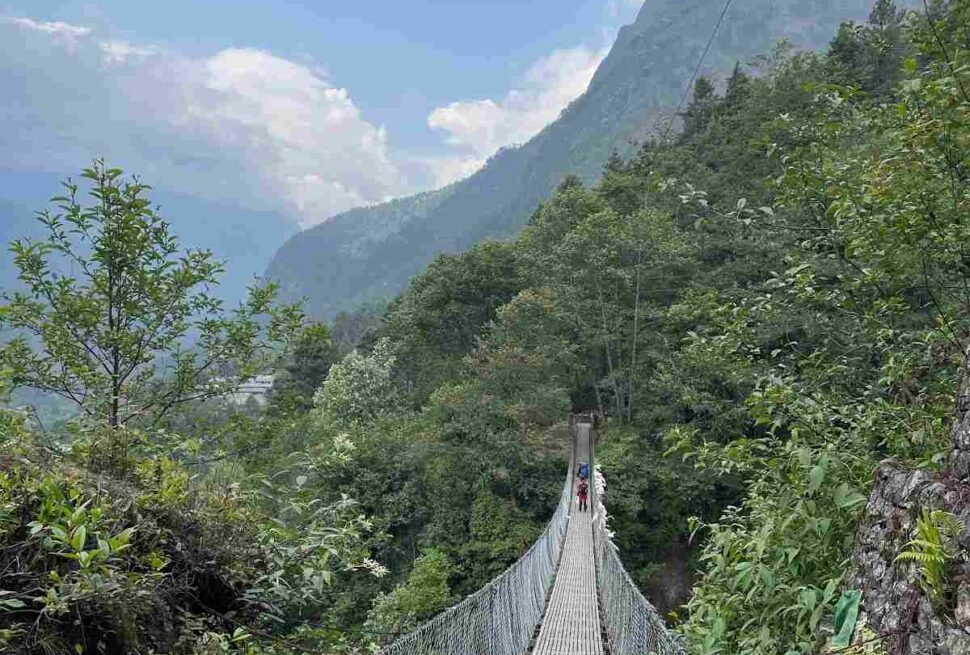
The classic EBC trek starts with a attractive flight to Lukla (2,860 m / 9,383 ft), then follows the Dudh Koshi River valley north through rhododendron forests, suspension bridges, and mani stone walls. You spend nights in teahouses in Phakding, Namche Bazaar, Tengboche, Dingboche, Lobuche, and Gorak Shep before reaching Everest Base Camp at 5,364 m (17,598 ft).
Key Highlights of the EBC Trek
| Trail Start | Lukla (2,860 m / 9,383 ft) |
| Base Camp Elevation | 5,364 m (17,598 ft) |
| Highest Point | Kala Patthar 5,545 m (18,192 ft) |
| Total Distance | ~130 km (round trip) |
| Duration | 12-14 days (standard) |
| Difficulty | Moderate |
| Accommodation | Teahouses all the way |
| Crowded Season | March-May, September-November |
What Makes the EBC Trek Special?
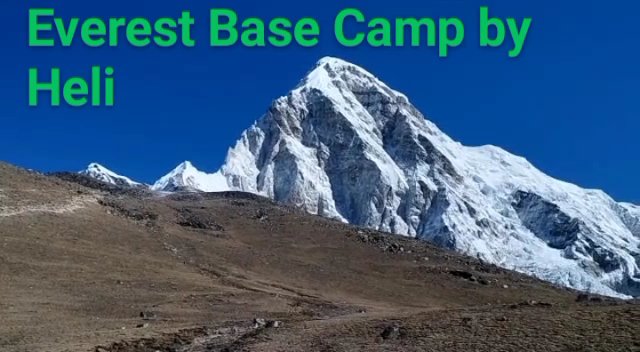
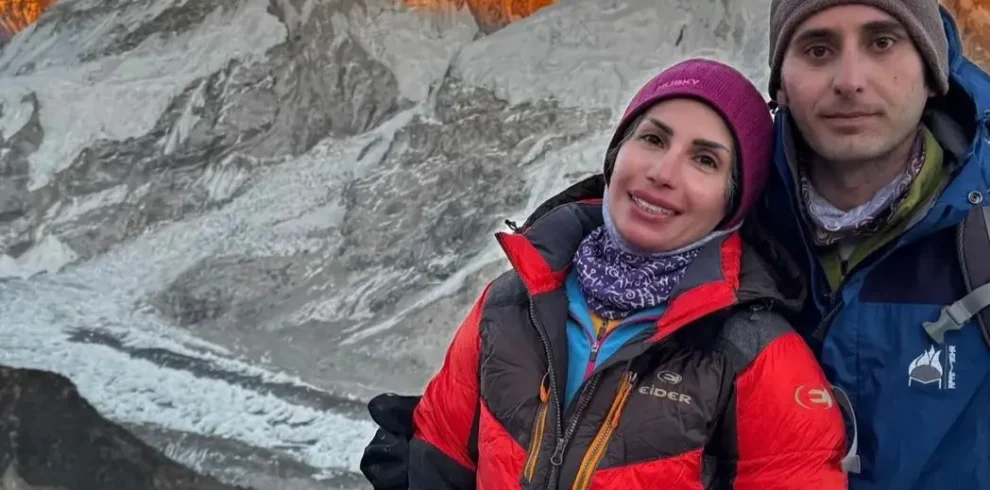
Kala Patthar sunrise: The pre-dawn climb to Kala Patthar (5,545 m) delivers the most famous sunrise view in the Himalayas Everest, Nuptse, Pumori, Changtse and the Khumbu Icefall glowing orange in the early light. Most trekkers name this as the single greatest moment of the trek.
Sherpa culture and history: Namche Bazaar (3,440 m / 11,286 ft) is the commercial capital of the Khumbu and a notable mountain town with bakeries, gear shops, hotels, and a Saturday market. Tengboche Monastery (3,867 m / 12,687 ft), perched above the treeline with Ama Dablam behind it, is one of the most photographed spots in the Himalayas.
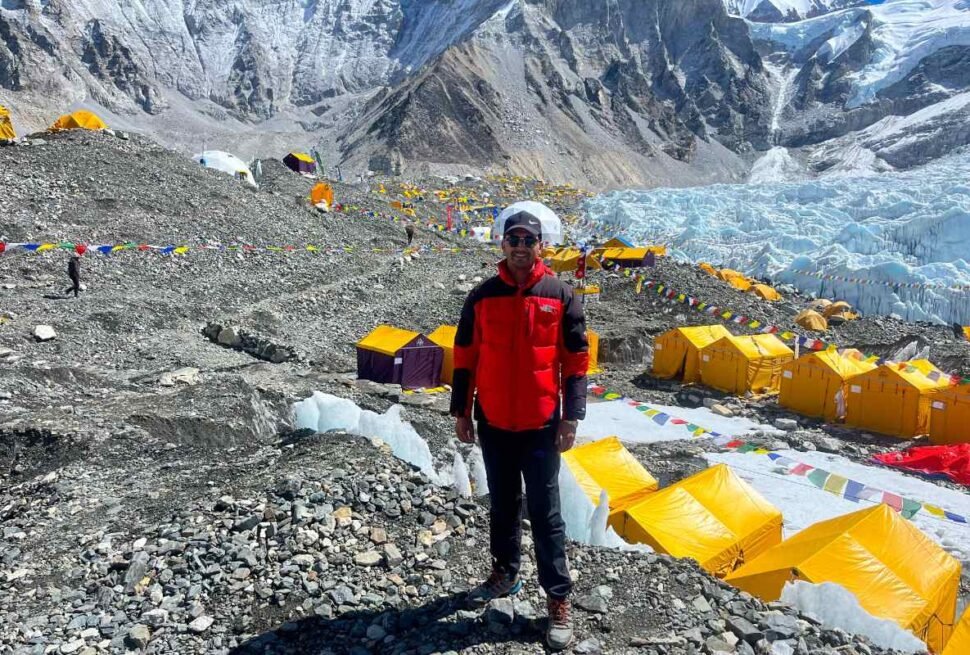
The Khumbu Icefall: From Base Camp you stand directly below the crumbling towers of ice that form the Khumbu Icefall the same obstacle every Everest climber must overcome. It’s a humbling, raw, otherworldly sight.
Well-established infrastructure: The EBC route has the best teahouse network in the Himalayas. Every village has multiple lodges, WiFi is available at most stops, and there are health posts and rescue operations along the trail.
EBC Trek: Pros and Cons
| Pros | Cons |
|---|---|
| well-known, bucket-list destination | Busiest trail in the region |
| Rich Sherpa culture and history | Teahouses crowded in peak season |
| Best teahouse infrastructure | Base Camp itself is a rocky moraine not visually dramatic |
| Achievable for beginners with preparation | Kala Patthar hike can be strenuous |
| Clear trail, easy to travel through | Some sections can feel like a highway of trekkers |
| Outstanding mountain views (Everest, Lhotse, Ama Dablam) | EBC only accessible in dry seasons |
2. Gokyo Lakes Trek
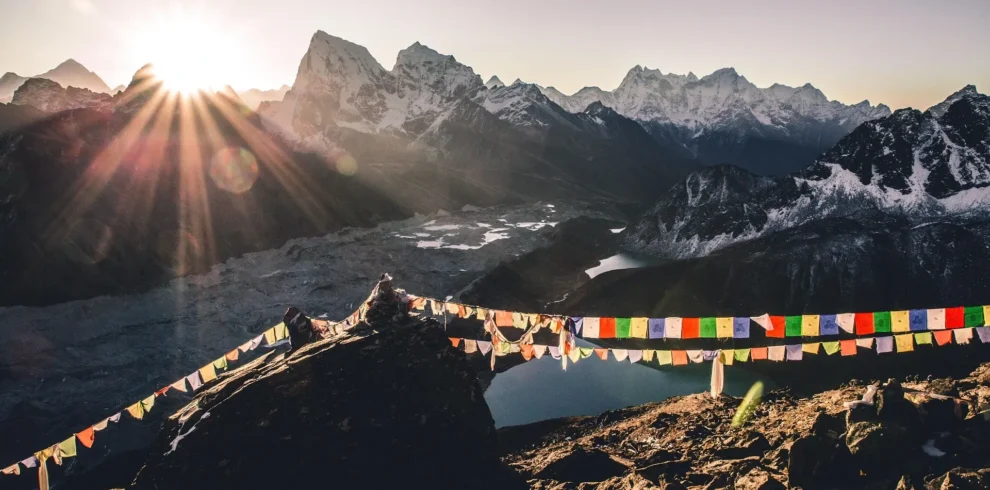
The Gokyo Lakes trek branches off the main EBC route at Namche Bazaar, heading northwest up the Gokyo Valley instead of northeast toward Lobuche. The reward is one of Nepal’s most visually striking destinations: a series of six sacred turquoise lakes sitting at 4,700-5,000 m (15,400-16,400 ft), flanked by the largest glacier in Nepal and surrounded by four peaks over 8,000 m.
The trail passes through less-traveled valleys, visiting tiny Sherpa settlements like Dole (4,200 m), Machhermo (4,470 m), and Gokyo (4,790 m) before the final climb up Gokyo Ri (5,357 m / 17,575 ft) a summit that rivals Kala Patthar for sheer panoramic impact.
Key Highlights of the Gokyo Lakes Trek
| Trail Start | Lukla (2,860 m / 9,383 ft) |
| Highest Lake | Thonak Tso 4,930 m (16,175 ft) |
| Highest Point | Gokyo Ri 5,357 m (17,575 ft) |
| Duration | 12-14 days |
| Difficulty | Moderate to Challenging |
| Crowd Level | Low-Medium (much quieter than EBC) |
| Glacier | Ngozumpa Glacier longest in Nepal |
| 8,000m Peaks Visible | Everest, Cho Oyu, Lhotse, Makalu |
What Makes the Gokyo Trek Special?
The lakes themselves: The six Gokyo Lakes (Dudh Pokhari, Taboche Tsho, Dudh Pokhari, Thonak Tsho, Ngozumpa Tsho, Gyazumpa Tsho) are a UNESCO-nominated Ramsar wetland. The turquoise water reflects the surrounding snow peaks and the contrast with the rocky moraine is extraordinary. The lakes are considered sacred by both Hindus and Buddhists.
Gokyo Ri panorama: From the summit of Gokyo Ri (5,357 m) you see four of the world’s six highest peaks in a single 360-degree sweep: Everest (8,848 m), Cho Oyu (8,188 m), Lhotse (8,516 m), and Makalu (8,485 m). Many trekkers say this view surpasses Kala Patthar for breadth and drama.
Ngozumpa Glacier: The Ngozumpa is the largest glacier in the Himalayas by surface area. Standing beside it a vast field of moving ice 35 km long gives a profound sense of the geological forces shaping this landscape.
Solitude and peace: The Gokyo valley sees roughly one-third the trekker numbers of the EBC trail. You’ll share lodges with far fewer people and can often have viewpoints almost to yourself.
Gokyo Trek: Pros and Cons
| Pros | Cons |
|---|---|
| Fewer trekkers, quieter experience | You don’t reach Everest Base Camp |
| Sacred turquoise lakes visually striking | Fewer teahouses; more remote feel |
| Gokyo Ri: 4 eight-thousanders in one view | Ngozumpa valley can be cold and windy |
| Ngozumpa Glacier Nepal’s largest | Fewer cultural highlights than EBC route |
| Better for wildlife (musk deer, Himalayan tahr) | Requires stronger acclimatization discipline |
| Can be combined with EBC via Cho La Pass | Trail is less marked in upper sections |
3. Everest Three High Passes Trek
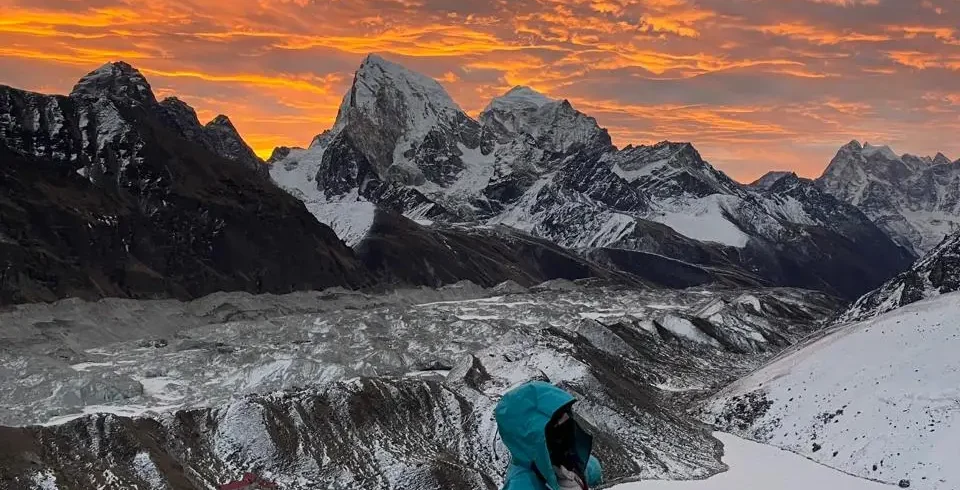
The Everest Three High Passes trek also called the Three Passes trek or the Khumbu Three Passes trek is the most demanding and comprehensive route in the Everest region. It crosses three high Himalayan passes: Kongma La (5,535 m / 18,159 ft), Cho La (5,420 m / 17,782 ft), and Renjo La (5,360 m / 17,585 ft), linking the three major valleys of Khumbu, Gokyo, and Thame in a single epic loop.
This route includes everything: Everest Base Camp, Kala Patthar, Gokyo Lakes, Gokyo Ri, all three passes, and dozens of kilometers of trail that most trekkers never see. It is the full Everest region experience, and it demands full commitment.
Key Highlights of the Three Passes Trek
| Trail Start | Lukla (2,860 m / 9,383 ft) |
| Highest Pass | Kongma La 5,535 m (18,159 ft) |
| Other Passes | Cho La (5,420 m), Renjo La (5,360 m) |
| Includes | EBC, Kala Patthar, Gokyo Lakes, Gokyo Ri |
| Duration | 18-21 days |
| Difficulty | Challenging |
| Daily Hiking | 6-9 hours on pass days |
| Prior Experience | Required (previous trekking above 4,000 m recommended) |
What Makes the Three Passes Trek Special?
Kongma La (5,535 m / 18,159 ft): The highest of the three passes, crossing from the Chhukung valley to the Lobuche valley. The views from the top take in Makalu, Baruntse, Lhotse, and Island Peak (Imja Tse) one of the most remote and impressive vantage points in the Khumbu.
Cho La (5,420 m / 17,782 ft): The glacier pass connecting the Gokyo valley to the Lobuche valley. This is the most technical of the three passes it involves a short glaciated section that may require crampons in early morning conditions. The views of Cholatse peak on approach are impressive.
Renjo La (5,360 m / 17,585 ft): The western pass, linking Gokyo to the Thame valley. The view from Renjo La is arguably the best of all three a bird’s-eye view of the Gokyo Lakes directly below and Everest, Lhotse, Makalu, and Cho Oyu stretching across the horizon.
The complete Khumbu circuit: No other trek in the region covers as much ground or shows you as many faces of the Himalayas. You see glaciers, sacred lakes, base camps, yak pastures, ancient monasteries, remote Sherpa villages, and passes that feel like the roof of the world.
Three Passes Trek: Pros and Cons
| Pros | Cons |
|---|---|
| The most complete Everest region experience | Requires 18-21 days minimum |
| Includes EBC, Kala Patthar, AND Gokyo Lakes | Not suitable for beginners |
| Remote trails with very few other trekkers | Cho La requires glacier experience |
| Three world-class viewpoints (one per pass) | Most expensive option |
| Physical and mental challenge at its best | Weather can force route changes |
| Best introduction to high Himalayan passes | Requires proper pre-trek fitness training |
4. Everest View Trek (Short Option)
The Everest View Trek is the most accessible option for people with limited time, lower fitness, or no experience trekking above 4,000 m. It follows the same trail as EBC as far as Namche Bazaar (3,440 m) and optionally Tengboche (3,867 m), without pushing into the high-altitude zone above 4,000 m.
Despite being short, this trek still rewards trekkers with striking views of Everest, Nuptse, Lhotse, Ama Dablam, and Thamserku from the Everest View Hotel viewpoint (3,962 m) near Syangboche. The cultural experience through Sherpa villages and forests is identical to the start of the full EBC trek.
Key Highlights of the Everest View Trek
| Duration | 7-9 days |
| Highest Point | ~3,962 m (Everest View Hotel / Syangboche) |
| Difficulty | Easy to Moderate |
| Best For | Beginners, older trekkers, families, limited time |
| Views | Everest, Ama Dablam, Lhotse, Nuptse |
| Altitude Sickness Risk | Low (stays below 4,000 m) |
The main limitation is that you don’t reach the true high-altitude Himalayan landscape no glaciers, no base camp, no dramatic passes. But for a first Himalayan experience or a quick taste of Sherpa culture with genuine Everest views, it is hard to beat in 7-9 days.
Side-by-Side Comparison of All Four Everest Treks
| Category | EBC Trek | Gokyo Lakes | Three Passes | Everest View |
|---|---|---|---|---|
| Duration | 12-14 days | 12-14 days | 18-21 days | 7-9 days |
| Max Elevation | 5,545 m (Kala Patthar) | 5,357 m (Gokyo Ri) | 5,535 m (Kongma La) | 3,962 m (Syangboche) |
| Difficulty | Moderate | Moderate-Hard | Challenging | Easy-Moderate |
| Distance (approx) | ~130 km | ~110 km | ~160-180 km | ~65 km |
| Daily Walking | 5-7 hours | 5-7 hours | 6-9 hours | 4-5 hours |
| Crowd Level | High | Low-Medium | Low (remote sections) | Medium |
| Teahouse Quality | Excellent | Good | Good (sparse on passes) | Excellent |
| Altitude Sickness Risk | Medium-High | Medium-High | High | Low |
| Base Camp Visit | Yes | No | Yes | No |
| Sacred Lakes | No | Yes (6 lakes) | Yes (Gokyo) | No |
| Glacier Crossing | No | No | Yes (Cho La) | No |
| Prior Trek Required | No | Recommended | Yes | No |
| Best For | First-timers, culture | Photography, nature | Experienced trekkers | Families, beginners |
How to Choose: Decision Guide Based on Your Profile
The best way to pick your Everest trek is to match your goal and situation to the right route. Here is an honest guide:
Choose Everest Base Camp if…
| ✓ This is your first trek above 4,000 m |
| ✓ You want to stand at the base of the world’s highest mountain |
| ✓ History, Sherpa culture, and expedition heritage excite you |
| ✓ You have 12-14 days available |
| ✓ You prefer a well-marked trail with reliable infrastructure |
| ✓ You want the Kala Patthar sunrise the most well-known moment in Himalayan trekking |
Choose Gokyo Lakes if…
| ✓ You are a photographer or nature lover who prioritizes scenery over history |
| ✓ You want fewer crowds and a quieter, more peaceful trek |
| ✓ You are interested in sacred sites the Gokyo Lakes hold deep spiritual significance |
| ✓ You want to see four eight-thousanders from a single viewpoint (Gokyo Ri) |
| ✓ You have previously trekked to altitude and want something different |
| ✓ You value glacial landscapes and wildlife over teahouse social scenes |
Choose Three Passes if…
| ✓ You have prior high-altitude trekking experience (ideally above 4,500 m) |
| ✓ You want the most comprehensive experience of the Khumbu EBC AND Gokyo |
| ✓ You have 18-21 days and can commit fully to a demanding itinerary |
| ✓ Physical challenge is a key part of what you are seeking |
| ✓ You are comfortable with remote trails, uncertain weather, and harder conditions |
| ✓ You want to cross genuine high mountain passes not just reach a base camp |
Choose Everest View Trek if…
| ✓ You have 7-9 days (or less) available |
| ✓ This is your first trekking experience at any altitude |
| ✓ You are traveling with family members including older adults or children |
| ✓ You are concerned about altitude sickness |
| ✓ You want Himalayan views and Sherpa culture without the physical demands of high altitude |
| ✓ You plan to return for a full EBC trek in the future and want a preview |
Cost Breakdown: What Each Trek Will Cost You
Trekking costs in the Everest region depend on how many days you trek, whether you use a guide and porter, and your accommodation and food choices. Here is a realistic breakdown for each route for one trekker.
Required Permits (All Treks)
| Permit | Cost (NPR) | Cost (USD approx) |
|---|---|---|
| Sagarmatha National Park Entry | NPR 3,000 | ~USD 22 |
| Khumbu Pasang Lhamu Rural Municipality | NPR 2,000 | ~USD 15 |
| TIMS Card (if trekking independently) | NPR 2,000 | ~USD 15 |
| Total Permits | NPR 7,000 | ~USD 52 |
Total Estimated Trek Cost (per person)
| Cost Item | EBC Trek | Gokyo Trek | Three Passes | Everest View |
|---|---|---|---|---|
| Flights (Kathmandu-Lukla return) | $350-$420 | $350-$420 | $350-$420 | $350-$420 |
| Permits | ~$52 | ~$52 | ~$52 | ~$52 |
| Accommodation (teahouse) | $5-$15/night | $5-$15/night | $5-$15/night | $5-$15/night |
| Meals per day | $20-$35/day | $20-$35/day | $20-$35/day | $15-$25/day |
| Guide (per day) | $25-$35 | $25-$35 | $30-$40 | $25-$35 |
| Porter (per day) | $15-$25 | $15-$25 | $15-$25 | $15-$25 |
| Total Budget (guided) | $1,500-$2,500 | $1,500-$2,500 | $2,500-$3,800 | $900-$1,500 |
Note: Costs increase as you go higher. Meals and drinks above Namche Bazaar are significantly more expensive than lower down. Budget $30-$50 per day minimum for food and water above 3,500 m. The Three Passes trek costs more primarily due to the additional days required, not higher daily rates.
Best Season for Each Everest Trek
Season choice matters enormously in the Himalayas. The weather, crowd levels, trail conditions, and mountain views all change dramatically across the year. Here is what you need to know for each route.
| Season | Months | EBC | Gokyo | Three Passes | Everest View |
|---|---|---|---|---|---|
| Spring (Best) | March-May | Excellent | Excellent | Excellent | Excellent |
| Summer/Monsoon | June-August | Difficult | Not Recommended | Not Recommended | Possible |
| Autumn (Best) | Sept-November | Excellent | Excellent | Excellent | Excellent |
| Winter | Dec-February | Possible (cold) | Difficult | Not Recommended | Good |
Season Details
Spring (March to May): The most popular trekking season. Skies are clear, temperatures are rising, and the rhododendrons below Namche are in full bloom. April and May also see heavy Everest expedition traffic on the EBC route. Avoid late May which can bring early pre-monsoon clouds.
Autumn (September to November): The second prime season and many trekkers’ favorite. The monsoon has washed the dust from the air and left the Himalayas crystal clear. October in particular offers stable, dry weather and the best visibility for mountain photography.
Monsoon (June to August): Heavy rains make the lower trails slippery and leech-infested. Cloud cover blocks mountain views. The Gokyo valley and Three Passes are particularly affected. Not recommended for high passes. Lower sections like Namche can still be trekked but the experience is diminished.
Winter (December to February): Cold, clear, and quiet. Temperatures at Gorak Shep can drop below -20°C at night. The Three Passes are dangerous with heavy snow. EBC to Kala Patthar is achievable with proper gear. Everest View Trek is actually quite pleasant in winter due to lower altitude.
How to Physically Prepare for Each Trek
The single biggest predictor of success on any Everest trek is your cardiovascular fitness before departure. The thinning air above 3,500 m means your body works harder to do the same amount of work. Here is what to do in the 8-12 weeks before your trek.
Fitness Requirements by Trek
| Trek | Minimum Fitness Level | Recommended Training | Key Challenge |
|---|---|---|---|
| Everest View | General good health | 30 min walks 3x/week | Altitude adjustment at Namche |
| EBC Trek | Moderate fitness | 5-6 hours hiking weekly, stair climbing | Consecutive high-altitude days |
| Gokyo Lakes | Good-High fitness | 8 hours hiking weekly, loaded pack training | Long stretches without teahouses |
| Three Passes | High fitness | 10+ hours hiking weekly, steep terrain, weighted pack | Cho La glacier crossing, multiple pass days |
Essential exercises for all treks: Stair climbing with a loaded backpack is the single most effective training exercise. If you have access to hills, hike them weekly. Add cycling, swimming or running for cardiovascular base. Strengthen your knees and ankles the downhill sections from Gorak Shep are long and steep and cause most injuries. Build to carrying a 7-10 kg pack on all training walks.
Planning Your Everest Trek?
Get local expert advice on cost, itinerary and the best time to go.
Frequently Asked Questions
Can I do the Gokyo Lakes and EBC trek together?
Yes this is one of the most popular combinations. The Gokyo-EBC route crosses Cho La Pass (5,420 m) to link the two valleys and takes 16-18 days. It is moderately challenging but does not require the full Three Passes commitment. Many trekkers consider this the ideal balance of adventure and highlights.
Do I need a guide for these treks?
Nepal requires all trekkers in the Khumbu region to be accompanied by a licensed guide as of 2023. This regulation applies to all the treks described here. A guide also significantly improves your safety, pacing, acclimatization decisions, and overall experience. Porters are optional but recommended carrying 5-7 kg instead of 15 kg makes a measurable difference over 14+ days.
How serious is altitude sickness on these routes?
Altitude sickness (AMS Acute Mountain Sickness) is a real concern above 3,000 m on any of these treks. The risk increases with speed of ascent, dehydration, and individual genetics. The standard rule applies to all routes: never ascend more than 300-500 m per day above 3,000 m, build in acclimatization rest days at Namche (3,440 m) and Dingboche (4,410 m), drink 3-4 liters of water daily, and descend immediately if symptoms worsen. Severe AMS, HACE (brain swelling), and HAPE (lung fluid) are life-threatening emergencies requiring immediate descent and evacuation.
Which trek has the best mountain views?
For the single best view of Everest: Kala Patthar (EBC route). For the widest panorama of the most 8,000 m peaks in one view: Gokyo Ri (Gokyo Lakes route) or Renjo La (Three Passes). For close-up views of Ama Dablam specifically: Tengboche on any route. The Three Passes trek wins overall for cumulative mountain views across the entire trek.
Can beginners do the Three Passes trek?
No. The Three Passes trek is not suitable for beginners. The glacier crossing on Cho La requires comfort with steep, icy terrain. The total distance and number of high-altitude days means your body must already know how to handle altitude before you go. If this is your first Himalayan trek, start with EBC or Gokyo, then return for Three Passes on a future trip.
Which trek is best value for money?
Per day, all routes cost roughly the same in the Khumbu. The EBC trek offers the most value overall because it has the highest infrastructure quality, the most well-known highlights, and the lowest logistical risk per dollar spent. The Three Passes trek has the highest total cost due to extra days but also delivers the most experiences per trip. The Everest View Trek is the most budget-friendly option if minimizing total spend is the priority.
Conclusion: Choose the Everest Trek That Fits You
The Everest region is vast enough to offer a different great adventure for every type of trekker. There is no single “best” trek only the best trek for you.
The Everest Base Camp trek is the world’s most well-known mountain trail for a reason. Its combination of history, culture, infrastructure, and raw Himalayan drama is unmatched. If this is your first high-altitude trek and you want to stand at the foot of Everest, this is where you go.
The Gokyo Lakes trek is the choice of the trekker who values beauty and solitude over bragging rights. The turquoise lakes, the panorama from Gokyo Ri, and the quiet of the valley make it a deeply rewarding alternative that many trekkers say they prefer to EBC.
The Three Passes trek is for the trekker who has already tasted the Himalayas and wants to go deeper more days, more passes, more remote terrain, and the satisfaction of completing the most comprehensive circuit in the Everest region.
The Everest View Trek is the entry point a taste of Sherpa culture and genuine Himalayan scenery in a manageable week that leaves you hungry for more.
Whichever route you choose, prepare properly, go slowly, hire a licensed guide, listen to your body, and give yourself extra buffer days for Lukla weather delays. The mountains will reward your respect.
EBC Trek vs Everest High Passes Trek: Which Is Right for You
The Everest Three High Passes Trek is the advanced version of the classic EBC route, crossing Kongma La (5,535 m), Cho La (5,420 m), and Renjo La (5,360 m) in addition to visiting EBC and Gokyo Lakes. It adds 6–7 days and significant technical challenge compared to the standard EBC trek. The right choice depends on your experience level, available time, and appetite for high-altitude challenge.
Choose the standard 14-day EBC Trek if you are a first-time Himalayan trekker, have 14–16 days available, prioritise reaching EBC specifically, or prefer a well-established and less physically demanding route. Choose the Three High Passes if you have previous Himalayan trekking experience, have 20+ days available, want the most complete Everest region experience possible, and are confident in your fitness for sustained high-altitude days above 5,000 m.
EBC Trek vs Island Peak Climbing: Adding a Summit to Your Adventure
For trekkers who want to push beyond Base Camp to an actual Himalayan summit, the EBC Trek with Island Peak Climbing combines the classic EBC route with an ascent of Island Peak (Imja Tse, 6,189 m). Island Peak requires crampons, ice axe, and rope — basic technical climbing skills your guide will teach you during a pre-summit training session at Base Camp.
This combination adds 7–8 days to the EBC itinerary and requires a reasonable level of fitness beyond standard EBC trekking. The summit day is long (12–14 hours) and demanding at high altitude. The reward — a genuine Himalayan summit — is life-defining. Cost is approximately USD 600–800 per person above the standard EBC package price. Our team provides all technical climbing equipment including harness, crampons, ice axe, and helmet as part of the climbing package.
Questions to Ask Your Everest Trek Company Before Booking
Choosing the right agency is as important as choosing the right trek. Here are the questions every serious trekker should ask before committing to a booking:
Is your guide NMA-licensed and first-aid certified? In Nepal, all trekking guides are required to hold a Nepal Mountaineering Association (NMA) or NATHM certification. First-aid training (Wilderness First Responder or equivalent) is non-mandatory but strongly preferred. All our guides at Everest Trekking Company are licensed and first-aid trained.
What is your emergency evacuation protocol? A responsible agency has a clear protocol: at what oxygen saturation level does descent become mandatory, how is helicopter evacuation arranged, who pays for evacuation (insurance coordination), and what is the guide’s communication tool (satellite phone, Thuraya device). Ask specifically and expect a specific answer.
What does the package price actually include? Get a written inclusions list covering: guide, porter, teahouse bookings, meals (which ones?), permits, Lukla flights, airport transfers, and any supplements. Compare like for like when reviewing multiple agency quotes.
What are your teahouses? Good agencies pre-select and pre-book specific lodges they know and trust. Ask which teahouses are included in your itinerary and whether rooms are guaranteed or subject to availability. Our teahouse network is confirmed before every departure — no client arrives to find no room available.
What is your cancellation and refund policy? Weather delays, medical situations, and personal emergencies happen. A transparent cancellation policy that protects both parties is a mark of a professional operation. We provide clear written terms covering all scenarios.
We invite you to ask us all of these questions directly. Our team responds within 24 hours to all inquiries at everesttrekkingcompany.com and we welcome the comparison.
Making Your Final Decision: A Simple Framework
If you are still weighing your options, use this three-question framework to find the right Everest trek for you:
1. How much time do you have? 7–10 days: Everest View Trek. 12–14 days: Classic EBC Trek or EBC with Helicopter Return. 16–20 days: EBC with Gokyo Lakes or from Jiri. 20+ days: Three High Passes or EBC with Island Peak Climbing.
2. What is your primary goal? Standing at Base Camp: Classic EBC. Everest summit views: Kala Patthar (part of EBC). High lakes and Cho Oyu views: Gokyo route. Maximum Everest region coverage: Three High Passes. Actual climbing: Island Peak add-on.
3. What is your budget? From USD 600 (View Trek) to USD 2,400+ (Island Peak). Our EBC cost guide breaks down every expense for the most popular routes.
Whatever you decide, the team at Everest Trekking Company is ready to help. Contact us with your answers to these three questions and we will recommend the perfect package for your situation. We have helped thousands of trekkers make this decision and are genuinely excited to help you find your Everest.
The right Everest trek is the one that matches your time, fitness, budget, and goals. With over a decade of experience crafting EBC trek packages for trekkers of every background, our team at Everest Trekking Company will help you choose wisely. Browse our full range of Gokyo, High Passes, Island Peak, and luxury EBC itineraries, or contact us directly for a bespoke recommendation. We look forward to helping you find your Everest.
For all questions, bookings, and personalised recommendations, contact the team at Everest Trekking Company — one of Nepal’s most trusted and experienced Everest trekking specialists. We have guided trekkers from over 60 countries to Everest Base Camp and back, and we bring that experience to every enquiry we receive. Our team responds to all messages within 24 hours and will help you plan the ideal Himalayan adventure for your budget, schedule, and experience level. We look forward to welcoming you to the trail.
Begin your Everest Base Camp Trek planning today with the team at Everest Trekking Company — Nepal’s trusted specialist for guided Khumbu adventures since over a decade. We handle every logistical detail so you can focus entirely on the experience ahead. Contact us with your preferred dates and receive a personalised quote within 24 hours.
Our licensed, experienced guides at Everest Trekking Company have guided thousands of trekkers safely through every season and condition the Khumbu can deliver. Whether you are planning your first Himalayan adventure or your tenth, we bring the experience, local knowledge, and genuine care that makes the difference between a good trek and an extraordinary one. Book your Everest Base Camp Trek with us today.
Planning Your Everest Trek?
Get local expert advice on cost, itinerary and the best time to go.