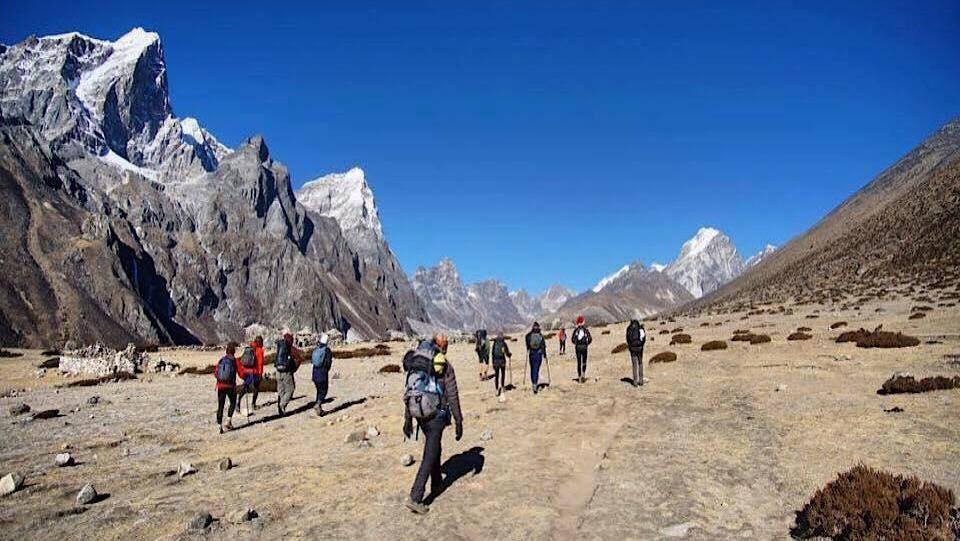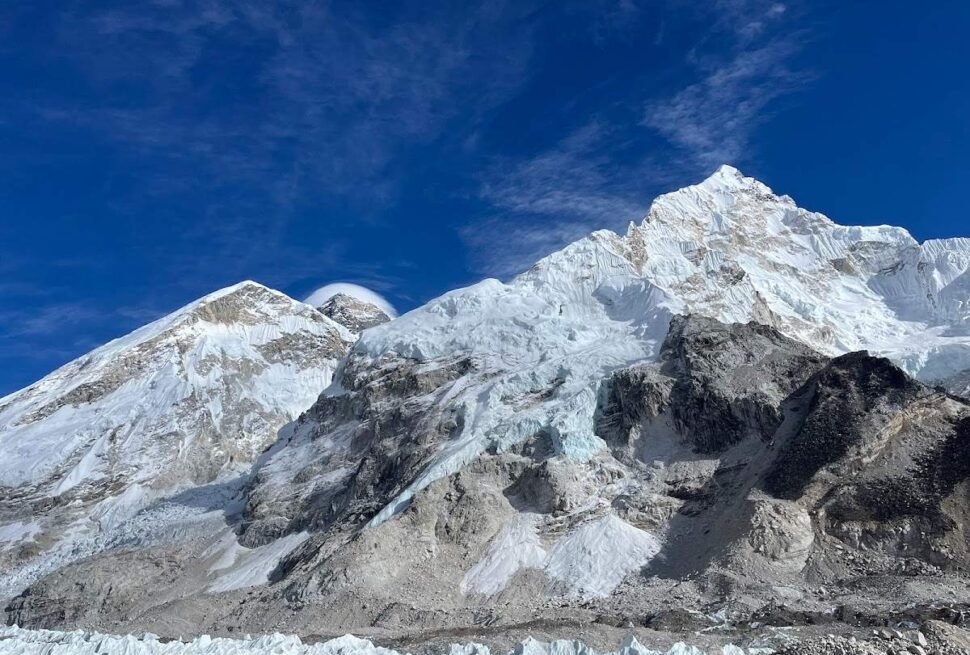
Trekking to Everest Base Camp with children is far more common than most first-time parents assume, and with the right preparation, pacing, and mindset it can be one of the most rewarding trips a family ever takes together. There is no official minimum age set by Nepal’s park authorities or the Khumbu Pasang Lhamu Rural Municipality, which means the real question is not whether a child is legally allowed on the trail but whether they are physically, mentally, and emotionally ready for a multi-day, high-altitude trek with basic teahouse accommodation.
This guide covers what age is realistic for a family Everest Base Camp attempt, how altitude and daily distances need to be adjusted for children, what gear and health precautions matter most, and how to structure an itinerary and choose an operator that will keep the trip safe, manageable, and genuinely enjoyable for the whole family rather than a forced march that nobody remembers fondly.
What Age Is Realistic for Everest Base Camp
Most experienced operators consider around 12 years old the practical starting point for a standard Everest Base Camp itinerary, since children at this age are generally better able to sustain five to seven hours of hiking on consecutive days, cope with basic teahouse lodging, and communicate clearly if they are feeling unwell, which matters enormously for early detection of altitude sickness. That said, there is no strict rule, and families with younger children, sometimes as young as nine or ten, have completed the trek successfully, though this typically requires prior trekking experience for the child, medical clearance beforehand, and a willingness to build in extra time and flexibility rather than following a standard fixed itinerary.
Very young children, toddlers and those under about seven or eight, are a different consideration entirely; while a small number of families have taken young children to lower-altitude viewpoints in the region, a full Everest Base Camp itinerary reaching altitudes above 5,000 meters is generally not recommended for children this young, both because of the physiological risks of altitude at a developing age and because the practical demands of the trek, cold, long days, basic facilities, are simply a lot to ask of a very young child regardless of fitness.
Why Altitude Affects Children Differently
Children are not simply small adults when it comes to altitude physiology, and several factors make them a genuine additional consideration on a high-altitude trek. Younger children in particular can struggle to articulate early symptoms of acute mountain sickness clearly, describing a headache or nausea in vague terms that are easy for an inexperienced parent to miss or attribute to tiredness or a minor stomach upset, which means close, active monitoring by parents and guides matters more with children than with adult trekkers who can self-report symptoms more reliably.
There is also ongoing medical discussion about how altitude specifically affects a still-developing body, and while there is no consensus that children are categorically more vulnerable to severe altitude illness than adults, the practical reality that they may not recognize or report symptoms early is itself a meaningful risk factor that responsible parents and operators need to actively plan around rather than assume will simply work out.
Medical Clearance and Pre-Trip Preparation
A visit to a doctor, ideally one with travel medicine or high-altitude experience, before booking a family Everest Base Camp trip is worth doing for every member of the family, but especially for children, to confirm there are no underlying heart, lung, or other conditions that would make high-altitude trekking inadvisable. This is also the right time to discuss whether Diamox, commonly used preventively for altitude sickness in adults, is appropriate for your child, since dosing and appropriateness differ from adult use and should be discussed directly with a physician rather than decided independently.
Beyond medical clearance, physical preparation matters just as much for children as for adults, arguably more so given that kids are less likely to have an existing base of long-distance hiking fitness. Regular family hikes in the months before departure, building up distance and elevation gain gradually, help both condition your child’s body and give you a realistic sense of their pace, stamina, and how they handle sustained physical effort, all valuable information for planning a realistic daily itinerary on the actual trek.
Structuring a Family-Friendly Itinerary
The single biggest adjustment for a family Everest Base Camp itinerary compared with a standard adult trip is pace: where a standard itinerary might run 12 to 14 days, a family trip with children benefits from stretching this to 16 days or more, with shorter daily walking distances, more frequent rest breaks, and additional acclimatization days built in beyond the standard schedule. The extra days cost more in guiding and accommodation fees but buy meaningfully more safety margin and a far more enjoyable pace for children who tire more easily than adult trekkers on long, sustained climbs.
Our detailed training guide for the Everest Base Camp trek offers a useful structure to adapt for family preparation, scaled down in intensity and distance for children while keeping the core principle of steady, progressive conditioning over several months rather than a last-minute push. Building in buffer days specifically for the family itinerary, rather than assuming children will keep pace with a standard adult schedule, is one of the most important planning decisions a family can make.
Keeping Children Engaged and Motivated
Long trekking days can be genuinely tedious for children even when they are physically capable of the distance, and keeping morale and motivation up is as much a part of a successful family trek as physical conditioning. Simple strategies that experienced family trekkers recommend include breaking the day into smaller, celebrated milestones rather than focusing on the full distance, bringing along a favorite small game or audiobook for rest breaks, and involving children in trip planning beforehand so they have some ownership over goals like spotting a particular animal, taking a specific photo, or reaching a symbolic landmark each day.
Many families also find that trekking with another family or a small group with children of a similar age transforms the experience, giving kids peer companionship on the trail that keeps energy and enthusiasm up in a way that trekking solely with adults often cannot replicate.
Gear and Packing for Kids
Children lose body heat faster than adults and often have a harder time regulating their own temperature during long, cold days at altitude, which makes proper layering even more important for kids than for adult trekkers. A warm, well-fitted down jacket, quality thermal base layers, a windproof and waterproof outer shell, and a warm hat and gloves are non-negotiable, and it is worth erring toward bringing more warm layers for a child than you think necessary rather than assuming they will simply tell you when they are cold, since children often do not recognize or communicate early cold-related discomfort as clearly as adults.
Footwear deserves special attention: children’s feet grow quickly, and trekking boots that are even slightly too big or too small cause blisters far more readily than well-fitted adult boots, so buy boots well in advance of the trip and break them in on training hikes rather than purchasing them just before departure. A comfortable, appropriately sized daypack for older children who want to carry some of their own gear, and a good pair of sunglasses given the intense high-altitude ultraviolet exposure, round out the essential kit, alongside the standard packing list items covered in our general Everest Base Camp trek packing list.
Choosing the Right Operator for a Family Trek
Not every trekking guide or operator has genuine experience managing the specific dynamics of a family trip with children, and this is one area where it is worth being direct in your questions before booking. Ask specifically whether the company has guided families with children of similar ages before, how they handle pacing when a child is tired or struggling, and what their protocol is for monitoring altitude symptoms in young trekkers who may not report them as clearly as adults.
A guide who is patient, genuinely enjoys working with children, and is willing to adjust the day’s plan around a child’s energy and mood, rather than rigidly following a fixed schedule, makes an enormous difference to how the trip actually feels for the whole family. Smaller, more flexible group sizes or a private family departure, rather than joining a larger mixed group of adult trekkers moving at a faster pace, is generally the better choice for families with children.
Helicopter Options and Backup Plans
One advantage families have that solo or adult trekking groups do not always consider as seriously is the availability of helicopter transport for part of the route, either as a planned time-saving measure on the way in, or as a contingency if a child becomes too fatigued or shows signs of altitude illness partway through the trek. Some families choose to fly in or out of a higher point on the route, such as Syangboche or directly to a lodge near Namche, to shorten the total trekking distance and reduce the physical demand on younger children, while still experiencing a meaningful portion of the trek on foot.
Whatever itinerary you choose, having a clear, pre-discussed plan for what happens if a child needs to turn back, whether that means a parent accompanying them down with a support guide while the rest of the family continues, or the whole family adjusting plans together, removes a layer of stress and decision-making pressure in the moment if it becomes necessary.
Food, Hydration and Health on the Trail
Keeping children well hydrated and adequately fed matters even more on a high-altitude trek than at home, since dehydration compounds altitude sickness symptoms and children are often less consistent than adults about drinking water regularly without reminders. Aim for three to four liters of fluid a day per person, more with exertion, and treat drinking water as a scheduled activity at each rest stop rather than something to rely on a child remembering to do independently.
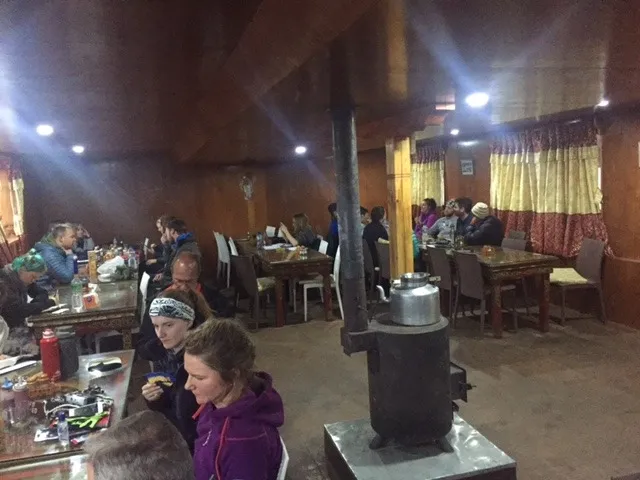
Teahouse menus along the Everest Base Camp trail are more varied than many first-time trekkers expect, with dal bhat, fried rice, noodle dishes, potato dishes, and simple pasta widely available, along with hot drinks and some packaged snacks, though families with particularly picky eaters may want to bring familiar snacks from home to supplement teahouse meals during the trek. Energy-dense foods matter more than usual given the caloric demands of trekking at altitude in the cold, and parents should watch that children are eating enough, not just enough to satisfy hunger but enough to sustain the physical demands of the day ahead.
Signs of Altitude Sickness Parents Should Watch For
Because children may not clearly articulate symptoms the way adults do, parents need to actively watch for behavioral changes as much as verbally reported symptoms: unusual irritability, loss of appetite, reduced interest in normally enjoyable activities, or complaints that seem vague or inconsistent can all be early signs of altitude illness that a child is struggling to describe more precisely. Persistent headache, vomiting, unsteady walking, or noticeably labored breathing at rest are more serious signs that require immediate descent regardless of how mild they initially appear.
Establish a simple, consistent way for your child to communicate how they are feeling throughout each day, whether that is a numbered scale for headache or fatigue or just a regular, low-pressure check-in at each rest stop, so that changes are noticed early rather than only becoming apparent once symptoms have already become serious. Our broader Everest Base Camp trek safety guide covers the general principles of altitude illness recognition and response that apply to the whole family, with the added emphasis for children that active, frequent monitoring matters more than passive symptom reporting.
Sample Family Itinerary Structure
A family-adapted Everest Base Camp itinerary typically extends the standard 12 to 14 day route to 16 or more days, adding extra acclimatization time and shortening some of the longer standard trekking days. After the flight into Lukla, the first few days to Phakding and Namche Bazaar are generally manageable for most children with reasonable prior hiking experience, and the standard acclimatization day at Namche remains just as important, if not more so, for a family group.
From Namche, rather than pushing straight through to Tengboche and Dingboche on the standard pace, a family itinerary often adds an extra night or splits longer stages into two shorter days, reaching Everest Base Camp itself several days later than a standard adult itinerary but with meaningfully lower fatigue and altitude risk at each stage. The Kala Patthar viewpoint climb, often done as a pre-dawn push on a standard adult itinerary, may be better attempted at a more relaxed time of day for families, prioritizing safety and a positive experience over the classic sunrise photo.
Cost Considerations for a Family Trek
A family Everest Base Camp itinerary generally costs more per person than a standard adult trek, both because the extended itinerary length adds guiding and accommodation days and because smaller, private family departures, rather than joining a larger shared group, typically carry a premium. Families should budget accordingly, using our published Everest Base Camp trek cost guide as a baseline and adjusting upward for the additional days and any private guide arrangements that make sense for their specific family.
Some costs may be lower for young children depending on operator policy, particularly around Lukla flight fares or certain permit categories, though this varies and is worth confirming directly rather than assuming, since Nepal’s permit and park fee structures do not universally apply reduced child rates in the way some other adventure tourism destinations do.
Travel Insurance for Children on the Trek
Confirming that your family’s travel insurance policy explicitly covers trekking at high altitude and includes helicopter evacuation is essential, and this applies to children just as much as adults, if not more so given the added importance of having a fast, reliable evacuation option available if a child shows signs of altitude illness. Some policies have specific provisions or exclusions related to minors that are worth checking directly with your insurer rather than assuming standard family travel insurance automatically extends full coverage to high-altitude trekking activities.
Our travel insurance guide for the Everest Base Camp trek explains what to look for in a policy, and families should pay particular attention to confirming that each family member’s policy, including any children, explicitly covers the specific altitude range of the planned itinerary and the cost of a helicopter evacuation, which can be extremely expensive without adequate coverage.
Building Resilience and Realistic Expectations
One of the most valuable things parents can do before a family Everest Base Camp trip is set realistic expectations with their children about what the days will actually involve: sustained walking, basic accommodation without the comforts of home, cold temperatures, and some genuinely difficult, tiring stretches, alongside the spectacular scenery and sense of accomplishment that make the trip worthwhile. Children who understand honestly what to expect, rather than being surprised by the difficulty partway through, generally handle the physical and mental challenges of the trek considerably better.
Equally important is being genuinely willing, as a parent, to turn back or adjust the itinerary if a child is struggling, rather than pushing toward Base Camp regardless of how the child is coping. The mountain and the trail will still be there for a future attempt; a family’s physical and emotional wellbeing on this specific trip should always take priority over reaching a specific destination on a specific schedule.
What is the minimum age for the Everest Base Camp trek
There is no official legal minimum age, but most experienced operators recommend around 12 years old as a practical starting point for a standard itinerary, given the physical demands of five to seven hour trekking days and the importance of a child being able to communicate clearly about how they are feeling at altitude. Some families successfully bring younger children, typically nine or ten years old, but this generally requires prior trekking experience, medical clearance, and a significantly extended, more flexible itinerary.
Can toddlers or very young children go to Everest Base Camp
A full trek to Everest Base Camp itself, at over 5,300 meters, is generally not recommended for toddlers or very young children given the altitude and physical demands involved, though some families do bring young children to lower-altitude viewpoints in the region such as Namche Bazaar without continuing to the higher sections of trail. If you are considering a Khumbu region trip with a very young child, discuss specific plans with an experienced operator and your pediatrician rather than assuming a standard itinerary can simply be adapted.
Do children need a permit for the Everest Base Camp trek
Yes, children require the same Sagarmatha National Park entry permit and Khumbu Pasang Lhamu Rural Municipality permit as adult trekkers, purchased in Nepal as part of the standard trip logistics. There is no separate child permit category, and pricing is generally the same regardless of age, though it is worth confirming current policy with your operator since fee structures can be updated periodically.
How much walking can a 12-year-old realistically handle each day
A fit, well-prepared 12-year-old with some prior hiking experience can generally handle four to six hours of trekking on varied terrain per day, though this varies considerably based on individual fitness, prior altitude exposure, and how well the itinerary paces cumulative fatigue over multiple consecutive days. Building this fitness gradually through training hikes in the months before departure, and choosing an extended family itinerary with shorter daily distances than a standard adult trip, gives the best chance of children handling each day comfortably rather than pushing through exhaustion.
Cultural and Educational Value for Children
Beyond the physical adventure, a family trek to Everest Base Camp offers children a genuinely rich cultural and educational experience that is difficult to replicate through any other kind of family travel. Passing through Sherpa villages, visiting Buddhist monasteries such as the Tengboche Gompa, and seeing prayer flags, mani walls, and chortens along the trail gives children direct, memorable exposure to a culture and way of life very different from their own, framed by some of the most dramatic mountain scenery on the planet.
Many parents who have taken children on this trek describe it as a formative experience that shapes how their children think about travel, physical challenge, and the wider world for years afterward, a meaningful return on the extra planning and patience a family itinerary requires compared with a standard adult trekking trip.
Alternatives to the Full Everest Base Camp Trek for Families
Families who are drawn to the Everest region but unsure whether the full Base Camp trek is right for their children, whether due to age, fitness, or available time, have several strong alternative options that offer a genuine taste of the Khumbu without the full altitude and distance commitment. A shorter itinerary to Namche Bazaar and the Everest View Hotel, sitting at a lower and more forgiving altitude, gives families dramatic mountain views, an authentic Sherpa village experience, and a real sense of the region without pushing children to the altitudes above 4,000 or 5,000 meters that the full trek involves.
Another option some families choose is combining a shorter trek with a scenic mountain flight, experiencing part of the trail on foot before flying out from a village along the route rather than continuing all the way to Base Camp and back on foot. This approach lets families tailor the physical demand of the trip to their children’s actual capability and interest rather than committing to a fixed, all-or-nothing itinerary from the outset.
Packing List Essentials Specific to Family Trekking
In addition to the standard packing list items every Everest Base Camp trekker needs, families traveling with children should pay particular attention to a few kid-specific essentials: extra changes of warm socks, since children are more prone to getting their feet wet and cold on the trail, a headlamp sized and fitted properly for a child’s head rather than an oversized adult one, and simple entertainment items like a deck of cards or a small travel game for the long evenings in teahouses once the day’s trekking is done.
A basic first aid kit tailored to your family’s specific needs, including any regular medications your child takes and clear written instructions in case a guide or another adult needs to administer something in an emergency, is worth assembling carefully before departure. Sun protection deserves particular attention for children, given how much more intense ultraviolet exposure is at high altitude; a good sunhat, high-SPF sunscreen reapplied regularly, and proper sunglasses are essential rather than optional.
Involving Children in the Planning Process
Children who have some say in planning the trip, whether that means researching a specific aspect of Sherpa culture beforehand, choosing which optional side trip to prioritize, or simply having input on what snacks to pack, tend to arrive more invested in the experience and more resilient when the trek gets genuinely difficult. Framing the trip as a shared family adventure rather than something being done to or for children, with real input into the planning process, changes how kids engage with the challenges along the way.
Setting a few simple, achievable personal goals for each child, separate from the overall destination of Base Camp itself, such as learning a few words of Nepali, identifying a certain number of different mountain peaks, or keeping a simple trip journal, gives children something to focus on and feel proud of regardless of how far the family ultimately travels on any given day.
Weather and Seasonal Considerations for Family Trips
Spring, from March through May, and autumn, from late September through November, remain the best seasons for a family Everest Base Camp trek, offering the most stable weather and moderate temperatures, exactly as they are for standard adult itineraries. These seasons also tend to have more daylight hours, which matters for families building in shorter, more relaxed daily walking distances, since a family itinerary benefits from not needing to rush against an early sunset.
Families should be particularly cautious about attempting the trek during winter or monsoon season; the colder temperatures and shorter daylight hours of winter add meaningfully to the physical demands on children, while the poor visibility, leeches, and slippery trail conditions of monsoon season create unnecessary additional challenges that are entirely avoidable by simply choosing a spring or autumn departure window instead.
Working With Guides Who Understand Kids
Beyond general trekking competence, a guide working with a family group benefits from genuine patience and an ability to keep children engaged, whether through simple trailside games, teaching a few words of the local language, or just maintaining an upbeat, encouraging presence through the harder stretches of each day. This is a different skill set from guiding a group of fit adult trekkers focused purely on covering distance efficiently, and it is worth discussing directly with your operator whether your assigned guide has specific experience and genuine enthusiasm for working with children.
Many families find that a guide who has children of their own, or who has specifically requested and enjoyed family trekking assignments in the past, brings a noticeably different and more supportive energy to the trip than a guide who is simply assigned the booking without any particular interest in working with young trekkers.
Is the Everest Base Camp trek safe for children
With appropriate preparation, an extended and flexible itinerary, close altitude monitoring, proper medical clearance, and an experienced guide comfortable working with children, the trek can be undertaken safely by many families, though it does carry genuine risks related to altitude that should never be underestimated or treated casually. The decision to bring a specific child on this specific trip should be made thoughtfully, based on that child’s individual fitness, prior experience, and ability to communicate how they are feeling, rather than assumed to be automatically fine simply because other families have done it successfully.
What is the best age gap for siblings trekking together
There is no strict rule, but families with children of noticeably different ages and fitness levels sometimes find it easier to split into two paced groups on particularly demanding days, with a parent or guide accompanying each, rather than forcing a younger or less fit child to match an older sibling’s pace throughout. Discussing this possibility with your operator in advance, including whether an assistant guide might be useful for a family with a wide age range among the children, is worth doing during the planning stage rather than improvising once on the trail.
Communication and Connectivity for Peace of Mind
Many family trekkers appreciate being able to stay in occasional contact with relatives back home, both for peace of mind and to share the experience as it happens, and the Everest Base Camp trail has more connectivity options than many first-time trekkers expect. WiFi and mobile data cards are available at most teahouses and villages along the route for a fee, though speed and reliability decrease at higher altitude and can be unpredictable, so families should not rely on constant connectivity but can generally expect at least periodic access to send updates and photos.
Having a clear plan for how and when you will check in with family back home, and setting realistic expectations that connectivity may be limited or unavailable for stretches of the trek, particularly at the higher altitude stops, helps avoid unnecessary worry on both ends. Some families find it valuable to prepare grandparents or other relatives in advance for the likelihood of gaps in communication, framing it as part of the genuine remoteness and adventure of the trip rather than a cause for concern.
Rest Days and Side Activities for Kids
Acclimatization days, essential for the whole family’s altitude safety, can also be reframed as valuable rest and recovery opportunities specifically for children, who often need more downtime than adult trekkers realize to recover from the cumulative physical demand of consecutive trekking days. Rather than treating acclimatization days purely as a medical necessity, build in genuinely enjoyable, low-exertion activities: a short exploratory walk around Namche Bazaar’s shops and bakeries, a visit to the Sherpa culture museum, or simply unstructured downtime for children to rest, read, or play in the lodge.
The Everest View Hotel side trip from Namche, a relatively gentle walk with spectacular views, is a popular acclimatization-day activity that many children genuinely enjoy rather than experience as another demanding trekking day, making it a good example of how to combine the physical benefit of light activity at altitude with something that still feels like a treat rather than an obligation.
Plan Your Family Everest Base Camp Adventure
A family trek to Everest Base Camp asks more of the planning process than a standard adult trip, more time, more flexibility, closer health monitoring, and a guide team genuinely equipped to work with children, but for families willing to invest that extra preparation, it delivers an extraordinary shared experience that few other family trips can match. The mountains, the culture, and the sense of shared accomplishment reward families who approach the trek thoughtfully rather than simply scaling down an adult itinerary and hoping for the best.
If you are considering bringing your children to Everest Base Camp, get in touch and we can help you design a properly paced family itinerary, with the acclimatization time, flexible daily distances, and experienced, child-friendly guiding that gives your family the best chance of an unforgettable and genuinely safe adventure together.
Common Mistakes Families Make on This Trek
The most common mistake is underestimating how much slower and more variable a child’s pace and energy can be compared to adult trekkers, leading families to book a standard adult-length itinerary and then struggle against a schedule that leaves no room for a bad day. A second common mistake is not taking early, vague symptom complaints from children seriously enough, assuming grumpiness or a mild headache is simply normal tiredness rather than a possible early sign of altitude illness that deserves a closer look and, if in doubt, a pause in ascent.
A third mistake is over-packing children with the expectation that they will carry a full daypack the way an adult trekker would; while older children who want to carry some of their own gear should be encouraged to do so, loading a child down with excessive weight adds unnecessary fatigue on a trek that is already physically demanding. Finally, some families underestimate the psychological difficulty of the trek for children as much as the physical difficulty, and preparing kids honestly for long, sometimes boring or uncomfortable stretches, not just the exciting parts, leads to a much better experience than a trip that is oversold as constant adventure.
Should we hire a private guide for a family trip
Many families find a private guide, or at minimum a private family departure rather than joining a larger mixed group of adult trekkers, is worth the additional cost, since it allows the itinerary to be genuinely paced around your specific children rather than the average pace of a larger group with different priorities and fitness levels. A private arrangement also gives more flexibility to adjust plans day by day based on how children are actually feeling, rather than needing to keep pace with fellow trekkers who may be on a fixed, less flexible schedule.
What if only one child wants to turn back
Discuss this scenario with your operator during planning, since it is a realistic possibility on any family trek with more than one child. A common solution is having one parent and a support guide accompany the child who wants or needs to turn back while the rest of the family continues with the primary guide, reuniting at a predetermined point, though this requires enough staff and advance planning to arrange smoothly rather than improvising on the day it happens.
Teenagers on the Everest Base Camp Trek
Teenagers, roughly 13 and older, are generally well suited to a closer-to-standard Everest Base Camp itinerary than younger children, provided they have built reasonable fitness beforehand and have some prior hiking experience, even if not specifically at altitude. Many teenagers actually thrive on the physical and mental challenge of the trek, and some families find that a teenager is more resilient to the demanding stretches of the trail than a same-aged adult who has not prepared as thoroughly, given how much conditioning and mindset matter relative to raw age.
That said, teenagers are not immune to altitude illness and can be just as susceptible as adults, so the same close monitoring and honest symptom reporting standards apply regardless of how physically capable a teenager appears to be. Involving teenagers directly in trip planning and training, treating them as genuine partners in preparing for the trek rather than simply bringing them along, tends to produce both better physical preparation and a more engaged, positive attitude on the trail itself.
Do children get altitude sickness more often than adults
The evidence on this is not entirely conclusive, and children are not necessarily more physiologically susceptible to altitude sickness than adults in every case, but the practical risk is often higher simply because children may not recognize or communicate early symptoms as reliably. This makes close parental and guide monitoring, rather than relying on a child to self-report clearly, the single most important safety practice for managing altitude risk with young trekkers on this route.
Whatever your family’s specific circumstances, thoughtful preparation, an honest assessment of your children’s readiness, and a trekking partner genuinely equipped to support a family itinerary are what turn Everest Base Camp from an intimidating idea into an achievable, deeply memorable family adventure.
Booking Timeline for a Family Trek
Given the additional planning involved, medical consultations, training buildup, and often the need for a private or small custom group departure, families should generally start planning a good six to twelve months ahead of a target trip date rather than booking on short notice. This gives enough time for children to build genuine fitness through a structured training period, for parents to arrange medical clearance and appropriate travel insurance, and for your chosen operator to build a properly customized itinerary around your family’s specific needs rather than fitting you into a generic fixed departure designed for adult trekkers.
Popular spring and autumn departure windows can also fill up for private and small group family departures, so booking early gives you the best choice of dates and the most flexibility to work with an operator on a genuinely tailored itinerary rather than accepting whatever dates happen to be available closer to your desired travel window.
What should we tell our children before the trip
Be honest about both the difficulty and the reward: explain that there will be hard days, cold mornings, and stretches that feel boring or uncomfortable, alongside genuinely spectacular scenery, interesting new places, and a real sense of accomplishment at the end. Children who go in with realistic expectations, rather than an oversold vision of nonstop adventure, generally handle the inevitable hard moments with more resilience and come away with a more positive overall memory of the trip.
Are there family-specific safety statistics for this trek
There is no centralized public database tracking outcomes specifically for family or child trekkers on the Everest Base Camp route, so families are largely relying on the collective experience and judgment of operators who have guided children successfully, combined with general altitude medicine guidance that applies across all age groups. This is exactly why choosing an operator with genuine, specific experience guiding families matters so much; their accumulated practical knowledge, rather than any formal statistic, is what actually informs safe, sensible decisions on the trail.
Asking a prospective operator directly how many family departures with children they have guided, and being willing to hear an honest answer even if it means being told a particular itinerary or timeframe is not advisable for your specific children, is one of the most useful things a parent can do during the planning process.
Bringing children to Everest Base Camp is a genuinely significant undertaking, but for families who prepare thoughtfully, choose the right operator, and stay flexible and attentive throughout, it can become one of the defining shared adventures of a childhood, a story your children will carry with them and, quite possibly, want to repeat with their own families one day.
Reach out to our team with your children’s ages, fitness levels, and travel dates, and we will help you design a family itinerary with the pacing, acclimatization, and experienced, child-friendly guiding that gives your whole family the best chance of reaching Base Camp together, safely and happily.
However you choose to approach it, whether the full Base Camp trek, a shorter family-friendly taste of the Khumbu, or something in between, the Everest region offers families an unmatched combination of adventure, culture, and natural beauty, well worth the extra planning it takes to bring children along for the journey.
Start the conversation with our team today, and let’s plan a family adventure to the roof of the world that your children will remember for the rest of their lives.
Safe travels, and see you on the trail.
A final word for cautious parents
It is completely normal to feel nervous about the idea of taking children to altitudes above 5,000 meters, and that instinct toward caution is healthy, not something to override simply because other families have made the trip successfully. Trust your own read of your child’s readiness above any general guideline, lean on an operator who will give you honest, specific advice rather than simply telling you what you want to hear, and remember that a shorter, lower-altitude family trip in the same region is always a completely valid and rewarding alternative if the full Base Camp itinerary does not feel right for your family this time around.