Food on the Everest Base Camp trek is one of the unexpected pleasures of the journey. Teahouses along the route serve a surprisingly diverse menu of Nepali and international dishes — much more than most first-timers expect. That said, food choices narrow at higher elevations, prices increase significantly above Namche Bazaar, and altitude suppresses appetite in ways that make eating intentionally important for your energy levels and acclimatisation.
What Do Teahouses Serve?
Teahouses on the EBC route follow a fairly standard menu format. Breakfast, lunch, and dinner are served throughout the day. Most lodges have printed menus — though what’s actually available depends on what supplies have come up the valley recently. At lower elevations, menus are more varied; at high-altitude stops like Lobuche and Gorak Shep, options narrow considerably.
Planning Your Everest Trek?
Get local expert advice on cost, itinerary and the best time to go.
Standard teahouse menu items:
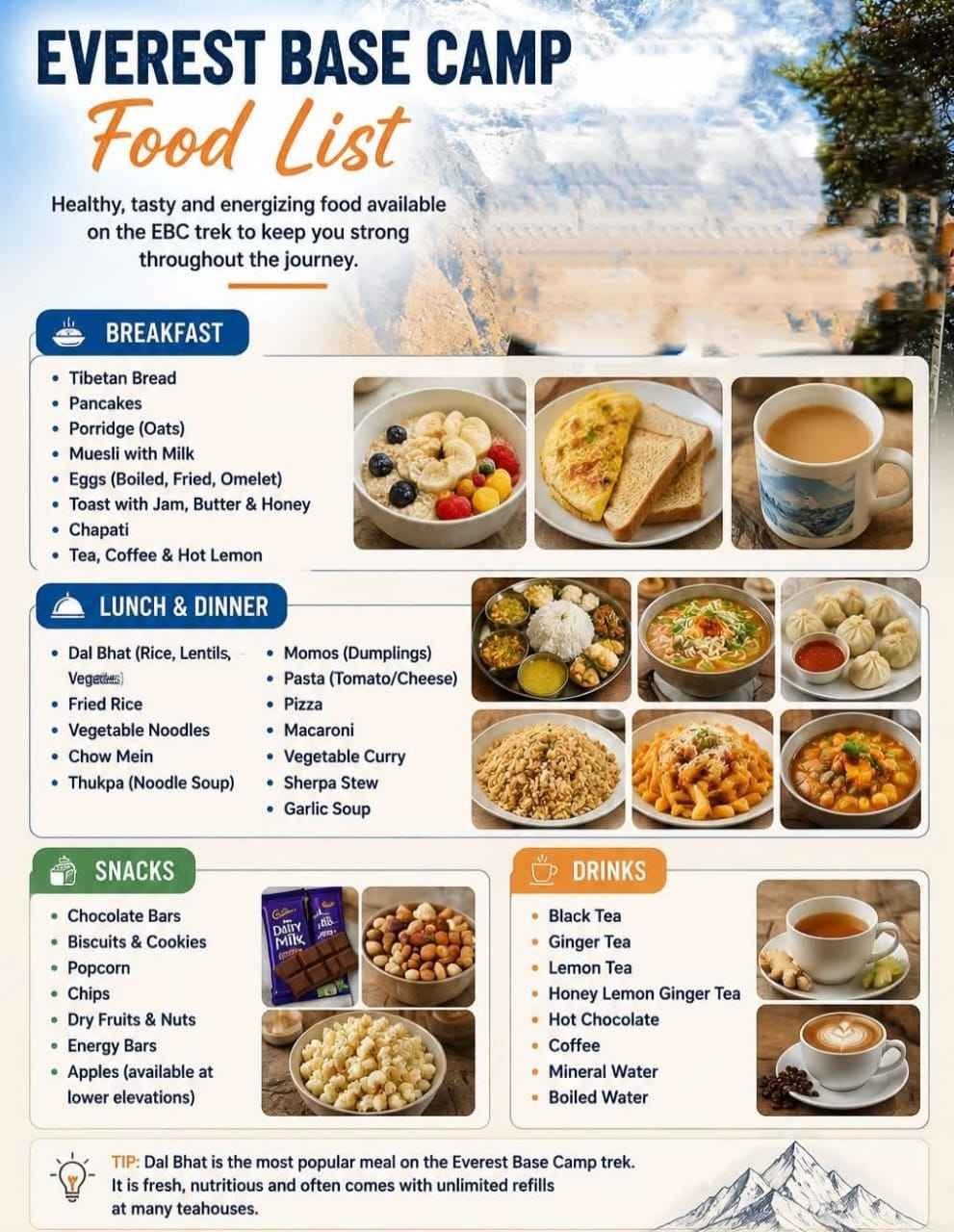
Breakfast Options
- Porridge (usually with honey and milk)
- Tibetan bread (flat, pan-fried bread) with jam, honey, or peanut butter
- Toast with egg, jam, or butter
- Omelette or fried/boiled eggs
- Muesli with milk
- Pancakes (popular but often heavy before a long walk)
- Tsampa porridge (roasted barley flour — a Sherpa traditional staple)
Lunch and Dinner Options
- Dal bhat — the most important dish on the trek (see below)
- Fried rice with vegetables or egg
- Noodle soup or thukpa (Tibetan-style noodle soup)
- Sherpa stew (potato, noodles, vegetables)
- Momos (dumplings, usually vegetable or meat)
- Spaghetti or pasta with tomato or garlic sauce
- Pizza (available at some teahouses in Namche and Tengboche)
- Vegetable curry
- Spring rolls
- Soup (vegetable, potato, tomato)
Dal Bhat: The Essential EBC Trek Meal
Dal bhat — rice with lentil soup, curried vegetables, and often a small side dish — is the traditional Nepali staple and the food of choice for most experienced EBC trekkers. It has several important advantages on the trail:
- Calorie-dense and filling — provides sustained energy for long trekking days
- Freshly cooked — unlike imported or preserved food, dal bhat is always cooked to order
- Nutritionally complete — carbohydrates (rice), protein (lentils), and vegetables
- Free refills — most teahouses give you unlimited dal bhat refills; eat as much as you need
- Widely available — served at every teahouse on the route, even the most remote
The local saying is: “Dal bhat power, 24 hour.” Many Sherpa guides and porters eat dal bhat twice a day throughout the trek. If you’re unsure what to order, ordering dal bhat is almost always the right choice.
How Food Quality Changes with Altitude
All supplies above Namche Bazaar are carried in by porter or yak — there are no roads above Lukla. This means food options become simpler and more expensive as you gain elevation.
| Altitude Zone | Example Stops | Food Variety | Food Quality |
|---|---|---|---|
| Below 3,500m | Phakding, Namche | High — full teahouse menus, bakeries, coffee shops in Namche | Good |
| 3,500–4,500m | Tengboche, Dingboche | Medium — standard teahouse menu, some variety | Good |
| 4,500–5,000m | Lobuche | Limited — basic menu items, supplies sporadic | Adequate |
| 5,000m+ | Gorak Shep | Very limited — basic staples only | Basic |
Namche Bazaar is worth noting specially — it has several bakeries, coffee shops, and restaurants that serve genuinely good food including pastries, cakes, espresso coffee, and fresh baked goods. It feels surprisingly cosmopolitan for a mountain village at 3,440m. Stock up on snacks in Namche before heading higher.
Drinks on the EBC Trek
Staying hydrated is critical at altitude — aim for 3–4 litres of fluid per day. Options include:
- Purified water — bring a water filter, purification tablets, or Steripen UV purifier. Clean water is available from taps at teahouses, which can be purified and is much cheaper than buying bottled water. Bottled water at Gorak Shep can cost NPR 400–600+ per litre.
- Ginger tea — a trekker favourite, available at every teahouse; helps with nausea and warms you up
- Butter tea (po cha) — traditional Sherpa/Tibetan drink; salty and made with yak butter; an acquired taste but warming at altitude
- Black tea, milk tea (chai) — always available
- Instant coffee or Nescafé — real espresso is available in Namche; above that, instant is the norm
- Hot lemon with honey — popular for sore throats and vitamin C
- Juice drinks — often Tang-style powder drinks; adds electrolytes if you’re using purified water
Avoid alcohol above 3,500m. Alcohol dehydrates you and disrupts sleep quality at altitude, both of which worsen acclimatisation. Save the beer for Namche or your return to Lukla.
Calorie Needs on the Trek
Trekking 6–7 hours per day at altitude burns significantly more calories than normal daily activity — estimates suggest 400–600 calories per hour of trekking at altitude. Over a full trekking day, you may burn 3,000–4,000 calories.
The problem: altitude suppresses appetite. Many trekkers find they simply don’t feel hungry above 4,000m, even when their body needs calories for energy, warmth, and acclimatisation. Eat regularly and deliberately, even if you don’t feel particularly hungry. Small, frequent meals are often better than three large ones at altitude.
Good high-energy snacks to carry in your day pack:
- Chocolate or energy bars (buy in Kathmandu or Namche — prices increase significantly higher up)
- Dried fruit and nuts
- Biscuits or crackers
- Glucose tablets or sports gels
Dietary Requirements on the EBC Trek
Vegetarian and Vegan
The EBC trek is very accessible for vegetarians. Most teahouse menus are predominantly vegetarian — dal bhat, vegetable fried rice, noodle soups, and vegetable curries are the backbone of the menu. Strict vegans should note that many dishes include butter, milk, or egg, but with clear communication to teahouse cooks, vegan meals are manageable. Carry some supplemental protein snacks (nuts, protein bars) for the highest altitude sections where choices narrow.
Gluten-Free
Gluten-free options are limited on the standard EBC route. Dal bhat (rice-based) and fried rice are safe, but many other dishes include wheat flour, soy sauce, or wheat-based noodles. If you have coeliac disease, carry supplemental food from Kathmandu and communicate clearly about your requirements at each teahouse.
Food Safety
Gastrointestinal illness is a real risk on the EBC trek. Hygiene standards vary between teahouses, and trail food is occasionally contaminated with bacteria that cause stomach upset. Some practical precautions:
- Eat freshly cooked, hot food — avoid salads or unpeeled raw vegetables
- Drink purified or bottled water only — never drink from streams or taps without purification
- Wash hands before eating — use hand sanitiser when soap isn’t available
- Avoid ice in drinks (the water it’s made from may not be purified)
- Dal bhat is almost always safe — it’s cooked to order at high temperature
Carry rehydration salts and anti-diarrhoeal medication in your first aid kit in case stomach illness strikes. A prescription antibiotic (discuss with your doctor) can be taken if illness is severe.
Food Costs on the EBC Trek
Budget approximately USD $25–$50 per day on food and drinks. Prices increase significantly above Namche Bazaar due to supply chain costs. At Gorak Shep (5,164m), a bowl of dal bhat can cost 3–4 times what it would at Namche. Save money by ordering local dishes (dal bhat, noodle soup) rather than imported food items, and by bringing your own snacks from lower elevations.
Trek Well-Fed with Everest Trekking Company
Our guides know exactly which teahouses serve the best food at each stop and advise trekkers daily on what to eat for optimal energy and acclimatisation. We also carry supplemental snacks for our groups on the highest sections of the route where teahouse food becomes very limited.
View our Everest Base Camp Trek packages for more information, or contact us with any questions about food and dietary requirements on the trail.
Related EBC Trek Guides
Planning Your Everest Trek?
Get local expert advice on cost, itinerary and the best time to go.