Food on the Everest Base Camp trek is a topic most guides ignore until you are already in the mountains and craving a meal that makes sense at 5,000 metres. This guide covers what to eat, what it costs, what is available at each altitude zone, and how to fuel your body for one of the world’s most demanding multi-week hikes.
Quick Facts: EBC Trek Food
| Daily food budget (teahouse) | $15 to $35 USD per day |
| Meals included in packages | Breakfast and dinner (most operators); some include lunch |
| Calories needed per day | 3,000 to 4,500+ kcal (trekking days) |
| Best foods at altitude | Carbohydrate-heavy: dal bhat, porridge, noodles, potatoes |
| Foods to avoid at altitude | Heavy meat dishes, alcohol, large portions before bed |
| Most remote food point | Gorak Shep (5,140 m) and Everest Base Camp |
What Type of Food Is Available on the EBC Trek?
Teahouses along the EBC trail serve a mix of Nepali, Tibetan, and Western dishes. The menu is remarkably consistent across the entire route. Teahouse owners buy supplies in bulk from Namche Bazaar or fly goods in by helicopter, so you will see the same dishes from Phakding to Gorak Shep with prices rising at each altitude gain.
Menu Options by Category
Nepali and Local Dishes
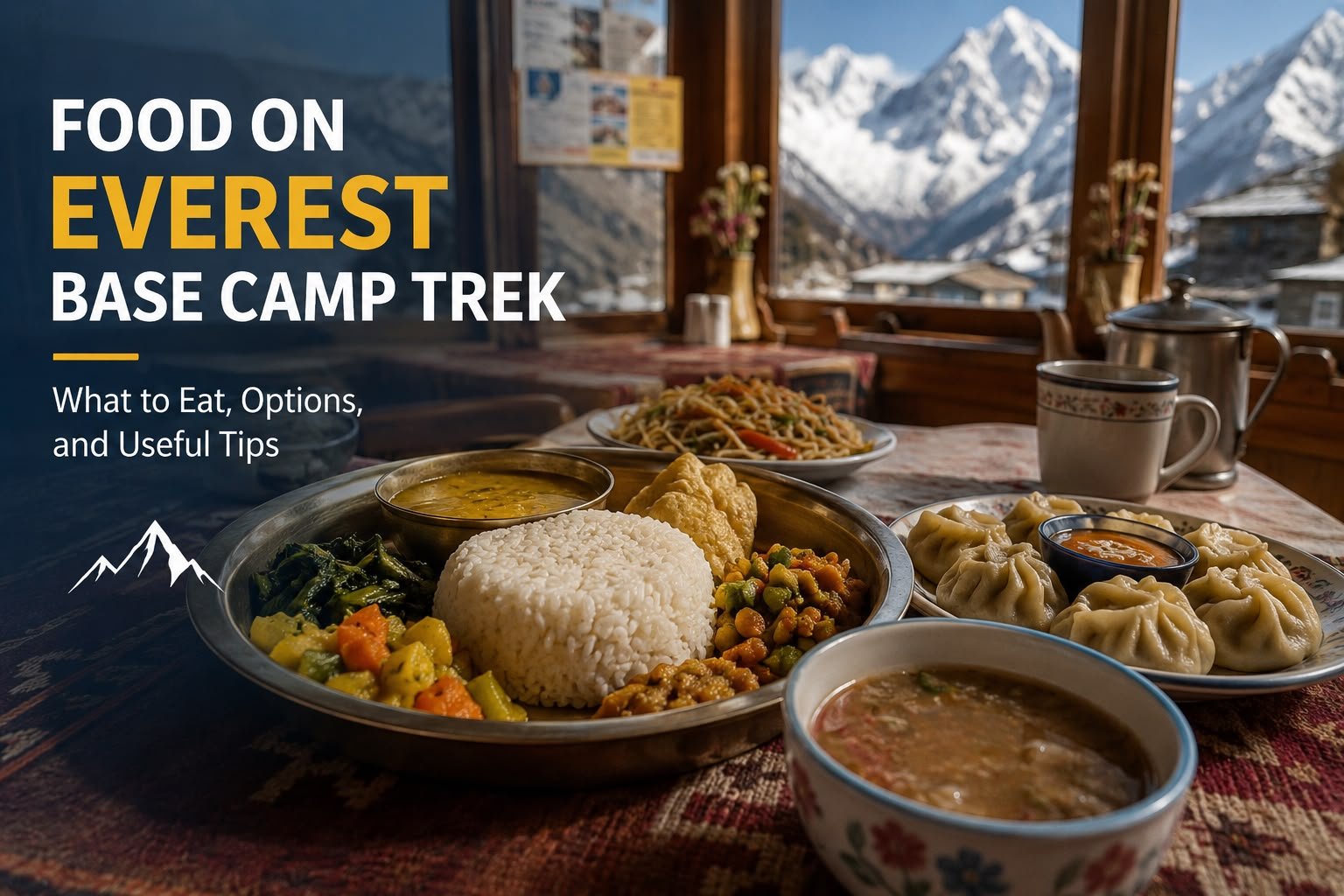
Dal Bhat is the trekker staple and for good reason. A complete carbohydrate and protein meal (lentil soup, rice, vegetable curry, pickled vegetables) that digests easily at altitude. Most teahouses offer unlimited refills of rice and curry. Highly recommended as your main calorie source.
Sherpa stew (Tsampa porridge) is roasted barley flour mixed with butter tea, a traditional Sherpa food and extremely high in energy. Not widely available on menus but worth asking for.
Tibetan bread is thick pan-fried dough bread, often served with jam, honey, or butter. Good breakfast or snack option.
Thukpa is Tibetan noodle soup with vegetables and sometimes egg or meat. Very popular at altitude, easy on digestion, warming.
Tsampa soup is roasted barley broth. Simple, light, and easy to digest.
Western-Style Dishes
Teahouses above Namche serve pasta, mashed potatoes, vegetable soup, pancakes, French toast, and even basic pizza at some lodges. Quality drops and prices rise with altitude. Ingredients are the same as Namche-level but transported further, so always check freshness of meat dishes.
Breakfast Options
Standard teahouse breakfasts: porridge (with optional apple, honey, or cinnamon), muesli with milk, scrambled or fried eggs, toast, pancakes, Tibetan bread with jam, hot cereal. Porridge and eggs are the most altitude-friendly options as both are easy to digest and provide sustained energy for morning ascents.
Food by Altitude Zone
| Zone | Village Range | Food Quality | Menu Width | Food Cost |
|---|---|---|---|---|
| Lower Khumbu | Lukla to Phakding (2,610-2,860 m) | Excellent | Wide | $4-8 per dish |
| Namche Zone | Namche Bazaar (3,440 m) | Very good, bakeries, cafes | Widest | $5-12 per dish |
| Mid-Khumbu | Tengboche to Dingboche (3,860-4,410 m) | Good | Moderate | $6-15 per dish |
| High Khumbu | Lobuche to Gorak Shep (4,940-5,140 m) | Basic | Limited | $8-20 per dish |
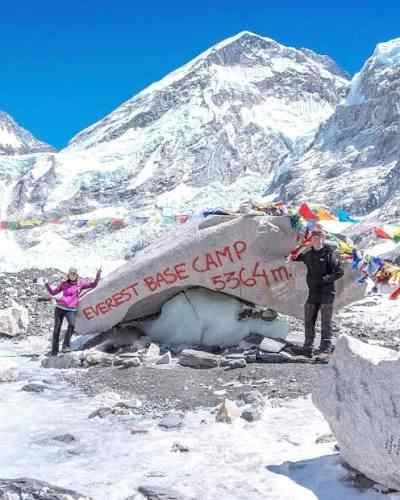
| EBC (day visit) | Base Camp (5,364 m) | No food available | N/A | N/A |
Village-by-Village Food Guide
Lukla and Phakding (2,610-2,840 m)
Good variety, relatively cheap, fresh ingredients available. Ideal place to eat a big meal before heading up. Local vegetables, eggs, and dairy at their freshest. Most people eat one meal in Lukla then continue to Phakding for the night.
Namche Bazaar (3,440 m)
The food hub of the Khumbu. Namche has bakeries with fresh cinnamon rolls and croissants, espresso cafes, a small supermarket, and restaurants with full Western menus. If there is any luxury eating to be done on the EBC trail, Namche is where you do it. Many trekkers overindulge in Namche on the first rest day. Keep it moderate and stay hydrated.
Tengboche (3,860 m)
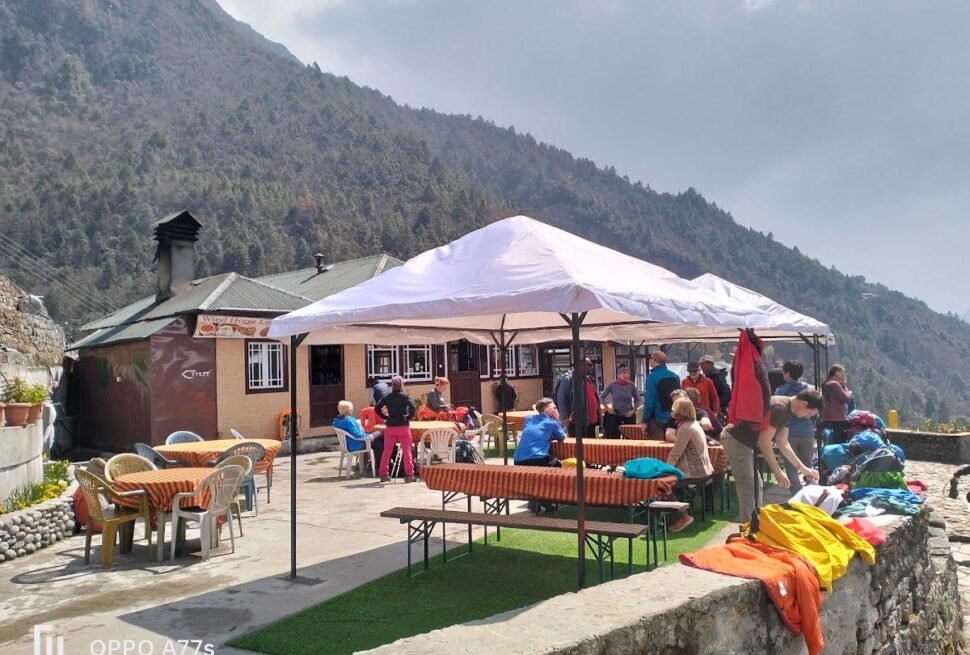
Good teahouses near the famous monastery. Cozy dining rooms with yak-dung stoves. Standard menu, all the classics available. The two-night stay at Namche means by Tengboche you are properly acclimatized and appetite is still good.
Dingboche and Pheriche (4,280-4,410 m)
Your appetite will begin to change here. Higher altitude means slower digestion. Focus on soups, dal bhat, and carbohydrate-light meals. Avoid heavy meat dishes. Garlic soup is widely recommended for acclimatization and available at every teahouse.
Lobuche (4,940 m)
Food becomes more limited and expensive. Menu narrows. Dal bhat, noodle soup, and Tibetan bread are the reliable choices. Hot drinks are essential here for warmth and hydration. Appetite often drops noticeably above 4,800 m.
Gorak Shep (5,140 m)
The last teahouse village before EBC. Very limited menu, expensive, and food quality is basic. You are here for one to two nights. Focus on high-carb meals, stay hydrated, eat even if appetite is low. This is the altitude where many trekkers find it hardest to eat.
Food Costs on the EBC Trek
| Item | Lower Trail (Phakding area) | Namche Bazaar | Dingboche | Gorak Shep |
|---|---|---|---|---|
| Dal Bhat | $5-7 | $7-10 | $10-14 | $15-20 |
| Pasta / Noodles | $5-8 | $7-12 | $10-15 | $15-20 |
| Porridge | $3-5 | $4-7 | $6-10 | $10-15 |
| Eggs (2) | $3-5 | $4-6 | $6-9 | $10-14 |
| Tea / Coffee | $1-2 | $2-4 | $3-6 | $5-8 |
| Hot Lemon / Ginger | $1-2 | $2-3 | $3-5 | $5-7 |
| Snickers / Chocolate | $1-2 | $2-3 | $3-5 | $5-8 |
Eating Right at Altitude: Nutrition Tips
Why Appetite Drops at Altitude
At altitude the body diverts blood flow to vital organs and away from digestion. Appetite-suppressing hormones increase. This is normal. The mistake trekkers make is listening to their appetite and eating less when the body actually needs more calories at altitude, not fewer.
Carbohydrates Are Your Best Friend
At altitude, carbohydrates are easier to metabolize using less oxygen than fats or protein. This is the science behind why dal bhat outperforms steak at 5,000 metres. Rice, potatoes, noodles, bread, and porridge should form the majority of your diet above 4,000 m. The Everest Base Camp trek preparation guide goes into more detail on nutrition training before departure.
Hydration and Food Together
Altitude suppresses thirst as well as appetite. Force fluids alongside meals. Hot lemon, ginger tea, and plain hot water between meals are all beneficial. Aim for 3 to 4 litres of water per day at altitude. Avoid alcohol, which dehydrates and impairs acclimatization.
Garlic Soup: The Altitude Classic
Every teahouse in the Khumbu serves garlic soup. Whether it genuinely aids acclimatization (as many Sherpas and experienced trekkers believe) or works via the extra hydration and warming effect, it is a reliable and comforting choice from Tengboche upward. It will not hurt and may help.
Food Safety and What to Avoid
Meat at very high altitudes: Meat is flown in or yak-carried from Namche. Above Dingboche, freshness and cold storage are unreliable. Stick to vegetarian dishes above 4,000 m to avoid food poisoning at altitude where evacuation is both difficult and expensive.
Salads and raw vegetables: Water used to wash salad vegetables may not be purified at small teahouses. Avoid raw salads above Namche. Cooked vegetables are safer throughout.
Tap water and untreated water: Never drink tap water or stream water without treating. Use water purification tablets, a Steripen UV purifier, or a filter bottle. The EBC trek packing list covers the best water purification options.
Large portions before sleep: Digestion is slower at altitude and overnight. Eating a very heavy dinner means disrupted sleep, which impairs acclimatization. Eat a medium-sized dinner, have a hot drink, and sleep.
What Your Package Includes
Most guided EBC packages with a registered everest trekking company include breakfast and dinner at teahouses. Lunch is typically at your own expense, bought at a teahouse mid-trail. Some premium and luxury EBC trek packages include all three meals. Confirm your meal inclusion when booking.
Special Dietary Requirements
Vegetarian and vegan: Easily accommodated on the EBC trail. Nearly every teahouse dish is vegetarian by default, including dal bhat, noodle soups, and potato dishes.
Gluten-free: Difficult but manageable. Rice-based dishes (dal bhat, rice with curry) are gluten-free. Noodles, bread, and Tibetan bread contain gluten. Inform your guide so they can communicate with teahouse owners.
Halal and Kosher: Very limited options. Bring supplementary snacks and energy products from Kathmandu if strict dietary requirements apply.
Snacks to Bring from Kathmandu
Stock up in Kathmandu or Namche. At higher altitudes, snack options are expensive and limited. Recommended: energy bars (Clif bars, Snickers, local trekking bars), trail mix and nuts, instant oatmeal sachets, electrolyte powder sachets, peanut butter sachets, dry fruit. The EBC packing list has a full snack and nutrition section.
Frequently Asked Questions
Is food included in EBC trek packages?
Most guided packages include breakfast and dinner at teahouses. Lunch is usually self-funded on the trail. Some luxury packages include all three meals. Confirm when you book with your everest trekking company.
How much should I budget for food on EBC?
Budget $15 to $25 USD per day for self-funded lunches and snacks if your package covers breakfast and dinner. If you are paying for all meals yourself, budget $30 to $50 per day with snacks. Higher at Lobuche and Gorak Shep.
Can I find vegetarian and vegan food on the EBC trail?
Yes. Vegetarian food is the default across the Khumbu. Dal bhat, noodle soups, potato dishes, rice, and vegetable curries are all available at every teahouse. Vegan options (dishes without butter or dairy) are available with communication to the cook.
Is the water safe to drink from teahouses?
Boiled water from teahouses is generally safe. Tap water and stream water must be treated. Bring water purification tablets or a UV purifier. Many trekkers use a combination of boiled water from teahouses and filtered water from a personal filter bottle.
Full Trail Menu: What Each Teahouse Serves
| Category | Dishes Available | Best Choice | Approx. Price |
|---|---|---|---|
| Breakfast | Tsampa porridge, eggs (fried/boiled/omelette), chapati, toast, pancakes, muesli with hot milk | Eggs and toast (protein + carbs) | USD 3-7 |
| Lunch | Dal bhat, fried rice, noodle soup, momos (dumplings), Tibetan bread | Dal bhat (refillable, high energy) | USD 5-12 |
| Dinner | Dal bhat, pasta, macaroni soup, vegetable curry, sherpa stew, pizza (lower altitudes only) | Sherpa stew or dal bhat | USD 6-14 |
| Snacks | Chocolate bars, biscuits, energy bars, peanut butter, dried fruit, instant noodles | Snickers, peanut butter on bread | USD 1-5 |
| Hot drinks | Black tea, milk tea, ginger lemon honey, hot chocolate, Nepali tea, coffee (instant) | Ginger lemon honey (warmth + immunity) | USD 1-4 |
| Water | Boiled water, purified water, bottled water | Boiled or treated water (save plastic) | USD 1-3 |
Why Dal Bhat Is the Best Food for Trekking
Dal bhat is the national dish of Nepal: lentil soup served over rice with vegetable curry and pickles. It is the single best food you can eat on the EBC trail for several reasons:
| Reason | Explanation |
|---|---|
| High carbohydrates | Rice provides fast and sustained energy for long trekking days |
| Protein from lentils | Dal (lentil soup) provides protein essential for muscle recovery |
| Unlimited refills | All teahouses offer free refills on dal bhat, so you can eat as much as needed |
| Made fresh | Always cooked to order, reducing food safety risk from reheated dishes |
| Available everywhere | Every teahouse at every altitude serves dal bhat, unlike pizza or pasta |
| Cost-effective | Dal bhat is the cheapest hot meal on the menu at every stop |
Food Prices by Village: What to Expect
| Village | Altitude | Dal Bhat Price | Egg Breakfast Price | Coffee Price |
|---|---|---|---|---|
| Phakding | 2,610m | USD 5-7 | USD 3-5 | USD 1-2 |
| Namche Bazaar | 3,440m | USD 6-9 | USD 4-6 | USD 2-3 |
| Tengboche | 3,860m | USD 7-10 | USD 4-6 | USD 2-3 |
| Dingboche | 4,360m | USD 8-11 | USD 5-7 | USD 2-4 |
| Lobuche | 4,940m | USD 10-13 | USD 6-8 | USD 3-4 |
| Gorak Shep | 5,140m | USD 12-15 | USD 7-9 | USD 3-5 |
Planning Your Everest Trek?
Get local expert advice on cost, itinerary and the best time to go.
Water and Hydration on the EBC Trail
Staying hydrated is one of the best ways to prevent altitude sickness. You should drink 3-4 litres of water per day. Here is how to manage water safely on the trail:
| Water Option | Cost | Safety | Recommendation |
|---|---|---|---|
| Boiled water from teahouse | USD 0.50-1 per litre | Safe | Best option, cheap and safe |
| Water purification tablets | USD 0.10 per tablet | Safe after 30 min | Good backup option |
| SteriPen UV purifier | USD 0 (bring from home) | Safe when used correctly | Good for environmental impact |
| Bottled water | USD 1-3 per bottle | Safe | Expensive and creates plastic waste |
| Tap/stream water (untreated) | Free | Not safe above villages | Do not drink without treatment |
More Food Questions on EBC
Can I eat meat on the EBC trail?
Meat is available (chicken, yak meat) at lower altitudes like Namche, but is strongly discouraged above Namche. Meat is carried up by porter and refrigeration is limited, raising the risk of food poisoning. At altitude, food poisoning combined with nausea from AMS is very dangerous. Stick to vegetarian meals above Namche.
Are there any bakeries or cafes on the trail?
Yes. Namche Bazaar has several bakeries and cafes with fresh bread, cakes, and even espresso. This is the last place for a Western-style cafe experience. Enjoy it before heading higher, where menus become more limited.
How should I handle food allergies on the EBC trek?
Inform your guide about any allergies before the trek. Most teahouses can accommodate vegetarian, gluten-free, and nut-free requests with advance notice, though options become more limited at higher altitudes. Carry your own snacks and safe foods for emergencies.
Is the food on the EBC trail safe to eat?
Food in established teahouses is generally safe. Stick to freshly cooked meals, avoid raw vegetables above Namche, and always drink treated or boiled water. Dal bhat, soups, and cooked eggs carry the lowest food safety risk.
Conclusion
Food on the EBC trail is simpler than you might expect and better than you might fear. Dal bhat, noodle soups, porridge, and garlic tea will carry you from Lukla to Base Camp and back. Eat carbohydrate-heavy, stay warm and hydrated, avoid meat above Dingboche, and do not skip meals even when your appetite disappears above 4,500 m. Your Everest Base Camp trek success depends as much on good nutrition as on your boots and sleeping bag. Book with an experienced everest trekking company and let your guide steer you toward the best teahouses and meals at each stage.
Complete Teahouse Menu Guide: What to Eat at Every Elevation
One of the most practical questions every EBC trekker has is what the food is actually like on the trail. The short answer: better than you expect, and getting better every year as teahouse owners invest in better kitchens, generators, and supply chains. Here is a comprehensive breakdown of what you will find on teahouse menus at different elevations.
Dal Bhat — The King of EBC Trail Food: Dal bhat is the national dish of Nepal — a set meal of lentil soup (dal), steamed rice (bhat), and accompaniments that typically include vegetable curry, pickled radish (gundruk or achar), and sometimes a small fried egg or papadum. It is inexpensive (USD 5–14 depending on altitude), massively calorie-dense, carbohydrate-rich for sustained energy, and most importantly comes with free unlimited refills at almost every teahouse on the trail. “Dal bhat power, 24 hour” is a genuine Nepali saying among trekkers and it is entirely accurate. The combination of complex carbohydrates from rice, protein from lentils, and micronutrients from vegetables is nutritionally near-ideal for high-altitude sustained exercise. Experienced EBC guides consistently recommend dal bhat at least once per day above Namche Bazaar.
Breakfast Options: Every teahouse on the EBC route serves breakfast from around 6:00 AM. Standard items: porridge with honey and milk (USD 3–6), muesli with milk or yogurt (USD 4–6), eggs in various preparations — boiled, fried, scrambled, or omelette (USD 4–8), Tibetan bread (a dense fried bread, excellent with jam or peanut butter, USD 3–5), toast or chapati (USD 2–4), and pancakes (USD 4–7). In Namche Bazaar, several bakeries serve genuinely excellent croissants, apple pie, and cinnamon rolls — the famous Namche Bakery is a highlight for many trekkers. Above Tengboche, breakfast options narrow but the core items remain available everywhere.
Lunch Options: Lunch on the trail means stopping at a teahouse along the route for a hot meal. The standard lunch menu at most teahouses includes: fried rice with vegetables or egg (USD 5–9), noodle soup (thukpa — Tibetan noodle soup, excellent at altitude, USD 4–7), ramen or instant noodles upgraded with egg and vegetables (USD 4–6), vegetable fried noodles (chow mein, USD 5–8), potato dishes in various forms including aloo tama (potato and bamboo shoot curry, USD 4–7), spring rolls (USD 4–6), and of course dal bhat. Many experienced trekkers eat their biggest meal at lunch, taking advantage of the energy for the afternoon trekking section.
Dinner Options: Dinner menus expand in the evenings, particularly at well-run teahouses in Namche Bazaar and Dingboche. Items available across the trail: pasta in various sauces (USD 6–14), pizza (stone oven at Namche, wood oven at higher elevations, USD 8–16), spaghetti bolognese or Napolitana (USD 7–14), momos (Tibetan dumplings — steamed or fried, vegetable or cheese, USD 5–9), garlic soup (a genuine altitude medicine folk remedy and delicious, USD 4–7), macaroni and cheese (USD 6–9), and yak steak at lodges that serve it in Namche (USD 12–18). Desserts include apple pie (the apple pie in Namche is famously good), chocolate cake, rice pudding, and Tibetan butter tea if you are feeling adventurous.
Nutrition at Altitude: What Your Body Needs
Eating at altitude is significantly different from eating at sea level. Here is what happens to appetite and nutrition above 3,500 metres and what to do about it:
Altitude suppresses appetite: Above 3,500 m, most trekkers experience a noticeable reduction in appetite, particularly for solid food. This is caused by the combination of lower oxygen partial pressure, elevated cortisol from physical exertion, and the physical effect of altitude on digestion. The problem: your body needs more calories at altitude than at sea level, particularly when walking 5–7 hours daily in cold weather. A 75 kg trekker doing a full trekking day above 4,000 m burns approximately 4,000–5,000 calories. Typical teahouse meals provide 2,000–3,000 calories if eaten in full. The calorie deficit is real and compounds over 14 days.
What to do about it: Eat even when you do not feel hungry. Focus on calorie-dense foods: dal bhat, pasta, and rice are your best friends. Carry high-calorie snacks for the trail between teahouses: chocolate, nuts, energy bars, and dried fruit. Avoid alcohol entirely — it is a diuretic, interferes with sleep, and accelerates altitude adaptation problems. Limit caffeine above 4,000 m for the same reason. Hot sweet tea (milk tea or ginger tea with plenty of sugar) is one of the best calories-per-USD options on the trail and is warming at the same time.
Carbohydrates vs protein at altitude: Research in altitude medicine consistently shows that high-carbohydrate diets perform better than high-fat or high-protein diets at altitude. Carbohydrates are more oxygen-efficient to metabolise — your body gets more energy per molecule of oxygen when burning carbohydrate than when burning fat. This is why rice, pasta, and dal bhat are not just culturally appropriate to the trail but physiologically optimal for high-altitude energy needs.
Hydration and food: Many trekkers underestimate how much fluid they lose at altitude. Cold, dry air causes significant moisture loss through respiration. Aim to drink 3–4 litres of water or fluid daily. Hot liquids (tea, soup, hot lemon water) count toward your daily fluid intake and provide both warmth and calories. Avoid drinking cold water from streams without treatment — use iodine tablets, a Sawyer filter, or boil water at your teahouse.
Food Costs Along the EBC Route: Day-by-Day Budget
If your package does not include meals (some budget packages provide accommodation only), here is what to budget for food at each stage of the trek:
| Trek Section | Altitude | Daily Food Budget |
|---|---|---|
| Lukla to Phakding | 2,610–2,860 m | USD 20–30 |
| Namche Bazaar | 3,440 m | USD 25–40 |
| Tengboche / Dingboche | 3,860–4,410 m | USD 30–45 |
| Lobuche | 4,910 m | USD 35–50 |
| Gorak Shep / EBC | 5,164 m | USD 40–60 |
Over a full 14-day trek with all meals paid out-of-pocket, budget USD 400–600 total for food. Our all-inclusive Everest Base Camp Trek packages include all three meals daily from Day 1 (Kathmandu) through the return to Kathmandu, eliminating this variable cost entirely.
Food Hygiene and Safety on the EBC Trail
Traveller’s diarrhea and stomach illnesses are among the most common medical problems on the EBC trail and can seriously derail a trek if they strike above 4,000 m. Here is how to protect yourself:
Stick to cooked food: All food on the EBC trail should be thoroughly cooked. Salads and raw vegetables are high-risk above Namche — the water used to wash them may be contaminated. Raw fruit that you peel yourself (bananas, oranges) is generally safe. Avoid unpeeled raw fruit above Tengboche.
Hot food is safer: Heat kills the bacteria and parasites responsible for most traveller’s diarrhea. Order hot meals and eat them while they are hot. Teahouses generally maintain reasonable food hygiene standards — the risk comes primarily from water and raw produce rather than cooking practices.
Water treatment: Never drink untreated water from any source on the trail. Use iodine tablets (cheap, lightweight, very effective), a Sawyer Squeeze filter (excellent investment for the whole trek), or sterilising pens. Alternatively, buy bottled water at teahouses — expensive above Namche but guaranteed safe. Many teahouses sell boiled water in your own bottle for USD 0.50–1.00, which is the best value option.
Pack an emergency pharmacy kit: Bring Ciprofloxacin (or Azithromycin) for bacterial gastroenteritis, Imodium for symptomatic relief of diarrhea, and Oral Rehydration Salts (ORS) to replace lost electrolytes. If you develop significant diarrhea above 4,000 m, descend is the priority — dehydration at altitude compounds into a serious medical situation faster than at sea level. See our full guide on altitude sickness and medical preparation for EBC.
Special Diets on the EBC Trek: Vegetarian, Vegan, and Gluten-Free
The EBC trail is exceptionally well-suited to vegetarian and vegan trekkers. Nepal has a strong tradition of vegetarian cuisine and the majority of teahouse menus are naturally vegetarian-dominant. Dal bhat is entirely vegetarian. Momos are available in vegetable and cheese versions. Most pasta dishes are meatless. Breakfast options (porridge, eggs, toast) are all vegetarian-friendly.
Vegan trekkers face slightly more limited options — butter and milk are widely used in cooking and tea — but can easily navigate the menus with advance communication to teahouse staff. Our guides can request vegan-specific preparation at all our partner teahouses if notified in advance.
Gluten-free trekkers have more challenges. Rice, dal, and potato dishes are naturally gluten-free, but cross-contamination in small kitchens is difficult to manage. Communicate your requirement clearly to the teahouse owner at every lodge and focus on naturally gluten-free menu items. Namche Bazaar has the best selection of gluten-free-labelled items on the entire route.
When booking your Everest Base Camp Trek with Everest Trekking Company, inform us of all dietary requirements at the time of booking and we will pre-brief all teahouses on your itinerary accordingly. Proper advance notice makes a significant difference to the meal experience for trekkers with specific dietary needs.
Snacks to Pack for the EBC Trail
Between teahouse meals, the right trail snacks make a significant difference to energy levels and morale. The best snacks for the EBC trail are calorie-dense, lightweight, and resistant to cold temperatures. Cold affects chocolate bars and energy gels — they become rock-hard at altitude temperatures. The best options include: nuts and nut butter sachets (high calorie, protein, and fat), dried fruit (dates, apricots, and raisins hold well in cold), hard cheese in individual portions (available in Namche), Snickers and similar chocolate-caramel bars that stay soft longer than pure chocolate, Cliff Bars or similar energy bars designed for cold conditions, instant soup sachets (Knorr and Maggi are available in Namche for restocking), crackers or hard biscuits, and peanut brittle or sesame bars from Kathmandu’s Thamel bakers.
Budget USD 3–5 per day for trail snacks. Namche Bazaar is the last reliable resupply point — stock up there before heading to Tengboche and above. Our guides pre-brief trekkers on what to buy in Namche for the upper trail as part of the standard Namche briefing.
Tea and Beverages: What to Drink on the EBC Trek
Staying well-hydrated at altitude is critical, and your beverage choices directly impact both hydration and calorie intake. Every teahouse on the trail offers a full drinks menu. The best choices: milk tea (masala chai) — sweet, warming, energising, and nutritious; ginger lemon honey tea — a natural altitude remedy used by Sherpa guides for generations (ginger warms, honey provides fast glucose, lemon adds vitamin C); garlic soup — sounds odd, eaten as a hot drink, widely believed to aid altitude acclimatisation and genuinely warming; hot chocolate — available above Namche, good morale booster on cold evenings; tumeric tea or golden milk — anti-inflammatory, warming, and increasingly available at higher-end teahouses; and thermoses of hot water from any teahouse (USD 0.50–1.00 per litre) for refilling your personal bottle with boiled water.
Avoid: alcohol above 4,000 m (diuretic and altitude antagonist), excessive coffee above 3,500 m (same reason), and cold drinks at any elevation when you are trying to stay warm. The goal at altitude is to drink warm fluids consistently throughout the day. The best metric: your urine should be pale yellow. Dark yellow means dehydration. Clear and frequent means good hydration. Contact Everest Trekking Company if you want personalised dietary guidance for your EBC trek. Our pre-departure briefing includes a full discussion of nutrition and hydration strategy at altitude.
Traditional Sherpa Foods Worth Trying
Beyond the international menu staples, the EBC trail offers authentic Sherpa food experiences that most trekkers who stick to pasta and pizza miss entirely. Tsampa: Roasted barley flour mixed with butter tea into a dense paste — the traditional Sherpa staple food for centuries, incredibly calorie-dense and perfectly adapted to high-altitude energy needs. Ask for it at teahouses in Namche and Khumjung. Sherpa stew (Sherpa thukpa): A hearty vegetable and noodle soup with potato and greens, slow-cooked and deeply warming. Richer and more filling than standard thukpa. Butter tea (po cha): Made from strong black tea churned with yak butter and salt. Tastes nothing like regular tea — more like a warm, salty, fatty soup. Acquired taste but genuinely warming at altitude and a genuine cultural experience. Chang: Traditional Sherpa millet beer, served in bamboo cups. Available at teahouses in Namche — our one recommendation is to try a cup in Namche at low altitude rather than above 4,000 m. Yak cheese: Available in Namche and increasingly at higher teahouses, yak cheese is excellent on crackers for a trail snack. Higher in fat than cow’s milk cheese, it provides sustained energy for altitude trekking. Ask your guide to recommend the best local cheese source in Namche — many buy direct from the yak cheese factory above the town.
Food is a genuine part of the EBC trek experience, not just fuel. Taking the time to try local specialties, eat with your guides, and understand what Sherpa families eat at altitude adds cultural depth to what is already an extraordinary adventure. Ready to start planning? Contact Everest Trekking Company today and we will take care of all the details — including briefing you on our favourite teahouse kitchens along the route.
Contact Everest Trekking Company today to plan your Everest Base Camp Trek with all food and accommodation logistics handled seamlessly by our experienced team.
Planning Your Everest Trek?
Get local expert advice on cost, itinerary and the best time to go.