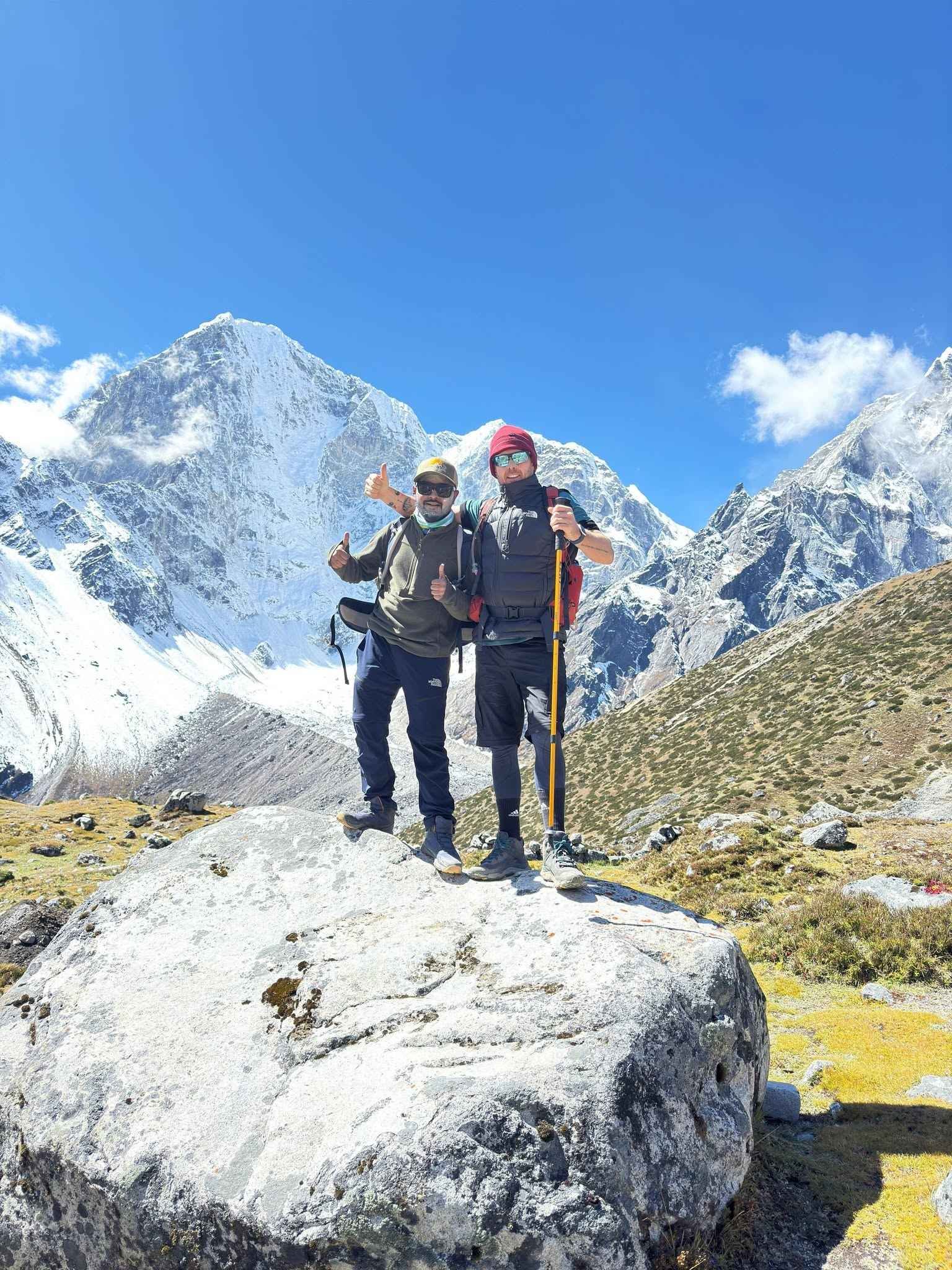
The Everest Base Camp trek is one of the world’s most popular high-altitude treks, and with proper preparation it is completed safely by thousands of trekkers every year. However, the high altitude, remote location, extreme weather, and demanding terrain mean that safety planning is not optional — it is fundamental to a successful EBC trek experience. This guide covers the key safety considerations you need to understand before setting off.
1. Altitude Sickness: The Primary Risk
Altitude sickness is the most significant safety risk on the EBC trek. Above 3,500m, the reduced oxygen levels cause physical stress in virtually all trekkers. Most cases of Acute Mountain Sickness (AMS) are mild and manageable with rest. However, the severe forms — High Altitude Cerebral Edema (HACE) and High Altitude Pulmonary Edema (HAPE) — are life-threatening medical emergencies.
Safety principles for altitude:
- Never ascend to a higher sleeping altitude with unresolved AMS symptoms
- Descend immediately if symptoms of HACE (confusion, coordination loss) or HAPE (shortness of breath at rest) develop
- Don’t let summit pressure override your health — reaching Base Camp is not worth risking your life
- Take all acclimatisation days in your itinerary — they are not optional
- Carry a pulse oximeter to monitor blood oxygen saturation (SpO2) — an SpO2 below 70–75% at altitude warrants medical attention
2. Choosing a Qualified Guide
A qualified, licensed, and experienced trekking guide is your most important safety asset on the EBC route. A good guide:
- Monitors every trekker for altitude sickness symptoms and takes appropriate action
- Makes pace decisions that support acclimatisation
- Knows the trail in all weather and visibility conditions
- Can communicate with helicopter companies and emergency services
- Carries basic first aid supplies and knows how to use them
All guides at Everest Trekking Company hold government-issued trekking guide licences and are trained in wilderness first aid and altitude illness recognition. We provide pulse oximeters on all EBC treks.
Planning Your Everest Trek?
Get local expert advice on cost, itinerary and the best time to go.
3. Weather Risks
Weather in the Khumbu can change rapidly and dramatically. Conditions that are clear in the morning can deteriorate to blizzard by afternoon. Key weather safety considerations:
- Start trekking early — most days in the Khumbu are clearest in the morning; afternoon cloud and wind are common and can make trail conditions deteriorate
- Carry full cold-weather gear even on warm days — temperature drops are sudden above 4,000m and you need layers immediately accessible in your day pack
- Never trek in whiteout or blizzard conditions above 4,500m — trails become invisible and navigation is extremely dangerous
- Listen to your guide on weather judgement — local knowledge of Khumbu weather patterns is far more reliable than apps or general forecasts
4. Trail Safety
The EBC trail presents several physical safety considerations:
River Crossings and Suspension Bridges
The trail crosses numerous suspension bridges over gorges and rivers. Most are safe but can sway significantly — cross slowly and one at a time to avoid resonance. Do not cross during high water (heavy monsoon rains). Your guide will assess conditions.
Yaks and Dzo on the Trail
Yaks (and dzo, a yak-cattle hybrid) are the primary transport animals in the Khumbu and share the narrow trail with trekkers. When meeting a yak train, move to the uphill side of the trail and stand still until the animals pass. Never stand on the downhill side — yaks can push you off the edge. Do not approach yaks from behind; they can kick. Give them the right of way — they have no interest in making way for you.
Steep and Rocky Terrain
Falls and ankle injuries on rocky sections are among the most common trail incidents. Use trekking poles, particularly on descents. Move carefully on loose scree. Don’t rush — pace yourself and look where you’re placing each foot on uneven terrain.
5. Solo Trekking Safety
Solo trekking the EBC route without a guide is permitted and happens regularly, but carries increased risks:
- No professional monitoring for altitude illness — if you develop severe AMS symptoms alone at Gorak Shep at 2 AM, you must manage the situation yourself
- Navigation in poor visibility without local knowledge
- Some travel insurance policies limit helicopter evacuation coverage to guided treks — check before you go
- No trail partner to notice if you seem confused or uncoordinated (early HACE symptoms)
Solo trekkers should: register their trek with the Nepal Tourism Board, leave a detailed itinerary with someone in Kathmandu, carry a satellite communicator or emergency GPS device, and always tell their teahouse where they plan to trek each day.
6. Emergency Communication and Evacuation
In a medical emergency on the EBC route:
- Guide contacts helicopter company in Kathmandu and your insurer’s emergency line simultaneously
- All major stops on the EBC route have helicopter landing pads
- Medical posts: HRA clinic Namche (3,440m) and HRA clinic Pheriche (4,240m) during trekking season
- Kathmandu hospitals with altitude illness experience: CIWEC Travel Medicine Center, Nepal International Clinic
Helicopter evacuation is expensive without insurance (USD $3,000–$6,000+). Travel insurance with helicopter evacuation cover to at least 5,500m is essential and non-negotiable.
7. Health Precautions Before Departure
- Vaccinations: Consult a travel medicine doctor. Hepatitis A and B, typhoid, and tetanus/diphtheria are commonly recommended for Nepal travel. Some doctors recommend rabies vaccination for long trips.
- Dental checkup: Dental pain at altitude is extremely uncomfortable and impossible to treat on the trail. See a dentist before departure.
- Eye exam: If you wear contact lenses, dust and altitude can cause problems. Consider switching to glasses for the trek or carrying copious spare solution.
- Medication review: Discuss all your regular medications with your doctor — some interact with altitude (certain blood pressure medications, diuretics, anticoagulants) and adjustments may be needed.
8. Food and Water Safety
- Drink only purified or boiled water — never drink directly from streams, even at high altitude where the water looks clean
- Eat freshly cooked, hot food — avoid raw salads and unpeeled fruits
- Wash hands before meals — carry hand sanitiser for situations where soap isn’t available
- Carry rehydration salts — stomach illness at altitude is both unpleasant and a risk factor for dehydration and AMS deterioration
9. Sun and UV Radiation
UV radiation at altitude is intense and increases by approximately 10–12% for every 1,000m of altitude gain. Above 4,000m you are exposed to roughly double the UV radiation of sea level. Sunburn, snow blindness, and UV-related eye damage can occur rapidly even on overcast days.
- Apply SPF 50+ sunscreen every morning, including to ears and under chin (reflected UV from snow)
- Wear UV400-rated or glacier sunglasses — standard fashion sunglasses without UV rating are inadequate above 4,000m; snow blindness from unprotected UV exposure is acutely painful
- Use SPF lip balm — lips burn and crack at altitude
10. Personal Safety
The EBC trek is generally very safe in terms of crime. Petty theft is rare on the trail, though common sense applies:
- Leave valuables (jewellery, large amounts of cash) in your Kathmandu hotel safe
- Carry your passport and permits in a secure pocket or money belt
- Lock your teahouse room door at night
- Solo female trekkers should be aware that harassment is rare but has been reported on some trail sections — trekking with a guide significantly reduces this risk
Safety Summary: Non-Negotiables
- Valid travel insurance with helicopter evacuation to 5,500m
- Proper acclimatisation itinerary (minimum 12 days from Lukla)
- Pulse oximeter
- Experienced, licensed guide
- Knowledge of AMS symptoms and willingness to descend
- Full cold-weather gear
- Water purification method
Trek Safely with Everest Trekking Company
Safety is the foundation of every trek we organise at Everest Trekking Company. Our guides are wilderness first aid trained, carry pulse oximeters and basic emergency medical supplies, and are empowered to make safety-first decisions including descending clients who develop altitude illness — regardless of where they are on the itinerary.
We require proof of valid travel insurance from all clients before any trek begins. We brief all trekkers on altitude illness, daily monitoring procedures, and emergency protocols at our Kathmandu pre-trek orientation.
View our Everest Base Camp Trek package or contact our team to discuss safety protocols and what to expect on the trail.
Related EBC Trek Guides
Planning Your Everest Trek?
Get local expert advice on cost, itinerary and the best time to go.