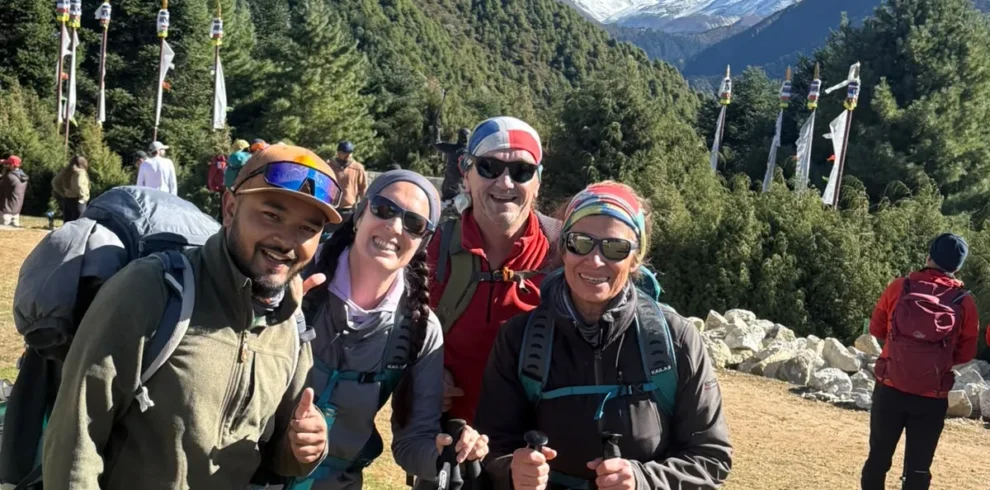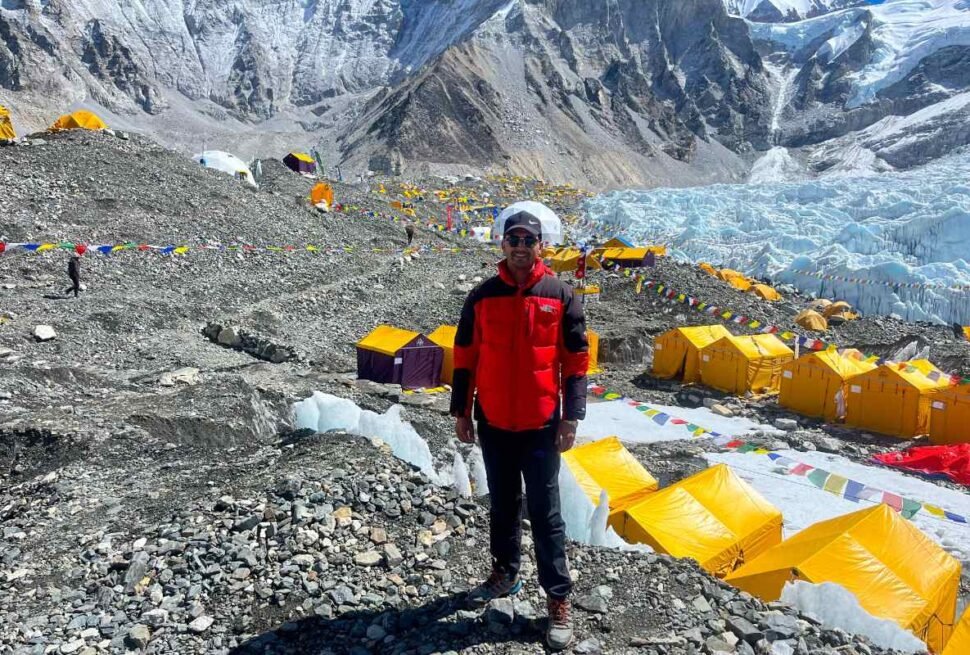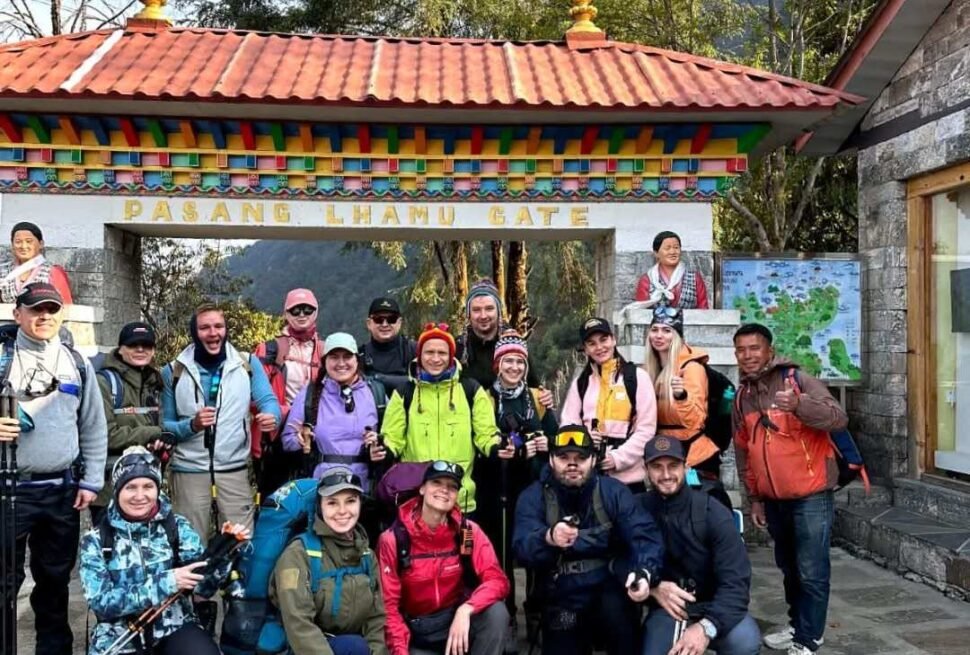
I can tell within two days on the trail who trained and who planned to get fit on the way up. The trained trekker eats well in Namche, sleeps properly in Dingboche, and has attention left over for the mountains. The untrained one spends the trek managing survival. The good news is that training for Everest Base Camp is not complicated and does not require a gym membership or a mountain outside your door. It requires 12 weeks, three types of work, and consistency. This is the exact program I recommend to our guests, built from watching what works at 5,000 metres.
The target is specific: arrive able to walk 6 hours with an 8 kilogram pack on back to back days and call it comfortable. Hit that standard and every day on the trail sits inside your ability. Miss it and the trek is still possible, but the margin that keeps altitude problems small disappears.
What the Trek Actually Demands
| Demand | On the trail | What trains it |
|---|---|---|
| Long steady days | 4 to 8 hours of walking, 11 to 13 days in a row | Weekend hikes, progressively longer |
| Big single climbs | Up to 800m of ascent in a day, like the Namche hill | Stairs, hill repeats, incline treadmill |
| Carrying weight | A 6 to 9 kg daypack, every day | Training with a loaded pack from week one |
| Descents | Two huge downhill days at the end | Leg strength, especially single leg work |
| Recovery on repeat | Doing it all again tomorrow | Back to back sessions on weekends |
| Thin air | 40 percent less oxygen at Base Camp than at sea level | Cannot be trained at home; managed by itinerary |
Notice the last row. No amount of running makes your blood adjust to altitude in advance; acclimatisation happens on the trek, through the itinerary. Training buys you something different: a body that works so efficiently at sea level that the altitude tax still leaves you with enough to spend. Fit trekkers do not skip altitude sickness, they simply have more reserve when it taxes them. How the itinerary manages the rest is covered in our altitude sickness guide.
Planning Your Everest Trek?
Get local expert advice on cost, itinerary and the best time to go.
The Three Types of Work
1. Hiking, the specific work. Nothing replaces walking on real ground with a real pack. One long hike every weekend is the spine of the whole program: start at 2 to 3 hours with 5 kilograms and build to 6 hours with 8 to 10 kilograms on consecutive days. Hills if you have them, stairs if you do not, flat distance if that is all your city offers; duration and load matter more than terrain.
2. Cardio, the engine work. Three sessions a week of anything that holds your heart rate up for 40 to 60 minutes: brisk incline walking, running, cycling, swimming, rowing. Two of the three should be steady and conversational; once a week, make one harder with intervals, such as 5 repeats of 3 minutes hard with 3 minutes easy. The steady work builds the aerobic base the trek runs on; the intervals raise the ceiling so the Namche hill does not touch your maximum.
3. Strength, the insurance work. Two short sessions a week, 30 to 40 minutes, legs and core, nothing exotic: squats, step ups onto a bench, lunges, single leg deadlifts, calf raises, planks. Step ups with a loaded pack are the single most trek specific exercise that exists. Strength is what protects your knees on the 1,600 metre descent from Namche to Lukla at the end, when tired legs cause more falls than any icy section higher up.
The 12 Week Program
| Weeks | Weekend hike | Cardio | Strength | Focus |
|---|---|---|---|---|
| 1 to 2 | 2 to 3 hours, 5 kg pack | 3 x 30 to 40 min easy | 2 x 30 min, learn the movements | Build the habit, find your baseline |
| 3 to 4 | 3 to 4 hours, 6 kg | 3 x 40 min, add one interval session | 2 x 35 min, add weight slowly | Consistency over intensity |
| 5 to 6 | 4 hours, 7 kg, hillier route | 3 x 45 min | 2 x 40 min | First real test: how do you recover? |
| 7 to 8 | 4 to 5 hours, 8 kg, plus a short second hike Sunday | 3 x 45 to 60 min | 2 x 40 min | Introduce back to back days |
| 9 to 10 | 6 hours Saturday, 3 hours Sunday, 8 to 10 kg | 3 x 60 min | 2 x 40 min | Peak weeks, the trek standard |
| 11 | 4 hours, 6 kg, easy pace | 2 x 40 min easy | 1 light session | Begin the taper |
| 12 | 2 hours, light pack | 2 x 30 min easy | Rest | Arrive fresh, not tired |
The program bends without breaking. Miss a week for work or illness, repeat the previous block rather than jumping ahead. Start fitter than average, compress the first four weeks into two. Start from the sofa, add four weeks at the front rather than pushing harder inside the twelve. The one rule with no exceptions is the taper: the final two weeks are for absorbing training, not adding it, because you cannot cram fitness but you can absolutely arrive exhausted.
Training When You Have No Mountains
Most of our guests train in flat cities, and it works. Stair climbing is the great equaliser: a 30 storey building climbed 6 to 8 times with a pack is a serious hill session, and stadium steps or a stair machine do the same job. Set a treadmill to 10 to 12 percent incline at walking pace for an hour with your pack on. Walk your long hikes on flat riverside paths but extend the hours. The trek does not check where you trained; it checks whether your legs and lungs answer when asked.
Test Yourself Before You Book the Flight
- Week 6 test: 4 hours of walking with 7 kg, and you feel normal the next morning, not wrecked
- Week 10 test: 6 hours with 8 kg on Saturday, 3 hours on Sunday, and Sunday still felt controlled
- Stair test any week: 45 minutes of continuous stair climbing with your pack without stopping
Pass the week 10 test and you are trained for Everest Base Camp, full stop. Fail it and the honest options are postponing by a month or choosing an itinerary with more rest days. This is also the moment to read our EBC difficulty guide with fresh eyes, because difficulty is relative to exactly this standard. Complete beginners should also read EBC for beginners before choosing a departure.
Planning Your Everest Trek?
Get local expert advice on cost, itinerary and the best time to go.
What Training Cannot Do, and What Does It Instead
Training does not acclimatise you, does not make you immune to a rough night at Lobuche, and does not replace the rest days in the itinerary. Those jobs belong to the route profile, and it is why we never sell itineraries that cut the Namche and Dingboche acclimatisation nights. Training also does not pack your bag: gear that fits and boots that are broken in are their own preparation stream, covered in the EBC packing list guide. And for the wider preparation picture beyond fitness, from paperwork to mental preparation, our complete guide on how to prepare for the Everest Base Camp trek ties every stream together.
FAQs About Training for Everest Base Camp
How long do I need to train for Everest Base Camp?
Twelve weeks is the reliable window for someone starting from average fitness, training three to five days a week. Already fit hikers can prepare well in six to eight weeks; complete beginners should give themselves sixteen. The final two weeks are always an easy taper.
Can a beginner do the Everest Base Camp trek?
Yes, and beginners summit the trail every week of the season. What beginners cannot skip is the preparation: 12 or more weeks of structured walking, cardio, and leg strength, plus an itinerary with full acclimatisation days rather than the shortest schedule on sale.
What is the best exercise for the EBC trek?
Walking uphill with a loaded pack, and its city substitutes: stair climbing and incline treadmill work. It trains the exact muscles, joints, and energy systems the trail uses. Everything else in a program supports this one movement.
Do I need to train for altitude?
You cannot meaningfully pre acclimatise at sea level, and expensive altitude tents are unnecessary for a trek with a proper itinerary. Acclimatisation happens on the trail through rest days and gradual sleeping altitude gains. Training instead builds the reserve that keeps the altitude tax affordable.
How fit do I need to be for Everest Base Camp?
The working standard: walk 6 hours with an 8 kilogram pack on back to back days and recover overnight. Trekkers at that level find every trail day manageable. You do not need to run marathons and you do not need a gym; you need legs and lungs with endurance.
Is Everest Base Camp harder than Kilimanjaro?
They are hard in different ways. Kilimanjaro is shorter, five to nine days, with a brutal single summit night that goes higher, 5,895 metres. EBC is nearly two weeks of sustained daily effort with more total walking but no single monster day. Kilimanjaro also ascends faster, which makes altitude sickness rates on it notoriously high. Most people who have done both call EBC the more sustained challenge and Kilimanjaro summit night the single hardest moment.
Should I train with the same backpack I will trek with?
Yes. Train with the pack you will carry, adjusted the way you will wear it, loaded to trail weight. Twelve weeks of training doubles as twelve weeks of finding every strap that rubs, while it can still be fixed at home.
How many hours a week does EBC training take?
Five to eight hours across four or five sessions: one long weekend hike that grows from 2 to 6 hours, three cardio sessions of 40 to 60 minutes, and two short strength sessions. The weekend hike carries most of the value if life forces you to cut elsewhere.
What should I do in the last two weeks before the trek?
Taper. Cut volume to half, keep everything easy, sleep well, and arrive in Kathmandu fresh. Fitness gained in the final fortnight is negligible; fatigue carried into the trek is not. The last two weeks are also for logistics, covered in our preparation guide.
Planning Your Everest Trek?
Get local expert advice on cost, itinerary and the best time to go.