By Kiran Basnet, Licensed Trekking Guide, Everest Trekking Company, Kathmandu
Ask any trekker who has been to Everest Base Camp what the most memorable moment of the journey was, and a surprising number will mention the Lukla flight before they mention the mountains. Not because it is the most beautiful thing they saw, the mountains take care of that, but because it is unlike any flight most people will ever take in their lives.
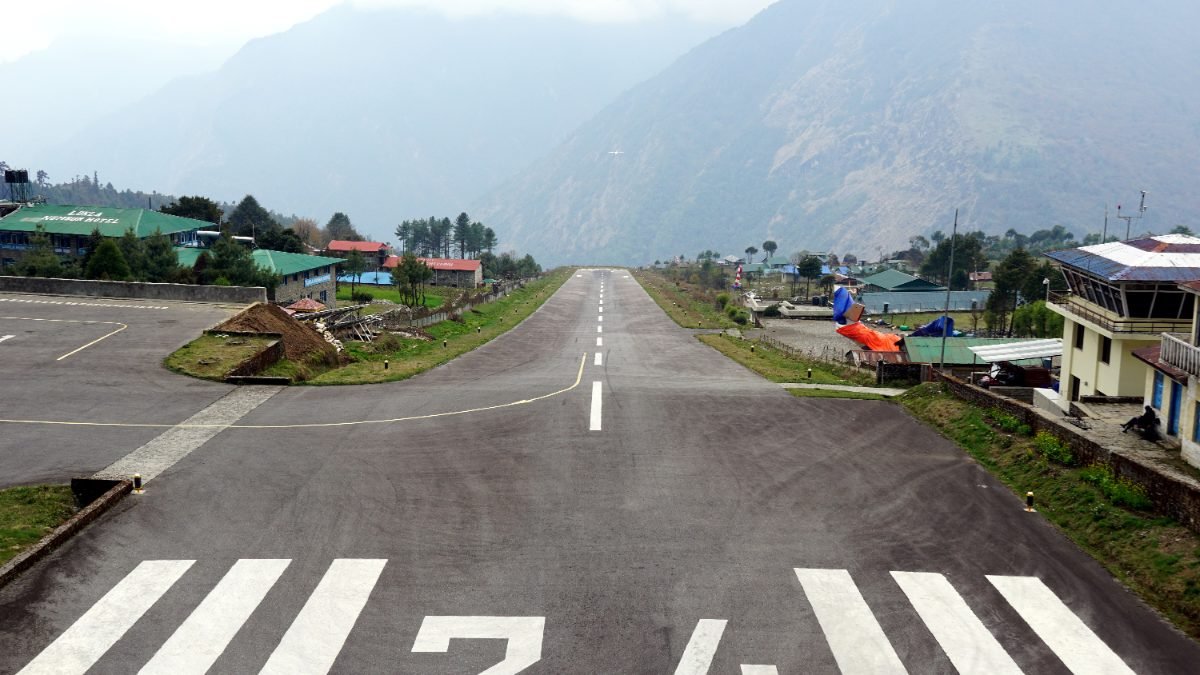
A 527-metre runway carved into a Himalayan hillside at 2,860 metres above sea level. An uphill slope of 12 degrees. No radar. No instrument landing. No night operations. Mountains on three sides. A stone wall at one end and a cliff drop at the other. The entire flight takes 30 minutes, and it sets the tone for everything that follows in the Khumbu.
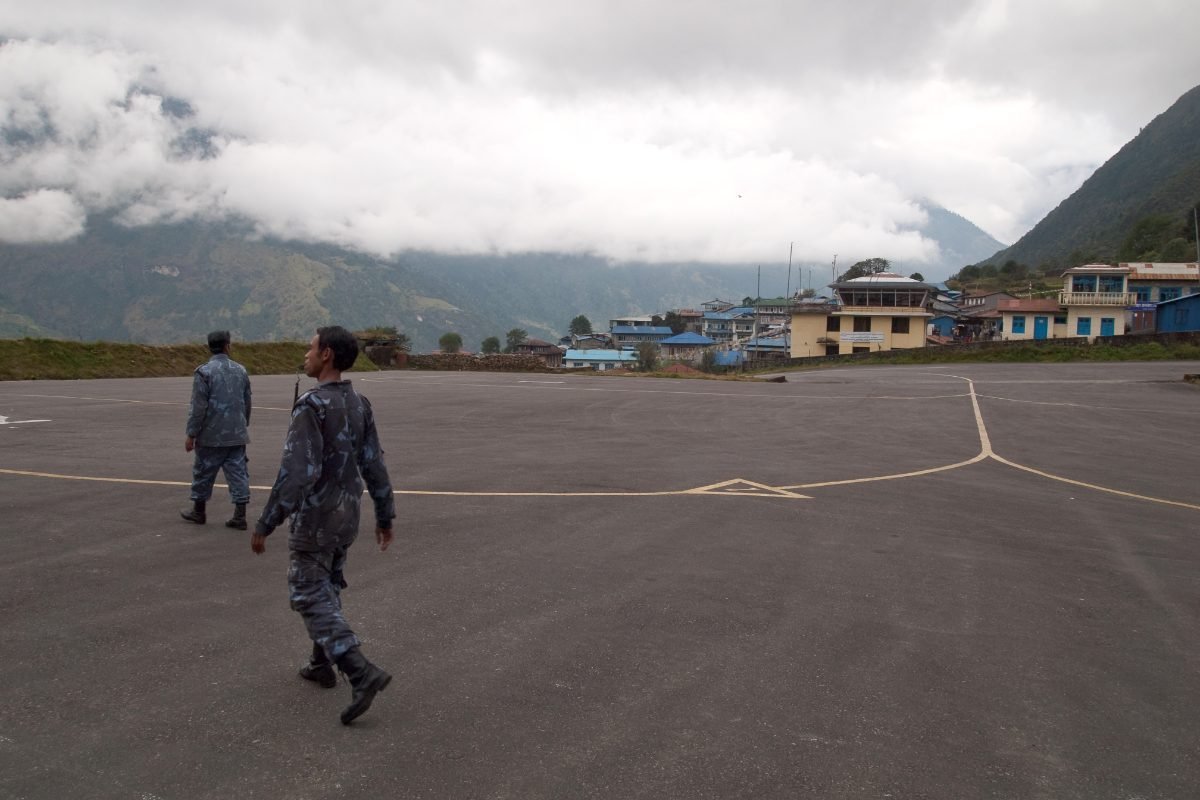
I have been on this flight more times than I can count, at the start of treks, at the end, in clear autumn skies, and in spring mornings when the valley below was still wrapped in cloud. Every time I buckle in, I feel the same thing I felt the first time: this is the beginning of something extraordinary.
This guide covers everything you need to know before your Lukla flight, which airport your flight departs from (it’s not always Kathmandu), which airlines operate it, what the baggage limits are, how much it costs, what to do if your flight is cancelled, and how to handle Lukla flight logistics without stress.
Planning Your Everest Trek?
Get local expert advice on cost, itinerary and the best time to go.
Tenzing-Hillary Airport: What Makes Lukla Different
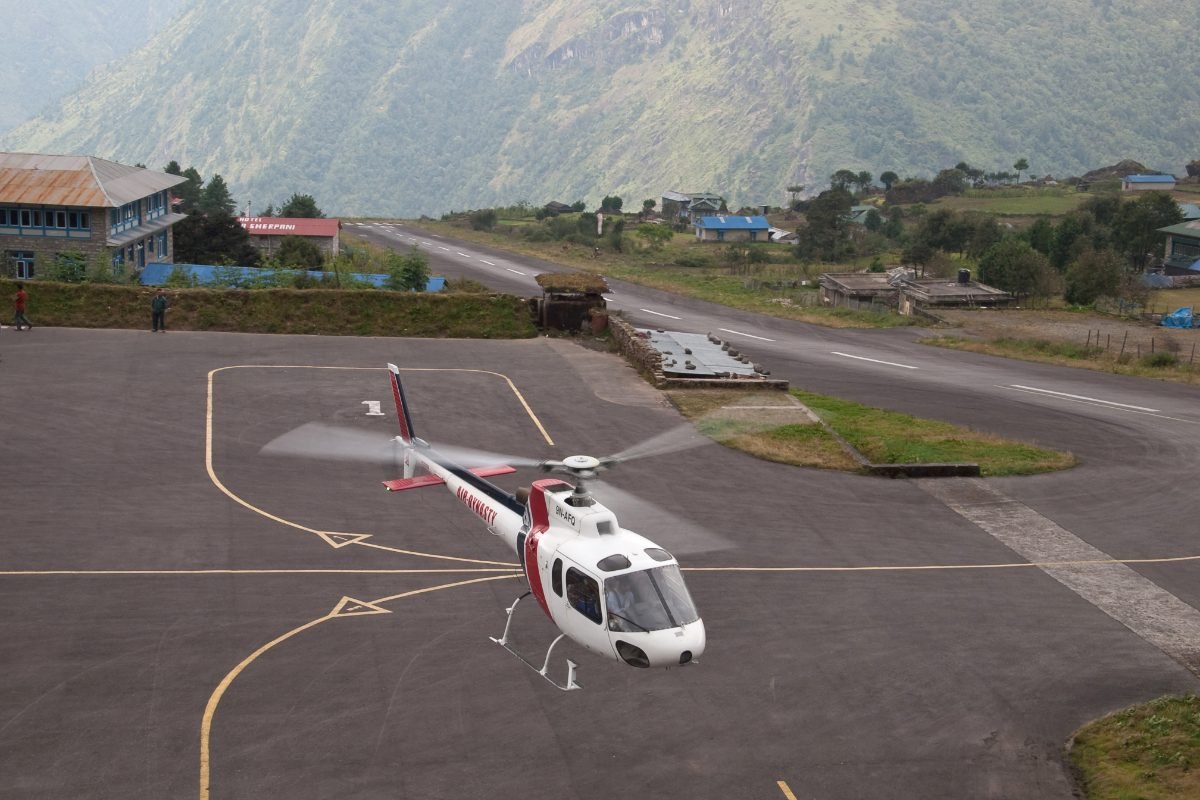
Tenzing-Hillary Airport was named in 2008 after Sir Edmund Hillary and Tenzing Norgay Sherpa, who made the first ascent of Everest in 1953. The airport itself was built in 1964 with funding provided by Edmund Hillary as part of his aid work in the Sherpa community.
It consistently appears on lists of the world’s most challenging airports. Here is why:
| Airport Feature | Detail |
|---|---|
| Runway length | 527 metres (vs. 2,000–4,000m on standard runways) |
| Runway slope | 12 degrees uphill, aircraft land going uphill, take off going downhill toward the cliff |
| Elevation | 2,860 metres above sea level |
| Navigation system | VFR (Visual Flight Rules) only, no radar, no ILS |
| Night operations | None, all flights between approximately 6 AM and 10 AM |
| Named after | Sir Edmund Hillary and Tenzing Norgay Sherpa |
| District | Solukhumbu, Khumbu region, Nepal |
The runway ends at a stone wall on the uphill (top) end and drops into a valley on the downhill (bottom) end. Landings run uphill toward the wall; takeoffs run downhill toward the valley. Pilots must commit to the approach before the threshold, there is no going around if conditions change at the last moment.
All flights operate on Visual Flight Rules: pilots must be able to see the runway before committing to land. Cloud in the approach corridor means no landing, . The morning weather window at Lukla runs from roughly 6 AM to 10 AM on most days. By late morning, valley winds pick up and clouds push in from the south. Most days, if a flight has not landed by 10 AM, it does not land at all that day.
Despite its reputation, the vast majority of the thousands of Lukla flights that operate annually do so safely. The risk comes from attempting to fly in marginal conditions, something that airlines and Nepal’s Civil Aviation Authority (CAAN) strictly regulate against. Pilots cancel rather than risk unsafe operations.
The Three Ways to Reach Lukla
Option 1: Direct Kathmandu to Lukla Flight
The 30–35 minute flight from Tribhuvan International Airport in Kathmandu is the most convenient option. All flights depart in the early morning (typically 6–9 AM) to catch the stable morning weather window at Lukla.
This option operates primarily during the off-peak months: December, January, February, early March, June, July, August, and early September. During peak trekking seasons (spring and autumn), Tribhuvan airport’s congestion pushes flights to Ramechhap, see below.
Option 2: Ramechhap (Manthali Airport) to Lukla, Peak Season
This is what catches most first-time Everest trekkers off guard. During peak seasons, your Lukla flight does not depart from Kathmandu. It departs from Manthali Airport in Ramechhap, 132 kilometres northeast of Kathmandu, which means a 4–5 hour drive through the night before you even get to the airport.
Why Ramechhap instead of Kathmandu?
Tribhuvan International Airport handles Nepal’s international traffic on a single runway. During spring (March–May) and autumn (September–November) peak seasons, the volume of Lukla-bound domestic flights combined with international arrivals and departures creates serious congestion. The narrow 4–5 hour morning VFR window at Lukla means that when dozens of flights queue from Kathmandu, many miss the window entirely. Trekkers were sitting in Kathmandu for 2–3 days waiting for a delayed Lukla flight.
From 2024 onwards, CAAN mandated that peak season Lukla flights shift to Manthali Airport. Ramechhap sits at only 474 metres above sea level, far below the clouds and wind patterns affecting Kathmandu at 1,400m. The airport handles no international traffic, and the VFR window is longer and cleaner. Multiple Lukla rotations complete successfully in a single morning with far fewer delays. The Ramechhap route is actually more reliable than the old Kathmandu route during peak season, the trade-off is an early morning drive.
| Detail | Kathmandu → Lukla | Ramechhap → Lukla |
|---|---|---|
| Season | Off-peak months | Spring (March–May) and Autumn (Sept–Nov) |
| Flight time | 30–35 minutes | 15–20 minutes |
| Departure from Kathmandu hotel | 4–5 AM for airport | 1–2 AM for drive to Ramechhap |
| Drive to airport | 15–30 min | 4–5 hours (132 km) |
| Cost (foreigners) | USD 230–245 one-way | USD 175 flight + USD 20 transport = ~USD 195 |
| Reliability | Good in off-peak | More reliable than Kathmandu in peak season |
The Ramechhap drive: Your vehicle leaves your Kathmandu hotel between 1 AM and 2 AM. The 132 km route follows the BP Highway through Dhulikhel and along the Tamakoshi River valley. It’s not a difficult drive, but at 1 AM it requires an early night before departure. Your trek agency should arrange the vehicle, do not try to organise this independently the night before.
Option 3: Overland to Solukhumbu (Salleri)
For trekkers who want to avoid the flight entirely or who have experienced repeated cancellations, an overland route exists. The drive from Kathmandu to Salleri (district headquarters of Solukhumbu) takes 8–9 hours. From Salleri, a 3–4 day walk through Phaplu and Kharikhola reaches Lukla on foot. This adds significant time to any itinerary but removes the flight variable entirely. It’s worth knowing as a contingency option.
Lukla Flight Cost 2026
| Flight Option | Cost (Foreigners) | Cost (Nepali Citizens) |
|---|---|---|
| Kathmandu → Lukla (one-way) | USD 230–245 | NPR 8,500 |
| Ramechhap → Lukla (one-way) | USD 175 | NPR 6,500 |
| Shared ground transport KTM → Ramechhap | USD 15–20 per person | NPR 1,500–2,000 |
| Helicopter (shared, up to 5 pax) | USD 600–700 per person | Similar rates |
| Helicopter (private charter) | USD 2,500–3,000 per helicopter | – |
Note: Lukla flight prices are set by the airlines and CAAN and are the same across all three scheduled carriers. The choice of airline on a given day typically comes down to seat availability, not price.
Airlines Flying to Lukla: Tara Air, Summit Air, and Sita Air
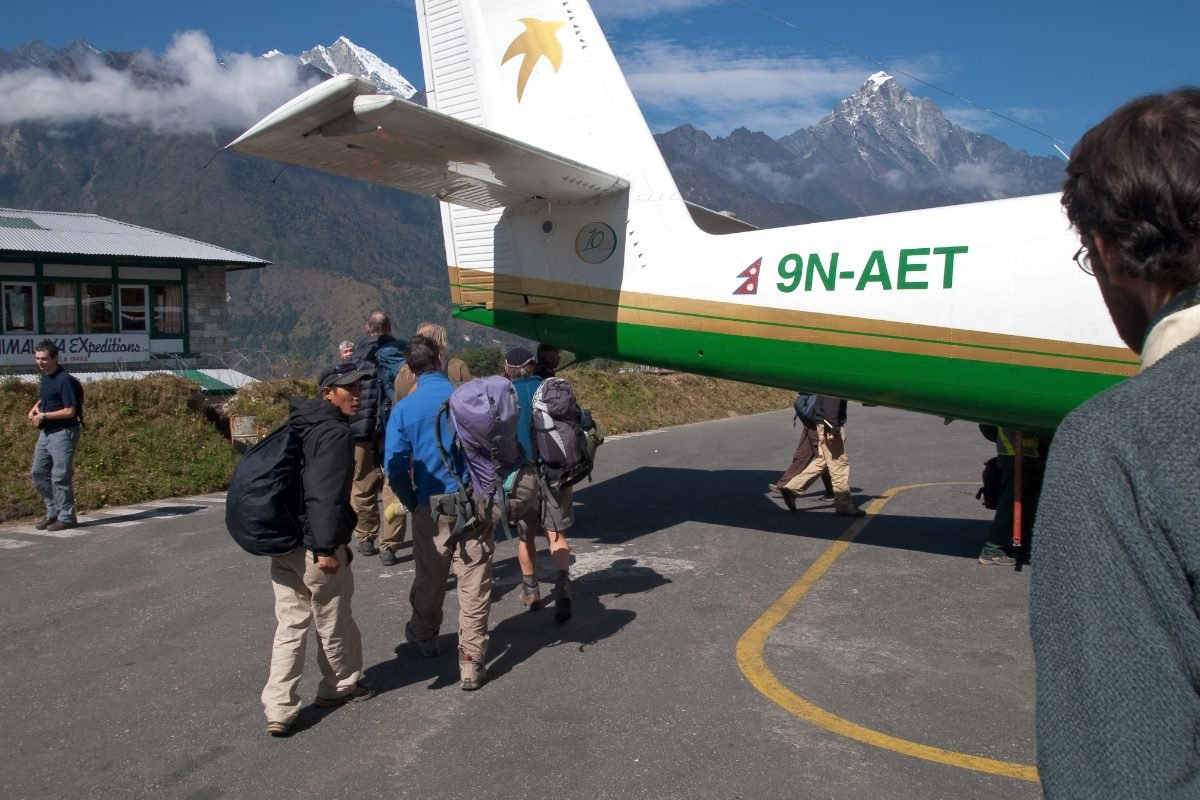
Three scheduled airlines currently operate Lukla flights in 2026. All use aircraft specifically designed for Short Takeoff and Landing (STOL) operations in mountain environments. All operate on Visual Flight Rules only. All require pilots to hold CAAN mountain flying certification with significant logged hours on STOL aircraft.
Tara Air
Part of the Yeti Airlines group, one of Nepal’s most established aviation companies. Tara Air operates primarily the Twin Otter DHC-6, a purpose-built STOL aircraft with a long safety record in mountain operations across Nepal, Bhutan, and the broader Himalayas. Tara Air pilots undergo specific mountain flying training and have accumulated extensive experience on the Lukla route. The airline operates daily flights during trekking season on both the Kathmandu and Ramechhap routes.
Summit Air
Summit Air operates modern aircraft designed for short runways and unpredictable mountain weather. Beyond passenger services, Summit Air also supports cargo and community logistics to remote Khumbu villages, which means the airline’s operational familiarity with the Lukla route runs year-round, not just during trekking season. Known for reliable scheduling within the morning weather window.
Sita Air
Sita Air has operated Lukla flights for many years and has a strong reputation for punctual service and customer support on mountain routes. The airline runs regular scheduled services on both the Kathmandu and Ramechhap routes during trekking season.
Lukla Flight Baggage Allowance
The small STOL aircraft flying to Lukla have strict weight limits. These are enforced, not guidelines. Overweight luggage is either charged per kilogram or offloaded to a later flight.
| Baggage Type | Allowance | Excess Charge |
|---|---|---|
| Checked baggage | 10 kg | USD 1–2 per kg |
| Hand carry | 5 kg | Not permitted to exceed |
| Total per passenger | 15 kg maximum | – |
Practical advice: Your main trekking duffel bag will be carried by your porter during the trek. Pack it to under 10 kg for the Lukla flight (it goes in the hold). Your daypack goes on the flight with you as hand carry, keep it under 5 kg. The most common mistake is packing too much in the main duffel and getting charged for excess at the airport. Use a soft duffel bag, not a hard suitcase, they’re easier to load onto the small aircraft.
Lukla Flight Schedule: Timing and Best Months
Why All Flights Are in the Morning
All Lukla flights depart between approximately 6 AM and 10 AM. This is not airline policy, it is weather reality. Morning air in the Khumbu is stable, cloud cover is low, and winds in the valley corridors are calm. By mid-morning, the situation reverses rapidly: clouds build from the south, valley winds pick up, and visibility in the approach corridor deteriorates. If a flight has not departed by approximately 10 AM, it generally won’t depart that day.
Best Months for Smooth Flights
| Month | Flight Reliability | Notes |
|---|---|---|
| October | Excellent | Best flying conditions of the year. Post-monsoon clarity. |
| November (early) | Very good | Excellent conditions; late November gets colder and less stable |
| April | Very good | Spring peak season, Ramechhap route; reliable morning windows |
| March | Good | Pre-peak, mostly direct from Kathmandu; good visibility |
| May | Good | Peak season Ramechhap; pre-monsoon haze can build |
| December–February | Good (fewer flights) | Cold and clear; lower flight volume; fog occasionally delays |
| September (mid-late) | Improving | Monsoon clearing; mid-September onwards much better |
| June–August | Poor | Frequent cancellations due to monsoon cloud and rain |
Lukla Flight Delays and Cancellations: What to Do
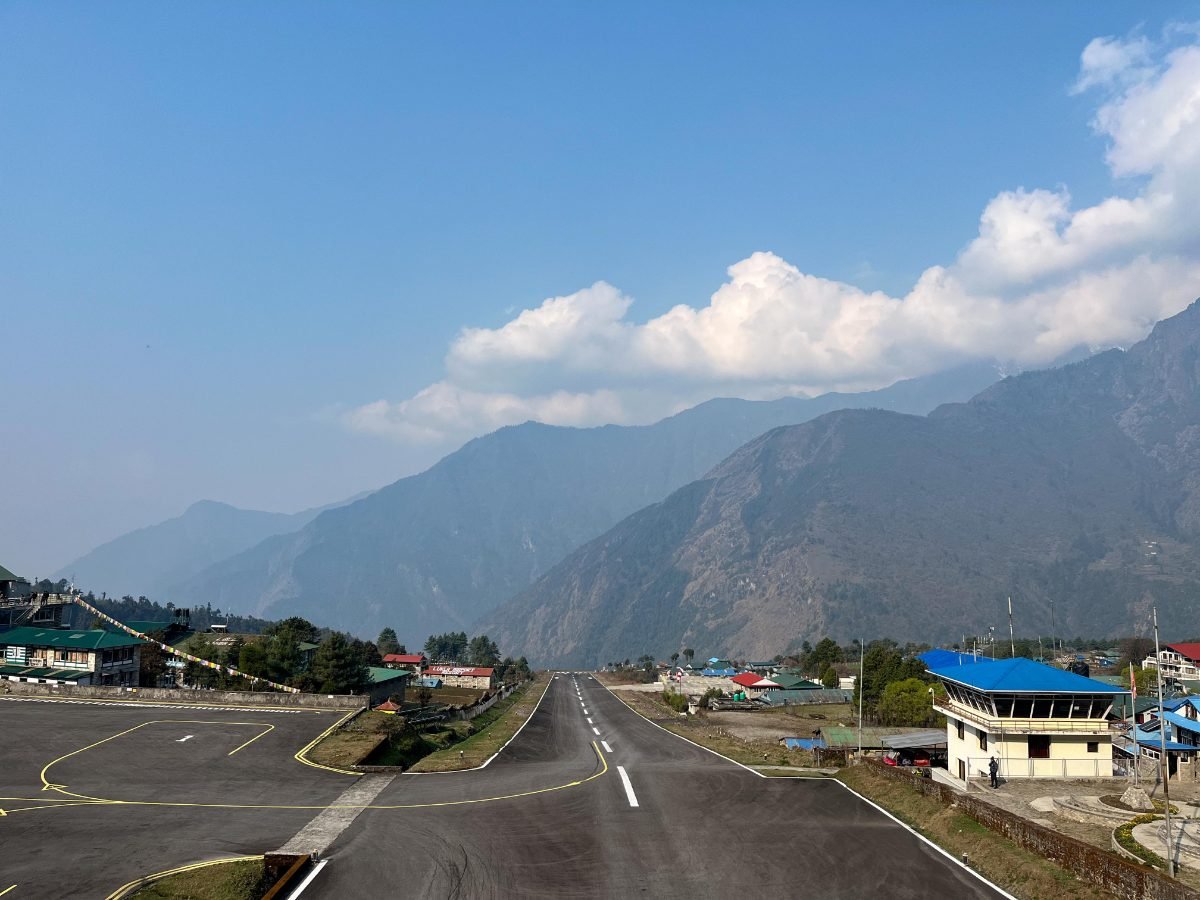
Flight delays and cancellations at Lukla are a normal part of trekking in the Everest region. This is not a failure of the system, it is the system working correctly. Pilots cancel rather than fly in unsafe conditions. Understand this before you depart and you’ll handle delays with the calmness they deserve.
Common Causes of Delays
- Low visibility at Lukla, cloud in the approach corridor, morning fog
- High winds, in the mountain valley corridors or at the runway itself
- Kathmandu airspace congestion, during peak season (less relevant with Ramechhap routing)
- Upstream aircraft positioning, small aircraft serving multiple mountain airstrips
What to Do If Your Flight Is Cancelled
- Stay calm. Airlines will reschedule you to the next available morning. Your trek agency manages this, don’t try to rebook independently.
- Use your buffer day. This is exactly what it’s for. A 1–2 day delay at the start is completely absorbable if your itinerary was planned properly.
- Consider a helicopter. If consecutive cancellations put your schedule at serious risk, a shared helicopter (USD 600–700 per person) can often operate when fixed-wing aircraft cannot.
- Drive to Salleri. If flights are cancelled for 3+ consecutive days and no helicopter slots are available, the overland drive to Salleri and 3–4 day walk to Lukla remains an option.
The Single Most Important Preparation: Buffer Days
Build at minimum 1 buffer day at the start of your trek (in Kathmandu, in case Lukla is fogged in) and 1 buffer day at the end (also in Kathmandu, in case your return Lukla flight is delayed and you risk missing an international connection). In monsoon season, budget 3–4 buffer days at each end. This single planning decision eliminates most of the stress associated with Lukla flight logistics.
Is the Lukla Flight Safe?
Yes, when operated within approved conditions. The short runway and high altitude create challenges that standard commercial airports don’t have, but these challenges are known, managed, and mitigated by strict regulatory requirements:
- Only CAAN-certified mountain pilots are permitted to fly into Lukla. They complete specific mountain flying training, must have extensive STOL aircraft experience, and must meet logged-hour requirements before operating on this route.
- VFR-only operations mean that flights are cancelled when visibility is inadequate, there is no instrument approach that pilots can use to push through bad conditions.
- Pre-flight runway clearance, Nepal Armed Police Force and civil police clear the runway of people, vehicles, and animals before every landing and takeoff.
- Strict weight compliance, baggage limits are enforced because overloaded STOL aircraft have dramatically reduced performance margins on a 527-metre runway.
There have been incidents at Lukla over the years. Transparency requires acknowledging this. However, the overwhelming majority of the thousands of annual Lukla flights operate without incident. The cancellation system exists precisely because the safety standards are enforced, pilots who cancel in marginal conditions are making the correct, professional decision.
Planning Your Everest Trek?
Get local expert advice on cost, itinerary and the best time to go.
Helicopter to Lukla: When It Makes Sense
The helicopter is not just a backup, for certain trekkers, it’s the right primary option.
Choose the Helicopter If:
- You’re on a tight schedule with no buffer days and cannot absorb a delay on Day 1
- You’ve experienced repeated fixed-wing cancellations on a previous trip
- You want a private departure without the Ramechhap 1 AM drive
- You’ve missed your fixed-wing flight due to weather and need to reach Lukla the same day
Helicopter Details
- Departure point: Tribhuvan International Airport, Kathmandu (no Ramechhap required)
- Flight time: 40–45 minutes from Kathmandu
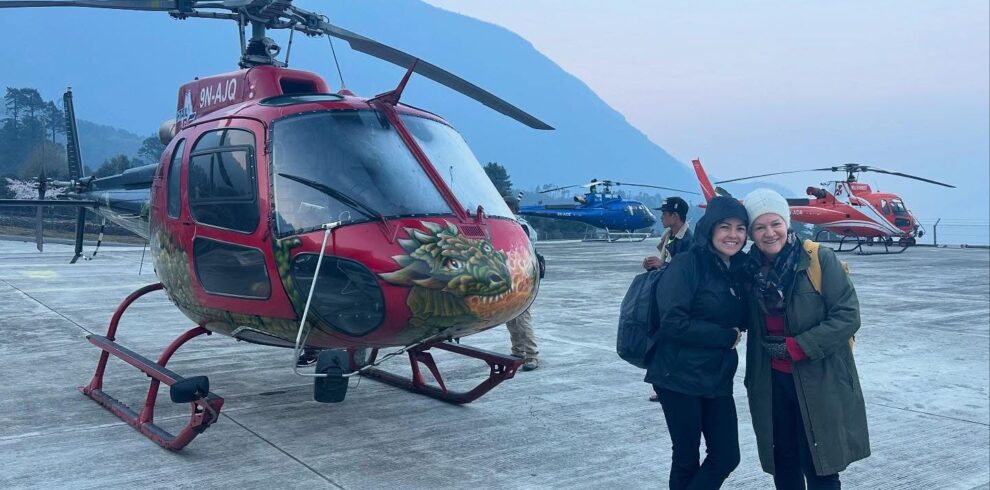
- Aircraft: Airbus H125, Bell 407, or similar, max 5 passengers (weight dependent)
- Shared cost: USD 600–700 per person one-way
- Private charter: USD 2,500–3,000 per helicopter one-way
Helicopter flights are still weather-dependent at the Lukla end, they are more flexible than fixed-wing in marginal conditions but cannot land at Lukla in zero visibility. Your travel insurance covering helicopter rescue (required for any EBC trek) is separate from helicopter transport insurance, confirm both.
Practical Tips: Before Your Lukla Flight
- Book at least 4–6 weeks ahead in spring and autumn. Peak season seats disappear fast, especially on popular departure dates. Last-minute Lukla flight availability is not reliable.
- Confirm your departure airport. Is it Kathmandu or Ramechhap? This depends on your travel date. Your trek agency should confirm this clearly when you book.
- Pack your main duffel to under 10 kg before flight day. Excess baggage charges at the airport are avoidable with pre-trip weighing. Use a soft duffel, not a hard suitcase.
- Wear your heaviest trekking clothes on the flight day, base layer, fleece, trekking boots. This saves significant weight in your hold baggage.
- Keep your passport, insurance docs, and permits in your carry-on daypack at all times.
- For Ramechhap departures: set multiple alarms. The vehicle leaves between 1 AM and 2 AM. Get to sleep early the night before arrival in Kathmandu. This early start is much easier if you’ve already slept a night in Kathmandu to recover from international travel.
- Do not assume a clear Kathmandu morning means a clear Lukla. Weather at the two locations is entirely independent. Your guide or trek agency will have real-time Lukla conditions.
- Have travel insurance that covers flight delays. A multi-day Lukla delay means additional hotel nights in Kathmandu. Standard travel insurance often covers this, check your policy.
Frequently Asked Questions: Lukla Flights
How long is the Kathmandu to Lukla flight?
30–35 minutes from Tribhuvan International Airport, Kathmandu. During peak season from Ramechhap (Manthali Airport), the flight itself is 15–20 minutes, though the 4–5 hour overnight drive adds significant travel time.
How much does the Lukla flight cost in 2026?
USD 230–245 one-way from Kathmandu for foreign trekkers. The Ramechhap option costs approximately USD 175 for the flight plus USD 15–20 for shared ground transport. Helicopter options run USD 600–700 per person shared or USD 2,500–3,000 for a private charter.
Why do Lukla flights operate from Ramechhap in peak season?
Tribhuvan International Airport in Kathmandu handles Nepal’s international traffic on a single runway. During spring and autumn peak seasons, the combined volume of Lukla domestic flights and international aircraft exceeds the available morning weather window. CAAN mandated the shift to Ramechhap from 2024 onwards. The Ramechhap airport at 474m gives a longer, more reliable morning VFR window with no international traffic competing for runway time. Flights from Ramechhap are actually more reliable than Kathmandu departures were during peak season.
Which airlines fly to Lukla?
Tara Air, Summit Air, and Sita Air are the three scheduled carriers operating Lukla flights in 2026. All three use STOL aircraft (Twin Otter DHC-6 and similar), operate exclusively on VFR, and require their pilots to hold CAAN mountain flying certification. Ticket prices are comparable across all three airlines.
What is the baggage limit on Lukla flights?
10 kg checked baggage plus 5 kg hand carry, 15 kg total per passenger. Limits are enforced and excess is charged at USD 1–2 per kg. Pack smart and light: your porter handles the main duffel on the trek, and the baggage limit is a practical maximum, not a target.
What happens if my Lukla flight is cancelled?
Airlines reschedule cancelled flights to the next available morning slot or issue a refund. Your trek agency manages rescheduling directly, you don’t need to handle this yourself. The most important preparation is having buffer days in your itinerary at both the start and end of your trek. One buffer day at each end is the minimum; two is better. A cancelled Lukla flight with a proper itinerary is a minor inconvenience. Without buffer days, it can collapse your entire schedule.
Can I take a helicopter to Lukla instead of a fixed-wing flight?
Yes. Helicopter flights from Kathmandu to Lukla operate year-round, including during peak season, with no Ramechhap drive required. Shared helicopter: USD 600–700 per person. Private charter: USD 2,500–3,000 per helicopter for up to five passengers. Helicopters are more flexible than fixed-wing in marginal weather but still cannot operate in zero visibility at Lukla.
Is Lukla airport actually dangerous?
The short runway and high altitude create genuine operational challenges. There have been incidents over the years. However, the vast majority of thousands of annual flights operate safely. The safety system works precisely because conditions are strictly monitored and flights are cancelled when they should be. Only CAAN-certified mountain pilots with extensive STOL experience are permitted to operate at Lukla. The danger comes from pushing into marginal conditions, something the regulatory system is specifically designed to prevent.
Book Your EBC Trek with Lukla Logistics Sorted
At Everest Trekking Company, we handle all Lukla flight logistics as part of every Khumbu trek package, flight bookings with Tara Air, Summit Air, or Sita Air, Ramechhap vehicle and timing coordination during peak season, real-time weather monitoring, and rescheduling if needed. Our trekkers don’t spend their pre-trek energy managing flight logistics. We take care of it so you can focus on the adventure that starts the moment you step off the plane in Lukla.
📞 WhatsApp / Call: +9779869225929
📧 Email: info@everesttrekkingcompany.com
- Everest Base Camp Trek, Classic 14-Day Package
- EBC Trek with Helicopter Return
- Complete EBC Preparation Guide
- Best Time for EBC Trek: Month-by-Month Guide
The 30 minutes you spend flying into Lukla are 30 minutes unlike any other. After that, the mountains take over.
Detailed Guide to Ramechhap Flights: The Alternative to Kathmandu
During peak trekking season (March–May and October–November), the Nepal Civil Aviation Authority redirects most Lukla flights from Kathmandu to Manthali Airport in Ramechhap. This reduces congestion at Tribhuvan International Airport in Kathmandu and spreads flight operations more efficiently. Understanding how Ramechhap works saves you significant confusion and stress during peak season.
Where is Ramechhap? Ramechhap (Manthali Airport) is approximately 130–140 km east of Kathmandu by road, through the winding hills of Sindhupalchok district. The drive takes 4–5 hours by private jeep or 5–6 hours by tourist bus.
When is Ramechhap in operation? Typically from late March through mid-May and from late September through mid-November. The exact dates vary year to year based on government directives and flight volume. Our operations team monitors the schedule and will advise you on which airport your Lukla flight departs from as your trek date approaches.
Logistics: Most trekkers leave Kathmandu at 1:00–2:00 AM by private jeep to arrive at Ramechhap by 5:30–6:00 AM for flights that depart between 6:00 and 10:00 AM (flights must be completed by mid-morning before mountain winds develop). Our team arranges the jeep transfer as part of the logistics package — you do not need to worry about the booking or driving route.
Staying near Ramechhap: Some trekkers choose to stay the night near Ramechhap rather than driving from Kathmandu at 1 AM. Basic guesthouses are available in Manthali town. This is particularly popular for older trekkers who prefer an early bedtime to a very early morning drive.
What Happens at Lukla Airport: A Step-by-Step Walkthrough
Lukla’s Tenzing Hillary Airport is one of the most unique airports in the world. Here is exactly what happens when you arrive:
Landing: The aircraft approaches from the valley below, rising steeply to the 527-metre runway that ends at a cliff face. The runway has a gradient of about 12% (uphill) which helps slow the aircraft. The landing is firm and quick. Most trekkers find the landing exhilarating rather than frightening — pilots who fly this route are among the most experienced in Nepal and typically have thousands of Lukla landings.
Arriving: Exit the aircraft, collect your duffel bag from the trolley on the tarmac, and proceed through the small terminal building where your passport may be checked. Your guide meets you directly outside the terminal — a familiar face after the dramatic approach.
Departing from Lukla: The departure process is straightforward. Check in at the Lukla terminal 60–90 minutes before your scheduled flight. Security screening is basic. Weigh your duffel at the check-in desk — luggage limits are strictly enforced at 15 kg per person including hand luggage. Excess baggage charges apply above this limit.
Flight delays and waiting: The Lukla terminal has a small waiting area. Most trekkers buy a final cup of tea or coffee at the terminal café and watch the aircraft operations while waiting. In peak season the terminal is extremely busy — stay close to the check-in desk and listen for your name to be called by airline staff.
Helicopter Flights to and from Lukla: Costs and How to Book
Helicopter services between Kathmandu (or Ramechhap) and Lukla are increasingly popular as an alternative to fixed-wing flights. They offer the advantages of higher weather tolerance, the ability to land at more points along the Khumbu, and the dramatic experience of a helicopter approach to Lukla.
A shared helicopter seat (typically 4–5 passengers per flight) from Kathmandu to Lukla costs approximately USD 250–350 per person. A private charter costs USD 800–1,200 for the whole aircraft. From Ramechhap in peak season, shared seats run USD 150–200 per person. Our operations team can arrange helicopter bookings with less than 24 hours notice if required — contact Everest Trekking Company and we will coordinate everything.
Some trekkers combine a fixed-wing flight to Lukla with a helicopter return from Gorak Shep or EBC to Kathmandu via our EBC Trek with Helicopter Return package. The helicopter return eliminates the 3–4 day descent walk and Lukla departure flight entirely, and provides a spectacular aerial view of the Khumbu Icefall, Everest’s south face, and the Himalayan foothills from above.
Summary: Your Lukla Flight Checklist
Before your Lukla flight, work through this checklist to avoid the most common logistical problems:
- Confirm your departure airport (Kathmandu or Ramechhap) with our operations team at least 3 days before departure
- Arrive at the airport 90 minutes before your scheduled flight
- Weigh your duffel bag — keep it under 15 kg total including hand luggage
- Pack your daypack with essentials in case your duffel is delayed (common in peak season)
- Keep your trekking permit documents and passport in your daypack, not your duffel
- Have USD 5–10 cash for any incidental airport fees
- Confirm your guide’s phone number the night before in case of last-minute airport changes
Our operations team monitors Lukla flight conditions daily and contacts all clients directly if schedule changes are needed. We handle all rebooking logistics on your behalf — you simply need to be ready to move when we call. For any questions about your Lukla flight logistics, contact Everest Trekking Company and our Kathmandu team will respond same-day.
Kathmandu to Lukla: The Full Journey Timeline
Here is the complete timeline for travelling from Kathmandu to the start of the EBC trail in Lukla, so you can plan your first two days with precision. Day 0 (evening before trek): Meet your guide in Thamel for pre-departure briefing (30–45 minutes). Confirm all documents. Pack your daypack with essentials for the flight. Set alarm for early morning. Trek Day 1 morning: Leave your Kathmandu hotel by 5:30–6:00 AM for a direct drive to Kathmandu domestic terminal (15–20 minutes), or leave by 1:00–2:00 AM for Ramechhap during peak season. Check in 90 minutes before flight. Board your 9-seat Twin Otter or Cessna Caravan. 35-minute flight through the foothills. Land at Lukla by 8:00–9:00 AM. Trek to Phakding by 2:00–3:00 PM. Total journey time from hotel to Phakding teahouse: approximately 5–7 hours depending on flight time. Your EBC Trek has officially begun. Contact Everest Trekking Company to arrange all logistics from your hotel door to the trailhead.
For all questions, bookings, and personalised recommendations, contact the team at Everest Trekking Company — one of Nepal’s most trusted and experienced Everest trekking specialists. We have guided trekkers from over 60 countries to Everest Base Camp and back, and we bring that experience to every enquiry we receive. Our team responds to all messages within 24 hours and will help you plan the ideal Himalayan adventure for your budget, schedule, and experience level. We look forward to welcoming you to the trail.
Begin your Everest Base Camp Trek planning today with the team at Everest Trekking Company — Nepal’s trusted specialist for guided Khumbu adventures since over a decade. We handle every logistical detail so you can focus entirely on the experience ahead. Contact us with your preferred dates and receive a personalised quote within 24 hours.
Our licensed, experienced guides at Everest Trekking Company have guided thousands of trekkers safely through every season and condition the Khumbu can deliver. Whether you are planning your first Himalayan adventure or your tenth, we bring the experience, local knowledge, and genuine care that makes the difference between a good trek and an extraordinary one. Book your Everest Base Camp Trek with us today.
Planning Your Everest Trek?
Get local expert advice on cost, itinerary and the best time to go.