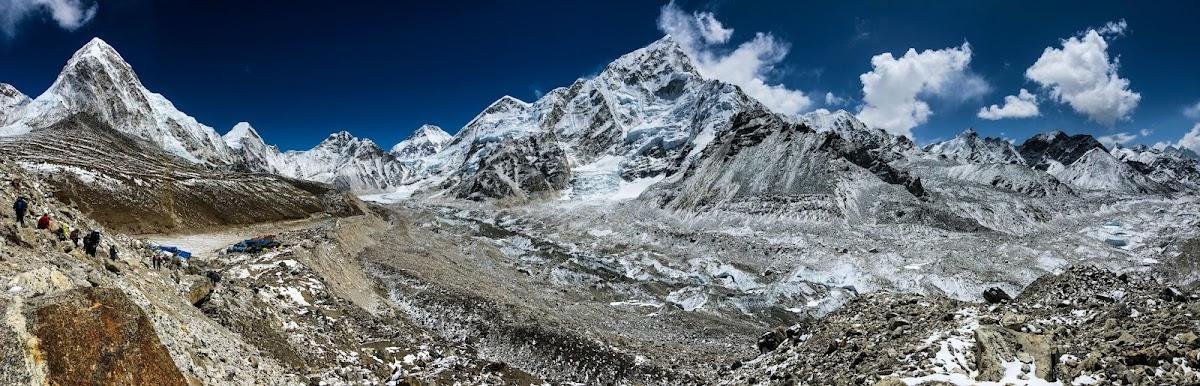
The Everest Base Camp trek cost is one of the first questions every aspiring trekker asks. The short answer: expect to budget between USD 1,400 and USD 2,500 for a fully guided 14-day package from Kathmandu, or USD 800–1,200 if you prefer an independent trek. But the total cost depends on dozens of variables — from the season you choose to the quality of teahouses you book to whether you hire a porter.
This guide breaks every single expense down so you can plan an accurate budget, avoid surprises, and choose the right best Everest trek company for your trip. We cover agency fees, permits, flights, accommodation, food, gear, tips, travel insurance, and the hidden costs most trekkers forget.
EBC Trek Cost 2026/2027 Summary
| Expense | Budget | Mid-Range | Premium |
|---|---|---|---|
| Trek Package (14 days) | USD 1,100 | USD 1,400 | USD 2,200+ |
| Nepal Visa | USD 30 | USD 50 | USD 50 |
| TIMS + Sagarmatha Permit | USD 55 | USD 55 | Included |
| Lukla Flights (return) | USD 180 | USD 180 | Included |
| Travel Insurance | USD 100 | USD 150 | USD 200 |
| International Flights | USD 600 | USD 900 | USD 1,400+ |
| Gear and Equipment | USD 200 | USD 500 | USD 1,000+ |
| Tips (guide + porter) | USD 100 | USD 150 | USD 200 |
| Extra Spending Money | USD 100 | USD 200 | USD 300 |
| TOTAL | ~USD 2,465 | ~USD 3,585 | ~USD 5,550+ |
1. Trek Package Cost: What Is Actually Included
The biggest variable in your EBC trek budget is whether you book a guided package or trek independently. A guided package from a reputable Everest Trekking Company typically includes: a licensed trekking guide, a porter to carry your bag (up to 12 kg), all teahouse accommodation, all meals (breakfast, lunch, dinner), airport transfers in Kathmandu, Lukla flights, all permit fees, and an emergency evacuation plan.
| Package Type | Price (USD) | What Is Included |
|---|---|---|
| Budget local agency | 700–900 | Guide, basic teahouses, meals |
| Mid-range local agency | 1,100–1,500 | Guide, porter, better teahouses, all meals, permits, Lukla flights |
| Premium local agency | 1,600–2,200 | Experienced guide, private porter, best teahouses, extra acclimatisation days |
| Western operator | 2,500–4,000 | Western trip leader, fully organised, higher service standards |
| Luxury EBC package | 3,500–6,000+ | Best lodges, helicopter options, private guide, premium food |
Our standard 14-day Everest Base Camp trek package starts at USD 1,400 per person and includes everything a trekker needs for a safe and memorable experience. We are a trusted Everest base camp trek company with a team of licensed guides who know the Khumbu region inside out.
2. Nepal Visa Cost
Every international visitor to Nepal requires a visa. Nepal issues tourist visas on arrival at Tribhuvan International Airport in Kathmandu. You can also apply online before travel through the Nepal Department of Immigration.
| Visa Duration | Cost (USD) |
|---|---|
| 15 days (single entry) | USD 30 |
| 30 days (multiple entry) | USD 50 |
| 90 days (multiple entry) | USD 125 |
For a 14-day EBC trek, a 30-day visa at USD 50 is the right choice. Bring passport photos and USD cash — card payments are not always accepted at the visa counter.
3. Trekking Permits: Sagarmatha National Park and TIMS
To trek to Everest Base Camp you need two mandatory permits. Controlled checkpoints verify them at multiple points on the trail.
| Permit | Cost | Where Obtained |
|---|---|---|
| Sagarmatha National Park Entry | NPR 3,000 (approx. USD 22) | Monjo checkpoint |
| Khumbu Pasang Lhamu Rural Municipality Fee | NPR 2,000 (approx. USD 15) | Lukla |
| TIMS Card | USD 10–20 | TAAN offices Kathmandu |
Good agencies include all permit fees in the package price. Our EBC trek packages include all permits so you can focus entirely on the trek itself. Read our dedicated guide on Everest Base Camp trek permits for the full breakdown.
4. Lukla Flights: Cost and What to Expect
Getting to the trailhead requires a short but thrilling flight from Kathmandu to Lukla (Tenzing Hillary Airport). At just 35–40 minutes, this flight is one of the most dramatic in the world, soaring over Himalayan foothills with jaw-dropping views.
| Flight Route | Approx. Cost (One Way) | Duration |
|---|---|---|
| Kathmandu to Lukla | USD 85–100 | 35–40 min |
| Lukla to Kathmandu | USD 85–100 | 35–40 min |
| Round trip total | USD 170–200 | — |
Lukla flights are weather dependent. Cancellations during monsoon season (June–August) and winter fog (December–February) are common. Always build in a buffer day before your international flight home. Our Lukla flight guide explains everything you need to know. Some trekkers opt for the EBC trek with helicopter return — flying back to Kathmandu by helicopter from Gorak Shep, eliminating Lukla flight delays on the return at a cost of approximately USD 300–400 extra.
5. Teahouse Accommodation Costs Along the EBC Route
Accommodation along the EBC route is in teahouses — small guesthouses run by local Sherpa families. Standards range from basic wooden huts at lower elevations to comfortable lodges with solar-heated showers and charging stations at Namche Bazaar.
| Location | Altitude | Room Cost (per night) |
|---|---|---|
| Phakding | 2,610 m | USD 3–8 |
| Namche Bazaar | 3,440 m | USD 5–15 |
| Tengboche | 3,860 m | USD 4–10 |
| Dingboche | 4,410 m | USD 4–8 |
| Lobuche | 4,910 m | USD 4–6 |
| Gorak Shep | 5,164 m | USD 4–6 |
Most teahouses offer very cheap or free rooms if you commit to eating all meals there. When you book a guided package with a reputable best Everest trek company, teahouse accommodation is pre-booked and included — particularly important during peak spring (March–May) and autumn (September–November) seasons when rooms fill fast. Our full guide on EBC trek accommodation covers every stop on the trail.
6. Food Costs on the EBC Trek
Food gets progressively more expensive the higher you climb, due to the cost of ferrying supplies by helicopter, yak, and porter. Expect to pay 2–3 times more at Gorak Shep than at Phakding.
| Meal or Item | Lower Elevations (USD) | Higher Elevations (USD) |
|---|---|---|
| Dal bhat (set meal) | 5–7 | 10–14 |
| Breakfast (porridge or eggs) | 4–6 | 7–10 |
| Hot tea or coffee | 1–2 | 2–4 |
| Bottled water (1 litre) | 1–2 | 3–5 |
| Energy bar or snack | 2–3 | 4–5 |
| Pizza or pasta | 6–9 | 12–15 |
If your trek package includes all meals (three per day), you save USD 200–350 over a 14-day trek. Budget trekkers who pay as they go should allow USD 30–45 per day for food alone at higher elevations. See our guide on food on the Everest Base Camp trek for the full picture.
7. Travel Insurance: A Non-Negotiable Cost
Travel insurance is not optional for the EBC trek. The trail reaches 5,545 metres at Kala Patthar, and altitude-related illness requiring helicopter evacuation is a real risk. A helicopter evacuation from high camp to Kathmandu costs USD 3,000–7,000 without insurance. With the right policy, that cost is covered entirely.
Your policy must explicitly cover:
- High-altitude trekking above 5,000 metres
- Emergency helicopter evacuation
- Medical treatment in Nepal
- Trip cancellation and flight delay
Expect to pay USD 80–200 for a 15-day policy from providers such as World Nomads, True Traveller, or SafetyWing. Always check the altitude coverage limit — some policies cap at 4,000 or 4,500 metres, which is not suitable for EBC.
8. International Flight Costs to Kathmandu
International flights are often the largest single expense. Kathmandu is served by Qatar Airways, Turkish Airlines, Air India, Oman Air, and budget carriers via Indian cities.
| Departure Region | Approx. Return Fare (USD) |
|---|---|
| USA or Canada | 900–1,400 |
| UK or Europe | 600–900 |
| Australia | 700–1,100 |
| India | 150–300 |
| Middle East or Asia | 300–600 |
Book at least 3 months in advance for peak spring (March–May) and autumn (September–November) departures when flights fill quickly and prices spike.
9. Gear and Equipment Costs
Kathmandu’s Thamel district has excellent gear shops where you can rent or buy quality equipment at far lower prices than in Western countries. Many trekkers pick up key items on arrival rather than lugging them from home.
| Item | Buy in Nepal (USD) | Rent in Nepal (USD) |
|---|---|---|
| Down jacket | 40–120 | 3–5 per day |
| Sleeping bag (-15°C rated) | 40–100 | 3–4 per day |
| Trekking boots | 50–150 | Not recommended |
| Trekking poles (pair) | 20–60 | 2–3 per day |
| Duffel bag (60 L) | 20–50 | 2 per day |
| Daypack (25–30 L) | 20–60 | 2 per day |
| Thermal base layers (top and bottom) | 25–60 | N/A |
See our complete EBC packing list for every item you need from head to toe. We advise arriving in Kathmandu at least one day early to sort any gear gaps before flying to Lukla.
10. Guide and Porter Costs for Independent Trekkers
If you plan to trek independently, you will need to hire a licensed guide and porter separately. This is now legally required in the Everest region — solo trekking without a licensed guide is not permitted.
| Staff Member | Daily Rate (USD) | 14-Day Total (USD) |
|---|---|---|
| Licensed trekking guide | 25–35 | 350–490 |
| Porter (per trekker) | 18–25 | 252–350 |
| Guide and porter combined | 43–60 | 600–840 |
Always pay your staff the full agreed amount plus a tip. The Nepal Mountaineering Association recommends tipping guides USD 10–15 per day and porters USD 8–10 per day. Never skimp on tips for staff carrying heavy loads at altitude.
11. Tips and Gratuities: How Much to Budget
Tipping is a vital part of trekking culture in Nepal and forms a significant part of local staff income. For a 14-day EBC trek, budget the following:
- Lead guide: USD 100–150 total (approximately USD 7–10 per trekker per day)
- Assistant guide: USD 70–100 total
- Porter: USD 50–70 total per porter
In groups, tips are pooled and distributed at a ceremony on the last day. Give tips in an envelope with a personal note of thanks — it is a tradition your crew will appreciate greatly.
12. Hidden Costs Most EBC Trekkers Forget
Beyond the headline package price, several extra expenses catch first-time EBC trekkers off guard:
| Extra Cost | Approx. Amount (USD) |
|---|---|
| Charging phone or camera at teahouses | 2–5 per charge |
| WiFi at teahouses | 2–5 per hour |
| Hot shower at teahouses | 3–8 per shower |
| Water purification tablets or filter | 5–10 total |
| Altitude medication (Diamox) | 10–30 total |
| Kathmandu hotel (pre or post trek) | 20–80 per night |
| Kathmandu sightseeing and food | 30–80 per day |
| Souvenirs and gifts | 20–100 |
| Emergency flight rebooking after weather delay | 0–150 |
| Vaccinations (typhoid, hepatitis A, etc.) | 100–300 |
13. How to Save Money on the EBC Trek
The EBC trek does not have to break the bank. Here are proven strategies to keep costs manageable without compromising safety or experience:
- Book directly with a local agency. Booking with a local Everest Trekking Company rather than a Western operator saves 30–50% with no quality drop. Our guides are the same people Western agencies use — just without the markup.
- Travel in shoulder season. March and November offer excellent conditions at lower prices than peak spring or autumn. See our guide on best time for the Everest Base Camp trek.
- Rent gear in Kathmandu. Down jackets, sleeping bags, poles, and duffel bags are available in Thamel for a fraction of purchase cost.
- Carry a water bottle and purification tablets. Bottled water at USD 3–5 per litre at high elevation adds up to USD 60–80 over the trek. A Sawyer filter or iodine tablets eliminate this entirely.
- Eat dal bhat. The traditional Nepali meal of lentil soup, rice, and vegetables is the cheapest and most energy-dense option. Many teahouses offer free unlimited refills on dal bhat.
- Travel with 2–4 friends. Groups sometimes qualify for small discounts and share guide costs more efficiently than solo trekkers.
14. EBC Trek Cost by Variant: Which Package Is Right for You
The standard 14-day EBC trek is just one option. As a leading best Everest base camp trek company, we offer a range of itineraries to match different budgets and goals:
| Trek Variant | Duration | Cost From (USD) |
|---|---|---|
| Classic EBC Trek | 14 days | 1,400 |
| EBC Trek with Helicopter Return | 12 days | 1,700 |
| Luxury EBC Trek | 13 days | 3,500 |
| EBC Trek with Gokyo Lakes | 17 days | 1,650 |
| Everest Three High Passes | 20 days | 1,900 |
| EBC Trek with Island Peak Climbing | 22 days | 2,400 |
15. Is the EBC Trek Worth the Cost?
Standing at 5,364 metres with Everest towering above you, surrounded by the Khumbu Icefall and the sounds of silence broken only by wind and prayer flags — there is nothing quite like Everest Base Camp. The trek is consistently rated one of the most life-changing experiences on earth.
When you factor in that a mid-range package costs USD 1,400 for 14 days of guided adventure with all meals and accommodation included, that works out to just USD 100 per day for an extraordinary Himalayan experience. Compared to a week in a European city hotel, the value is exceptional.
The key is choosing the right partner. Our experienced, NATHM-certified guides have walked this trail hundreds of times and know every teahouse, acclimatisation trick, and emergency procedure. We are proud to be a leading best Everest trek company trusted by thousands of trekkers from across the world.
Frequently Asked Questions About EBC Trek Cost
How much does the Everest Base Camp trek cost in total?
A full trip including package, visa, flights, gear, insurance, and spending money typically costs USD 2,500–4,000 for most travellers. The trek package itself starts at USD 1,400 per person with our company.
Can I do EBC on a budget under USD 1,500?
The trek package alone starts at USD 1,100 for basic guided options. Add permits (USD 37), Lukla flights (USD 180), visa (USD 50), and insurance (USD 100), and you are already at USD 1,467 before food, gear, or tips. A realistic budget trip including international flights costs at least USD 2,000–2,500 in total.
What is not included in the EBC trek package?
Typically not included: international flights, Nepal visa, travel insurance, personal gear, tips, and personal expenses (WiFi, showers, snacks, alcohol). Always confirm exactly what your package covers before booking.
When is the cheapest time to trek to EBC?
Monsoon (June–August) and winter (December–February) offer the lowest package prices, but with weather trade-offs. The best value for good trekking conditions is March or November. See our month-by-month breakdown in our best time for EBC trek guide.
Is it cheaper to book EBC trek in Nepal or from abroad?
Always cheaper to book directly with a local Nepali agency. You pay for the same guides, teahouses, and trails — without the additional margins charged by international operators. Contact us directly for the best price on your Everest Base Camp trek.
Planning Your Everest Trek?
Get local expert advice on cost, itinerary and the best time to go.
16. Day-by-Day Cost Breakdown for the 14-Day EBC Trek
Understanding exactly where your money goes each day helps you plan a realistic budget and avoid running short of cash in the mountains. Below is a detailed day-by-day breakdown for a mid-range independent trekker (excluding the trek package, which covers accommodation and meals):
Day 1 — Arrival in Kathmandu: Your first full day in Kathmandu typically involves settling in, sorting gear, and perhaps a briefing with your guide. Budget USD 30–60 for a mid-range Thamel guesthouse, USD 20–30 for meals and drinks, and USD 10–20 for any last-minute pharmacy items (Diamox, water purification tablets, lip balm for high altitude). Total: USD 60–110.
Day 2 — Kathmandu to Lukla, Trek to Phakding: Your flight to Lukla (included in most packages) departs early morning from Ramechhap or Kathmandu depending on season. The afternoon trek to Phakding is easy, through forests and river crossings. Personal expenses today: USD 10–20 for snacks, drinks, and a SIM card top-up. Total outside package: USD 10–20.
Day 3 — Phakding to Namche Bazaar: A longer day with significant elevation gain through Sagarmatha National Park. Your permit is checked at Monjo. This is the day many trekkers feel the first effects of altitude. Outside package costs: USD 5–10 for WiFi at Namche, a beer or soft drink, and any snacks. Total: USD 5–15.
Day 4 — Acclimatisation Day in Namche Bazaar: A rest day for your body to adjust to 3,440 metres. Namche has excellent bakeries, gear shops, and the famous Hillary Museum. Budget USD 10–20 for a coffee and pastry at a cafe, USD 5–15 for a hot shower, USD 5–15 for any gear items you forgot. Total: USD 20–50.
Day 5 — Namche to Tengboche: A beautiful day with views of Everest, Lhotse, and Ama Dablam. Tengboche Monastery is one of the most photographed spots on the trail. Personal costs: WiFi (USD 3–5), a warm drink at a teahouse along the way (USD 2–4). Total: USD 5–10.
Day 6 — Tengboche to Dingboche: Descending through rhododendron forests then ascending to the high plateau at Dingboche (4,410 m). The air noticeably thinner here. Budget for extra warm drinks throughout the day (USD 10–15) and a hot shower if available (USD 5–8). Total: USD 15–23.
Day 7 — Acclimatisation Day in Dingboche: Another rest day. A short hike to the ridge above Dingboche provides stunning views of Makalu and Island Peak. Personal budget for today: USD 10–20 for snacks and hot drinks, USD 3–5 for phone charging. Total: USD 13–25.
Day 8 — Dingboche to Lobuche: Passing the Thukla Memorial — a sobering site with stone cairns honouring climbers lost on Everest. Lobuche (4,910 m) teahouses are basic and cold. Budget for extra snacks and drinks: USD 15–25. Phone charging and WiFi: USD 5–10. Total: USD 20–35.
Day 9 — Lobuche to Gorak Shep, Hike to EBC: The big day. You reach Everest Base Camp (5,364 m) in the afternoon after a long, rocky approach. This is the most expensive food day — everything at Gorak Shep is at premium altitude prices. Budget USD 25–40 for all snacks and hot drinks. Total: USD 25–40.
Day 10 — Kala Patthar Sunrise, Descent to Pheriche: Early morning hike to Kala Patthar (5,545 m) for the best Everest panorama on the trek. Then a long descent to Pheriche. Budget for celebration drinks and extra food: USD 20–30. Total: USD 20–30.
Days 11–14 — Descent to Lukla: Each day heading down, teahouse prices fall. Budget USD 10–20 per day for personal expenses. Total: USD 40–80.
Adding up all out-of-package personal expenses over 14 days: approximately USD 213–448, or around USD 300 as a realistic middle estimate. This aligns with the USD 200–350 buffer we recommend in our budget planning section above.
17. Seasonal Price Variations: When Is EBC Cheapest
The time of year you trek has a major impact on overall cost. Here is how prices fluctuate across the year for a typical guided package from a local Everest Trekking Company:
Spring (March–May) — Peak Season, Highest Prices: March, April, and May are the busiest months on the trail. Temperatures are warming, skies are clear, and flowers are in bloom. Package prices are at their annual peak, teahouse rooms fill fast and must be pre-booked, and domestic flights to Lukla are most expensive. Expect packages 10–20% above average. Spring is still the best overall season for a first-timer — the higher price is well worth it for the reliable conditions. The April trek to EBC is particularly popular for its rhododendron blooms and stable weather.
Autumn (September–November) — Second Peak, Near-Peak Prices: Autumn is considered by many experienced trekkers to be the best season on the trail. The monsoon has washed the skies clear, temperatures are cooling, and visibility is superb. October and November in particular offer near-perfect conditions. Prices are similar to spring — slightly lower in September when the trail is still emptying out after monsoon. Book early for October EBC treks as teahouses fill quickly.
Monsoon (June–August) — Cheapest Season, Challenging Conditions: The summer monsoon brings heavy rain, cloud, leeches below 3,000 metres, and frequent Lukla flight cancellations. Trekking in June, July, and August is possible but challenging. Package prices drop 20–30% from peak, teahouses are nearly empty, and you will often have the trail to yourself. Experienced trekkers on a tight budget sometimes choose this window. Plan extra buffer days for flight delays.
Winter (December–February) — Cold But Cheap: Winter months bring extreme cold at altitude (below –20°C at EBC), heavy snowfall above Namche, and high wind above 5,000 metres. However, the skies are crystal clear and the trail virtually empty. Package prices drop 15–25% from peak. A December EBC trek or January EBC trek suits experienced cold-weather trekkers only. Proper cold-weather gear is essential and adds to the overall budget.
18. Group Size and How It Affects Your EBC Trek Cost
Travelling in a group versus solo has a measurable impact on what you pay, particularly for independently organised treks:
Solo trekkers pay the full per-person rate for guide services, and typically pay a single supplement at teahouses (some rooms have two beds and solo travellers may pay for both). On a fully inclusive package, solo travellers pay exactly the listed per-person rate. For independently organised treks, the guide’s daily rate is split between all group members — two trekkers share a guide at USD 25–35/day rather than paying USD 25–35 each.
A group of four trekkers sharing one licensed guide would pay USD 7–9 per person per day for guide services, compared to USD 25–35 for a solo trekker. This is one of the biggest arguments for travelling as a small group. We offer small group EBC treks with fixed departure dates that allow solo travellers to join a pre-formed group at the standard per-person package price — contact us at our website for upcoming group departures.
19. Understanding What Premium Packages Offer That Budget Ones Do Not
At first glance, a USD 2,500 luxury EBC package costs almost twice a USD 1,400 standard package. What does the extra money actually buy you?
With our Luxury Everest Base Camp Trek, the key differences include: accommodation in the best-rated teahouses and lodge-hotels at each stop, a private porter assigned to each trekker (rather than one porter per two trekkers), a highly experienced senior guide with first-aid certification and satellite communicator, full board meals with the option of set Western menu items at higher elevations, and a helicopter return from Gorak Shep or EBC directly to Kathmandu — eliminating the long descent and Lukla flight entirely. The helicopter alone saves 3–4 days of walking and eliminates the main source of flight delay stress.
For trekkers on tighter budgets, the standard package is excellent. The difference in experience is primarily one of comfort and convenience rather than safety or scenic quality — the mountains are exactly the same from any teahouse.
20. EBC Trek Cost vs Other Great Himalayan Treks
How does the Everest Base Camp trek cost compare to other iconic Himalayan adventures? Here is a broad comparison using mid-range guided package prices:
| Trek | Duration | Mid-Range Package (USD) | Max Elevation |
|---|---|---|---|
| Everest Base Camp | 14 days | 1,400–1,600 | 5,545 m (Kala Patthar) |
| Annapurna Circuit | 14–18 days | 1,200–1,500 | 5,416 m (Thorong La) |
| Manaslu Circuit | 14 days | 1,100–1,400 | 5,106 m (Larkya La) |
| Langtang Valley | 7–10 days | 700–900 | 4,984 m (Tserko Ri) |
| EBC with Gokyo Lakes | 17 days | 1,650–1,900 | 5,545 m |
The EBC trek costs slightly more than the Annapurna Circuit or Manaslu due to its popularity, the permit structure, and the higher demand for teahouses in the Khumbu. However, it remains one of the world’s great adventure experiences per dollar spent. For trekkers who want a quieter alternative at a lower price, the Everest View Trek offers stunning Everest scenery in just 7 days from USD 600.
21. Budgeting for Emergencies and Contingencies
Every experienced trekker knows that the mountains do not always cooperate with your schedule or your budget. Build these contingency funds into your planning:
Weather delay fund (USD 100–200): Lukla flights are frequently cancelled due to cloud, fog, and wind. If you are stranded in Lukla for 1–3 extra days, you need accommodation (USD 5–10/night), food (USD 20–30/day), and potentially a new connecting flight ticket if you miss an international departure. Budget USD 100–200 as a weather contingency.
Medical contingency (USD 200–500): Even with excellent preparation, altitude sickness, stomach bugs, and minor injuries happen. If you need to descend early by vehicle from Namche or pay for a clinic visit at the HRA clinic in Pheriche (USD 30–50 per consultation), these costs add up. Your travel insurance should cover helicopter evacuation, but it may not cover all medical consumables at teahouses.
Extra day in Kathmandu (USD 60–100): Flight delays out of Nepal are common, particularly for early morning departures. Build one buffer day into your Kathmandu stay to avoid the stress — and cost — of rebooking international flights at short notice.
As a trusted best Everest trek company, our operations team in Kathmandu assists all our clients with rebooking, emergency logistics, and coordination with insurance providers at no extra charge. This is one of the most valuable services a good local agency provides that a DIY trekker cannot replicate.
22. How to Book the EBC Trek at the Best Price
Here are the most effective strategies for securing the best price on your Everest Base Camp trek without sacrificing quality or safety:
Book direct with a local Nepal agency. Cutting out international middlemen saves 30–50% on the package price. You get the same guides, the same teahouses, the same mountains. The difference is purely in the margin. As a local Everest base camp trek company, we pass those savings directly to our trekkers.
Book 3–6 months in advance for spring and autumn. Early booking secures the best teahouse rooms, more guide availability, and occasionally an early-bird discount. Last-minute bookings in peak season lead to higher prices and potentially inferior accommodation choices.
Compare inclusions carefully, not just headline price. A package at USD 900 that excludes permits, Lukla flights, and meals may end up costing more than a USD 1,400 fully inclusive package. Always ask for a detailed inclusions and exclusions list before comparing prices.
Ask about group departure dates. If you are a solo traveller or a couple, joining a small group departure is often 10–15% cheaper than a private trip. Our group departures run from Kathmandu every week during peak season.
Read verified reviews. Price is only one factor. The quality of your guide is the most important determinant of your experience. Read Google, TripAdvisor, and Trustpilot reviews before booking. All Everest Trekking Company guides carry NMA certification and have completed first-aid training.
Ready to start planning? Book your Everest Base Camp trek with us today and get a personalised cost breakdown for your dates, group size, and budget level. Our team responds within 24 hours.
23. Packing Efficiently to Reduce Extra Costs
Packing well saves money on the trail in several direct ways. Overpacking means you need an extra porter (USD 18–25/day), your pack is too heavy for a day hike to Kala Patthar, and you feel every extra kilogram above 5,000 metres. Underpacking means buying expensive replacement gear in teahouse shops at 3–4 times the Kathmandu price.
The sweet spot is a 35-45 litre daypack (carrying just your camera, water, snacks, layers, and documents) and a porter duffel of no more than 10–12 kg containing your sleeping bag, down jacket, base layers, and spare clothes. This setup means one porter per trekker is sufficient, keeping your labour costs within the standard package rate.
Items worth buying in Kathmandu before departure: quality wool socks (NPR 300–500 each), gaiters (NPR 800–1,200), a balaclava (NPR 400), and a headlamp (NPR 600–1,200). These cost 3–5 times more at shops along the trail above Namche. Our full EBC packing list specifies exact quantities and where best to buy each item in Kathmandu.
Whatever your budget, the Everest Base Camp trek is a profound, life-defining journey. Work with an experienced, trusted best Everest trek company to make sure every dollar is well spent and every step of the trail is guided by people who genuinely care about your safety and experience.
Planning Your Everest Trek?
Get local expert advice on cost, itinerary and the best time to go.