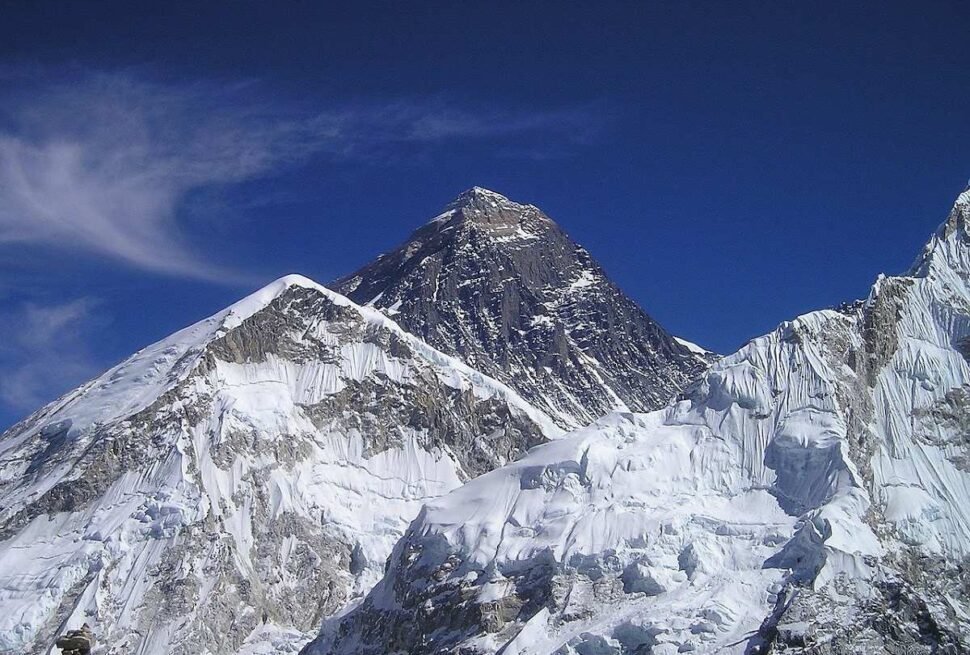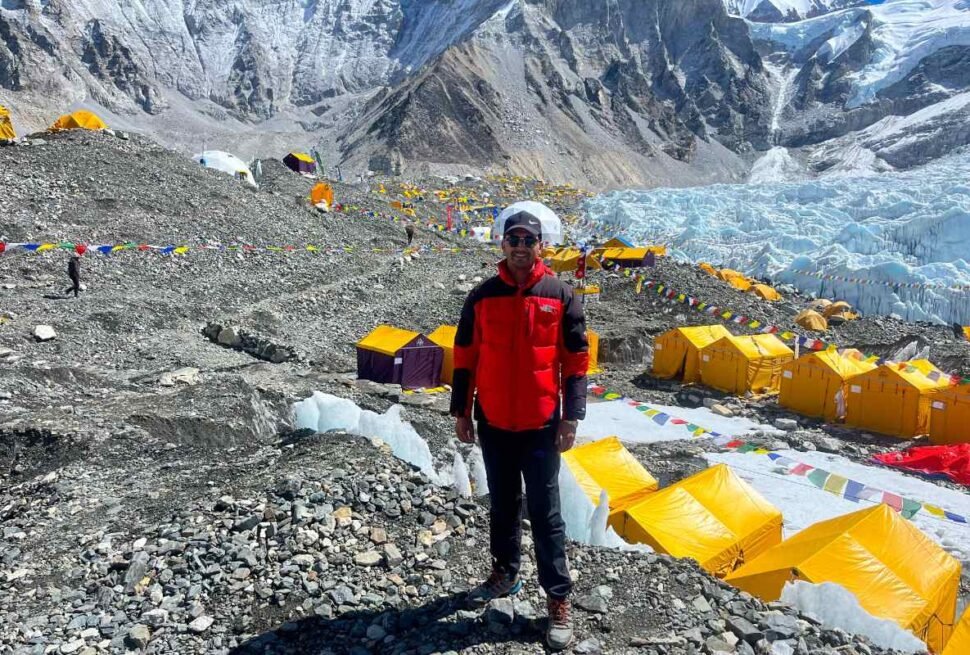
Kala Patthar (Nepali: काला पत्थर, meaning “black rock”) is a prominent peak at 5,645 metres and the highest point on the standard Everest Base Camp trek. It is widely regarded as the best accessible viewpoint for Mount Everest in the world — offering a closer, more dramatic view of Everest’s summit pyramid than the Base Camp itself, which is surrounded by the Khumbu Glacier moraine and doesn’t afford a clear view of the mountain above.
For most trekkers, standing on Kala Patthar’s summit and looking directly at Everest, Lhotse, Nuptse, and the Khumbu Icefall is the defining moment of the entire EBC journey.
Kala Patthar: Key Facts
| Feature | Details |
|---|---|
| Altitude | 5,645m (18,519 ft) |
| Location | Khumbu region, Sagarmatha National Park, Nepal |
| Starting point | Gorak Shep (5,164m) |
| Distance from Gorak Shep to summit | Approximately 2.5 km one way |
| Time to summit from Gorak Shep | 1.5–2.5 hours |
| Views from summit | Everest (8,849m), Lhotse (8,516m), Nuptse (7,861m), Changtse, Pumori, Khumbu Icefall |
| Best time to climb | Pre-dawn for sunrise, or early morning before clouds build |
What Can You See from Kala Patthar?
The view from Kala Patthar on a clear day is one of the most spectacular mountain panoramas on earth. Standing at the summit, you are looking directly at:
- Mount Everest (8,849m) — the iconic black summit pyramid rises directly above the Khumbu Icefall. The South Col route, used by all expeditions from the Nepal side, is visible.
- Lhotse (8,516m) — the world’s fourth highest mountain, flanking Everest to the south
- Nuptse (7,861m) — dramatic west ridge immediately to the south of Everest
- Changtse (7,583m) — the “north peak” of Everest visible behind the main summit
- Pumori (7,161m) — the “daughter peak” immediately west of Kala Patthar
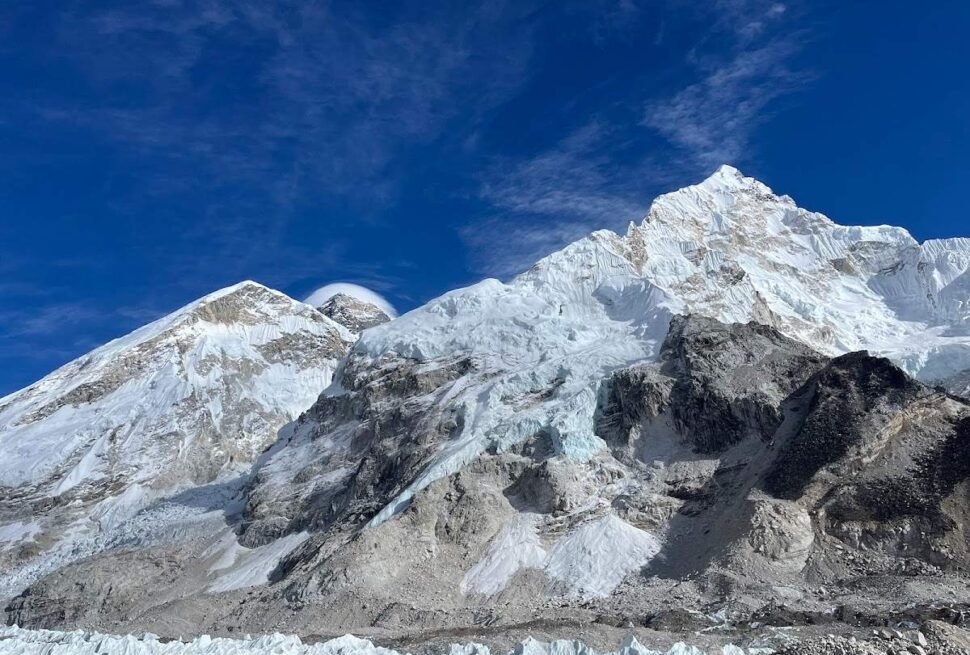
- Khumbu Icefall — the dramatic, broken section of glacier flowing from the Western Cwm, clearly visible from Kala Patthar
Everest Base Camp itself is less visible from Kala Patthar — the camp sits below the icefall in the Khumbu Glacier moraine and is not clearly distinguishable. The mountain views from Kala Patthar are significantly better than from Base Camp, which is why most trekkers rank Kala Patthar as the more rewarding of the two destinations.
Planning Your Everest Trek?
Get local expert advice on cost, itinerary and the best time to go.
How to Get to Kala Patthar
Kala Patthar is climbed from Gorak Shep (5,164m), the last teahouse stop on the EBC route. The trail heads northwest from Gorak Shep, ascending steeply along a rocky ridge. The trail is well-worn and visible but can be icy and snowbound in winter or after fresh snowfall.
The ascent typically takes 1.5–2.5 hours depending on fitness and altitude acclimatisation. At 5,600m, the air is extremely thin — expect to move more slowly than at lower elevations, with frequent short rests.
The summit is marked by a cairn and prayer flags. The true high point is slightly further along the ridge from the main viewpoint that most trekkers stop at — if conditions and time permit, continue to the actual summit for an even better view.
Sunrise on Kala Patthar
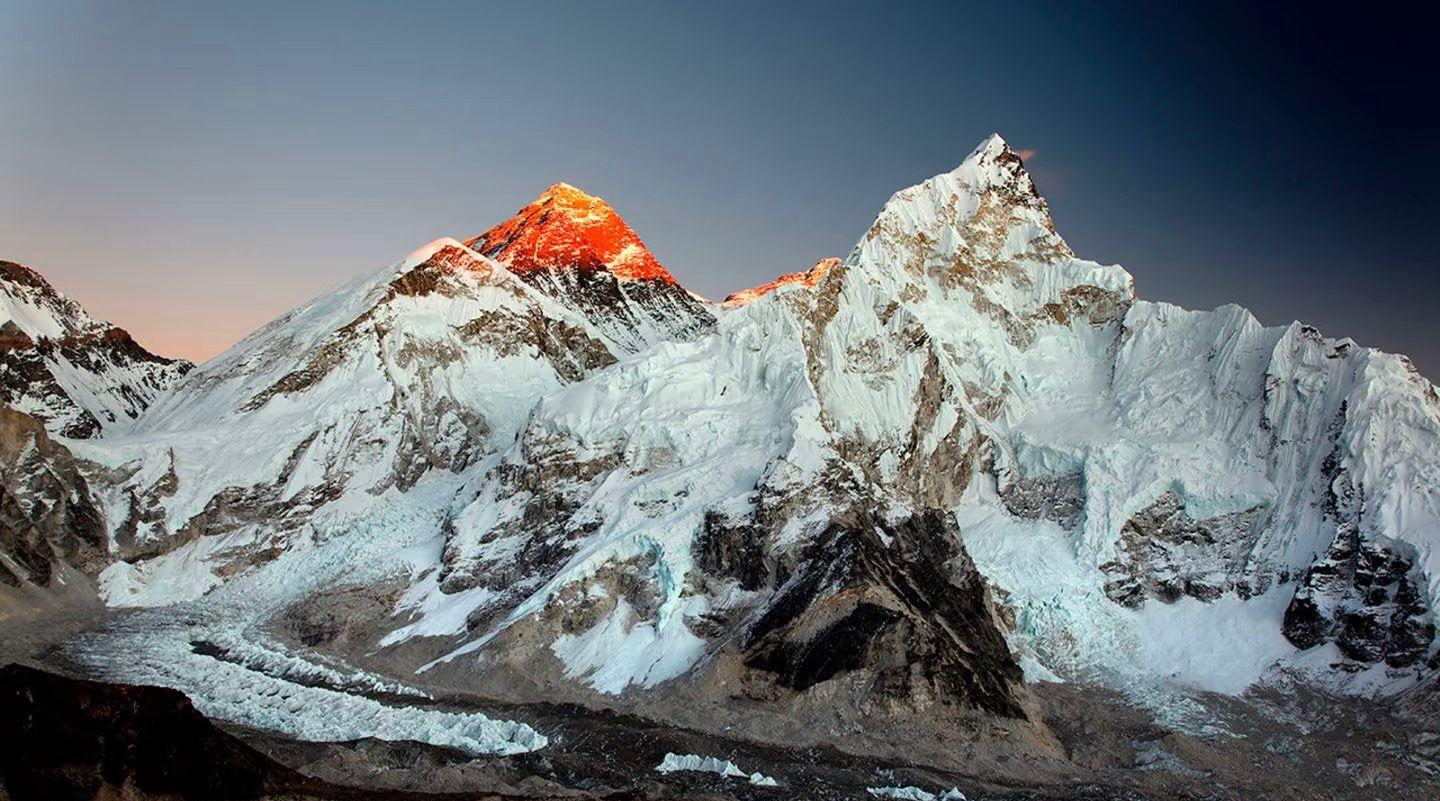
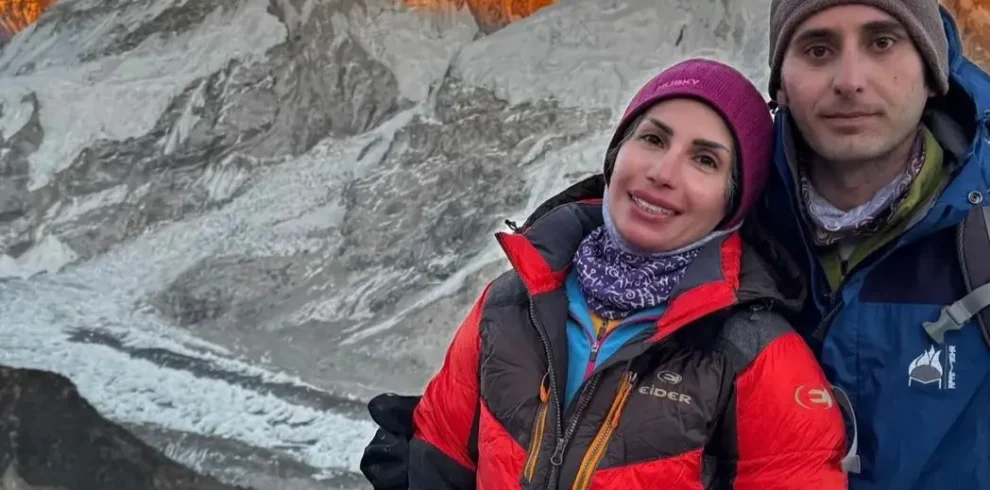
The sunrise from Kala Patthar is one of the most photographed and celebrated mountain sunrises in the world. As the first light hits Everest’s summit, the black pyramid turns gold and then pink before the sun rises above the eastern ridgeline. The Khumbu Icefall is lit dramatically from the side, creating extraordinary shadow and texture.
To catch the sunrise, trekkers leave Gorak Shep in the dark — typically around 4:30–5:00 AM, with headlamps. The pre-dawn conditions are cold (temperatures at the summit in October can be -15°C or below with wind chill), so full cold-weather gear is essential: down jacket, thermal layers, warm hat, and insulated gloves.
In return, you get the mountain almost entirely to yourself in the early morning light — and views that most trekkers describe as the most extraordinary moment of the entire EBC trek.
Daytime vs Sunrise Ascent
If sunrise timing doesn’t suit you or conditions are severe, a daytime ascent (leaving Gorak Shep around 8–9 AM) still offers excellent views in good weather — particularly in October, when mornings are generally clear before clouds build in the afternoon. By late morning on peak autumn days, some cloud can begin to obscure the summit views, so the earlier you summit, the better.
Difficulty of the Kala Patthar Ascent
Kala Patthar is not technically difficult — there is no scrambling, ropes, or exposed terrain on the standard route. However, the combination of altitude (5,645m), thin air, steep terrain, and cold temperatures makes it physically demanding. At this elevation, the air contains roughly half the oxygen available at sea level.
Most trekkers who have completed the acclimatisation stops at Namche and Dingboche have enough altitude adaptation by the time they reach Gorak Shep to summit Kala Patthar successfully, albeit slowly and with effort. Trekkers with active AMS symptoms should not attempt the summit — rest and monitor your health before any ascent.
Kala Patthar and EBC: One Day or Two?
The standard EBC itinerary includes both Everest Base Camp and Kala Patthar in successive days from Gorak Shep:
- Day 1 from Gorak Shep: Hike from Lobuche to Gorak Shep, then continue to Everest Base Camp in the afternoon. Return to Gorak Shep for the night.
- Day 2 from Gorak Shep: Pre-dawn ascent of Kala Patthar for sunrise, then descend to Pheriche or Dingboche.
This two-day approach gives you both EBC and Kala Patthar without rushing either. Some trekkers visit EBC and Kala Patthar on the same day, but this makes for an extremely long, exhausting day at altitude and is not recommended.
Best Time to Climb Kala Patthar
The best season for Kala Patthar is October, followed by April and November. October offers the most reliable clear skies and the most dramatic views. The risk of cloud or snowstorm obscuring the summit increases in November (colder, higher snowfall risk) and in spring as the monsoon approaches in May.
Morning is always better than afternoon — cloud typically builds over the Khumbu peaks from mid-morning onwards, particularly in spring and monsoon months.
What to Bring for Kala Patthar
- Full cold-weather gear: down jacket, thermal base layers, warm hat, balaclava, insulated gloves
- Headlamp with fresh batteries (for pre-dawn ascent)
- Camera and extra batteries (cold drains batteries quickly)
- Water and snacks
- Sunscreen and glacier glasses (UV is extreme at this altitude)
- Trekking poles (helpful on the steep terrain)
The View Trekkers Remember Most
Ask almost any Everest Base Camp trekker which moment they remember most vividly, and a majority will say standing on Kala Patthar looking at Everest — the sheer mass of the mountain, the scale of the Khumbu Icefall, the prayer flags flapping in the wind, and the knowledge that you’ve walked every step from Lukla to this point at the roof of the world.
Every ETC-guided EBC trek includes a guided Kala Patthar ascent, typically pre-dawn for sunrise. View our Everest Base Camp Trek package for the full itinerary.
Related EBC Trek Guides
Planning Your Everest Trek?
Get local expert advice on cost, itinerary and the best time to go.