People type this question into Google quietly, usually late at night after booking flights: do people die on the Everest Base Camp trek? The honest answer deserves more than a scary headline or a reassuring brush off, so here it is from someone who works on this trail. Yes, there are deaths on the Everest Base Camp trek in a typical year, a small number. The number is tiny against the tens of thousands who walk the trail annually, almost every case follows a known pattern, and the patterns are avoidable. This article explains what actually goes wrong, how often, and exactly what we do about each risk.
One thing to be clear about first: Nepal does not publish an official registry of trekker deaths on the Everest Base Camp trail, so every figure you read anywhere, including here, is an estimate assembled from rescue operators, news reports, and trail experience. Treat any website quoting precise death statistics for the EBC trek with suspicion. The honest range that people who work in the Khumbu would recognise is a handful of deaths in a normal year, out of a trekking population that Sagarmatha National Park entry data puts in the tens of thousands.
Table of Contents
The Difference Between Everest and the Everest Base Camp Trek
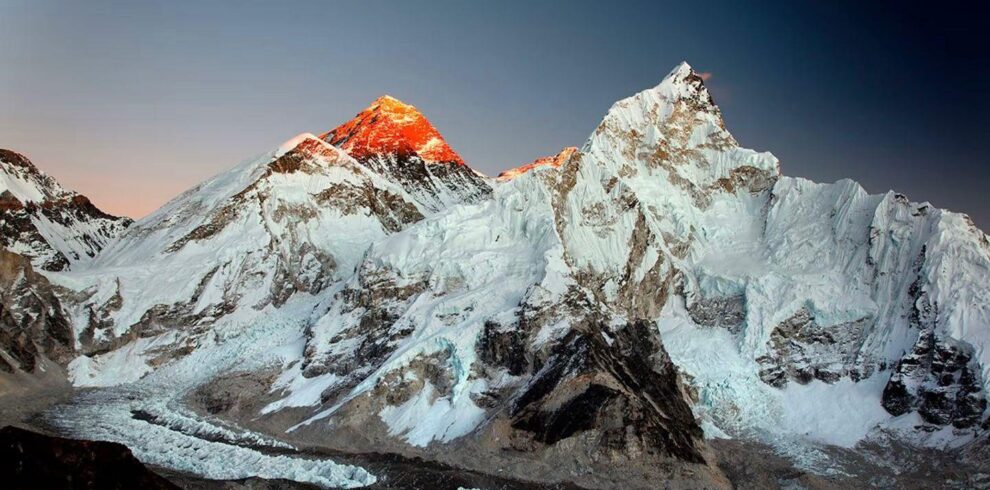
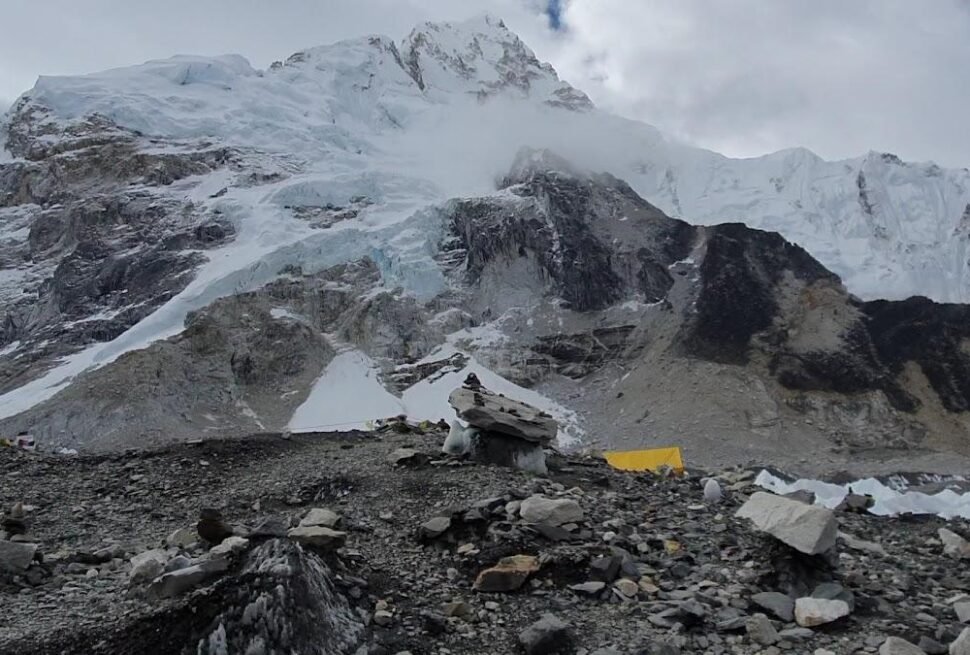
Most of the frightening numbers people find belong to a different activity. Deaths reported on Mount Everest, the ones that make international news each spring, happen to climbers above Base Camp, in the icefall and the death zone, on a mountaineering expedition that has nothing in common with the trek. The trek ends where the climb begins, at 5,364 metres. Trekkers do not touch the icefall, do not use oxygen, and do not sleep on the mountain. When you read about a deadly season on Everest, it is almost never about the trail you will walk.
Planning Your Everest Trek?
Get local expert advice on cost, itinerary and the best time to go.
What Actually Causes Deaths on the Everest Base Camp Trek
| Cause | The pattern behind it | How preventable |
|---|---|---|
| Severe altitude illness (HAPE and HACE) | Ignoring symptoms and continuing to ascend | Highly preventable |
| Heart attacks and existing conditions | Undiagnosed or unmanaged conditions under sustained exertion | Partly preventable with screening |
| Falls from the trail | Rare; usually shortcuts, night walking, or icy sections | Highly preventable |
| Cold exposure | Solo trekkers caught out, mostly off season or off route | Highly preventable |
| Helicopter and flight incidents | Rare aviation accidents in mountain weather | Outside individual control, statistically small |
Among all causes of deaths on the Everest Base Camp trek, altitude sits at the top of that table for a reason. High altitude pulmonary oedema and high altitude cerebral oedema kill trekkers who kept walking up when their bodies were telling them to stop. Nearly every altitude death investigated afterward shows the same timeline: symptoms appeared a day or two earlier, they were called a headache or tiredness, and the person ascended anyway, often because their itinerary had no slack or their group had no one responsible for noticing. The full picture of symptoms and responses is in our guide to altitude sickness on the EBC trek, and it is the single most important page on this site to read before you fly.
The second row surprises people. Sustained daily exertion for two weeks at altitude is a cardiac stress test, and trekkers in their fifties, sixties, and seventies who have not exercised at this intensity for years are asking their hearts a hard question on the hill up to Namche. This is not a reason for older trekkers to stay home; we address it directly in can seniors do the Everest Base Camp trek. It is a reason to see a doctor before booking and to tell your guide about any condition, because the guides can manage what they know about.
How Risky Is the Trek in Real Numbers
Put the estimated deaths on the Everest Base Camp trek against the trekking population and the trail comes out safer than many activities nobody worries about. Tens of thousands of trekkers reach the Khumbu every year, and the deaths in a typical year can be counted on one hand or two. The risk per trekker is a small fraction of one percent, and that includes people who arrived with no acclimatisation plan, no insurance, no guide, and a heart condition they never mentioned to anyone. For a prepared trekker on a sane itinerary with support, the residual risk is small and concentrates in things that are managed daily on a good trek: ascent profile, hydration, symptom checks, and weather calls.
The comparison that puts it in perspective: the drive to your airport carries measurable risk too. The difference is that on the trail, the main risk announces itself with symptoms a day or two before it becomes dangerous. Very few hazards in life give you that much warning.
The Seven Rules That Remove Most of the Risk
- Follow a real acclimatisation profile. Two nights in Namche, two in or around Dingboche, and never a big sleeping altitude jump after that. Itineraries that skip rest days to look cheap are how people end up in trouble at Lobuche.
- Report every symptom. A headache at 4,400 metres is information, not weakness. Guides can only manage what they hear about, and early honesty is the difference between a rest day and a helicopter.
- Never ascend with symptoms. The oldest rule in altitude medicine and still the one that saves lives: symptoms mean stay, worsening symptoms mean descend, tonight if necessary.
- Carry real insurance. A policy covering trekking to 6,000 metres with helicopter evacuation, checked line by line. Our insurance and emergency guide lists exactly what to verify.
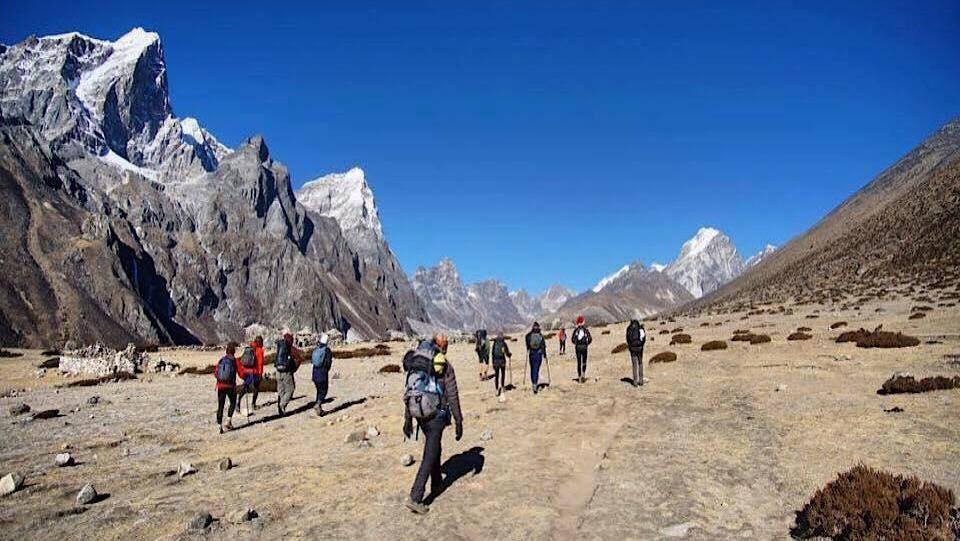
- Do not trek alone above Namche. Most exposure and fall cases involve people walking solo. A guide notices the early signs you cannot see in yourself; our guide hiring guide covers what good support looks like.
- Respect the season. Winter cold and monsoon trail conditions change the risk math. The EBC weather guide shows what each month actually does.
- Arrive trained. Fitness is a safety feature. A body with reserves handles altitude, cold, and long days with margin to spare; see how to prepare for the EBC trek.
What Happens When Something Goes Wrong
The Khumbu has the best emergency infrastructure of any trekking region in Nepal, and it is worth knowing how it works before you need it. Every village on the route has lodges with communication. There are health posts along the trail, a hospital in Khunde, the Himalayan Rescue Association aid post at Pheriche at 4,371 metres with doctors experienced in altitude medicine every season, and helicopter operators in Kathmandu and Lukla who fly rescues daily in season. From anywhere on the main trail, a helicopter can reach a stable casualty within hours in flyable weather.
On our treks the sequence is fixed: the guide assesses, communicates with our Kathmandu office, arranges descent or evacuation, and handles the insurance paperwork while the guest is moving toward help. Guests never coordinate their own rescue. That coordination, more than any single piece of gear, is what a good company actually sells.
The Questions Behind the Question
When people search for deaths on the Everest Base Camp trek, they usually want to know something more personal: is it safe for me, or for my parent, or my partner. The pattern in the incidents points to an answer. The trail does not kill prepared people on sensible itineraries with support; nearly every tragedy involves at least two of the following: no acclimatisation slack, ignored symptoms, no insurance, trekking alone, or an unmanaged medical condition. Remove those factors, and you have removed nearly all of the controllable risk. That is not a promise, mountains do not give promises, but it is an honest description of two decades of incident patterns in the Khumbu.
Altitude Illness in Plain Language: AMS, HAPE, and HACE
Because altitude drives most serious incidents, it deserves a proper explanation rather than an acronym soup. Three conditions sit on one ladder, and knowing which rung you are on is the skill that keeps trekkers alive.
| Condition | What it is | Typical signs | Correct response |
|---|---|---|---|
| AMS (acute mountain sickness) | The common, mild form; the body complaining while it adapts | Headache plus nausea, poor sleep, dizziness, or loss of appetite | Rest at the same altitude, hydrate, do not ascend until symptoms clear |
| HAPE (high altitude pulmonary oedema) | Fluid collecting in the lungs; a medical emergency | Breathlessness at rest, wet cough, gurgling breathing, blue lips, extreme fatigue | Descend immediately, oxygen if available, evacuation |
| HACE (high altitude cerebral oedema) | Swelling of the brain; a medical emergency | Confusion, stumbling walk, severe headache unrelieved by painkillers, behaviour change | Descend immediately, this cannot wait for morning |
The ladder matters because HAPE and HACE almost never appear from nowhere: they grow out of AMS that was ignored or medicated into silence while the person kept ascending. Mild AMS touches a large share of all trekkers somewhere above Namche and is not dangerous by itself. It becomes dangerous through one specific decision, going up before it resolves. That is the entire secret of Khumbu safety, and it is why our guides ask every guest the same three questions at every breakfast: how did you sleep, how is your head, how is your appetite.
The walking test guides use for HACE is worth knowing: heel to toe in a straight line, ten steps. A person who cannot do it goes down, now, with help, whatever the hour. Nobody has ever regretted a night descent that turned out to be cautious; the opposite regret exists and it is permanent.
What a Pulse Oximeter Actually Tells You
Most organised groups now carry fingertip pulse oximeters, and the little red numbers cause as much confusion as reassurance. Two principles make them useful. First, absolute values fall for everyone at altitude: readings that would trigger a hospital admission at sea level are normal life at Lobuche. Second, the trend and the gap matter more than the number: a trekker whose saturation sits far below their group at the same altitude, or whose number falls while everyone else’s recovers, is the one the guide watches.
| Sleeping altitude | Typical healthy range after acclimatisation | Worth attention |
|---|---|---|
| Namche, 3,440m | 88 to 94 percent | Below the mid 80s with symptoms |
| Dingboche, 4,410m | 82 to 90 percent | Below 80 with symptoms |
| Lobuche, 4,940m | 78 to 87 percent | Below the mid 70s with symptoms |
| Gorakshep, 5,164m | 75 to 85 percent | Falling trend plus any HAPE or HACE sign |
Treat the table as orientation, not diagnosis: individuals vary, cold fingers read low, and no oximeter replaces the breakfast questions. The devices earn their place because they catch the quiet cases, the polite guests who say they feel fine and whose numbers say otherwise.
Planning Your Everest Trek?
Get local expert advice on cost, itinerary and the best time to go.
Diamox: What It Does and Does Not Do
Acetazolamide, sold as Diamox, is the standard preventive medication for altitude illness, and half the trail has questions about it. It works by mildly acidifying the blood, which drives deeper breathing, which raises oxygen levels, especially during sleep; in effect it speeds up the adaptation your body was already attempting. A common preventive dose is 125 milligrams twice daily, started the day before going high, but the decision and dose belong to your doctor at home, not to a blog and not to a trail pharmacy.
What Diamox does not do is treat established HAPE or HACE, and it does not license a faster itinerary. The tingling fingers and extra urination are normal side effects; a sulfa allergy is the classic reason people cannot take it. Guests on sensible itineraries frequently complete the trek without it. Guests on compressed itineraries sometimes treat it as a seatbelt for a car they are deliberately crashing, and that is the use pattern that ends in helicopters.
Risk by Season on the EBC Trail
| Season | Main risk factors | Reality check |
|---|---|---|
| Spring (March to May) | Crowds at altitude, afternoon snow showers late season | Peak rescue traffic simply because peak trekker numbers |
| Autumn (October to November) | Cold nights arriving fast, busy lodges | Statistically the most stable and forgiving window |
| Winter (December to February) | Deep cold, ice on shaded trail sections, closed high lodges | Fine for experienced, equipped trekkers; unforgiving of casual planning |
| Monsoon (June to September) | Slippery trails, leeches low down, flight disruption, cloud | Fewer altitude incidents, more logistical ones |
The season pattern surprises people: altitude illness itself does not care what month it is, so the seasonal differences are mostly about everything around it, weather margins, trail surface, and how quickly help moves. Winter cold converts small mistakes into big ones faster than any other variable; a sprained ankle at minus fifteen is a different event from the same ankle in October. Our full month by month breakdown is in the EBC weather guide.
How a Helicopter Rescue Actually Unfolds
Knowing the sequence removes the fear of the unknown, so here it is from the operational side. The guide identifies a case that needs evacuation and radios or calls our Kathmandu office with location, condition, and insurance details. The office contacts the helicopter operator and the insurer’s assistance line in parallel; insurers want notification before a flight whenever possible, and this is one of the places a company earns its fee, because a guest alone on a lodge phone at 4,900 metres is in no state to negotiate claim authorisation.
The helicopter launches from Kathmandu or Lukla when weather allows, which in season usually means within hours in daylight. Landing zones exist at every major village on the route; the patient flies to a Kathmandu hospital, often with a stop in Lukla, and treatment for altitude cases is usually short once the person is low.
Two facts to hold onto. First, helicopters do not fly in cloud or darkness, which is why the descend now decision on the ground can never be replaced by waiting for a machine. Second, the paperwork you do at home, a policy with explicit trekking altitude cover and the assistance phone number saved offline, is what makes this whole machine start turning without a credit card negotiation at the worst moment of your trip. Our insurance and emergency guide walks through the policy checklist line by line.
How EBC Compares With Other Famous Treks
Context helps calibrate fear, so here is the honest comparison from a company that watches these trails professionally. The EBC route is among the safest high treks on earth per trekker precisely because it is busy: help, communication, and rescue infrastructure are never far. Remote routes with high passes carry higher consequence for the same mistake because rescue takes longer to arrange and lodges sit further apart.
Kilimanjaro, the other famous name, records notoriously high altitude sickness rates because its standard itineraries climb nearly twice as fast as a sane EBC schedule; the mountain is lower at the summit than some EBC sleeping points are cold, but the ascent speed does the damage. The pattern across all of them repeats one lesson: itinerary design, not destination, is the main safety variable in trekking.
The Unglamorous Risks: Stomachs, Sun, and Bridges
A safety article that only discussed dying would miss the incidents that actually interrupt most treks. Gastrointestinal illness is the number one trip spoiler in the Khumbu: treat all water, eat food that is cooked and hot, and be sceptical of buffet style food that has sat warm. Sunburn at altitude is fierce and fast through thin air, including through cloud; sunscreen and lip protection are medical equipment here, not cosmetics.
On the trail itself, the suspension bridges are strong and maintained, but yak and mule trains have absolute right of way: stand on the hillside edge, never the drop side, and let them pass. And the most common injury of all is the twisted ankle on the descent, powered by tired legs and loose stone, which is why trekking poles and the leg training in our preparation guide count as safety measures.
The Himalayan Rescue Association, whose Pheriche aid post has served this valley since 1973, publishes plain language altitude advice at himalayanrescue.org.np, and their daily altitude talk at Pheriche at 3pm in season is worth an hour of any trekker’s rest day.
Anatomy of a Safe Itinerary Versus a Risky One
Two itineraries can visit identical villages and carry completely different risk. The difference lives in three design choices: where the rest days sit, how large the sleeping altitude jumps are, and whether a buffer day exists at the end. Here is the comparison we show guests who ask why our schedule is one day longer than the cheapest one they found.
| Design choice | Risky version | Safe version |
|---|---|---|
| Namche acclimatisation | One night, straight up next morning | Two nights with an active hike day between them |
| Second rest day | None, or placed too low to matter | At or around Dingboche, 4,410m, before the highest section |
| Sleeping jumps above 4,000m | 600m or more per night to save days | Under 500m per night, every night |
| Highest nights | Two consecutive nights at Gorakshep | One night at Gorakshep, descend after Kala Patthar |
| Buffer day | Absent; flight booked for the earliest possible date | One spare day before the international connection |
The risky column saves two days on paper and is sold hard by price led operators, because a shorter trek quotes cheaper. The cost hides in outcomes: the rushed schedule is exactly where the turned around trekkers, the emergency descents, and the helicopter cases concentrate. When comparing quotes, count the nights above 4,000 metres and the rest days before them; that comparison tells you more about safety than any marketing page.
What Our Guides Monitor Every Day
Guests sometimes imagine guide work as navigation, which on this well marked trail would make the job easy. The real work is a daily monitoring routine that most guests barely notice happening around them.
- Morning: the three questions at breakfast, sleep, head, appetite, plus a look at how each guest actually eats rather than what they say
- On the trail: pace watching, because the first sign of trouble is usually a strong walker becoming slow, quiet, or clumsy hours before any complaint
- Afternoon arrival: oximeter round in the lodge, results logged against yesterday, gaps and trends flagged
- Evening: hydration check, dinner appetite watch, and a plan agreed for any guest carrying symptoms into the night
- Always: the veto. Our guides hold absolute authority to hold a guest down, order a descent, or call an evacuation, and no guest wish overrides it
The routine is boring by design. Emergencies on well run treks are rare precisely because a dozen small boring interventions happened in the days before each one would have grown. When you evaluate a company, ask them what their guides check daily; the ones with a real answer are the ones you want. Our approach to building that team is described in the guide hiring guide.
Families, Children, and Mixed Ability Groups
Families trek to Base Camp every season, and children adapt to altitude as well as adults when the schedule respects them. The adjustments that matter: children cannot always articulate symptoms, so adults must watch behaviour, appetite, and energy rather than waiting for complaints; itineraries need more slack, not less; and the group moves at the pace of its most affected member, full stop.
The same principle governs mixed ability adult groups, where the strongest walker setting the pace is a classic route to someone else’s bad night. Private departures exist for exactly these situations, and they are the format we recommend for families and for any group whose members differ widely in fitness. Beginners planning their first high trek should start with our EBC for beginners guide.
The Small Kit That Handles Big Moments
Rescue infrastructure and guide monitoring do the heavy lifting, but a small personal kit closes the gaps. Every guest of ours carries: a headlamp with spare batteries, because emergencies ignore daylight; personal medications plus a basic painkiller and any doctor agreed altitude medication; a water method they trust, tablets or filter, used every single day; blister care they know how to apply before the blister finishes forming; and their insurance assistance number saved offline on paper and phone. None of it weighs 500 grams together. All of it converts bad moments into stories rather than incidents, and the complete packing picture is in our packing list guide.
Why the Fear Question Deserves a Better Answer Than Statistics
Numbers about deaths on the Everest Base Camp trek reassure the mind, but what settles most worried trekkers is understanding how visible the danger is on the ground. Altitude illness does not ambush a monitored group; it announces itself in appetite, sleep, pace, and mood, one to two days before it becomes serious, and every layer of the system described in this article exists to hear that announcement. The trail itself is a maintained path walked by thousands, not a wilderness route. Villages with communication sit hours apart, not days. A doctor staffed aid post sits below the highest section, and helicopters fly overhead daily in season.
What the statistics cannot capture is the asymmetry of control. Nearly every factor that produces a serious incident on this trek, itinerary pace, symptom honesty, insurance, solo travel, training, is chosen weeks before Lukla, mostly at a desk. The mountain controls the weather; you control almost everything else. That is an unusual amount of agency for an adventure of this scale, and it is the real answer to the late night question that opened this article: the trek is as dangerous as your planning allows it to be, and for well planned trekkers, that is not very dangerous at all.
One final planning note that belongs in every safety discussion: acclimatisation earned on a previous trek fades within weeks, so last year’s Kilimanjaro or Manaslu does not carry over. Every trip starts the adaptation clock from zero, which is why experienced trekkers follow the same rest day schedule as first timers, and why the itinerary questions in this article matter on your fifth Himalayan trip exactly as much as on your first.
FAQs About Safety and Deaths on the Everest Base Camp Trek
How many people die on the Everest Base Camp trek each year?
There is no official registry, so honest sources give estimates: a handful of trekker deaths in a typical year, out of tens of thousands who walk the trail. Altitude illness and cardiac events account for most cases, and both follow warning patterns that a sane itinerary and daily symptom checks catch early.
Is the Everest Base Camp trek dangerous?
For a prepared trekker on a proper acclimatisation itinerary with insurance and a guide, the risk is small. Most serious incidents involve ignored altitude symptoms, rushed schedules, solo trekking, or unmanaged health conditions. The trek is demanding, but demanding and dangerous are different things.
Do the Everest deaths in the news happen on the trek?
No. Those deaths happen to mountaineers climbing above Base Camp, in the Khumbu icefall and near the summit at over 8,000 metres. The trek ends at Base Camp at 5,364 metres and involves no climbing, no icefall, and no death zone.
What is the biggest danger on the EBC trek?
Altitude illness that is ignored. High altitude pulmonary oedema and cerebral oedema develop from milder symptoms that appeared one or two days earlier. Trekkers who report symptoms, rest, and refuse to ascend while unwell remove most of this risk.
Can you get rescued from the Everest Base Camp trail?
Yes. Helicopter rescue operates daily in season, weather permitting, and can reach any point on the main trail. The Himalayan Rescue Association staffs an aid post at Pheriche, and there is a hospital at Khunde. Rescue requires insurance that covers helicopter evacuation at altitude, arranged before you travel.
Is the EBC trek safe for older trekkers?
Many trekkers in their sixties and seventies complete the route every season. The key additions are a medical check before booking, honesty with the guide about conditions and medications, and an itinerary with extra rest days rather than the minimum schedule.
Is it safe to do the EBC trek without a guide?
The rule since 2023 requires trekkers in most of Nepal to have a licensed guide, and the safety case supports it: most exposure, fall, and late response altitude cases involve people walking alone. A guide is the one safety measure that actively monitors you rather than waiting to be used.
Does travel insurance cover death or evacuation on the EBC trek?
Policies designed for trekking cover emergency evacuation and medical treatment if they include altitude up to 6,000 metres. Standard travel policies often exclude trekking altitudes entirely. Verify the altitude ceiling, the helicopter clause, and the exclusions before you fly.
What altitude is Everest Base Camp and is it in the death zone?
Base Camp is at 5,364 metres. The death zone begins around 8,000 metres, nearly three vertical kilometres higher. Trekkers experience thin air and need proper acclimatisation, but they are nowhere near the altitudes that make mountaineering headlines.
What are the early symptoms of altitude sickness on the EBC trek?
A headache combined with any of nausea, unusual fatigue, dizziness, poor sleep, or loss of appetite, typically appearing from Namche upward. Early symptoms are common and manageable; the rule that keeps them harmless is refusing to ascend until they resolve.
Should I take Diamox on the Everest Base Camp trek?
Discuss it with your doctor before travelling. A common preventive dose is 125 milligrams twice daily starting the day before going high, and it speeds acclimatisation rather than masking symptoms. It is not a substitute for rest days and it does not treat severe altitude illness.
What oxygen saturation is normal at Everest Base Camp?
After proper acclimatisation, healthy trekkers commonly read 75 to 85 percent at Gorakshep, numbers that would alarm a sea level clinic. Guides read trends and gaps rather than single values: a reading far below the group, or falling while others recover, gets attention.
How fast can a helicopter reach a sick trekker on the EBC trail?
In season and in flyable daylight weather, usually within hours of the call, with landing zones at every major village. Helicopters cannot fly in cloud or darkness, which is why immediate descent on foot remains the first response to serious symptoms at night.
What is the Himalayan Rescue Association post at Pheriche?
A seasonal aid station at 4,371 metres staffed by volunteer doctors experienced in altitude medicine, operating since 1973. It treats trekkers, runs a daily altitude talk in season, and sits one day below the highest section of the route, exactly where altitude problems tend to declare themselves.
Can I trek to Everest Base Camp with a heart condition or asthma?
Many people with well managed conditions complete the trek, but the decision belongs to your doctor, made with full information about sustained exertion at up to 5,364 metres over two weeks. If cleared, three rules apply: carry your medications in your daypack rather than the porter bag, brief your guide in writing on the condition and the emergency response, and choose an itinerary with extra rest days rather than the minimum schedule. What causes trouble is not managed illness; it is the condition nobody on the trail knew about.
Planning Your Everest Trek?
Get local expert advice on cost, itinerary and the best time to go.