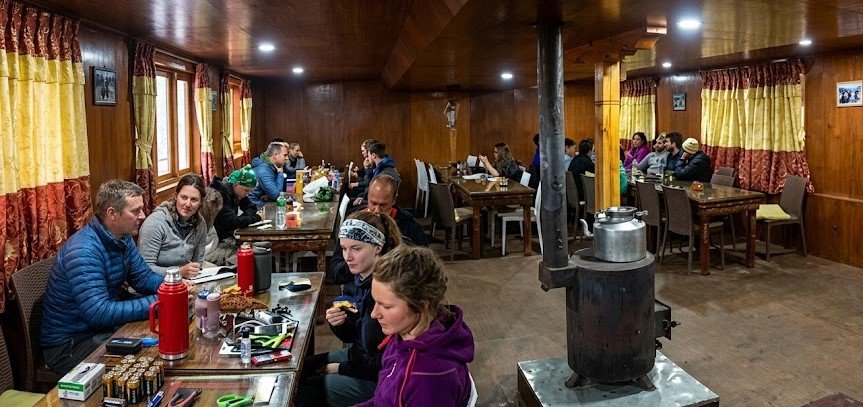
Teahouses — also called lodges or guesthouses — are the accommodation backbone of the Everest Base Camp trek. They are family-run establishments that provide a bed, meals, and a warm communal dining room for trekkers passing through. Without teahouses, the EBC trek would require full camping equipment; with them, you can trek with just a day pack and trust that shelter and food will be waiting at the end of each day.
Understanding what to expect from teahouses — and how conditions change as you gain altitude — helps you pack appropriately and set realistic expectations for comfort.
What Is a Teahouse?
A teahouse is a small, family-owned guesthouse that caters specifically to trekkers. Most teahouses have been in the same family for generations, passing from parents to children as the trekking industry has grown in the Khumbu. The name “teahouse” comes from the tradition of serving tea and simple food to travellers — though modern teahouses offer full menus and a range of accommodation options.
Teahouses vary enormously in quality, from basic structures with thin walls and minimal insulation at high altitude, to comfortable, well-furnished lodges in Namche Bazaar with attached bathrooms, hot showers, and proper dining rooms with heating. The most comfortable teahouses on the EBC route are at lower elevations — particularly in Namche and Phakding. As you climb above 4,000m, facilities become more basic.
Planning Your Everest Trek?
Get local expert advice on cost, itinerary and the best time to go.
What Teahouse Rooms Are Like
Standard teahouse rooms on the EBC route are:
- Twin or double rooms — two single beds or one double bed, basic mattress with a thin pillow and blanket provided
- Wooden walls — simple construction; you’ll often hear your neighbours through the walls
- Small window — usually one window facing the trail or mountains
- No heating in the room — rooms are not heated; dining rooms often have a wood or yak-dung stove
- Lock on the door — basic security lock; store valuables in your sleeping bag
Your sleeping bag is your most important comfort item in teahouses. Teahouse blankets exist but are often thin and may not be washed between guests. A good sleeping bag (rated to -15°C or lower) ensures you sleep warm regardless of the blanket quality provided.
Bathroom and Toilet Facilities
Bathroom arrangements vary significantly by altitude and teahouse quality:
- Shared bathrooms — most teahouses below 4,500m have shared bathrooms with western-style flush toilets and cold-water taps
- Attached bathrooms — available at better teahouses in Namche, Tengboche, and Dingboche; usually at premium room prices
- Squat toilets — some teahouses, particularly at higher elevations, have squat-style toilets
- Hot showers — available at many teahouses up to Dingboche; above that, hot showers become increasingly rare and expensive. Bucket showers (hot water poured into a bucket for you to wash with) are sometimes offered higher up.
Above Lobuche (4,940m), outdoor toilets and very limited washing facilities are normal. A good supply of wet wipes helps on the higher sections of the route when hot water isn’t available.
Heating and Warmth in Teahouses
Teahouse rooms are not heated. At high elevations, room temperatures at night can drop well below freezing — matching or exceeding outside temperatures. This is why a quality sleeping bag is essential: the teahouse cannot keep you warm, your sleeping bag must.
The communal dining room is usually the warmest space in the teahouse. Many have a central stove burning wood or compressed yak dung. Trekkers gather around the stove in the evenings to eat, socialise, and warm up before retreating to their cold rooms. The stove is usually lit in the evening and extinguished at night — don’t expect it to stay burning through the night.
Electricity, Charging, and WiFi
Electricity is available at most teahouses on the EBC route, though reliability varies. Lower-altitude teahouses (up to Namche) often have consistent power from the national grid or micro-hydro sources. Higher up, power comes from solar panels and is less reliable, particularly in winter or cloudy weather.
Device charging is typically charged separately (NPR 200–500 per device). Bring a large power bank to reduce dependence on teahouse charging and save money.
WiFi is available at most teahouses from Lukla to Gorak Shep, though speed and reliability decrease significantly with altitude. WiFi is typically charged separately (NPR 300–1,000 per day). An Ncell SIM card with mobile data is often a more reliable option for staying connected, particularly on the lower sections of the trail. Coverage becomes limited above Dingboche.
How Teahouse Quality Changes with Altitude
| Location | Altitude | Comfort Level | Facilities |
|---|---|---|---|
| Phakding | 2,610m | Good | Hot showers, flushing toilets, WiFi, good variety of rooms |
| Namche Bazaar | 3,440m | Excellent | Best on route — some with attached bathrooms, hot showers, heating, bakeries, restaurants nearby |
| Tengboche | 3,860m | Good | Hot showers available, good food, some attached bathrooms |
| Dingboche | 4,410m | Moderate–Good | Hot showers still available, decent rooms, some WiFi |
| Lobuche | 4,940m | Basic–Moderate | Cold, basic rooms; some hot showers; limited menu |
| Gorak Shep | 5,164m | Very Basic | Cold rooms, basic toilets, very limited facilities; crowded in peak season |
Teahouse Costs
Teahouse accommodation on the EBC route is generally inexpensive, particularly at lower elevations. The common arrangement is that rooms are priced cheaply (or even provided at minimal cost) on the expectation that you’ll eat all your meals at that teahouse. This food-and-board arrangement is widespread and fine in practice — teahouse food is typically good and there’s rarely a need to eat elsewhere.
Approximate room prices:
- Basic shared-bathroom room: NPR 500–1,000 (USD $3–$8) per person
- Room with attached bathroom: NPR 1,500–3,000 (USD $11–$22) per person
- Hot shower: NPR 300–800 (USD $2–$6) extra
Premium Lodges on the EBC Route
For trekkers seeking a more comfortable experience, premium lodge options exist on the EBC route. Yeti Mountain Home properties (Phakding, Namche, Kongde, Dole, Machherma) and EcoHimal Lodges (Lukla, Namche, Tengboche, Dingboche, Chhukung) offer heated rooms, better bedding, attached bathrooms, and higher-quality meals — at significantly higher prices (USD $100–$250+ per person per night including meals). These are popular with trekkers who want the EBC experience with more comfort than standard teahouses provide.
Booking Teahouses
In low season (November–February, June–August), teahouse booking in advance is generally not necessary — you can walk up and find a room. In peak season — especially October — teahouses at popular stops (Namche, Tengboche, Dingboche, Gorak Shep) fill up quickly. Pre-booking through your trekking company for peak-season dates is strongly recommended to avoid scrambling for beds at the end of a long trekking day.
Etiquette in Teahouses
- Always eat at the teahouse where you sleep — this is the standard arrangement and how teahouse owners sustain their business
- Remove your boots before entering the dining room
- Be quiet in rooms at night — walls are thin and early wake-up times are common
- Dispose of waste properly — do not leave rubbish on the trail or in rooms; use teahouse bins
- Be respectful of staff — teahouse staff work extremely hard in difficult conditions at altitude
Sleep Quality at Altitude
Sleep is often disrupted at high altitude, even in good teahouses. Periodic breathing (Cheyne-Stokes breathing) — where the body temporarily stops breathing during sleep and then wakes itself — is common above 4,000m and causes light, fragmented sleep. This is normal and usually improves after a night or two at the same altitude.
Tips for better sleep at altitude: go to bed early, avoid alcohol, take low-dose Diamox (62.5–125mg) if sleep disruption is severe, and wear warm socks and a hat to stay warm through the night.
Trek with Teahouse Bookings Handled for You
Our Everest Base Camp Trek packages include teahouse accommodation throughout the route, pre-booked for peak season to guarantee your bed after each day’s trekking. Our guides know the best teahouses at each stop. View our EBC Trek package for full details.
What a Typical Teahouse Room Looks Like
Most teahouse rooms are simple twin-bed setups with a thin mattress, pillow, and blanket, wooden walls that offer limited soundproofing and insulation, and a small window. Bedding is generally basic, which is why we recommend every trekker carry a proper four-season sleeping bag rather than relying on teahouse blankets alone, especially at higher elevations where nighttime temperatures regularly drop well below freezing.
Shared bathrooms, typically located down the hall rather than attached to individual rooms, are standard at most teahouses, particularly above Namche Bazaar, though some of the larger, more established teahouses in lower villages offer attached bathrooms for a higher room rate. Squat-style toilets are more common than Western-style ones the higher you climb, so it is worth preparing for and getting comfortable with this in advance.
How Teahouse Pricing Actually Works
Room rates themselves are often surprisingly low, sometimes just a few dollars a night, because teahouse owners expect guests to eat their meals at the same establishment, where the real profit margin lies. This is an unwritten but well-understood arrangement throughout the region, and trekkers who eat elsewhere after taking a cheap room are viewed unfavorably and occasionally asked to pay a higher room rate to compensate.
We build meals into our standard package pricing specifically so clients never need to navigate this etiquette themselves, and our guides handle the practical logistics of where the group eats and stays each night as a coordinated package.
Heating and Staying Warm in the Evening
Most teahouses have a single communal dining room heated by a wood or yak-dung burning stove, which becomes the natural gathering point for trekkers each evening, both for warmth and for the social atmosphere of sharing stories with other groups passing through. Individual bedrooms are almost never heated, reinforcing again why a properly rated sleeping bag matters so much for a comfortable night’s sleep.
The evening hours around the dining room stove have become something of a signature part of the Everest Base Camp trekking experience, trekkers from around the world sharing food, stories, and the shared physical challenge of the day just completed, often forming friendships that last well beyond the trip itself.
Charging Devices and WiFi at Teahouses
Most teahouses offer device charging for a per-device, per-hour fee that increases with altitude, and WiFi is available at most establishments through the Everest Link network, also priced by data amount and increasing in cost the higher you climb. We cover both of these topics in more depth in our dedicated guide to connectivity on this trek, but as a general rule, budget a few extra dollars daily for charging and internet access above what your basic package includes.
Bringing a power bank, discussed in our packing guide, reduces reliance on paid teahouse charging and is a worthwhile investment for trekkers who want to minimize this particular daily cost across a two-week trip.
How Teahouses Are Selected on Our Itineraries
We work with a specific network of teahouses along the route chosen for cleanliness, reliable heating in the dining area, good food, and strong working relationships with our guiding team built over years of repeat visits. This is not a random or last-minute selection process; our guides know exactly which teahouse to book at each stop and prioritize consistency and comfort for our clients.
In peak season, when demand for rooms can exceed supply in popular villages, these established relationships also mean more reliable room availability than an operator without the same long-standing local connections, reducing the risk of a last-minute scramble for accommodation.
Hot Showers: What to Expect
Hot showers are available at most teahouses for an additional fee, typically heated by a gas geyser or solar system, though availability and water pressure become less reliable the higher you climb, and some higher-altitude teahouses may only offer a bucket of hot water rather than a proper shower. Showering becomes something of a luxury rather than a daily habit for most trekkers above Dingboche, both due to cost and the practical discomfort of getting wet in cold conditions.
We recommend packing biodegradable wet wipes as a practical alternative for days when a shower is not available or not appealing given the cold, letting you stay reasonably clean without needing hot water every single day of the trek.
Food and Meal Service at Teahouses
Teahouse kitchens prepare meals to order from a menu that typically includes dal bhat, noodles, fried rice, soups, and a range of other options covered in detail in our dedicated food guide for this trek. Meal preparation can take some time, particularly in a busy teahouse during peak season, so ordering promptly upon arrival, especially for dinner, helps avoid a long wait after an already tiring day of walking.
Our guides typically place orders for the group as soon as everyone arrives at a teahouse, streamlining this process so trekkers can rest and warm up while the kitchen prepares the evening meal, rather than waiting around hungry before even placing an order.
Teahouses Versus Camping: Why We Recommend the Teahouse Route
While camping treks are possible on some routes in Nepal, the Everest Base Camp trail is well developed with teahouse infrastructure at every overnight stop, making the teahouse trek the standard and, in our view, clearly preferable option for the vast majority of trekkers. Teahouses offer a warm meal, a real bed, and shelter from the elements, all without the additional weight and logistical complexity of carrying and setting up camping equipment.
For trekkers specifically interested in a camping-based itinerary, perhaps for a more remote or off-the-beaten-path route, we can arrange this separately, but for the standard Everest Base Camp trek, the teahouse network is well established, reliable, and provides a genuinely comfortable base each night without sacrificing the authentic experience of trekking through this remarkable region.
Village by Village: Notable Teahouses Along the Route
Namche Bazaar, the trek’s main hub, has the widest range of teahouse options, from basic budget lodges to more comfortable establishments with attached bathrooms, bakeries, and even the occasional espresso machine, reflecting the town’s role as the commercial center of the Khumbu region. Tengboche, home to the region’s most significant monastery, offers simpler but well-located teahouses with some of the best mountain views of the entire trek visible directly from the dining room window on a clear day.
Dingboche and Pheriche both offer solid, comfortable teahouse options and serve as key acclimatization stops on most itineraries, while Gorak Shep, the final overnight stop before Base Camp and Kala Patthar, has more basic facilities reflecting its remote, high-altitude location at over 5,000 meters, the highest overnight stop on the standard route.
Etiquette and Community Norms at Teahouses
Teahouses are family-run businesses that also serve as the owner’s home, and basic courtesies, removing boots before entering communal areas where requested, keeping noise reasonably low in shared spaces during evening hours, and being mindful of the limited resources like hot water and charging capacity, go a long way toward a positive experience for everyone staying there. Tipping teahouse staff, while not universally expected the way it is for guides and porters, is appreciated and a kind gesture for particularly attentive service.
Our guides model and reinforce good teahouse etiquette throughout the trek, helping first-time trekkers understand local norms and ensuring our groups are welcomed back warmly on future visits, an important part of maintaining the strong relationships we rely on throughout the region.
Room Availability During Peak Season
October and April, the busiest months on this route, can see teahouses fill up completely in popular villages, particularly around the main Dashain and Tihar festival periods in Nepal when domestic and international trekker numbers both peak simultaneously. Booking through an established operator with strong teahouse relationships, as we do, significantly reduces the risk of arriving at a village only to find no rooms available.
Independent trekkers without advance arrangements sometimes face this exact problem during peak weeks, occasionally having to walk further than planned to find an available room, a real practical risk of trekking without a guide or pre-arranged accommodation during the busiest parts of the season.
What Amenities Improve as You Descend
One underappreciated aspect of the teahouse experience is how amenities generally improve again on the way back down after the high point of the trek, with warmer temperatures, more reliable hot showers, and often better food availability at lower elevations compared to the sparse conditions near Gorak Shep and Lobuche. Many trekkers describe the descent as noticeably more comfortable in terms of daily creature comforts, even while their legs are more fatigued from the days of walking already completed.
This is worth keeping in mind if the higher-altitude teahouses feel particularly basic during the ascent: conditions genuinely do improve again once you begin heading back down toward Namche Bazaar and eventually Lukla.
Laundry and Keeping Clean on the Trail
Laundry service is available at some lower-altitude teahouses for a fee, though it becomes less reliable and more expensive the higher you climb, and cold, damp conditions mean clothes can take a long time to dry even when washing is possible. Most trekkers accept a degree of being unwashed as simply part of the trekking experience, supplementing with wet wipes and hand washing small items like socks and base layers in a sink when practical.
We recommend packing enough base layers and socks to minimize how often you need to wash anything during the trek itself, saving proper laundry for your return to Kathmandu, where hotels and laundry services are widely available at reasonable cost.
Sleeping Well at Altitude in a Teahouse
Sleep quality often decreases at higher elevations due to altitude itself, thinner walls that transmit noise from neighboring rooms and the dining area below, and cold temperatures despite a good sleeping bag. Earplugs are a small but genuinely useful item to pack, helping block out the sounds of a teahouse in the evening and early morning as other trekkers move about before dawn departures.
Periodic waking during the night is common at altitude and not necessarily a sign of a problem, though our guides monitor for more serious sleep disturbances that might indicate altitude sickness requiring closer attention. Establishing a consistent evening routine, however simple, genuinely helps with sleep quality over the course of a multi-night trek in unfamiliar rooms each night.
Solo Female Travelers and Teahouse Safety
The teahouse network along this route is generally safe and welcoming for solo female trekkers, particularly when traveling with a guided operator, and Sherpa culture places a strong emphasis on hospitality toward all guests regardless of gender or nationality. That said, as with travel anywhere, straightforward precautions such as keeping valuables secure and being aware of your surroundings in busier villages remain sensible practice.
Our female clients consistently report feeling welcomed and safe throughout the trek, and our guides are attentive to ensuring every client, regardless of gender, has a comfortable and secure experience at each teahouse stop along the route.
How Teahouses Have Changed Over the Years
The teahouse network along this route has developed considerably over the past two decades, with many establishments upgrading from very basic shelters to more comfortable lodges offering attached bathrooms, better insulation, and more reliable electricity, particularly in lower and middle-altitude villages like Namche Bazaar and Lukla. This development reflects both the growing number of trekkers on the route each year and reinvestment by teahouse owners as their businesses have grown.
Higher-altitude teahouses near Gorak Shep and Lobuche have seen somewhat less development, partly due to the genuine logistical challenges of building and maintaining infrastructure at such extreme elevation, and partly because demand there is inherently seasonal and tied directly to trekking traffic passing through on the way to Base Camp and Kala Patthar.
Booking Teahouses: Guided Versus Independent Trekking
Trekkers on a guided trip, like those we operate, have teahouse bookings arranged in advance as part of the itinerary, removing the uncertainty of finding available rooms, particularly important during peak season weeks. Independent trekkers generally rely on arriving and hoping for availability, which works reasonably well outside peak periods but carries real risk of a difficult search for accommodation during the busiest weeks of the year.
This is one of several practical reasons we recommend a guided trek over fully independent trekking for this route, alongside the safety and navigation benefits of traveling with an experienced local guide who knows exactly where to go and who to speak with at each stop.
Common Questions About Teahouses
Are teahouse rooms private or shared with strangers? Rooms are typically private for your own group, usually twin-share, though solo trekkers may be paired with another solo trekker of the same gender at some busier teahouses during peak season if the operator does not book a private single room in advance.
Is there electricity in the rooms? Some lower-altitude teahouses have basic in-room outlets, but higher up the route, electricity is usually limited to the dining area, with device charging offered there for a fee rather than in individual bedrooms.
Do teahouses have heating in the bedrooms? Almost never. Heating is generally limited to the communal dining room stove, which is why a properly rated sleeping bag is essential gear rather than an optional comfort item for this trek.
The Social Side of Teahouse Life
Beyond simple shelter, teahouses are genuinely one of the most memorable social aspects of this trek, with the shared dining room each evening becoming a natural gathering place where trekkers from dozens of countries, following the same route on different itineraries, end up sharing stories, advice, and encouragement about the days ahead. Many long-term friendships and even future travel plans have been made over a shared pot of tea in a teahouse dining room somewhere along this route.
Our guides often know the other guiding teams and teahouse owners personally, adding a further layer of warmth and community to each overnight stop, and clients frequently mention this social dimension of the trek as an unexpected highlight they did not anticipate before booking.
Final Thoughts on Teahouse Accommodation
Teahouses are a defining part of the Everest Base Camp trekking experience, offering not just practical shelter but a genuine window into Sherpa hospitality and the daily rhythms of life in this remarkable high-altitude region. While the accommodation itself is basic by most international travel standards, the warmth, both literal and figurative, of a good teahouse at the end of a long trekking day is something most trekkers remember fondly long after the trip itself.
If you have specific questions about what to expect at any particular stop along the route, our guides are glad to share detailed, current insight based on their own extensive experience staying at these same teahouses trip after trip.
Come prepared for basic but genuinely warm and welcoming accommodation, pack a proper sleeping bag, and embrace the simplicity of teahouse life as part of the overall adventure rather than a hardship to endure. It is one of the details that makes this trek feel so different from a standard holiday, and most trekkers come away with a real appreciation for the resourceful, hospitable way of life these teahouses represent.
If you would like more detail on what to expect at any specific stage of the itinerary, or want help planning around particular comfort priorities, reach out to our team and we can walk you through exactly what each stop along the route offers.
The simplicity of teahouse life, no televisions, minimal internet, a single communal room for warmth, has a way of encouraging genuine connection between trekkers that is increasingly rare in modern travel, and many of our clients describe it as one of the most unexpectedly refreshing parts of the entire journey.
Whatever your expectations going in, arrive with flexibility and an open mind, and the teahouses along this route are likely to become one of the more memorable parts of your Everest Base Camp story.
Book your trek with a team that already knows every one of these teahouses personally, and you remove one more source of uncertainty from an already ambitious undertaking, leaving you free to focus on the walking, the views, and the people you meet along the way.
We are always glad to answer questions about accommodation standards for any part of the trail, so feel free to ask us anything before you commit to a specific itinerary or departure date.
From the first warm bowl of dal bhat in Phakding to your final night back in Namche Bazaar on the way down, the teahouses along this route will quietly shape much of your day-to-day experience of the trek, and it is worth taking their comfort and character seriously in your planning.
Reach out any time to learn more about what awaits you at each overnight stop, and let us help you plan a trek where accommodation is one less thing to worry about.
We hope to welcome you to a teahouse dining room somewhere along this route very soon.
Safe and comfortable travels, wherever your trek takes you next.
Until then, happy planning, and we look forward to being part of your journey to Everest Base Camp.
Related EBC Trek Guides
Planning Your Everest Trek?
Get local expert advice on cost, itinerary and the best time to go.