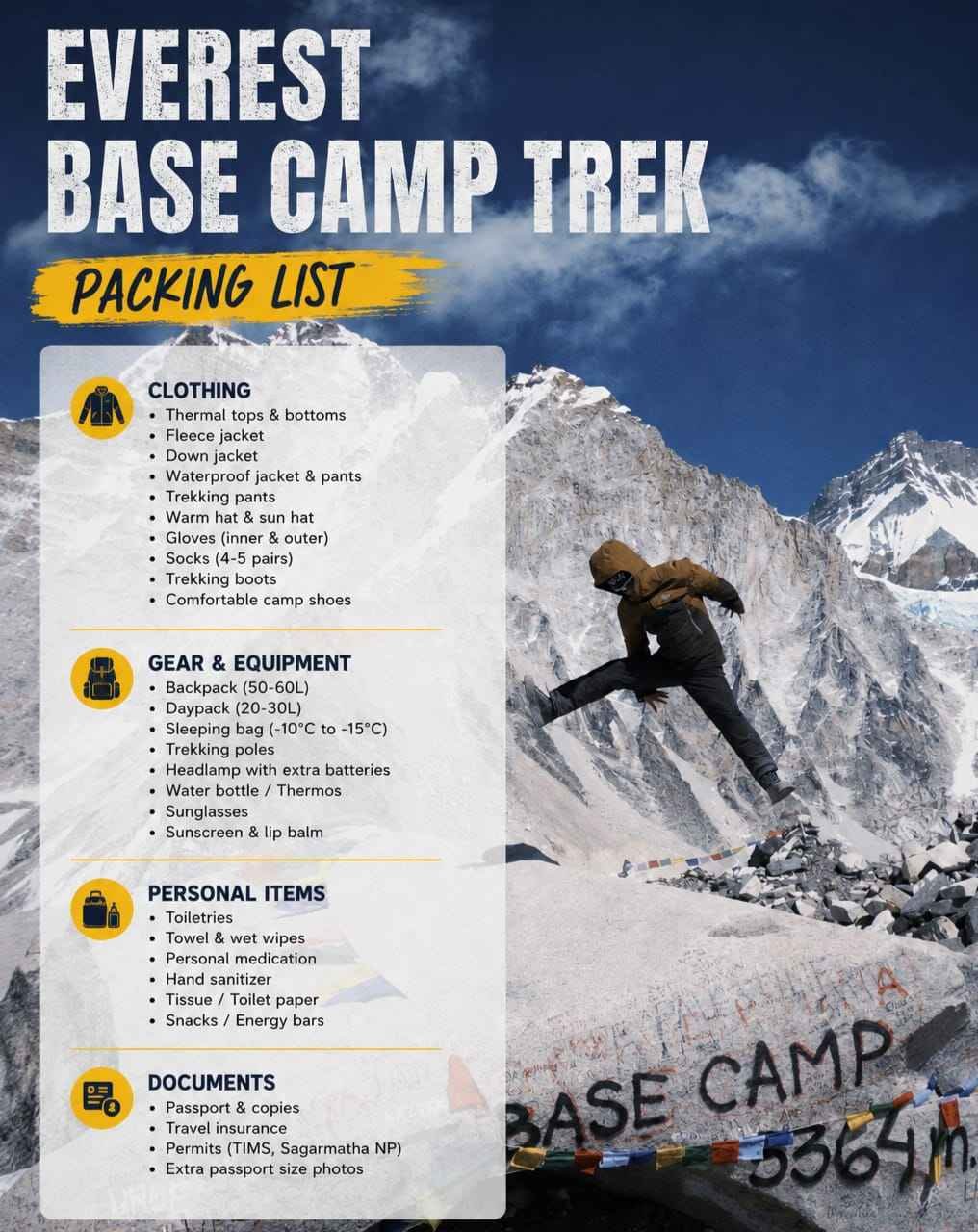
Packing the right gear for the Everest Base Camp trek is one of the most important parts of your preparation. Too little gear and you’ll be cold, uncomfortable, or caught short in an emergency. Too much and you’ll be carrying an unnecessarily heavy bag up to 5,364m. This packing list is designed around what you actually need — no fluff, no unnecessary extras.
Almost everything on this list can be rented or purchased in Kathmandu’s Thamel district if you don’t own it already, at a fraction of the cost of buying at home.
Clothing and Layering System
The EBC trek requires a three-layer clothing system for the upper and lower body: a moisture-wicking base layer, an insulating mid-layer, and a wind/waterproof outer shell. Temperatures range from around 18°C near Lukla to -20°C on summit days at Kala Patthar, so layers that can be added or removed throughout the day are essential.
Planning Your Everest Trek?
Get local expert advice on cost, itinerary and the best time to go.
Upper Body
- Moisture-wicking base layer (x2) — merino wool or synthetic; wool regulates temperature better and stays odour-free longer
- Fleece or softshell mid-layer — for insulation during rest breaks and cooler mornings
- Down jacket (700+ fill power) — essential above 3,500m for evenings and rest stops; this is the single most important warm layer on the trek
- Waterproof and windproof outer shell jacket — protects against wind, rain, and snow; Gore-Tex or equivalent recommended
- Light trekking shirt or T-shirt (x2–3) — for warmer, lower-elevation days
Lower Body
- Trekking trousers (x2) — quick-dry, zip-off designs are versatile for variable temperatures
- Thermal base layer leggings — for cold evenings and high-altitude sections
- Waterproof over-trousers — for rain and snow protection
Extremities
- Warm hat / beanie — wool or fleece; you lose significant body heat through your head at altitude
- Sun hat or cap — UV radiation is intense at altitude; protect your face and neck
- Balaclava — optional but highly recommended for Kala Patthar summit in cold seasons
- Lightweight liner gloves — for moderate cold while still needing dexterity
- Warm insulated gloves or mittens — for high elevations, especially Kala Patthar in October–November
- Merino wool or thermal socks (x4–6 pairs) — wool is best for warmth even when wet
- Lightweight camp shoes or sandals — for wearing inside teahouses; gives your feet a rest from boots
Footwear
- Waterproof trekking boots — ankle-high, broken-in before the trek; this is the most critical gear item; do not use new boots on trek day 1
- Trekking gaiters — useful for muddy sections and light snow; optional for standard EBC route
Sleeping
- Sleeping bag rated to -15°C to -20°C — teahouse blankets exist but are thin and may be damp; a quality sleeping bag is non-negotiable for comfort above 4,000m
- Sleeping bag liner — adds warmth and keeps the sleeping bag cleaner; useful in all seasons
Bags and Carrying System
- Main duffel bag (60–80L) — carried by your porter; soft-sided duffel is easier for porters than a rigid backpack
- Day pack (20–30L) — what you carry yourself on the trail each day; should hold water, snacks, layers, camera, first aid, and documents
- Rain cover for day pack — essential; pack one even in dry season for sudden showers
Trekking Equipment
- Trekking poles (pair) — significantly reduce knee stress on descents; adjustable and with anti-shock mechanism is ideal
- Headlamp with extra batteries — for early morning Kala Patthar summits and power cuts at teahouses
- Sunglasses (CE-rated UV400 or glacier glasses) — very important; UV radiation at altitude can cause snow blindness
- Water bottles or hydration bladder (2L minimum) — carry enough to stay hydrated between water sources
- Water purification method — tablets (iodine or chlorine), Steripen UV purifier, or squeeze filter; saves significant money vs buying bottled water at altitude
Electronics and Power
- Power bank (20,000mAh or higher) — teahouses charge per device charge and power is not always reliable; a large power bank keeps your phone, camera, and GPS charged for several days
- Universal plug adapter — Nepal uses Type C, D, and M sockets
- Camera or phone — the Khumbu views are extraordinary; whatever you use, protect it from cold (batteries drain fast in cold)
- Spare memory cards and batteries — electronics fail more often in cold
Hygiene and Health
- Sunscreen SPF 50+ — apply daily; UV radiation is intense above 3,000m even on cloudy days
- Lip balm with SPF — lips crack and burn at altitude
- Hand sanitiser — for pre-meal hygiene on the trail
- Toilet paper and a small trowel — some sections of trail have limited facilities
- Wet wipes — for quick freshen-ups when hot water isn’t available
- Toothbrush, toothpaste, and basic toiletries — keep to a minimum for weight
First Aid Kit
- Ibuprofen and paracetamol — for headaches, muscle pain
- Diamox (acetazolamide) — altitude sickness prevention/treatment (prescription required)
- Blister treatment — Compeed or moleskin
- Rehydration salts — for stomach issues or dehydration
- Antihistamines
- Antibiotics for traveller’s diarrhoea — Ciprofloxacin or Azithromycin (discuss with your doctor pre-trek)
- Bandages and antiseptic wipes
- Pulse oximeter — measures blood oxygen saturation; small, inexpensive, and invaluable for monitoring altitude health
Documents and Money
- Passport — required for permit checkpoints
- Trekking permits — Sagarmatha NP permit and Khumbu Pasang Lhamu Rural Municipality permit; your guide can carry copies
- Travel insurance documents — carry a printout and have a digital copy
- Nepal Rupees cash — ATMs are available in Namche Bazaar; carry enough cash for the full trek above Namche as there are no ATMs higher up
What NOT to Bring
- Heavy books or excessive reading material — download digital books instead
- Jewellery or valuables — leave at your Kathmandu hotel safe
- More than 2 pairs of trekking trousers — you’ll wash at teahouses
- Large laptop — a tablet or e-reader is sufficient if you need a device
- Unnecessary toiletries — travel-sized everything; weight adds up
Gear You Can Rent or Buy in Kathmandu
If you don’t own specialist gear, Thamel in Kathmandu has dozens of reputable rental and purchase shops. For a 14-day trek, renting saves money and avoids the hassle of transporting bulky gear internationally. Items commonly rented:
- Down sleeping bags (-15°C to -20°C)
- Down jackets
- Trekking poles
- Trekking boots (try to bring your own if possible — fit matters enormously)
- Duffel bags
- Waterproof jackets
Inspect all rental gear carefully before accepting it. Check sleeping bag fill, jacket insulation, and boot sole integrity. Ask for gear from a reputable source and confirm the quality before you leave Kathmandu.
Recommended Pack Weight
Your main duffel (carried by porter): aim for under 12–14kg. Most porter agreements specify a maximum of 10–15kg, with the lower end being more considerate of your porter’s welfare.
Your day pack: aim for under 8–10kg. You’ll carry this yourself every day. The lighter your day pack, the more enjoyable the trek.
Trek with Everything Sorted
Our Everest Base Camp Trek packages include comprehensive pre-departure gear guidance and a detailed packing checklist tailored to your specific season. We can advise on what to prioritise for autumn versus spring treks and help source any gear you’re missing in Kathmandu. View our EBC Trek package for more information.
Related EBC Trek Guides
Planning Your Everest Trek?
Get local expert advice on cost, itinerary and the best time to go.