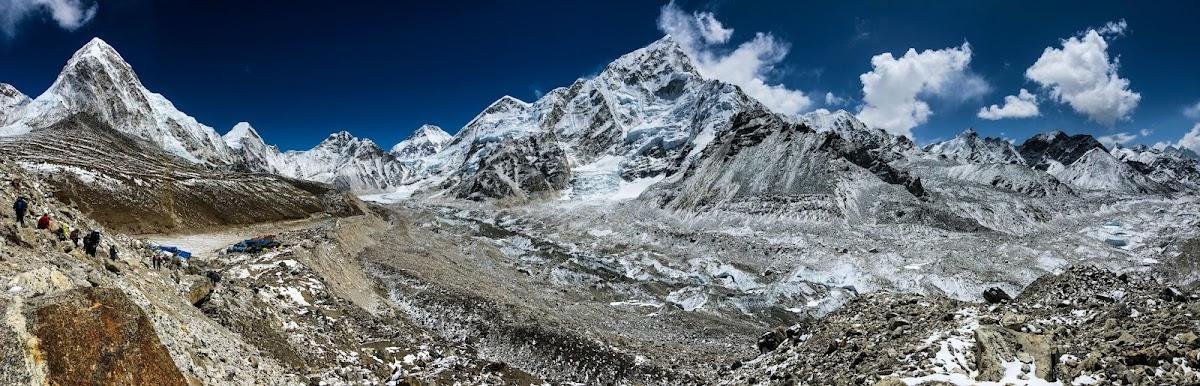
Tenzing-Hillary Airport in Lukla (IATA: LUA) is the most famous mountain airstrip in the world and the starting point for the Everest Base Camp trek. At 2,860 metres above sea level, with a runway that ends at a cliff edge, the airport is notoriously difficult to land at and notoriously susceptible to weather delays. Understanding how it works saves you stress, money, and missed flights.
Tenzing-Hillary Airport: Key Facts
| IATA Code | LUA |
| Location | Lukla village, Solukhumbu District, Nepal |
| Altitude | 2,860 m (9,383 ft) |
| Runway length | 527 m (1,729 ft) |
| Runway gradient | 11.7% incline (uphill for landing; downhill for takeoff) |
| Departure airports | Kathmandu (TIA) and Ramechhap (Manthali, RHP) |
| Airlines operating | Tara Air, Summit Air, Sita Air, and others |
| Aircraft types | Twin Otter, Pilatus PC-12, small 9-19 seat aircraft |
| Operating hours | Dawn to approximately 2pm; VFR (visual flight rules) only |
Why Lukla Airport Is Considered Dangerous
The Tenzing-Hillary Airport has earned its reputation through a combination of factors that make it unlike virtually any other commercial airstrip in the world. The runway is 527 metres long (a standard commercial runway is 3,000+ metres). It sits at a 12% uphill gradient, aircraft land uphill to use the gradient as braking assistance and take off downhill using the gradient to gain speed before reaching the cliff edge where the runway ends.
The mountain location means weather is the defining variable on any given day. Cloud, crosswind, visibility, and turbulence from the Khumbu valley can change within minutes. Pilots fly VFR (visual flight rules) only, they need clear line of sight to land and take off. When cloud drops, the airport closes regardless of demand or schedule.
Despite its reputation, the airport handles hundreds of thousands of passengers annually with a safety record that reflects the extraordinary skill of Nepali mountain pilots who specialize in this route. The danger is real but managed by experienced operators.
Planning Your Everest Trek?
Get local expert advice on cost, itinerary and the best time to go.
Two Departure Airports for Lukla: Kathmandu vs Ramechhap
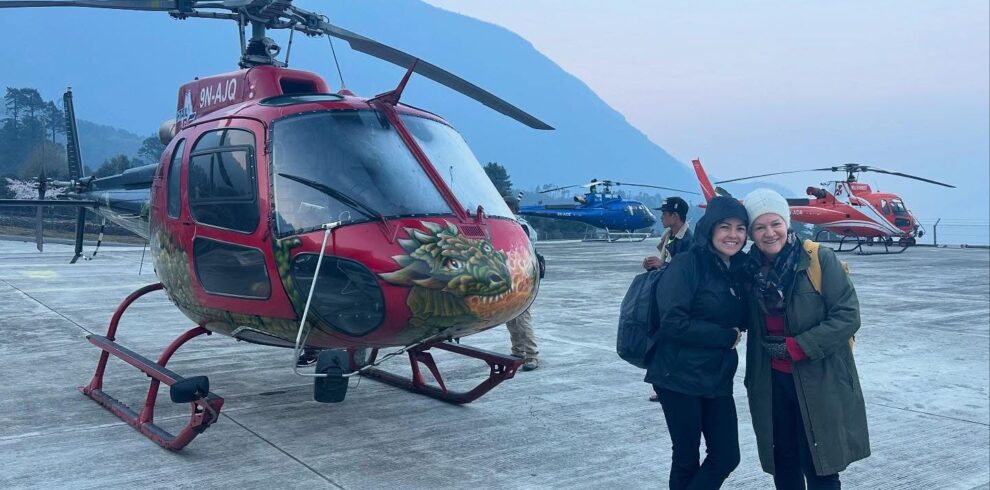
Since 2015 (and increasingly from 2019), Nepal’s aviation authority introduced a policy of splitting Lukla departures between Kathmandu Tribhuvan International Airport (TIA) and Ramechhap/Manthali Airport (RHP), 130 km east of Kathmandu, to reduce Kathmandu airport congestion.
| Factor | Kathmandu (TIA) to Lukla | Ramechhap (Manthali) to Lukla |
|---|---|---|
| Flight duration | ~35 minutes | ~20 minutes |
| Road time to Ramechhap | N/A | 4-5 hours drive from Kathmandu (pre-dawn departure) |
| Peak season use | Both airports; policy-driven split | Mandatory for many peak season flights |
| Cost | Included in package | Included in package; overnight before may be needed |
| Flight reliability | Slightly longer flight path but same weather dependency | Slightly shorter; similar weather dependency |
During October and April peak seasons, many Lukla flights are mandated from Ramechhap. This means a 4am drive from Kathmandu to catch a 6am flight from Ramechhap. Your everest trekking company handles airport logistics and advises whether Ramechhap is required for your departure date. Some operators overnight clients in Ramechhap the night before to avoid the 4am drive.
Why Flights Are Delayed or Cancelled
Low visibility / cloud cover: The most common cause. VFR-only operations mean any cloud that drops below safe minimums stops all flights. Kathmandu valley cloud in the morning is the most common point of failure, not Lukla itself.
Crosswind at Lukla: The runway orientation means crosswinds from certain directions make landing hazardous. Pilots abort if wind conditions exceed safe parameters.
Rain and turbulence: Monsoon weather (June-August) causes the most frequent disruptions. Even in October, a post-monsoon weather system can close the airport for a full day.
Aircraft technical: The Twin Otter fleet requires careful maintenance. Technical delays occasionally ground aircraft.
Schedule overload: In peak October season, the demand for Lukla flights exceeds capacity. A single morning of delays causes a cascade of postponements that affects multiple days of scheduling.
How to Handle Lukla Flight Delays
Build buffer days: The single most important planning decision. Always allow at least one extra day in your schedule at the end of the trek before any international departure. Two days in October and during monsoon season. This is non-negotiable planning advice.
Morning flights: All Lukla flights operate in the morning. The airport typically closes by noon to 2pm. Book the earliest possible morning departure slot for best chances of success.
Keep plans flexible: Lukla flight delays cost money if you have non-flexible onward connections. Book international flights the day after your earliest possible Lukla return, not on the same day.
Helicopter as backup: If flights are cancelled for 2+ days (rare but possible in extended weather events), helicopter charter is the reliable alternative. Costs $350 to $600 per person Lukla to Kathmandu. Your operator arranges this. The Lukla flight delay and helicopter guide covers all scenarios.
What Happens at Lukla Airport
Lukla airport is a compact mountain terminal. Check-in happens at small airline counters and is straightforward. Baggage is weighed carefully, charter aircraft have strict weight limits, typically 10 to 15 kg checked plus 5 kg carry-on. Trekking pack weight is critical: if your main bag is with porters ahead of you, check-in is easy. If your porter has descended with you and you arrive at Lukla with all gear, pack accordingly.
The waiting area is basic. Tea and coffee are available at small shops. The mood during delays varies from patient to anxious depending on how long the wait extends. Experienced trekkers bring books, downloaded content, and enough food for an extended morning wait.
Flying into Lukla: The Actual Experience
The Lukla approach from Kathmandu crosses progressively higher mountain terrain before the aircraft descends sharply into the Dudh Koshi valley and lines up for the short runway. The last seconds of the approach show the cliff face at the top end of the runway rapidly approaching. The uphill landing gradient absorbs the aircraft’s speed quickly. First-time Lukla passengers often describe it as the most dramatic flight of their lives. Second-time passengers find it unnotable.
The takeoff is the inverse: full throttle from the uphill end, building speed as the aircraft descends the gradient, then a sharp drop over the cliff edge into the valley below before climbing out. Dramatic to watch from the terminal; entirely normal to the pilots who do it multiple times daily.
Preparing for Your Lukla Flight
| Preparation Item | Details |
|---|---|
| Arrive at airport early | 1-2 hours before departure |
| Baggage weight | 10-15 kg checked + 5 kg carry-on; confirm with operator |
| Buffer days | Minimum 1 day; 2 days in peak season |
| International flight timing | Minimum 1 day after Lukla flight day |
| Cash for delays | NPR for food and tea during waits |
| Ramechhap overnight (if required) | Your operator arranges and advises |
Frequently Asked Questions
Why is Lukla airport so dangerous?
The combination of a very short runway (527 m), 12% gradient, cliff edge at the end of the runway, high altitude, and VFR-only operations in mountain weather makes it one of the world’s most technically demanding airstrips. It is not inherently dangerous if operated correctly by experienced mountain pilots; it is unforgiving if operating conditions are not met.
How often are Lukla flights cancelled?
In October peak season with good weather, successful flight probability on any given morning is 85 to 90%. In the monsoon (June-August), cancellation probability on any day is 40 to 60%. Specific delay rates depend on the weather pattern of that particular season, not averages.
Can I take a helicopter instead of a plane to Lukla?
Yes. Helicopter transfers to and from Lukla are available and increasingly popular as a way to avoid fixed-wing flight delays. Cost is higher per person ($350 to $600 per sector) but helicopters can often operate in conditions that ground fixed-wing aircraft. Your everest trekking company arranges helicopter alternatives.
Lukla Flight Schedule and Booking Guide
| Factor | Details |
|---|---|
| Flight duration | 25-40 minutes from Kathmandu |
| Departure time | 6:00am – 10:00am (morning window only, weather closes by midday) |
| Return flights | 6:00am – 11:00am (same morning window) |
| Airlines operating | Tara Air, Summit Air, Sita Air (subject to change) |
| Aircraft type | Twin Otter (9-seat), small turboprop |
| Baggage allowance | 10-15 kg checked + 5 kg carry-on (varies by airline) |
| Booking lead time needed | 2-6 months for October/April; 1-4 weeks for other months |
| Price (one way) | USD 180-220 from Kathmandu (foreigners pay more than locals) |
Why Lukla Is the Most Extreme Airport in the World
| Feature | Measurement or Detail |
|---|---|
| Runway length | 527 metres (one of the world shortest paved runways) |
| Runway grade | 11.7% incline (runway slopes uphill to help aircraft decelerate) |
| Altitude | 2,860m (9,383 feet) |
| End of runway (uphill end) | Wall of solid mountain rock |
| Downhill end | 1,000-metre cliff drop into the valley below |
| Visual flight only | No instrument landing system (ILS). Pilots rely entirely on visual conditions. |
| Wind direction requirement | Flights only operate with specific wind conditions |
| Named after | Tenzing Norgay Hillary (the first Everest summitters) |
Lukla Flight Delay Statistics by Month
| Month | Average Delay Frequency | Max Expected Wait | Risk Level |
|---|---|---|---|
| October | 1-2 days delay in the month | 1-2 days | Low |
| November | 1-3 days delay in the month | 1-2 days | Low |
| December | 1-3 delays in the month | 1-2 days (mainly Kathmandu fog) | Low |
| January | 2-4 delays in the month | 1-3 days | Low-Moderate |
| February | 2-4 delays in the month | 1-3 days | Low-Moderate |
| March | 2-4 delays in the month | 1-2 days | Low-Moderate |
| April | 2-5 delays in the month | 1-3 days | Moderate |
| May | 5-10 delays in the month | 1-3 days | Moderate-High |
| June | 10-15 delays in the month | 2-4 days | High |
| July | 15-20 delays in the month | 3-5 days | Very High |
| August | 10-15 delays in the month | 2-4 days | High |
| September | 5-8 delays in the month | 1-3 days | Moderate |
What To Do If Your Lukla Flight Is Cancelled
| Option | Details | Cost |
|---|---|---|
| Wait for the next available flight | Most delays resolve within 1-2 days | Extra accommodation and food in Lukla |
| Take a helicopter from Lukla to Kathmandu | Fastest option if weather clears partially | USD 300-500 per person |
| Trek to Phaplu and take a flight from there | 3-day trek to Phaplu airport (longer runway, fewer delays) | Phaplu flight cost USD 120-180 |
| Trek to Salleri and take a bus/jeep | 4-6 day option to reach a road | USD 20-50 for jeep transport |
The most important advice: always build 1-2 buffer days before any international flight out of Kathmandu when trekking in the Lukla region. Travel insurance that covers flight delays is strongly recommended.
Lukla Airport FAQ
Is the Lukla flight really as dangerous as people say?
Lukla has had incidents over the decades, but modern safety standards are significantly improved. The aircraft are well-maintained, pilots are experienced on this specific route, and flights are cancelled whenever conditions are borderline. The perception of danger is greater than the actual current risk. Millions of trekkers have safely used Lukla airport.
Can I go to Lukla by road instead of flying?
There is no direct road to Lukla. The nearest road access is several days trek away. However, you can drive to Salleri or Phaplu (rough mountain road) and then trek or take a shorter flight to Lukla. Some trekkers do the overland option for the EBC via Jiri route, which avoids Lukla entirely.
What happens to excess baggage at Lukla?
Most agencies arrange for excess bags to be stored in Kathmandu while you trek. On the trail, your main bag is carried by a porter and you carry a daypack. Packing over the airline limit means paying excess baggage fees, typically USD 2-3 per kg.
Conclusion
Tenzing-Hillary Airport in Lukla is the gateway to the Khumbu and the Everest Base Camp trek. Its dramatic setting and weather-dependent operations are part of the adventure. Plan buffer days, book morning departures, work with an experienced everest trekking company that monitors flight conditions and has contingency plans, and the airport transition from trekker to mountain explorer will be memorable for the right reasons.
Tenzing-Hillary Airport, Lukla: Your Complete Guide
Tenzing-Hillary Airport in Lukla (IATA: LUA) has earned a reputation as one of the most dramatic airports on Earth. At 2,860 metres elevation, with a 527-metre sloped runway sandwiched between a sheer rock face and a cliff drop, it requires specially trained mountain pilots and operates only in clear visual conditions. For EBC trekkers, understanding how this airport works — practically and operationally — is essential for planning a stress-free start to the Everest Base Camp Trek.
The Physical Reality of Tenzing-Hillary Airport
The runway at Tenzing-Hillary Airport slopes upward at a 12% gradient from south to north. Arriving aircraft always land uphill (approaching from the south over the Dudh Kosi valley), using the slope to assist braking on the short runway. Departing aircraft always take off downhill (heading south), using the slope to gain airspeed before the runway ends at the cliff edge. There is no instrument approach — all operations are visual. A mountain wall closes one end and a precipitous valley drop the other. The margin for error is essentially zero.
The aircraft that operate this route are specifically selected for the environment: Twin Otter DHC-6 (19 passengers, highly manoeuvrable, STOL capability), Dornier 228 (19 passengers, excellent short-field performance), and occasionally MD 500 helicopters for smaller charters. Pilots operating scheduled Lukla services must hold mountain flying endorsements issued by the Civil Aviation Authority of Nepal, achieved only after extensive supervised mountain flying hours.
Why Flights Get Cancelled and What to Expect
Lukla flight cancellations are caused by weather, not technical failures. The main weather conditions that ground flights are: low cloud and fog in the Dudh Kosi valley obscuring the approach path, high winds at the runway level (creating dangerous crosswind components on the short strip), and mountain obscuration reducing the visual corridor needed for safe navigation. These conditions occur unpredictably in all seasons but are most frequent during the monsoon (June–September), post-monsoon transition (late September), and winter (December–February). During peak trekking seasons (October–November and April–May), delays of 1–2 days are common. Delays of 3–7 days occur occasionally in all seasons.
When flights are cancelled, the queue of waiting passengers grows rapidly. Flights are rescheduled on a first-come-first-served basis as conditions allow — the same sequence of passengers, one flight at a time. Passengers who check in and wait patiently at the airport when conditions are marginal sometimes benefit from brief weather windows. Those who return to Kathmandu hotels and wait for guaranteed conditions may find themselves further down the waiting list. The experienced approach: check in, wait at the airport or nearby accommodation, and be ready to board immediately when a window opens. Everest Trekking Company operations team monitors flight status continuously during trekking season and advises clients via WhatsApp in real time.
The History Behind the Name
The airport was renamed Tenzing-Hillary Airport in 2008 to honour the two men who made the first confirmed ascent of Mount Everest on 29 May 1953: Sir Edmund Hillary (New Zealand) and Tenzing Norgay (Nepal/India). Before the airport was built by Sir Edmund Hillary himself in 1964 — funded through his Himalayan Trust charity — the approach to Everest for expedition teams required an 8–12 day walk from Jiri or longer from the roadhead further south. Hillary personally supervised the construction of the Lukla airstrip, which transformed Khumbu logistics and enabled the rapid growth of trekking tourism that has become the economic foundation of the Sherpa communities today.
The name carries genuine historical weight. Standing on the Lukla runway waiting to board your small aircraft, you are in the same location where Edmund Hillary built one of his most lasting legacies for Nepal — an act of practical generosity that opened the Khumbu to the world while generating economic opportunity for its mountain communities. When you arrive at Lukla with Everest Trekking Company, our guides share this history during the first morning briefing on the trail.
Helicopter Operations at Lukla
In addition to fixed-wing scheduled services, Lukla is a significant helicopter hub for the Khumbu region. Helicopter services from Lukla include: emergency medical evacuation (most common use — dozens of helicopter evacuations per year carry ill or injured trekkers from the Khumbu to Kathmandu hospitals), high-altitude porter and equipment resupply to Base Camp and higher, VIP transfers for trekkers with flexible budgets or acute schedule pressure, and scenic mountain flights for non-trekking visitors. Helicopter landing areas are maintained in Lukla, Namche, Phortse, Dingboche, Pheriche, Lobuche, and Gorak Shep.
Emergency helicopters can reach Gorak Shep from Lukla in approximately 30–45 minutes. For altitude emergency evacuations from EBC elevation (5,364 m) to Kathmandu, direct helicopter flights are possible in good weather. Everest Trekking Company coordinates all emergency helicopter evacuations for our clients — our operations team maintains 24/7 contact with the main helicopter operators and insurance company rescue coordination services. Every client’s travel insurance details are held by our Kathmandu operations centre throughout the duration of the trek.
Practical Tips for Your Lukla Airport Experience
Arriving at Lukla airport: Check-in opens approximately 2 hours before scheduled departure. Luggage is weighed and excess charged at the check-in desk. Boarding is called by gate staff — be ready immediately when boarding begins as windows can close quickly. The airport lounge is basic (tea available, few seats) — bring snacks and reading material for potential delays.
Departing from Lukla: Flights back to Kathmandu or Ramechhap face the same weather constraints as arrivals. Build in departure buffer days to your schedule. The first flights of the day (typically 6–8 AM) offer the best weather windows as mountain air is most stable in early morning. Late morning and afternoon flights are more frequently cancelled. Check out of your final Lukla accommodation the night before your flight to be completely ready for a dawn departure.
Your Everest Base Camp Trek with Everest Trekking Company includes full management of all Lukla flight logistics — departure timing, luggage management, backup planning, and real-time delay communication. You focus on the achievement of reaching Everest Base Camp; we handle the complicated part of getting you there and back.
Safety Record and Modern Operations at Lukla
The safety record of commercial Lukla flights has improved significantly over the past decade due to tighter CAAN regulations, mandatory simulator training for mountain pilots, and the retirement of older aircraft types. The most recent fatal accidents at Lukla occurred in 2019 (a ground collision on the runway) and 2017 (a runway excursion during landing). Commercial Lukla operations in 2022–2025 have maintained a substantially improved safety record compared to the 2010s.
Nepal’s aviation authority has implemented several safety improvements: mandatory aircraft gross weight limits (strictly enforced at the check-in desk), enhanced weather reporting from the Lukla meteorological station (shared with all operators via a common communication channel), mandatory pre-flight pilot briefings on current conditions, and restrictions on flight operations in specific adverse weather parameters. All reputable Lukla operators, including those used by Everest Trekking Company, participate in these enhanced safety protocols.
What the Lukla Arrival Experience Is Like
For most trekkers, landing at Lukla is one of the memorable moments of the entire EBC journey. The approach from the south feels impossibly steep. The runway appears from behind a ridgeline with startling suddenness. The aircraft touches down, brakes hard against the uphill slope, and rolls to a stop with metres to spare at the upper end of the runway near the airport building. Passengers step off onto a concrete apron at 2,860 m, and the Khumbu immediately asserts its personality: cold crisp air, the sound of a mountain river below, prayer flags snapping in the valley wind, and the snow-capped Kongde Ridge closing the valley to the north.
The Lukla village is compact and primarily oriented toward trekking tourism. The main street offers teahouses, bakeries (the famous Lukla bakeries produce surprisingly excellent coffee and croissants), gear shops, and communications offices. After collecting your luggage and completing the KPAS permit fee payment at the village checkpost, your porter picks up the main duffle bag and the trek officially begins with the first steps north out of Lukla toward Phakding.
Coming Back: Lukla on the Return Journey
The return to Lukla from the Khumbu feels both triumphant and bittersweet. After 12–13 days on the trail, Lukla’s bakeries and hot showers are genuinely exciting. But the Khumbu has a way of getting under trekkers’ skin — many return guests of Everest Trekking Company describe the final morning in Lukla as the first moment they start planning their next return to the mountains.
The final evening in Lukla is traditionally a celebratory dinner at one of the main teahouses — the Lukla bakeries stay open late and cook a remarkable spread for departing trekkers. Our guides join the dinner and receive the traditional tip envelope if the team has done a good job (tipping guides and porters is an important part of Sherpa livelihood and our pre-trek briefing covers appropriate tipping rates and timing). Morning departure follows, with all the same weather variables as the inbound flight. The view heading south — out over the lower Solu Khumbu hills toward the Kathmandu Valley — provides a final perspective on how far from the everyday world you have been, and how magnificently the world’s highest mountain region rewards the trekker who comes to experience it. Book your Everest Base Camp Trek with Everest Trekking Company and make Lukla the beginning and the beautiful end of the experience of a lifetime.
Lukla Airport FAQ
How early should I arrive at the airport? Check-in at Kathmandu domestic terminal or Ramechhap airport opens 2 hours before scheduled departure. For Ramechhap flights, arrive 15–20 minutes before check-in opens to ensure luggage is processed correctly. Our team accompanies all clients to check-in.
What if my Lukla flight is cancelled on departure day? Rebooking is automatic through your airline’s waitlist. Our operations team in Kathmandu and Lukla coordinates rebooking and communicates status updates in real time. Build 1 extra day in Lukla before your intended return-to-Kathmandu date to absorb a single-day delay without stress.
Is there mobile phone coverage at Lukla airport? Yes. NCell and Nepal Telecom both have coverage in Lukla village and at the airport. WhatsApp functions normally. Above Namche (3,440 m), coverage becomes intermittent and is largely absent above Dingboche (4,410 m). Buy a NCell SIM card with a data package in Kathmandu before departure (approximately USD 3–5 for a 1 GB package) for Lukla and lower valley coverage.
Can I buy food and drinks at Lukla airport? A small teahouse operates adjacent to the airport building. Tea, coffee, basic snacks, and bottled water are available. Prices are slightly elevated (Lukla village prices). The main village bakeries (5-minute walk) offer much better food and are worth the brief walk if you have time before boarding.
Is the airport open year-round? Technically yes, but during the monsoon season (mid-June to mid-September), flights are cancelled the majority of days due to cloud and rain. A small number of flights operate on clear morning windows during this period, but schedule reliability is very low. Most EBC trekkers avoid the monsoon period for this reason among others. The airport’s busiest, most reliable operating period is April–May and October–November. For complete seasonal guidance on Lukla flight reliability by month, see our best time for EBC guide or contact Everest Trekking Company directly. Book your Everest Base Camp Trek at the right time of year with the right logistics partner and make Lukla the smooth, exhilarating gateway to the world’s greatest trek.
Getting the Most from Your Time in Lukla
Lukla is typically a transit point — trekkers arrive, complete permit formalities, have breakfast, and head north. But Lukla village itself is worth a brief exploration if you arrive with time before the first day’s walking begins. The local gompa (Buddhist monastery) at the upper end of the village is small but beautifully maintained, with fresh thangka paintings and a meditation courtyard. The village’s main street bakeries are justifiably famous among EBC trekkers — the Everest Bakery and the Summit Bakery both produce excellent espresso coffee, fresh-baked bread, and apple pie. The return leg, after 12 days in the high Khumbu, these comforts feel extraordinarily luxurious.
Lukla’s gear shops carry genuine brand-name equipment (North Face, Black Diamond, Osprey have all licensed local shops) at prices 15–30% below Thamel retail — if you have forgotten something essential, Lukla is your last practical opportunity to acquire it at reasonable cost. Above Namche, gear is available but at premium pricing and limited selection.
Connecting Onward: Lukla to Phakding on Day 1
After clearing the airport and completing permit formalities, the first day’s trekking begins: Lukla (2,860 m) to Phakding (2,610 m). This 3–4 hour walk descends 250 m along the Dudh Kosi river valley — a deceptively easy first day that many trekkers underestimate. The Khumbu begins immediately: suspension bridges span gorges above rushing glacial rivers, mani stones carved with Buddhist prayers line the trail, and the first views of snow-capped peaks appear between the valley walls. The famous Khumbu trail hospitality — teahouse keepers appearing at their doorways with menus and warm smiles — begins in Phakding.
This is what Tenzing-Hillary Airport makes possible: 35 minutes of flight from Kathmandu to a valley gateway where 14 days of one of the world’s great trekking journeys await. Everest Trekking Company is proud to operate the Everest Base Camp Trek throughout the year, making this journey accessible to trekkers from every corner of the world. Book today and begin your Khumbu adventure.
Tenzing-Hillary Airport: The Gateway That Changes Everything
In 35 minutes of flight, Lukla transports you from a crowded South Asian capital to one of the world’s last genuinely wild mountain regions. Every year, tens of thousands of trekkers pass through its single sloped runway and emerge into a world of glaciers, Sherpa hospitality, and some of the most spectacular mountain scenery on Earth. That transition — from Kathmandu to the Khumbu in under an hour — is one of the great logistical achievements of 20th century Nepal, and it begins and ends at Tenzing-Hillary Airport. Book your Everest Base Camp Trek with Everest Trekking Company and let the Lukla landing be the first unforgettable moment of your Everest Base Camp experience.
Lukla airport is the threshold between the everyday world and one of Earth’s last great wilderness frontiers. Step through it with the team that knows the Khumbu better than anyone — Everest Trekking Company. Book your Everest Base Camp Trek today and begin your journey at the world’s most dramatic mountain gateway.
Tenzing-Hillary Airport is where the real adventure begins. Every trekker who has ever stood at Everest Base Camp passed through its famous sloped runway. As the best Everest trek company in Nepal, Everest Trekking Company manages every aspect of your Lukla flight experience — from the first booking to the final touchdown back in Kathmandu. Book the Everest Base Camp Trek today and take off toward the mountains.
From first landing to final departure, Tenzing-Hillary Airport is the defining transition of the EBC experience. With Everest Trekking Company managing your complete Khumbu logistics, every flight — arrival and return — is handled with the confidence of a team that has navigated this airport hundreds of times across every season. Book your Everest Base Camp Trek and begin at Lukla.
Every EBC journey passes through Lukla’s legendary airport. Book the Everest Base Camp Trek with Everest Trekking Company and trust the team with the experience, the connections, and the backup plans to handle every Lukla variable without stress.
Planning Your Everest Trek?
Get local expert advice on cost, itinerary and the best time to go.