The monsoon season on the Khumbu runs from June through August. Misunderstood, underestimated, and largely avoided by mainstream trekkers, the monsoon version of the Everest Base Camp trek is a genuinely different experience from the autumn and spring peaks. This guide covers what the monsoon actually means for the trek, the critical rain shadow phenomenon above 4,000 m, and how to approach the season if it is your only option.
Monsoon EBC: Season Overview
| Season window | June through August |
| Peak monsoon | July (most intense rainfall) |
| Best monsoon month | Late August (monsoon weakening) |
| Rain shadow above 4,000 m | Largely dry; key advantage of monsoon trekking |
| Trail crowding | Very low throughout season |
| Lower trail (Lukla-Namche) | Wet and muddy; leeches; rivers high |
| Upper trail (above 4,000 m) | Generally dry; good morning views |
| Gorak Shep night temps | -3C to +3C (warmest nights of the year) |
The Most Important Thing to Know About Monsoon EBC
The single most critical fact that changes everything about assessing a monsoon EBC trek is the Himalayan rain shadow. The Nepal monsoon is driven by southwest moisture flowing north from the Bay of Bengal. When this moisture hits the main Himalayan range, it rises, cools, and falls as rain on the southern slopes and valleys. Above the main ridge, moisture is blocked. The Khumbu plateau sits behind this barrier.
In practical terms: Lukla, Phakding, and the lower Dudh Koshi valley receive heavy daily monsoon rain from June through August. Namche (3,440 m) receives moderate rain. Tengboche (3,860 m) receives light rain at the transition zone. Dingboche (4,410 m), Lobuche (4,940 m), and Gorak Shep (5,140 m) receive minimal monsoon precipitation and can have clear, excellent mountain views on many mornings. This is documented meteorology, not marketing optimism.
Planning Your Everest Trek?
Get local expert advice on cost, itinerary and the best time to go.
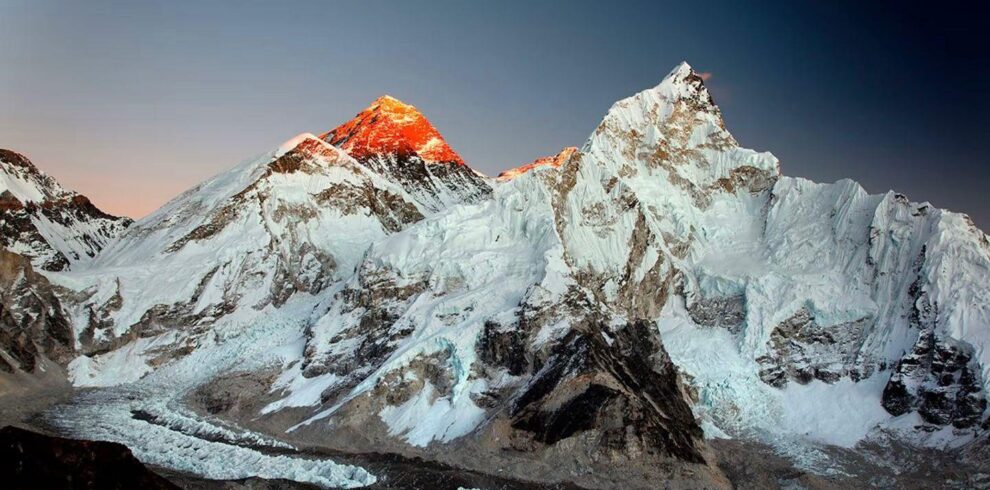
Month-by-Month Monsoon Comparison
| Factor | June | July | August |
|---|---|---|---|
| Lower trail rain | Heavy | Heaviest | Heavy (easing late month) |
| Upper trail (4,000+ m) | Good mornings | Good mornings; dry | Good to excellent |
| Leeches (below Namche) | Active | Most active | Declining from mid-August |
| Lukla flight reliability | Moderate | Lowest of year | Moderate, improving late month |
| Trail greenery | Peak green | Peak green | Peak green |
| Crowds | Very low | Minimum | Very low |
| Overnight temps (Gorak Shep) | -5 to 0C | -3 to +2C | -3 to +3C |
| Sleeping bag needed | -5C rated | 0 to -5C rated | 0 to -5C rated |
What Makes Monsoon EBC Worth Considering
Warmest High-Altitude Temperatures of the Year
Nights at Gorak Shep in July and August are the warmest of any trekking month at -3C to +3C. The sleeping bag required for a July EBC trek (0C rating) is far lighter and cheaper than the -15C bag needed in October or the -30C bag required in January. For trekkers who struggle with extreme cold, monsoon months are paradoxically the most comfortable at high altitude.
Empty Trails, Personal Experience
July EBC may see fewer trekkers above Namche in a week than any single morning on the Khumbu in mid-October. Teahouses have availability without advance booking. The trail is yours. The silence between villages in the upper Khumbu during monsoon season has a quality that peak season trekkers will never experience.
Green Season Beauty
The lower Khumbu forest in monsoon is intensely green, with waterfalls, flowering plants, and the full dramatic effect of the monsoon-fed valley. Above Tengboche, alpine meadows are carpeted in wildflowers that do not exist in autumn. The Gokyo Lakes in July and August show their most vivid turquoise water colour. The Khumbu is biologically most alive during the monsoon.
Value Pricing
Monsoon months are off-season for most Nepal trekking operators. Package prices, Lukla flights (when bookable), and teahouse rooms are all below peak-season rates. Budget trekkers saving 25 to 40% versus October costs find real value in the June to August window, particularly late August as conditions improve.
Monsoon-Specific Challenges
Leeches on the lower trail: Active from Lukla to above Namche through the monsoon. Wear long trousers, apply repellent to boots, check regularly. Uncomfortable but not dangerous. Absent above Namche (3,440 m).
Lukla flight disruptions: July has the worst Lukla flight reliability of the year. Build 2 to 3 buffer days before international connections in June and July. 1 to 2 days for August. Your everest trekking company monitors conditions and has helicopter alternatives available. The Lukla flight guide covers all contingency scenarios in full.
Trail mud and rivers: Lower trail mud is significant in June and July. Rivers are at maximum flow. Waterproof boots and gaiters are essential. All suspension bridges are passable but some feel dramatic over high water.
Mountain photography below 4,000 m: Panoramic mountain views from lower viewpoints are unreliable during monsoon. From Kala Patthar and Base Camp, morning views can be excellent.
Optimal Monsoon Strategy
Experienced monsoon EBC trekkers use the following strategy: travel the lower trail (Lukla to Namche) early in the morning before daily rain builds. From 5:30am to 9am, conditions on the lower trail are usually clear or light cloud. Push to Namche as early as possible each morning. Above Namche, pace is more relaxed as afternoon cloud impacts are less severe.
Target late August for the optimal monsoon window. Starting a 14-day trek on August 18 to 22 puts you descending through Lukla in early September as conditions improve daily. You get the green season Khumbu on the way up and clearing skies on the way down.
Gear for Monsoon EBC
The monsoon demands different gear emphasis from autumn or winter. Priority items: quality waterproof jacket (not just water-resistant; a quality hardshell is essential), waterproof trekking boots, rain cover for daypack, gaiters for lower trail mud, dry bags for electronics inside pack, leech socks or long trousers. Sleeping bag can be lighter than any other season (0C to -5C for July/August). See the complete EBC packing list for monsoon-specific recommendations.
Frequently Asked Questions
Can you do EBC during monsoon?
Yes. The EBC trail is open and teahouses operate throughout the monsoon. The experience is different from dry seasons but entirely viable for prepared trekkers. The rain shadow above 4,000 m means upper-trail conditions are better than most people expect.
Is it safe to trek to EBC in monsoon?
Yes, with appropriate preparation. The main risks are lower trail mud and slippery surfaces (use trekking poles and good boots), high rivers (stay on bridges; never ford independently), and Lukla flight disruptions (build buffer days). No additional altitude risks exist during monsoon versus other seasons.
What month in the monsoon is the best for EBC?
Late August (from around 15th to 20th onward) is the best monsoon window. Rain is decreasing, conditions improving daily, upper trail views are excellent, and late-August trekkers are positioned to transition into the autumn season on their descent. June (second half) is also a reasonable option as conditions are marginally better than peak July.
Monsoon EBC Month by Month
| Month | Rain Level | Lower Trail | Upper Trail (4,000m+) | Views | Crowds |
|---|---|---|---|---|---|
| June | Heavy (monsoon onset) | Muddy, leeches, slippery | Good above 4,000m | Poor below, good high up | Very few |
| July | Very Heavy (peak monsoon) | Very muddy, high rivers, active leeches | Good to excellent above 4,000m | Poor below 4,000m, clear above | Minimal |
| August | Heavy tapering | Wet first half, improving second half | Good | Improving, late Aug near September quality | Minimal to Low |
The Above-the-Clouds Phenomenon: Why the Upper Trail Is Fine
The Everest region sits in a unique geographic position. The monsoon rain belt primarily affects elevations between 1,000m and 4,000m. Above 4,000m, the Khumbu valley sits in a high-altitude rain shadow that receives far less moisture. This is why:
| Elevation Zone | Monsoon Experience | What Trekkers Report |
|---|---|---|
| Lukla to Phakding (2,600-2,800m) | Full monsoon rain, very wet | Muddy trails, leeches, green jungle feel |
| Phakding to Namche (2,800-3,440m) | Frequent rain, cloud | Views mostly blocked, afternoon always cloudy |
| Namche to Tengboche (3,440-3,860m) | Daily cloud, occasional rain | Mornings sometimes clear, views rare |
| Tengboche to Dingboche (3,860-4,360m) | Cloud, sporadic rain | Often above cloud base in the morning |
| Dingboche to EBC (4,360-5,364m) | Minimal rain, clear skies | Sunny, cold, excellent views most mornings |
Monsoon Trek: The Real Benefits
| Benefit | Details |
|---|---|
| Lowest prices of the year | Teahouses, guides, porters, and agencies all charge off-season rates (20-40% less than October) |
| Empty trails | You may have entire sections of trail to yourself for days |
| Lush scenery | The most green and lush the lower trail gets all year. Waterfalls, wildflowers, and vivid forest colours |
| No accommodation booking needed | Walk in to any teahouse at any time. No advance booking ever needed. |
| Upper trail is excellent | Above 4,000m, conditions are often better than most people expect |
| Views at high camp | EBC, Gorak Shep, and Kala Patthar often have excellent morning views |
| Personal teahouse service | With very few guests, teahouse owners give exceptional personal attention |
Monsoon Trekking Safety Rules
| Rule | Reason |
|---|---|
| Never cross swollen rivers without your guide checking first | Monsoon rain raises river levels significantly. Some bridges can be washed out. |
| Avoid narrow gorge sections in heavy rain | Rock fall and small landslides are possible on steep unstable sections |
| Always start hiking early morning | Rain is heaviest in the afternoon. Start by 7am to cover distance before afternoon storms. |
| Keep electronics in dry bags | Sustained rain can destroy unprotected electronics even inside a backpack |
| Check your entire body for leeches at every rest stop | Leeches are particularly active in warm wet conditions below 3,500m |
| Stay on the main trail | In monsoon, shortcuts and alternative paths can be overgrown, slippery, or landslide-affected |
More Monsoon EBC Questions
Should I choose June, July, or August for a monsoon EBC trek?
Late August is the best option if you want to trek during monsoon season. July is the wettest and hardest month with the most flight delays. June marks monsoon onset with unpredictable conditions. Late August (after August 20) sees the monsoon retreating and conditions improving while prices remain at off-season levels.
Are helicopter rescues possible during monsoon?
Helicopter rescue is possible during monsoon but can be delayed by weather. There may be 1-3 day waits during heavy monsoon periods where flying is not possible. Travel insurance with helicopter evacuation cover (minimum USD 100,000) is essential. This makes hiring a licensed guide even more important in monsoon, as they know how to prevent emergencies.
What percentage of trekkers complete EBC during monsoon?
Only about 5-10% of annual EBC trekkers go during the monsoon months (June-August). This makes the monsoon trail experience genuinely rare and different. Those who do it consistently report it as one of their most memorable mountain experiences precisely because of the solitude and the dramatic contrast between the lush lower trail and the clear high camps.
Conclusion
The monsoon EBC season is not for everyone and is absolutely not the best season for the Everest Base Camp trek in objective terms. But for the right trekker, it offers something the autumn and spring peaks cannot: solitude, a biologically alive Khumbu, warm high-altitude nights, and the genuine satisfaction of the trail in its rawest seasonal state. Book with an experienced everest trekking company that understands monsoon logistics, pack your rain jacket, and go early every morning.
Trekking to Everest Base Camp During Monsoon Season (June–September)
The monsoon season — Nepal’s rainy season from mid-June through mid-September — is the least popular trekking period in the Khumbu for understandable reasons. Heavy rainfall on lower trail sections, cloud obscuring mountain views, active leeches in forest zones, and unpredictable Lukla flight availability make monsoon EBC significantly more challenging than the main seasons. Yet it is not impossible, and for trekkers with specific reasons for this timing, Everest Trekking Company offers carefully managed monsoon EBC departures that navigate the season’s challenges to deliver a safe and rewarding trek.
Planning Your Everest Trek?
Get local expert advice on cost, itinerary and the best time to go.
What the Monsoon Actually Means in the Khumbu
Nepal receives 80% of its annual rainfall during the monsoon season. In the Khumbu valley specifically, the effect is complex and often misunderstood. The area north of Namche Bazaar lies partially in the rain shadow of the main Himalayan ridge — meaning that while the lower valley from Lukla to Namche receives significant monsoon rainfall, the upper Khumbu from Tengboche northward receives much less precipitation than the monsoon’s reputation suggests. Many monsoon days above Namche are overcast but dry, with cloud clearing in the late afternoon to reveal partial mountain views. The consistent, heavy monsoon rain that makes the lower trail difficult does not persist above 3,500–4,000 m.
This upper-valley rain-shadow effect is the reason why some monsoon treks succeed beautifully above Namche even when lower sections are wet and difficult. The upper Khumbu in monsoon is green in a way that no other season matches — the permanent snowfields and glaciers contrast dramatically with the unusually lush vegetation of the valley floor — and the near-total absence of other trekkers creates a profound wilderness solitude impossible in the main seasons.
Practical Challenges of Monsoon EBC
Lukla flight delays: The most significant practical challenge. Monsoon cloud over the Dudh Kosi valley regularly closes Tenzing-Hillary Airport for 1–5+ day periods. Multi-day delays at the start and end of the trek are common. Travel insurance with weather delay coverage is essential, and departure schedules should include at minimum 3 buffer days in Kathmandu at the start of the trip.
Trail conditions below Namche: The lower trail from Lukla to Namche becomes muddy and slippery during active rain periods. Leeches are abundant in the forest sections between Phakding and Namche from June through early September. Waterproof gaiters, leech socks (available in Kathmandu), and waterproof trail shoes rather than leather boots are recommended for the lower section. The trail surface is firmer above Namche and leech activity ceases above approximately 3,200 m.
Mountain visibility: Cloud over the peaks is the most common monsoon disappointment. Summit views from Tengboche, Dingboche, and the upper trail are obscured more frequently in monsoon than in any other season. The best monsoon visibility windows are typically early morning (before cloud rebuilds from overnight clearing) and late afternoon (after the day’s cloud begins to dissipate). Kala Patthar views are obtainable on good days but require patience and a willingness to wait for cloud breaks.
Accommodation availability: Many teahouses above Namche reduce operations or close during the deepest monsoon months (July–August). Everest Trekking Company confirms teahouse status before every monsoon departure and plans accommodation logistics accordingly. Some monsoon treks use a combination of the few year-round teahouses and lightweight camping equipment above Lobuche.
Why Some Trekkers Choose Monsoon EBC
Despite its challenges, monsoon EBC has genuine advocates among experienced trekkers. The primary reasons: near-total solitude on the trail (the Namche-to-Dingboche section that carries 500+ trekkers per day in October may carry 10–20 in July); the extraordinary green richness of the monsoon landscape that autumn and winter visitors never see; the dramatic atmosphere of cloud and mist around the high peaks that creates a completely different photographic mood from the crisp blue-sky days of other seasons; and for trekkers with schedule constraints that genuinely limit them to a July or August window, the ability to complete the trek at all.
Additionally, monsoon trekking above Namche generally produces better acclimatisation than is sometimes assumed. The cooler temperatures (lower thermal stress on the body) and higher humidity (less dehydration from dry air) actually create reasonably comfortable trekking conditions above 3,500 m on the many days when rain is not falling. Some altitude medicine practitioners note that the gentler physical conditions of cool, damp, monsoon air at altitude can produce more comfortable acclimatisation than the cold, dry, high-UV conditions of October.
September: The Monsoon Retreat and Pre-Season Opportunity
September occupies a special position as the monsoon’s final month. The monsoon typically retreats northward from Nepal between 10 and 25 September, with the exact timing varying by year. A September EBC departure benefits from progressively improving conditions throughout the trek — arriving at EBC in deteriorating monsoon and returning to Lukla as the post-monsoon clarity establishes itself. September trek planning therefore involves some timing risk (will the monsoon have retreated by your Dingboche-to-EBC days?) but also potential reward (getting the first clear autumn conditions before October crowds arrive).
Everest Trekking Company tracks the monsoon retreat carefully each year and briefs September clients on the specific timing outlook for their travel dates. We can generally advise with reasonable accuracy by early August on the likely monsoon retreat date range for a given year. For September trekkers, the recommendation is to target the third week of September departure from Kathmandu — giving the best probability of clear conditions for the upper trail during the most important elevation days.
Monsoon EBC Summary
Monsoon EBC is a specialist choice for experienced trekkers who understand and accept its limitations — specifically: intermittent mountain visibility, flight delay risk, and less comfortable lower-trail conditions. It delivers unique rewards — solitude, lush scenery, photographic atmosphere, and the satisfaction of completing a trek in conditions most people consider too difficult. Everest Trekking Company provides the same quality of guiding and safety management for monsoon treks as for any other season, with additional specific preparations for the season’s unique challenges. Contact our team to discuss whether a monsoon Everest Base Camp Trek is the right choice for your specific situation. Browse all available packages and season options at everesttrekkingcompany.com.
Monsoon EBC: Gear and Clothing Modifications
Monsoon trekking requires significant gear adjustments from the standard EBC packing list. The primary additions: a high-quality waterproof jacket (minimum 20,000 mm waterproof rating with taped seams — not just water resistant), full waterproof trousers for the lower trail section in active rain, waterproof gaiters (to keep boots dry when leech socks are worn over them), a pack cover or fully waterproof duffle bag liner, and leech socks (long woollen or nylon socks worn over trousers, tucked into boots, to prevent leeches attaching to feet and ankles on the lower forested trail sections).
Electronic equipment must be more carefully protected in monsoon: cameras and phones in waterproof pouches, power banks in sealed dry bags, and sleeping bag in a waterproof compression sack inside the main duffle. Above Namche, rain gear is still needed but the necessity for it decreases significantly — the drier upper valley conditions mean waterproofing is precautionary rather than constant above 3,500 m.
Acclimatisation in Monsoon: Is It Harder?
Acclimatisation in monsoon is not inherently harder than in other seasons — altitude remains the primary variable, and the body’s physiological response to hypoxia is consistent regardless of weather. There is some evidence in altitude medicine literature suggesting that high humidity conditions at altitude (more common in monsoon than in the dry winter or post-monsoon periods) may slightly reduce the effective oxygen partial pressure in inspired air, but this effect is modest and not a clinical concern for EBC-level altitudes.
What can affect acclimatisation quality in monsoon is sleep disruption from rain noise, temperature fluctuations (monsoon nights can swing from warm and damp to cold when cloud clears), and the physical fatigue of trekking in wet conditions on slippery terrain. All of these factors can indirectly worsen acclimatisation by reducing sleep quality and increasing baseline physical stress. Everest Trekking Company guides respond to these factors by scheduling more generous teahouse time, earlier daily finishes, and enhanced evening monitoring of trekker condition throughout monsoon departures.
Combining Monsoon EBC with Khumbu Cultural Experiences
Monsoon EBC offers exceptional access to cultural experiences that are more crowded or less accessible in peak season. The famous Tengboche Monastery, site of the annual Mani Rimdu festival (held in November — not monsoon, but the monastery itself is extraordinary year-round), is entirely empty of tourists in July–August. Private prayer sessions and extended monastery visits that are impossible in October (when tour groups dominate the monastery schedule) are feasible in monsoon. The Namche Bazaar Saturday market — normally overrun with tourists in October — is a more authentic local commercial event in July, with yak herders, local farmers, and Sherpa traders transacting the kind of commerce the market was originally established for.
Sherpa village life above Namche continues normally in monsoon — farming, yak herding, and domestic routines proceed regardless of weather. The absence of trekking tourists makes the communities more accessible in an authentic sense — local people are more likely to invite passing trekkers in for butter tea and conversation in July than in October, when trekking traffic has made some communities more commercially oriented toward the tourist economy. This cultural dimension is a genuine benefit of monsoon trekking for those interested in Sherpa culture beyond its trekking-tourism interface.
Monsoon EBC: Is It Right for You?
Monsoon EBC is the right choice if: your schedule genuinely only allows a July or August window; you are an experienced trekker comfortable with variable conditions and delayed logistics; you have high cold/wet tolerance and are motivated by wilderness solitude over comfortable tourism; or you are a photographer seeking the dramatic cloud-and-mountain atmospheric conditions that monsoon uniquely provides. It is the wrong choice if: you have a fixed departure date that cannot accommodate Lukla flight delays; you are a first-time high-altitude trekker who needs the confidence of reliable weather; or you are trekking with children or other group members whose tolerance for wet, variable conditions is limited.
The Everest Trekking Company team will give you an honest answer when you contact us about monsoon EBC. If monsoon is right for you, we will plan it meticulously and guide it expertly. If another season would serve you better, we will recommend it — our goal is the best possible experience for every client, not maximum departure volume. Browse all season options and book the Everest Base Camp Trek at its best for your specific timing at everesttrekkingcompany.com.
Monsoon EBC: A Season Summary and Final Thoughts
The monsoon brings rain, cloud, leeches, and Lukla delays — and also extraordinary solitude, lush landscapes, dramatic atmospheric photography conditions, and access to a version of the Khumbu that 95% of EBC trekkers never see. It is not for everyone. It is perfect for some. The key to a successful monsoon EBC is: an experienced guide who knows the upper-valley rain-shadow conditions; a flexible schedule with buffer days for Lukla delays; full waterproof gear for the lower trail; and a genuine appreciation for the specific beauty of the monsoon mountains rather than disappointment at the absence of the bluebird days that define autumn.
Everest Trekking Company manages monsoon EBC treks with the same rigour, safety protocols, and service quality as all our seasonal departures. If July, August, or early September is your window, contact us and we will make it work — and deliver an experience that surprises even the most sceptical monsoon trekker. Browse all EBC packages and season options at everesttrekkingcompany.com.
Monsoon EBC: Related Packages
The monsoon-compatible packages at Everest Trekking Company include the standard Everest Base Camp Trek with modified teahouse logistics for July–September conditions, and the EBC Trek with Helicopter Return — particularly recommended for monsoon trekkers because the helicopter return eliminates the weather-dependent lower-trail descent and flight logistics concerns of the return journey. For monsoon trekkers, the helicopter return package reduces logistical stress significantly. Contact Everest Trekking Company at everesttrekkingcompany.com to discuss monsoon trekking options and current season availability.
The Monsoon’s Hidden Gift: An Empty Khumbu
In July, the Tengboche monastery prayer hall is empty of tourists. The Namche market is a genuine local market. The trail from Phakding to Namche has no queues at the suspension bridges. The upper Khumbu from Dingboche to Gorak Shep is a wilderness that feels genuinely remote in a way that October, for all its beauty, simply cannot replicate. For those who find this description compelling — who are drawn to the idea of the Himalaya without its tourist infrastructure — monsoon EBC is for you. Contact Everest Trekking Company and let’s plan it. Book the Everest Base Camp Trek at everesttrekkingcompany.com.
Monsoon EBC FAQ
Can I get helicopter return during monsoon? Yes — the EBC Trek with Helicopter Return is particularly recommended in monsoon as it eliminates the weather-dependent lower-trail return section and reduces Lukla flight dependency. Helicopters operate in conditions that close fixed-wing flights and can often extract trekkers from the upper Khumbu when Lukla is fogged in for fixed-wing aircraft.
Are guides essential during monsoon? More than in any other season. Navigation in poor visibility, trail assessment after heavy rainfall, leech management, and the additional judgment calls required by variable monsoon conditions all require experienced guidance. Solo trekking in monsoon is not recommended — the consequences of a poor weather decision compound more rapidly when routes are wet and visibility is reduced. Book the Everest Base Camp Trek with Everest Trekking Company for monsoon departures and have the right team with you for every condition the season delivers.
The Khumbu valley is magnificent in every season — each one reveals a different aspect of the world’s greatest mountain landscape. Whatever month you choose, Everest Trekking Company will prepare you for it, guide you through it, and ensure the Everest Base Camp Trek exceeds every expectation you bring to the mountains. Book today at everesttrekkingcompany.com.
Monsoon EBC: a season of dramatic contrast, solitary trails, and the Khumbu at its most genuinely wild. Everest Trekking Company has the experience, the protocols, and the guide team to make your monsoon Everest Base Camp Trek safe, rewarding, and thoroughly memorable. Contact us at everesttrekkingcompany.com to discuss monsoon departure options.
Monsoon EBC is specialist trekking at its finest — challenging, atmospheric, and profoundly rewarding for those who go in prepared and open-minded. Everest Trekking Company handles every logistical complexity the monsoon creates. Book the Everest Base Camp Trek in monsoon and experience the Khumbu in its most dramatically raw and uncrowded form.
The monsoon does not close the Khumbu — it transforms it. Everest Trekking Company knows how to find the beauty within it. Book the Everest Base Camp Trek in monsoon and experience Nepal’s greatest mountain landscape in its most elemental form. Contact us at everesttrekkingcompany.com.
The Everest Base Camp Trek is one of the world’s great adventures — and Everest Trekking Company makes it accessible, safe, and extraordinary in every season. Explore all options, choose the right season, and book with the team that knows the Khumbu better than anyone in Nepal. Visit everesttrekkingcompany.com today.
Ready for the Khumbu’s monsoon challenge? The lush green valleys, empty trails, and dramatic cloud-wrapped peaks of the monsoon season are a genuinely extraordinary Himalayan experience. Everest Trekking Company handles the logistics; you bring the spirit of adventure. Contact us today and start planning your monsoon Everest Base Camp Trek at everesttrekkingcompany.com.
Monsoon EBC: the season that reveals the Khumbu’s wildest, most intimate face. Everest Trekking Company has the experience and the team to make it work. Book the Everest Base Camp Trek today and choose your season with confidence — whatever month you pick, we will guide it with excellence and care.
Every season in the Khumbu holds its own magic. Monsoon is the wildest, most uncrowded expression of that magic. Book the Everest Base Camp Trek in your season with Everest Trekking Company.
The Khumbu reveals different faces in different seasons. Monsoon shows the most elemental one. Book the Everest Base Camp Trek in your season with Everest Trekking Company — Nepal’s most trusted Everest trekking company.
Planning Your Everest Trek?
Get local expert advice on cost, itinerary and the best time to go.