Altitude is the defining challenge of the Everest Base Camp trek. Everything else, the distance, the cold, the food, the terrain, is secondary to what happens to your body as you climb above 4,000, 5,000, and 5,500 metres. Understanding the altitude profile of EBC helps you acclimatize intelligently, recognize warning signs, and make smart decisions that keep you on the trail all the way to Base Camp.
EBC Altitude Profile: At a Glance
| Starting altitude (Lukla) | 2,860 m (9,383 ft) |
| Highest overnight stop (Gorak Shep) | 5,140 m (16,863 ft) |
| Everest Base Camp | 5,364 m (17,598 ft) |
| Kala Patthar (highest trekker viewpoint) | 5,545 m (18,192 ft) |
| Total altitude gain from Lukla | ~2,685 m (8,809 ft) |
| Oxygen at EBC vs sea level | ~53% of sea level oxygen available |
| Oxygen at Kala Patthar | ~52% of sea level oxygen |
Village-by-Village Altitude Profile
| Village / Point | Metres | Feet | O2 vs Sea Level | Trek Day |
|---|---|---|---|---|
| Kathmandu (start) | 1,400 m | 4,593 ft | 86% | Pre-trek |
| Lukla | 2,860 m | 9,383 ft | 73% | Day 1 |
| Phakding | 2,610 m | 8,563 ft | 75% | Day 1 overnight |
| Namche Bazaar | 3,440 m | 11,286 ft | 67% | Day 2-3 |
| Tengboche Monastery | 3,860 m | 12,664 ft | 63% | Day 4 |
| Dingboche | 4,410 m | 14,468 ft | 58% | Day 5-6 |
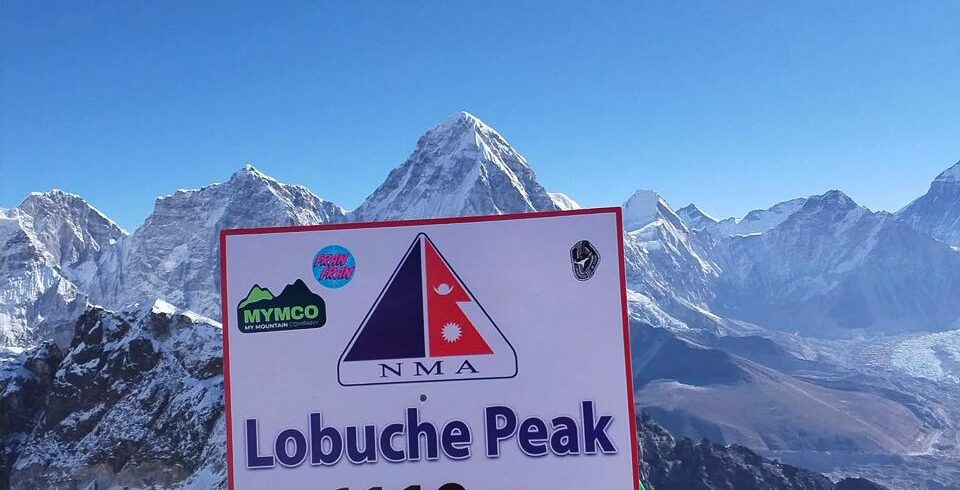
| Lobuche | 4,940 m | 16,207 ft | 54% | Day 7 |
| Gorak Shep | 5,140 m | 16,863 ft | 53% | Day 8-9 |
| Everest Base Camp | 5,364 m | 17,598 ft | 52% | Day 8 (day visit) |
| Kala Patthar | 5,545 m | 18,192 ft | 52% | Day 9 (morning) |
Why Altitude Matters: The Physiology
At sea level, air pressure pushes oxygen into your lungs with every breath. As altitude increases, atmospheric pressure decreases and fewer oxygen molecules enter your lungs per breath. This is called hypobaric hypoxia. Your body compensates by breathing faster, increasing heart rate, and over time (days to weeks) producing more red blood cells. The acclimatization process is real but takes time that cannot be rushed.
The key altitude thresholds on the EBC trail:
2,500 m (Lukla area): First altitude effects. Some trekkers feel mild headache or fatigue on day 1. Rest is important.
3,440 m (Namche Bazaar): The first major acclimatization stop. The mandatory two-night stay at Namche is the most important acclimatization event on the trek. Do not skip it.
4,000 m: The altitude at which AMS (acute mountain sickness) risk increases significantly. Symptoms that began as mild headache can progress to serious illness above this altitude if proper acclimatization has not occurred.
4,410 m (Dingboche): Second mandatory acclimatization stop. Two nights here allows your body to adapt before the high-altitude stages above 4,900 m.
5,000 m+: Serious altitude effects possible in anyone regardless of fitness. Oxygen saturation in the blood drops measurably. Your guide monitors your oxygen saturation with a pulse oximeter at regular intervals above 4,000 m.
Planning Your Everest Trek?
Get local expert advice on cost, itinerary and the best time to go.
The Acclimatization Profile: Why the Standard Itinerary Works
The standard EBC itinerary is not arbitrary. It follows the “climb high, sleep low” acclimatization principle used in high-altitude medicine:
| Acclimatization Event | Altitude Slept | Altitude Reached | Purpose |
|---|---|---|---|
| Namche rest day hike | 3,440 m | 3,840 m (Everest View Hotel) | Stimulate red blood cell production without committing to higher sleep altitude |
| Dingboche rest day hike | 4,410 m | 4,800 m (Nangkartshang Peak) | Acclimatize to sub-5,000 m before committing to Lobuche and above |
| Lobuche overnight (4,940 m) | 4,940 m | 4,940 m | First overnight above the critical 4,800 m threshold |
Altitude Sickness Warning Signs
The detailed guide on altitude sickness on the EBC trek covers this in full. The key rule: never ascend with unresolved AMS symptoms. The symptoms to watch for:
Mild AMS: Headache, fatigue, loss of appetite, mild nausea, dizziness. Manageable with rest, hydration, and not ascending until symptoms resolve.
Moderate AMS: Severe headache not relieved by ibuprofen, vomiting, extreme fatigue, difficulty walking straight. Descent required immediately.
HACE (High Altitude Cerebral Edema): Confusion, inability to walk in straight line, loss of coordination. Life-threatening. Emergency descent and medical evacuation immediately.
HAPE (High Altitude Pulmonary Edema): Breathlessness at rest, cough producing pink frothy sputum, extreme fatigue. Life-threatening. Emergency descent and medical evacuation immediately.
Oxygen Saturation on the EBC Trail
Your guide carries a pulse oximeter throughout the trek and takes regular readings above Namche. Normal readings vary by individual but general guidelines:
| Altitude | Normal SpO2 Range | Concerning SpO2 |
|---|---|---|
| Sea level | 95-100% | Below 90% |
| Namche (3,440 m) | 85-95% | Below 80% |
| Dingboche (4,410 m) | 80-90% | Below 75% |
| Lobuche (4,940 m) | 75-85% | Below 70% |
| Gorak Shep (5,140 m) | 70-82% | Below 65% |
SpO2 readings alone do not determine whether to ascend or descend. Your guide and the Lake Louise AMS scoring system assess symptoms together with oxygen saturation. Low SpO2 with no symptoms is different from low SpO2 with severe headache and vomiting.
Who Has Altitude Risk?
Anyone, regardless of fitness level. AMS does not discriminate by age, gender, or physical condition. Research shows that previous altitude experience helps identify individual susceptibility but does not prevent AMS. The only factors with some evidence for reduced AMS risk are previous successful high-altitude experience and slow ascent rate. Read more in the dedicated EBC for beginners guide.
Altitude Training Before the Trek
True altitude acclimatization requires actual time at altitude. Pre-trek altitude training (running at high altitude, altitude tents, simulated altitude masks) provides partial benefit for fitness but does not replicate the physiological adaptation of actually being at altitude. The most beneficial pre-trek altitude exposure is spending time at 2,500 to 3,500 m for several days before flying to Lukla. Some trekkers add a 2 to 3 day Kathmandu or Nagarkot stay but this is at too low an altitude (1,400 m) for meaningful acclimatization. Arriving in Kathmandu early and joining an optional trek to Nagarkot (2,175 m) adds marginal benefit only.
Frequently Asked Questions
How high is Everest Base Camp in feet?
Everest Base Camp on the south side (Nepal) is at 5,364 metres, which equals 17,598 feet above sea level. The highest point trekkers typically reach is Kala Patthar at 5,545 metres (18,192 feet).
Do I need supplemental oxygen on the EBC trek?
No. Supplemental oxygen is used by climbers going above 7,000 m on summit bids. The EBC trek reaches 5,545 m at Kala Patthar, which is well within the range of safe trekking without supplemental oxygen for properly acclimatized individuals. Some medical providers carry small emergency oxygen bottles for severe AMS treatment, but supplemental oxygen is not required for the standard EBC trek.
What percentage of trekkers get altitude sickness on EBC?
Studies estimate that 25 to 50% of EBC trekkers experience some form of AMS. Mild AMS (headache, fatigue) is very common and usually manageable with rest. Serious HACE or HAPE is rare. Fatalities are extremely rare when trekkers follow descent protocols. The risk is significantly reduced by following the standard acclimatization itinerary and never ascending with unresolved symptoms.
Altitude Gain Day by Day on the EBC Trek
| Day | Start Altitude | End Altitude | Net Altitude Change | Sleeping Altitude |
|---|---|---|---|---|
| Day 1 (Lukla to Phakding) | 2,860m | 2,610m | -250m | 2,610m |
| Day 2 (Phakding to Namche) | 2,610m | 3,440m | +830m | 3,440m |
| Day 3 (Namche acclimatization) | 3,440m | 3,440m + day hike to ~3,800m | 0m sleeping altitude | 3,440m |
| Day 4 (Namche to Tengboche) | 3,440m | 3,860m | +420m | 3,860m |
| Day 5 (Tengboche to Dingboche) | 3,860m | 4,360m | +500m | 4,360m |
| Day 6 (Dingboche acclimatization) | 4,360m | 4,360m + hike to ~4,900m | 0m sleeping altitude | 4,360m |
| Day 7 (Dingboche to Lobuche) | 4,360m | 4,940m | +580m | 4,940m |
| Day 8 (Lobuche to Gorak Shep to EBC) | 4,940m | 5,364m (EBC) | +424m | 5,140m (Gorak Shep) |
| Day 9 (Kala Patthar then descent) | 5,140m | 5,545m then down to 4,240m | Summit 5,545m | 4,240m (Pheriche) |
How Altitude Affects Your Body: By Zone
| Altitude Zone | Oxygen Available vs Sea Level | Physical Effects | EBC Trail Section |
|---|---|---|---|
| 2,500-3,000m (Low altitude) | 75-80% | Mild breathlessness on steep climbs, otherwise normal | Lukla to Phakding |
| 3,000-3,500m (Moderate altitude) | 70-75% | Breathlessness on moderate climbs, possible mild headaches, disrupted sleep | Phakding to Namche |
| 3,500-4,000m (High altitude) | 65-70% | Clear AMS risk, headaches more common, reduced appetite, fatigue | Namche to Tengboche |
| 4,000-4,500m (Very high altitude) | 58-65% | Significant breathlessness, AMS likely without acclimatization, poor sleep | Dingboche area |
| 4,500-5,000m (Extreme altitude) | 53-58% | Severe breathlessness on any exertion, high AMS risk, body deteriorates without rest | Lobuche to Gorak Shep |
| 5,000-5,600m (Extreme altitude) | 50-53% | Maximum trekking altitude. Prolonged stay causes physical deterioration. Summit EBC and Kala Patthar. | EBC and Kala Patthar |
Highest Points on the EBC Trek
| Point | Altitude | Notes |
|---|---|---|
| Everest Base Camp | 5,364m | The main goal. Located on the Khumbu Glacier moraine. No technical climbing required to reach. |
| Kala Patthar | 5,545m | The best viewpoint for Everest above Base Camp. Higher than EBC. Often done before sunrise. |
| Lobuche Pass (if doing Three Passes) | 6,119m | Only on extended Three Passes route, not standard EBC |
| Gorak Shep | 5,140m | Last inhabited stop before EBC. Sleeping altitude. |
| Dingboche | 4,360m | Key acclimatization stop |
| Namche Bazaar | 3,440m | First major acclimatization stop |
Altitude Comparison: EBC vs Other Famous Treks
| Trek / Peak | Max Altitude | Altitude vs EBC |
|---|---|---|
| Everest Base Camp Trek (Kala Patthar) | 5,545m | Benchmark |
| Annapurna Circuit (Thorong La Pass) | 5,416m | 129m lower than Kala Patthar |
| Kilimanjaro (Uhuru Peak) | 5,895m | 350m higher than Kala Patthar |
| Gokyo Ri | 5,360m | 185m lower than Kala Patthar |
| Mera Peak (summit) | 6,476m | 931m higher, requires technical climbing |
| Mont Blanc (summit) | 4,808m | 737m lower than Kala Patthar |
| Langtang Valley (max) | 3,870m | 1,675m lower than Kala Patthar |
Altitude FAQ
Does Everest Base Camp require mountaineering skills?
No. The trekking route to Everest Base Camp (5,364m) does not require any technical climbing skills, ropes, or special mountaineering equipment. It is a walking route on established trails. However, it does require solid physical fitness, good acclimatization, and the right clothing and gear for high altitude.
What altitude do most trekkers have altitude sickness?
Most altitude-related symptoms first appear between 3,000m and 4,000m, typically around Namche Bazaar (3,440m). The risk increases significantly above 4,000m at Dingboche. Taking the mandatory acclimatization days at Namche and Dingboche reduces the risk significantly.
Is 5,545m (Kala Patthar) dangerous altitude for a non-climber?
It is high but achievable for fit trekkers who have followed proper acclimatization. The key is not to rush. People who follow the standard 12-14 day itinerary with rest days at Namche and Dingboche routinely reach Kala Patthar safely. The danger comes from ascending too quickly.
Conclusion
Altitude is the journey on the Everest Base Camp trek. Understanding the profile, respecting the acclimatization process, and recognising the warning signs of AMS are the three things that separate trekkers who make it to Base Camp from those who have to turn back. Follow the standard acclimatization itinerary, listen to your body, listen to your guide, and go slow. An experienced everest trekking company builds the correct pacing, rest days, and altitude monitoring into every itinerary they run.
EBC Trek Altitude and Elevation: What You Need to Know
The Everest Base Camp trek is defined by its elevation profile as much as its scenery. From Lukla airport at 2,860 m to Kala Patthar at 5,545 m, the trek rises and falls through 2,685 m of net elevation gain — but the cumulative profile is more complex, with descents and re-ascents that make the total elevation work significantly greater than the net figure alone suggests. Understanding the elevation profile of each day is essential for managing acclimatisation, pacing, and physical preparation.
Key Elevations on the EBC Trail
| Location | Elevation | Trek Day | Significance |
|---|---|---|---|
| Lukla | 2,860 m | Day 1 | Trek start; altitude adaptation begins |
| Phakding | 2,610 m | Day 1 | First night stop |
| Namche Bazaar | 3,440 m | Days 2–4 | First acclimatisation stop; main Khumbu hub |
| Tengboche | 3,860 m | Day 4 | Famous monastery; Ama Dablam views |
| Dingboche | 4,410 m | Days 5–7 | Second acclimatisation stop; above tree line |
| Lobuche | 4,910 m | Day 7 | Final teahouse night before summit push |
| Gorak Shep | 5,164 m | Days 8–9 | Highest teahouse; base for EBC and Kala Patthar |
| Everest Base Camp | 5,364 m | Day 8 | Trek objective; foot of the Khumbu Icefall |
| Kala Patthar | 5,545 m | Day 9 | Highest point of trek; best Everest viewpoint |
What Altitude Means Physiologically at Each Stage
Each elevation band on the EBC trail triggers different physiological adaptations. Understanding these helps trekkers interpret what their bodies are experiencing and why.
2,500–3,000 m (Lukla to Phakding): Mildly reduced oxygen. Healthy individuals feel minimal effects at this elevation. Breathing rate may increase slightly during exertion. Sleep at this elevation is generally undisturbed. Most trekkers from sea-level cities feel completely normal.
3,000–3,500 m (Phakding to Namche): The threshold zone for AMS susceptibility. Above 3,000 m, a meaningful percentage of people begin to experience headaches, mild fatigue, and disrupted sleep. The Namche acclimatisation stop (2 nights at 3,440 m) is specifically designed to allow the body to adapt to this threshold. Blood oxygen saturation (SpO2), normally 98–99% at sea level, typically reads 90–95% at Namche — still well within safe functional range but noticeably reduced.
3,500–4,500 m (Namche to Dingboche): Progressive altitude effects. SpO2 continues to drop, typically to 85–92% at Tengboche and 80–88% at Dingboche. Headaches and fatigue are common and expected. Sleep quality reduces (many trekkers report Cheyne-Stokes breathing — periodic breathing with brief apnoeic pauses — a normal altitude adaptation that sounds alarming but is not dangerous). The acclimatisation hike from Dingboche to Nagarjun Hill (5,100 m) on the rest day applies the “climb high, sleep low” principle and significantly accelerates adaptation.
4,500–5,000 m (Dingboche to Lobuche): High altitude. SpO2 typically 78–86%. Breathing effort during uphill walking is significantly increased. Simple tasks require conscious management of pace and breath. This elevation range is where AMS risk is highest — the combination of increased physiological stress and the body’s ongoing adaptation means some trekkers will feel worse at Lobuche than they did at Dingboche, even after rest days. Our guides monitor SpO2 and discuss readings openly with all clients.
5,000–5,545 m (Lobuche to Kala Patthar): Very high altitude, approaching extreme altitude. SpO2 typically 72–82%. Walking speed slows to a fraction of normal. The rest-step technique (pausing between each step) is often necessary on steeper sections. Appetite is significantly reduced at this elevation. The mind can feel sluggish and decision-making ability is modestly reduced — one reason why having an experienced guide making route and timing decisions is genuinely important above 5,000 m. The view from Kala Patthar (5,545 m) is worth every physically challenging step.
Planning Your Everest Trek?
Get local expert advice on cost, itinerary and the best time to go.
Pulse Oximetry: Understanding Your SpO2 Readings
All Everest Trekking Company guides carry pulse oximeters — small clip-on devices that measure blood oxygen saturation (SpO2) and pulse rate through fingertip measurement. We take SpO2 readings from all trekkers each morning and evening above Dingboche. Understanding what your readings mean helps you monitor your own altitude adaptation.
SpO2 of 95%+: normal at low altitude; expected at Namche in well-acclimatised individuals. SpO2 90–95%: mildly reduced; normal at 3,500–4,000 m for recently arrived trekkers; monitor for AMS symptoms. SpO2 85–90%: moderately reduced; normal at 4,000–4,500 m; begin more careful AMS monitoring. SpO2 below 80%: significantly reduced; combined with AMS symptoms this warrants serious consideration of descent; our guides will have a detailed discussion with any trekker reading consistently below 80% at 4,500+ m. SpO2 below 75% at altitude combined with AMS symptoms: descent recommended.
Note that SpO2 varies significantly between individuals at the same altitude, and some individuals naturally read lower than others at altitude without experiencing symptoms. The absolute number is less important than the trend over time and the presence or absence of AMS symptoms. Our guides have taken thousands of SpO2 readings across all altitudes and can interpret your specific readings in context. Book your Everest Base Camp Trek with Everest Trekking Company and benefit from this personalised altitude monitoring service from the moment you reach Dingboche.
How Elevation Affects Daily Life on the Trek
Above 4,000 m, everyday activities that are effortless at sea level require deliberate management. Here is what to expect at the highest elevations of the EBC trek in practical, day-to-day terms.
Sleep quality: Sleep at high altitude is lighter and more fragmented than at sea level, particularly in the first 2 nights at any new elevation. This is caused by Cheyne-Stokes breathing — a periodic breathing pattern common above 3,500 m where breathing rate fluctuates cyclically, including brief pauses that can wake a sleeping trekker. The sensation is unsettling but not dangerous. Most trekkers adapt within 1–2 nights. Taking Diamox significantly reduces Cheyne-Stokes frequency and improves sleep quality at altitude. Earplugs can help (both with breathing sounds from bunkmates and with teahouse noise generally).
Appetite: Altitude suppresses appetite through multiple mechanisms — a direct physiological effect of hypoxia on appetite-regulating hormones, nausea in susceptible individuals, and the sheer metabolic expenditure of altitude that leaves some trekkers too fatigued to eat properly. At Lobuche and Gorak Shep, many trekkers find they can manage only half a normal meal. This is normal. The key is to maintain caloric intake regardless of appetite — specifically carbohydrates, which fuel the body most efficiently at altitude. Teahouse menus cater to this: dal bhat (lentil rice), fried noodles, porridge, and chapati are all high-carbohydrate options available at every teahouse throughout the route.
Digestion: Altitude slows gastric motility — food takes longer to digest than at sea level. Constipation is common above 4,000 m (aggravated by dehydration and reduced fibre intake). Preventive measures: maintain hydration, eat fibre-containing foods (local vegetables, fruits where available, oat-based porridge), and walk after meals rather than immediately resting. Our guides’ advice: eat smaller portions more frequently rather than large meals, and choose hot foods (which are more digestible in cold, high-altitude conditions) over cold dishes.
Physical coordination: At the highest elevations (5,000+ m), fine motor coordination can be modestly impaired. Lacing boots, operating camera settings, and writing in a notebook may take slightly longer than normal. This is a normal mild altitude effect in most trekkers and is not an AMS symptom by itself. More significant coordination issues — stumbling, difficulty walking in a straight line — are early HACE warning signs and should be reported to your guide immediately.
Mood and energy: Many trekkers experience fluctuating mood and energy at altitude. Days when everything feels effortful and grim often follow nights of poor sleep at new elevations. These emotional low points typically resolve within 24 hours as acclimatisation improves. Our guides are trained to recognise normal altitude-related mood fluctuation and distinguish it from concerning AMS symptom progression. The most reliable remedy for altitude blues: a cup of sweet tea, a bowl of hot noodles, and a rest in the teahouse dining room with good company.
Mount Everest Elevation: Putting EBC in Context
Everest Base Camp (5,364 m) sits at exactly 60.5% of Everest’s total height of 8,849 m. Kala Patthar (5,545 m) adds another 181 m, reaching 62.6% of Everest’s elevation. This perspective is useful for understanding both the achievement of reaching EBC and the extraordinary remoteness of the actual summit. From Kala Patthar, the summit pyramid of Everest appears tantalizingly close — perhaps a 2–3 day journey away by direct line. In reality, the technical climbing route from Base Camp to the summit covers 3,485 m of additional vertical elevation and requires weeks of acclimatisation, multiple intermediate camps, technical ice and rock climbing skills, supplemental oxygen, and highly specialised mountaineering experience.
The contrast makes EBC trekking all the more impressive: reaching the foot of the world’s most famous mountain — the one that every summit-bound team passes through at 5,364 m — is genuinely accessible to any fit and determined person with the right preparation. No technical skills required, no supplemental oxygen needed, no years of mountaineering training prerequisite. Just 14 days of guided walking with Everest Trekking Company and you stand at the same elevation as the base of the route that has challenged the world’s greatest climbers for over a century. Book the Everest Base Camp Trek today and walk in the footsteps of every Everest expedition since 1953.
Altitude Safety: Non-Negotiable Principles for EBC Trekking
The altitude profile of the EBC trek demands respect. These five non-negotiable principles govern safe behaviour at high altitude — principles that Everest Trekking Company enforces consistently on every departure.
1. Never ascend with active AMS symptoms. A headache is not permission to push on. A headache above 3,000 m is an instruction to stop, rest, hydrate, and wait for improvement before ascending further. If symptoms worsen over 12–24 hours, descend. There are no exceptions to this rule on our treks — not for schedule pressure, not for summit pressure, not for any reason.
2. Never sleep more than 500 m higher than the previous night above 3,500 m. The standard EBC itinerary observes this principle at every stage. Our guides will not proceed to a higher sleeping altitude with any trekker whose symptoms raise concern, regardless of the itinerary schedule.
3. Drink 3–4 litres of fluid per day. Hydration directly impacts altitude adaptation. Dehydration accelerates AMS onset and worsens existing symptoms. Tea, warm water, and electrolyte drinks count toward the daily fluid target. Coffee and alcohol dehydrate — limit both, particularly above 4,000 m.
4. Tell your guide how you actually feel. Pride and determination are excellent qualities in a trekker. They become dangerous when they prevent honest reporting of symptoms. Our guides are not trying to turn people around — they are trying to get every trekker safely to Base Camp and back. Accurate symptom reporting is the most important thing any trekker can do for their own safety above 4,000 m.
5. Descent is treatment. For HACE or HAPE, descent is the only reliable immediate treatment. It is available at any time, in any weather, by any means necessary. No summit, no view, and no trekking goal is worth a human life. The mountain will be there for another visit. Our guides are authorised and instructed to initiate emergency descent without waiting for permission from any trekker exhibiting signs of HACE or HAPE.
These principles are applied consistently on every Everest Trekking Company EBC departure. Our safety record reflects the rigor of their application. Book your Everest Base Camp Trek with Everest Trekking Company and trek knowing that your safety is our highest priority from the first day to the last. For more on altitude safety and what to expect at each elevation stage of the EBC trek, visit everesttrekkingcompany.com or contact our Kathmandu team directly.
The View from 5,545 Metres
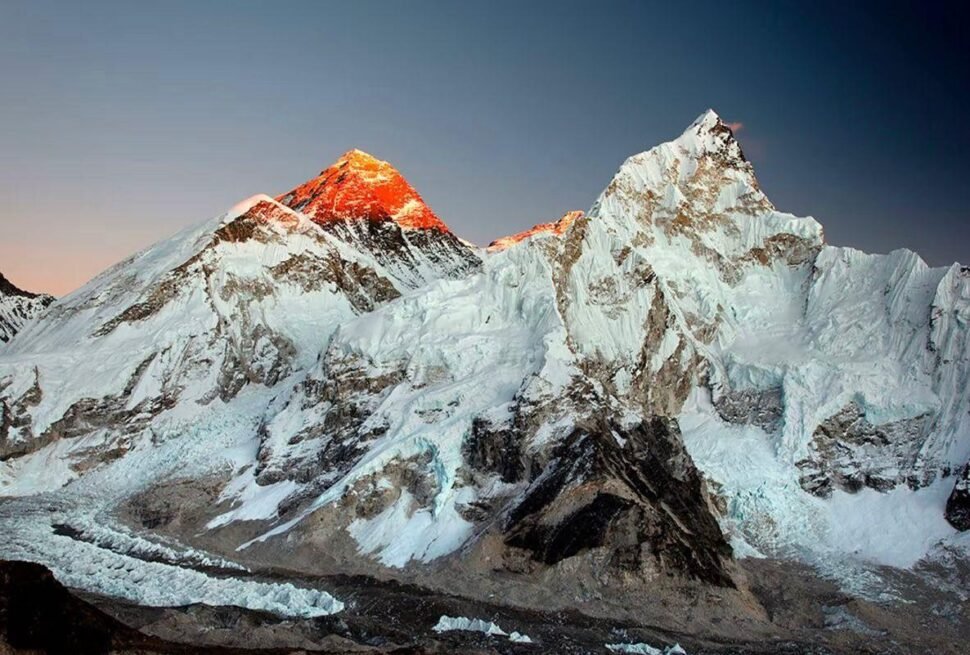
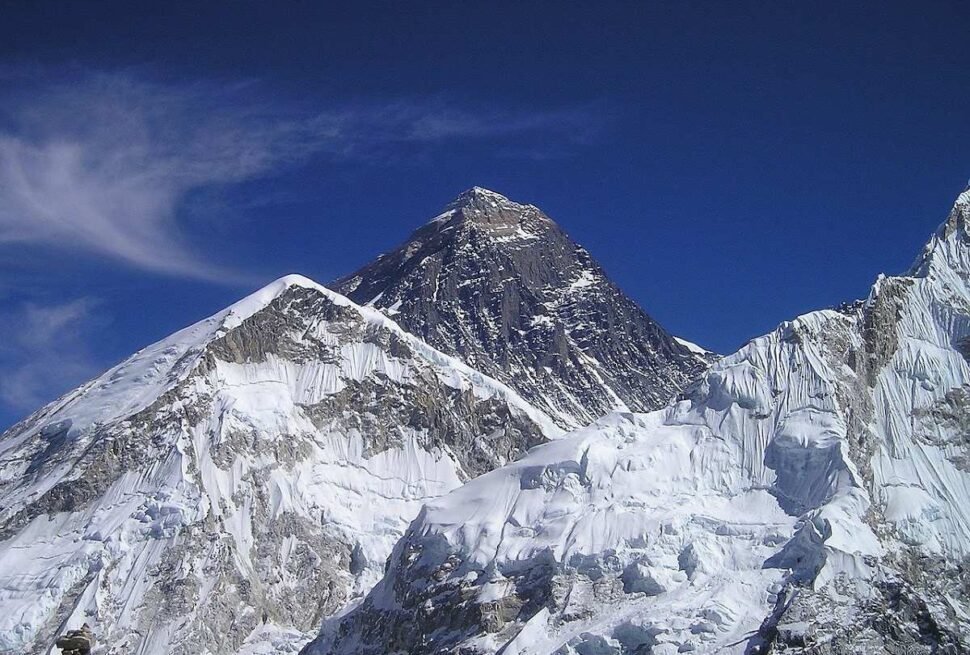
Kala Patthar (5,545 m) is the highest point of the standard EBC trek and offers the most iconic view of Mount Everest available to non-technical trekkers. From this elevated viewpoint above the Khumbu Glacier, Everest’s complete southwest face is visible — the entire route from Base Camp through the Khumbu Icefall, Western Cwm, Lhotse Face, South Col, Southeast Ridge, and ultimately the summit pyramid. On a clear dawn, with the first light of sunrise striking the summit snowfield at angles that turn the ice orange and gold, Kala Patthar provides a perspective on the world’s highest mountain that photographs cannot fully capture.
Surrounding peaks visible from Kala Patthar: Nuptse (7,861 m) immediately to the south, Lhotse (8,516 m) — the world’s fourth highest peak — adjacent to Everest, Pumori (7,161 m) directly above Gorak Shep to the north, Changtse (7,583 m) on the Tibetan side of the Everest massif, and the dramatic sweep of the Khumbu Glacier below, flowing northward from the icefall. The panorama is one of the most concentrated collections of high-altitude mountain scenery on Earth.
At 5,545 m, you are standing higher than any point in the Alps, any peak in North America, any summit in Africa, and virtually every mountain range outside the Himalaya-Karakoram system. The altitude is remarkable not just for what it takes to get there but for what it shows when you arrive. Every step of the Everest Base Camp Trek from Lukla leads here — and this view is why so many trekkers consider EBC the most rewarding trek of their lives. Book with Everest Trekking Company today and start the journey to 5,545 m.
Elevation and the Journey Home
After reaching Kala Patthar and EBC at the upper end of the elevation profile, the descent back to Lukla brings a gradual return to more normal physiological conditions. With each 500 m of descent, oxygen availability increases, breathing becomes easier, appetite improves, and sleep quality recovers. Many trekkers describe the descent as a progressive restoration of normal energy and good humour — the mountain releasing you gently back to the lower world. By the time you reach Namche on the penultimate day, you feel fundamentally different from the person who arrived at 3,440 m ten days earlier — stronger, more confident, and permanently connected to the landscape you have traversed.
The elevation story of the EBC trek is ultimately not just a physiological challenge. It is a journey into one of Earth’s most extreme and most beautiful environments — a landscape shaped by some of the highest peaks and oldest glaciers on the planet. Understanding the elevations you will traverse prepares you for what to expect. Experiencing those elevations in person transcends any preparation. Book your Everest Base Camp Trek with Everest Trekking Company today and join the thousands of trekkers who have stood at 5,545 m above sea level and understood, for the first time, exactly what the Himalaya means.
Why Altitude Makes the EBC Trek Special
The elevation profile of the EBC trek is not a challenge to overcome — it is the point. Every metre of altitude gain brings new physiological experiences, new perspectives on the mountains, and a deepening respect for the high-altitude environment. The Khumbu is one of very few places on Earth where non-technical travellers can experience the genuine high-altitude world — the reduced oxygen, the extreme cold, the extraordinary mountain views, and the profound physical achievement of reaching 5,000+ m. This is what makes EBC different from any other trek: the altitude is not a byproduct of the destination, it is the destination itself. Book your Everest Base Camp Trek with Everest Trekking Company today and experience the full elevation story of the world’s most iconic high-altitude trek.
From 2,860 m in Lukla to 5,545 m on Kala Patthar, the elevation journey of the Everest Base Camp Trek is one of the most remarkable altitude experiences available to any non-technical traveller in the world. Trust Everest Trekking Company — Nepal’s most experienced Everest base camp trek company — to guide you through every metre of it safely and memorably.
Altitude is the defining factor of the EBC experience — and the reason why standing at 5,545 m on Kala Patthar feels like one of the greatest personal achievements of your life. Trust Everest Trekking Company to take you there and bring you safely back.
Understanding altitude prepares you for the physical reality of EBC. Experiencing it in person exceeds any preparation. Book the Everest Base Camp Trek with Everest Trekking Company today and begin the highest, most rewarding walk of your life.
The elevation story of the EBC trek — from 2,860 m at Lukla to 5,545 m on Kala Patthar — is the story of how preparation, patience, and the right team can take you higher than you ever thought possible. Everest Trekking Company has guided that story thousands of times. Book today and make it yours.
Planning Your Everest Trek?
Get local expert advice on cost, itinerary and the best time to go.