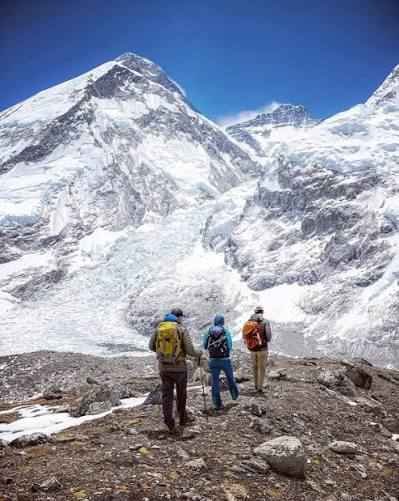
The Everest Base Camp trek is rated moderately difficult to challenging. It is not a casual walk — the combination of high altitude, long daily walking distances, and cumulative physical effort over 12–14 days makes it a serious undertaking. However, it is not technically difficult: there is no rock climbing, ice climbing, or fixed ropes required. The trail is well-marked and has teahouses every few hours. Thousands of people complete the EBC trek every year with no technical mountaineering experience.
The main challenge is altitude. You will trek above 5,000m — an elevation at which the air contains roughly half the oxygen available at sea level. Acclimatisation, pacing, and listening to your body are more critical than raw fitness for success on this trek.
Key Facts About EBC Trek Difficulty
| Factor | Details |
|---|---|
| Maximum altitude | 5,364m (Everest Base Camp), 5,645m (Kala Patthar) |
| Total distance (round trip from Lukla) | Approximately 130 km |
| Standard duration | 12–14 days |
| Daily walking time | 5–7 hours |
| Technical difficulty | None — standard trekking trail |
| Altitude sickness risk | Moderate to high above 3,500m without proper acclimatisation |
| Minimum fitness required | Good cardiovascular fitness; experience hiking helpful |
| Difficulty rating | Moderate–Challenging |
What Makes the EBC Trek Difficult?
1. Altitude
The biggest challenge on the Everest Base Camp trek is altitude. Most trekkers start at Lukla (2,840m) — already higher than the summit of many European mountains. Over the following days, you climb steadily to over 5,300m. At this elevation, the partial pressure of oxygen is significantly lower than at sea level, which means your body takes in less oxygen with each breath.
Common symptoms of altitude adjustment (not to be confused with acute mountain sickness) include mild headache, reduced appetite, and fatigue. These typically ease after a proper acclimatisation rest day. The standard itinerary includes rest and acclimatisation days at Namche Bazaar (3,440m) and Dingboche (4,410m) specifically to allow your body to adapt.
The “climb high, sleep low” principle is applied at key points on the itinerary — for example, trekking up to Everest View Hotel (3,962m) from Namche before sleeping back at Namche (3,440m) — to stimulate acclimatisation without overloading the body.
2. Cumulative Distance
The round trip from Lukla to EBC and back is approximately 130 kilometres of actual trekking. Spread over 12–14 days with rest days included, daily distances are manageable — typically 8–16km per day. However, the sustained nature of the effort, combined with altitude, means fatigue accumulates. Days that would feel easy at sea level feel harder than expected above 4,000m.
3. Terrain
The EBC trail is rocky, uneven, and often steep in sections. The upper sections of the trek — from Dingboche to Lobuche and beyond — cross rocky glacier moraines with loose stones. Good ankle support from quality trekking boots is important. The trail around Dugla and the memorial site above Lobuche involves a steep, stony climb. The approach from Gorak Shep to Everest Base Camp crosses the Khumbu Glacier moraine, which is rocky and slow-going.
There are no fixed ropes, ladders, or technical sections. The trail is a walking path throughout, with occasional stone staircases built by local communities.
4. Weather
Cold temperatures at high elevation add a physical challenge, particularly above 4,000m. Wind chill at Kala Patthar’s summit (5,645m) can make the effective temperature feel much colder than the thermometer reads. Dressing in proper layers and being prepared for sudden weather changes is essential.
Planning Your Everest Trek?
Get local expert advice on cost, itinerary and the best time to go.
Difficulty by Trail Section
| Section | Altitude Range | Difficulty | Notes |
|---|---|---|---|
| Lukla to Namche Bazaar | 2,840m–3,440m | Moderate | Steep climb to Namche on day 2 |
| Namche to Tengboche | 3,440m–3,860m | Moderate | Up and down terrain, scenic ridgeline |
| Tengboche to Dingboche | 3,860m–4,410m | Moderate | Valley walking, altitude begins to tell |
| Dingboche to Lobuche | 4,410m–4,940m | Moderate–Hard | Dugla climb, memorial hill, rocky moraine |
| Lobuche to Gorak Shep | 4,940m–5,164m | Hard | Rocky path, low oxygen, slow going |
| Gorak Shep to EBC | 5,164m–5,364m | Hard | Glacier moraine, uneven ground |
| Gorak Shep to Kala Patthar | 5,164m–5,645m | Hard | Steep climb, very low oxygen at summit |
Is the EBC Trek Harder Than Other Popular Treks?
In terms of altitude, the EBC trek is significantly higher than most popular trekking destinations globally. For comparison:
- Annapurna Base Camp Trek: Maximum altitude 4,130m — noticeably lower, easier altitude challenge than EBC
- Ghorepani Poon Hill Trek: Maximum altitude 3,210m — much lower, more suitable for beginners
- Kilimanjaro (Africa): Maximum altitude 5,895m — higher than EBC but shorter duration; many consider EBC’s sustained effort harder despite the lower peak altitude
- Tour du Mont Blanc (Europe): Maximum altitude around 2,600m — much lower, more about distance and terrain than altitude
Within Nepal’s trekking options, the Everest Three Passes Trek (crossing Kongma La, Cho La, and Renjo La) is harder than the standard EBC trek, while the Annapurna Circuit and ABC trek are somewhat easier in terms of maximum altitude.
Who Can Do the EBC Trek?
The EBC trek is achievable for a wide range of people, provided they:
- Are in good cardiovascular health
- Have no serious heart or lung conditions (consult your doctor before any high-altitude trek)
- Can walk 6–7 hours per day on uneven ground carrying a day pack
- Are prepared to descend immediately if altitude sickness symptoms become severe
Age is not a barrier in itself. Trekkers in their 60s and 70s regularly complete the EBC trek successfully. The key factors are fitness, health, and the willingness to move slowly and take acclimatisation days seriously. Children as young as 10–12 have trekked to Base Camp with proper preparation and family support, though high-altitude trekking with children requires careful judgement.
Fitness Preparation for the EBC Trek
Three to four months of consistent training before the EBC trek is recommended. The most important fitness factor is cardiovascular endurance — the ability to sustain aerobic effort for several hours at a time. Strength in the legs and knees also matters for the steep descents.
Recommended Training Activities
- Hiking with a loaded pack — the closest simulation to EBC conditions. Aim for weekend hikes of 6–8 hours carrying 8–10kg.
- Stair climbing or step machine — excellent for building quad and calf strength for uphill sections.
- Running or cycling — builds aerobic base. Aim for 30–45 minutes of cardio 3–4 times per week.
- Yoga or core strengthening — improves balance and body awareness on uneven terrain.
By the time you fly to Kathmandu, you should feel comfortable completing a 5–6 hour hike with a 6–8kg day pack without excessive fatigue.
Altitude Sickness Risk on the EBC Trek
Altitude sickness (Acute Mountain Sickness, or AMS) is a real risk on the EBC trek and affects a significant proportion of trekkers above 3,500m. Mild AMS is common — headache, nausea, fatigue, and disrupted sleep are typical early symptoms. Most cases resolve with a rest day at the same altitude and adequate hydration.
More serious forms — High Altitude Cerebral Edema (HACE) and High Altitude Pulmonary Edema (HAPE) — are rare but life-threatening and require immediate descent. A knowledgeable guide will monitor trekkers for these symptoms and initiate descent if needed.
Key rules for avoiding serious altitude illness:
- Never ascend to a new sleeping altitude if you have symptoms that haven’t resolved
- Take acclimatisation days seriously — don’t skip them even if you feel good
- Drink 3–4 litres of water per day
- Avoid alcohol above 3,500m
- Descend at the first sign of worsening symptoms
Frequently Asked Questions
Is the EBC trek suitable for beginners?
The EBC trek is doable for fit beginners, but it is not recommended as your first multi-day trek if you have no hiking experience at all. Completing a few day hikes or a shorter multi-day trek before attempting EBC will give you realistic expectations of what to expect and help identify any fitness or gear gaps.
Do I need to be a runner or athlete to do the EBC trek?
No. Many people who complete the EBC trek are not runners or athletes. The key is sustained aerobic fitness — the ability to walk steadily uphill for several hours. Average fitness combined with proper training preparation is sufficient for most people.
What is the hardest day on the EBC trek?
Many trekkers find the final push from Gorak Shep to Everest Base Camp (or from Gorak Shep to the summit of Kala Patthar) the hardest single day. You are at your highest elevation, the air is thinnest, and the terrain is rocky moraine. The Kala Patthar summit push is typically done pre-dawn for sunrise views, adding the challenge of cold temperatures and headlamp navigation.
Can I do the EBC trek without a guide?
Yes, the EBC trek is theoretically possible without a guide — the trail is well-signed and there are teahouses throughout. However, trekking without a guide means you have no professional support for altitude sickness decisions, no help with route finding in poor visibility, and reduced access to helicopter evacuation through some insurance policies. Hiring a guide is strongly recommended, especially for solo or first-time trekkers.
Trek with Everest Trekking Company
Our licensed, experienced guides have completed the EBC route hundreds of times in all seasons. They will monitor your acclimatisation, set the right daily pace, make safety decisions, and ensure your trek is safe and memorable. View our Everest Base Camp Trek package to start planning.
Related EBC Trek Guides
Planning Your Everest Trek?
Get local expert advice on cost, itinerary and the best time to go.