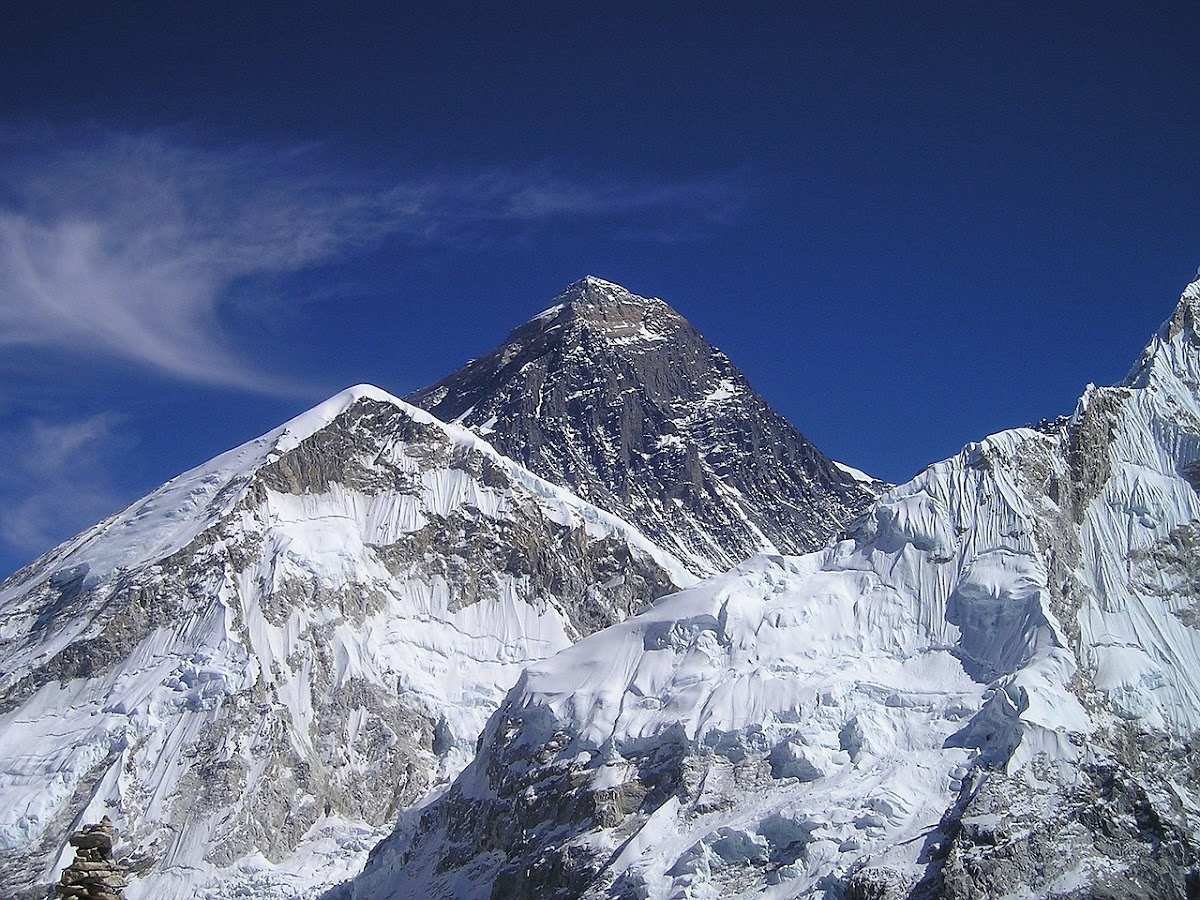
The Khumbu region of northeastern Nepal is one of the most studied and celebrated mountain communities on earth, yet most trekkers who pass through its villages know surprisingly little about the people who built and maintain the world they are walking through. The Sherpas of the Khumbu are not simply guides and porters, though they excel at those roles. They are a people with a distinct language, a profound religious tradition, an extraordinary mountaineering history, and a social structure that has adapted over five centuries to one of the most extreme high-altitude environments humans have ever called home.
This guide covers the full picture: who the Sherpas are and where they came from, how Tibetan Buddhism shapes every aspect of daily life in the Khumbu, the monasteries and festivals that mark the cultural calendar, the traditional foods and home architecture, the story of Sherpa mountaineering achievement, and how to engage with this community respectfully as a visiting trekker. Understanding the culture of the Khumbu makes every day on the Everest Base Camp trek richer and more meaningful.
Who Are the Sherpas? Origins and History
The word “Sherpa” comes from the Tibetan words “shar” (east) and “pa” (people) — literally, “people from the east.” The Sherpas migrated from the Kham region of eastern Tibet into what is now the Khumbu area of Nepal approximately 500 years ago, around the 15th and 16th centuries. The migration is documented in oral history and partially in ancient texts preserved at Tengboche Monastery. The earliest arrivals followed high-altitude yak trading routes across the Nangpa La pass, settling in the high valleys below Everest.
The Khumbu environment shaped Sherpa society in fundamental ways. At altitudes between 3,400 and 4,800 metres, the land is too high for most crops beyond potatoes and buckwheat. The economy was historically built on trade — yaks and salt and grain moving between the Tibetan plateau and the lowlands of Nepal — supplemented by animal husbandry and limited farming. This trading tradition produced a community that was mobile, linguistically skilled, and deeply familiar with mountain terrain. These are exactly the qualities that made Sherpas invaluable when Himalayan mountaineering began in the early 20th century.
Planning Your Everest Trek?
Get local expert advice on cost, itinerary and the best time to go.
Genetic Adaptation to High Altitude
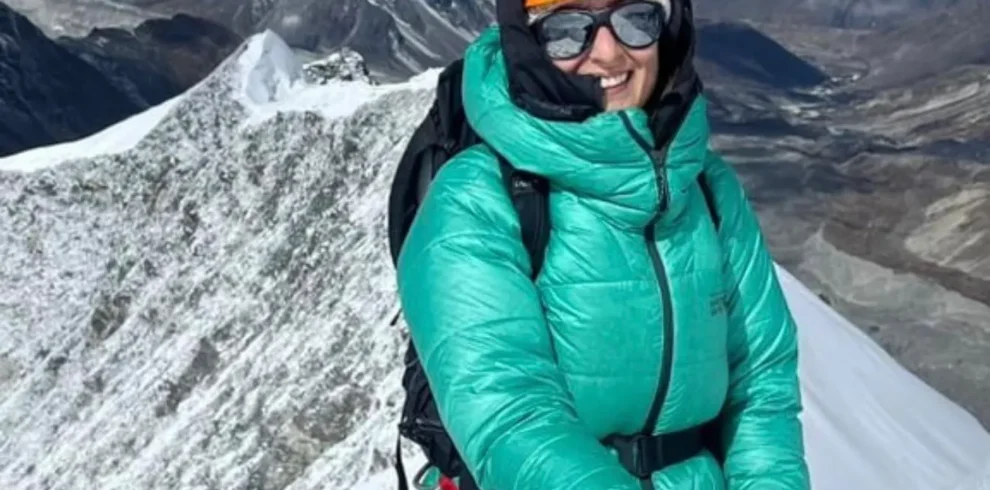
Sherpa physiological adaptation to high altitude is not just cultural — it is genetic. Published research in the journal PLOS Genetics has identified specific variants in the EPAS1 gene (sometimes called the “super-athlete gene”) in Sherpa populations that allow more efficient oxygen metabolism at altitude. Sherpas have lower baseline haemoglobin concentrations than lowland populations but more efficient mitochondrial oxygen use, better capillarisation in muscle tissue, and different patterns of hypoxic response. These genetic adaptations developed over the roughly 30 generations since the Khumbu migration — an unusually rapid and documentable example of human genetic evolution in response to environmental pressure.
This is why experienced Sherpa guides can walk at pace above 5,000 metres that would leave most acclimatised trekkers breathless, and why summit attempts on Everest have historically been led by Sherpa high-altitude workers who can function at extreme altitude without supplemental oxygen for extended periods.
Tibetan Buddhism in the Khumbu
Tibetan Buddhism is not a background detail of Sherpa culture — it is the operating system. Every village in the Khumbu, every household, every major life event, and every relationship with the natural world is understood through the lens of Buddhist teaching and practice. Trekkers who understand even the basics of this framework will find the Khumbu landscape transformed from a collection of interesting sights into a coherent living world.
The Nyingma Tradition
Khumbu Sherpas follow the Nyingma school of Tibetan Buddhism, the oldest of the four major schools. The Nyingma tradition was established by Padmasambhava (Guru Rinpoche) in Tibet in the 8th century and emphasises meditation practice, the revelation of hidden teachings (terma), and the veneration of local protective deities alongside the central Buddhist figures. Guru Rinpoche is venerated across the Khumbu as the being who “tamed” the spirits of the Himalaya and made the mountains safe for human habitation.
Sacred Landscape: Reading the Khumbu as a Buddhist Text
The Khumbu is not simply a place where Buddhists happen to live. It is understood as a “beyul” — a sacred hidden valley consecrated by Guru Rinpoche as a refuge during times of crisis. The specific geography of the Khumbu is mapped onto Buddhist symbolic cosmology: particular peaks are identified as the abodes of protective deities, rivers mark sacred boundaries, and specific passes and caves are sites of historical meditation and revelation.
As you trek through the Khumbu, the elements of this sacred landscape are visible in every direction:
- Mani walls: Long stone walls built from rocks carved with the mantra “Om Mani Padme Hum.” Always pass to the left of a mani wall (keeping it on your right) — the correct direction is clockwise relative to sacred objects.
- Prayer flags (Lungta): The five colours represent the five elements: blue (sky/space), white (air/wind), red (fire), green (water), yellow (earth). The flags carry printed prayers that are “sent” into the world by the wind each time the flag moves. Replace or supplement existing strings; never remove them.
- Chortens (stupas): Dome-shaped structures containing relics or sacred texts, marking the boundary of sacred territories and the achievements of enlightened beings. Pass clockwise around all chortens.
- Prayer wheels: Cylinders containing printed mantras; spinning them clockwise is equivalent to reciting the mantra the number of times it is printed inside. A large prayer wheel might contain the mantra thousands of times.
- Lhapso (incense cairns): Stone platforms at high points where juniper is burned and offerings are made to local mountain deities before passes are crossed.
Monasteries of the Khumbu
The monasteries of the Khumbu are among the most important cultural institutions in the region, functioning as religious centres, community gathering places, archives of historical knowledge, and schools. Most are open to respectful visitors. Removing shoes before entering the main prayer hall, walking clockwise around the interior, speaking quietly, and not photographing without asking permission are the universal requirements.
| Monastery | Location / Altitude | Founded | Significance | Trek Connection |
|---|---|---|---|---|
| Tengboche (Thyangboche) | 3,867m | 1916 (rebuilt 1993 after fire) | Largest and most famous monastery in Khumbu; seat of the Khumbu Lama; site of Mani Rimdu festival | On the main EBC trail; unmissable on Day 4/5 |
| Pangboche | 3,985m | Reputedly 350+ years old (oldest in Khumbu) | Contains a scalp and hand reputedly from a Yeti; home to Lama Geshe who blessed the 1953 Everest expedition | On the main EBC trail between Tengboche and Dingboche |
| Thame | 3,820m | ~17th century | Home monastery of Tenzing Norgay’s family; site of spring Mani Rimdu | One hour above the main trail west of Namche; requires a side trip |
| Khumjung | 3,790m | Founded by Hillary on Sherpa request (1961) | Houses another claimed Yeti scalp; Hillary School nearby | Accessible on the Namche acclimatisation day hike |
| Chiwong | 2,900m | ~1923 | Important Solu Khumbu monastery south of Namche; annual festival | Not on main EBC route; reachable from Phaplu |
Visiting Tengboche: What to Expect
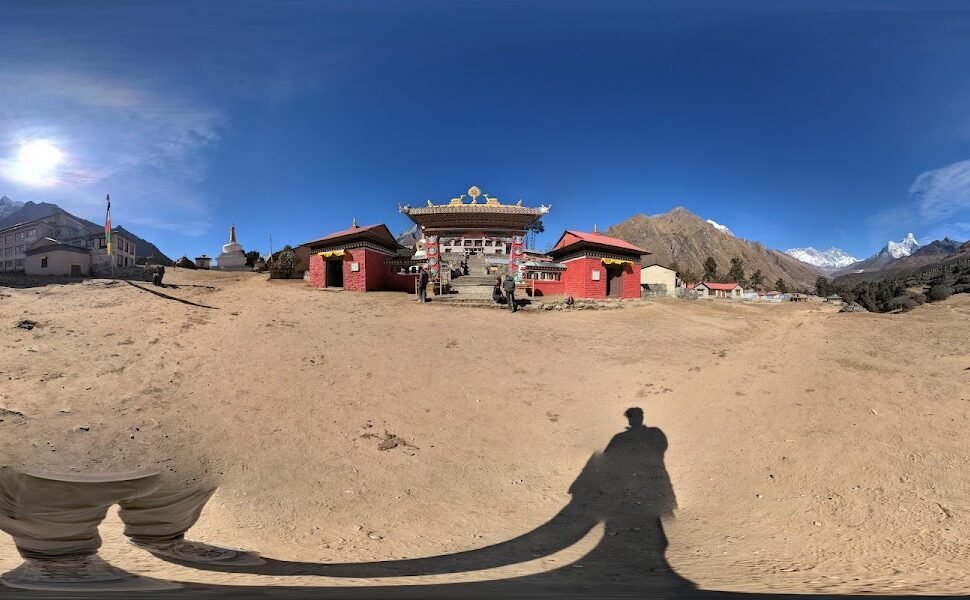
Tengboche Monastery sits on a ridge at 3,867 metres with Ama Dablam directly south and the massif of Everest, Lhotse, and Nuptse visible to the north. The approach from the river gorge below is through rhododendron forest, emerging onto the ridge at the monastery complex. The setting is one of the most dramatic of any religious building in the world.
The main temple was rebuilt after a fire in 1989 (completed 1993), and the interior features elaborate thangka paintings, large gilded Buddha statues, and the tangka drum and horns used in ritual ceremonies. Daily prayer sessions take place at approximately 6:30am and 3:00pm. Visitors who arrive quietly and sit respectfully at the back of the hall during these sessions are generally welcome. The chanting, horns, drums, and cymbals of a full monastic ceremony are an experience that has no equivalent anywhere else on the trek.
Khumbu Villages: A Guided Tour
| Village | Altitude | Population | Character | Key Sight |
|---|---|---|---|---|
| Namche Bazaar | 3,440m | ~1,500–2,000 (permanent) | The commercial and administrative heart of Khumbu; weekly Saturday market; internet cafes, bakeries, gear shops | Sherpa Museum; Everest View Hotel hike; market day |
| Khumjung | 3,790m | ~400 | Traditional Sherpa village above Namche; Hillary School; terraced fields; well-preserved architecture | Khumjung Monastery (Yeti scalp); Hillary School |
| Khunde | 3,840m | ~200 | Adjacent to Khumjung; site of Hillary Hospital (1966), oldest hospital in Khumbu | Hillary Hospital; views from above village |
| Pangboche | 3,985m | ~200 | Oldest continuously inhabited village in Khumbu; ancient monastery; traditional stone houses | Pangboche Monastery; Ama Dablam views |
| Dingboche | 4,410m | ~100 permanent, many seasonal | High-altitude farming settlement; potato and buckwheat fields; acclimatisation hub | Nangkartshang hike; views of Makalu, Lhotse, Island Peak |
| Lobuche | 4,940m | Seasonal only | Remote high-altitude teahouse cluster; gateway to EBC; memorial cairns to fallen climbers | Climbers’ Memorial; Pyramid research station nearby |
| Gorakshep | 5,164m | Seasonal only | Former lake bed; last teahouses before EBC; spartan accommodation | Last stop before EBC and Kala Patthar |
Namche Bazaar: The Capital of the Khumbu
Namche Bazaar occupies a natural amphitheatre on the western side of the ridge above the Dudh Kosi river, at 3,440 metres. In 1950, it was a village of perhaps 200 people living by yak herding and trans-Himalayan trade. Today it has bakeries serving apple strudel, gear rental shops with the same equipment you’d find in Chamonix or Kathmandu, dozens of teahouses and lodges, satellite internet, and a permanent population of several thousand that swells to five or six times that during peak trekking season.
The weekly Saturday market at Namche is one of the great social institutions of the region. Sherpa farmers from Khumjung and Khunde bring potatoes, vegetables, and dairy products down to trade with lowland Nepali traders who carry up rice, spices, fruit, manufactured goods, and equipment. The market morning is one of the best opportunities to observe traditional Khumbu commercial culture in a setting that has not been staged for tourist consumption.
Sherpa Festivals: The Cultural Calendar
The Sherpa cultural calendar follows the Tibetan lunar calendar, and the major festivals punctuate the year with days of masked dance, ritual ceremony, communal feasting, and religious observation. If your trek coincides with a major festival, attend whatever is accessible to visitors — these are among the most extraordinary public ceremonial events in Asia.
| Festival | Timing (Lunar) | Typical Gregorian Date | Location | What Happens |
|---|---|---|---|---|
| Mani Rimdu (autumn) | 10th–12th month of Tibetan calendar | October–November | Tengboche Monastery | Three-day event: Empowerment ceremony (first day); Masked Cham dance (second day, public); Distribution of sacred pills (third day) |
| Mani Rimdu (spring) | 5th month of Tibetan calendar | May–June | Thame Monastery | Same structure as autumn Mani Rimdu; smaller and more intimate atmosphere at Thame |
| Losar | 1st day of Tibetan New Year | February–March | All Khumbu villages | Tibetan New Year: family visits, ritual cleaning of homes, offerings at monasteries, festive food and chang (barley beer) |
| Dumje | 7th month of Tibetan calendar | June–July | Khumbu villages, primarily Namche | Five-day summer festival celebrating Guru Rinpoche; prayer ceremonies, feasting, community gathering; held when many Sherpas return from expeditions |
| Saga Dawa | 15th day of 4th Tibetan month | May–June (full moon) | All monasteries | Marks the birth, enlightenment, and death of the Buddha; circumambulating sacred sites; increased religious merit for all actions; particularly observed at Tengboche |
Mani Rimdu: The Most Important Festival
The autumn Mani Rimdu at Tengboche Monastery is the single most significant cultural event accessible to trekkers in the Khumbu. The festival commemorates the defeat of pre-Buddhist Bon spirits by the Buddhist teachings, dramatised through the Cham masked dance performed by monks on the central courtyard of Tengboche.
The Cham dance is not a performance put on for tourists — it is a sacred ritual performed by trained monks wearing elaborate costumes and masks representing Buddhist protective deities, wrathful emanations, and symbolic characters. The audience sits around the courtyard while monks circle and interact in a choreographed sequence that can last eight or more hours over the course of the festival day. The sound, colour, and atmosphere of Mani Rimdu at Tengboche in the October-November window is genuinely unlike anything else in the world.
The festival falls during the peak autumn trekking season, meaning teahouses at Tengboche and nearby villages book out weeks in advance around the festival dates. If you plan to attend, coordinate your itinerary explicitly around Mani Rimdu dates, which shift each year with the lunar calendar.
Traditional Sherpa Architecture and Home Life
Traditional Sherpa homes are immediately recognisable once you know what to look for: large two-storey stone buildings with flat or slightly pitched roofs, small windows, and a specific internal organisation that reflects both the harsh climate and the Buddhist household practice.
Architecture Features
- Stone construction: Massive dry-stone walls one to two feet thick provide insulation against the extreme cold; the stone is local granite and quartzite found throughout the Khumbu
- Flat roofs: Used for drying grain, wood, and yak dung fuel in summer; also provide a sleeping space during the brief warm season
- Lhakang (chapel room): Every traditional Sherpa home has a dedicated Buddhist shrine room on the upper floor, containing a altar with Buddha images, offering bowls, butter lamps, and thangka paintings
- Kitchen placement: The kitchen is the heart of the home and always central in the floor plan; the hearth is sacred and food is prepared communally
- Windows facing south: Positioned to maximise solar gain in the short warm season and minimise heat loss in winter
- Ground floor for animals: Traditional homes kept yaks and naks (female yaks) on the ground floor in winter, with the heat of the animals warming the floor above
The Khumbu Kitchen: Traditional Foods and Drinks
| Food or Drink | What It Is | When Served | Significance |
|---|---|---|---|
| Dal bhat | Lentil soup (dal) with rice (bhat), vegetables, and pickled condiment (achar) | Twice daily, main meals | The foundational meal of both Sherpa and broader Nepali culture; unlimited refills are the custom |
| Tsampa | Roasted barley flour mixed with butter tea or water into a dough | Breakfast or trail snack | The staple food of high-altitude Tibetan and Sherpa life for centuries; lightweight, calorie-dense, requires no cooking |
| Butter tea (Po cha) | Black tea churned with yak butter and salt | Throughout the day, offered to all guests | Provides fat, calories, and salt — essential at altitude; the offering of butter tea is a foundational gesture of hospitality |
| Chang | Fermented barley beer, mildly alcoholic | Social occasions, festivals | Brewed in most households; offering chang to a guest is a mark of welcome; consumed communally at festivals |
| Raksi | Distilled grain spirit, stronger than chang | Festivals, special occasions | The strongest traditional alcohol; offered at celebrations; requires moderation at altitude |
| Sherpa stew | Potato, vegetables, noodles, and sometimes meat in broth | Evening meal option | A warming high-calorie meal adapted for trekkers; widely available in teahouses; excellent at altitude |
| Yak cheese | Hard cheese made from yak milk | Snack, market food | Produced seasonally when yaks are at high pastures; sold at Namche market; a nutritionally dense local product |
The offering of butter tea deserves specific mention. In Sherpa culture, refusing butter tea entirely when it is offered can be mildly impolite, though it will be understood by hosts accustomed to trekkers. If you do not want to drink a full cup, hold the cup when it is offered, take a small sip, and place it back on the table. The host will refill it, which is correct — you can let it sit. This is more gracious than simply saying no.
Planning Your Everest Trek?
Get local expert advice on cost, itinerary and the best time to go.
Sherpa Mountaineering: A History of Achievement
No account of Sherpa culture is complete without the mountaineering history that brought the Khumbu to global attention. But it is important to understand this history correctly: Sherpas were not discovered as useful labourers by Western expeditions. They were experienced high-altitude mountain people who were recruited because their knowledge, fitness, and physical adaptation to altitude made them the most capable people in the world for high-mountain logistical work.
The Early Expedition Era (1920s–1950s)
The first large-scale Himalayan expeditions began in the 1920s, initially attempting Everest from the north (Tibet) with British mountaineers. Sherpas were recruited from Darjeeling, where a community had settled following migration from the Khumbu. By the 1930s, specific Sherpas were recognised as exceptional expedition members and given the title “Tiger of the Snows” by the Himalayan Club for their performance on difficult peaks.
Ang Tharkay, Pasang Kikuli, and Da Namgyal were among the most celebrated Sherpa climbers of the pre-1953 era, with records of expedition work spanning two decades and some of the most difficult high-altitude terrain ever attempted. Pasang Kikuli died in the 1939 K2 disaster while attempting to rescue trapped American climbers — a story of extraordinary courage that is little known outside mountaineering circles.
Tenzing Norgay and the 1953 Everest Ascent
The first ascent of Everest on May 29, 1953 by Edmund Hillary and Tenzing Norgay is the foundational event of modern Himalayan mountaineering. Tenzing Norgay was born in the Khumbu (possibly in Tibet near the Khumbu border) and had participated in seven previous Everest expeditions before the successful 1953 attempt. He was not simply a guide on the 1953 expedition — he was the highest-achieving Himalayan climber of the era, with a record of high-altitude ascents that exceeded any Western mountaineer of his time.
The question of who stepped on the summit first — Hillary or Tenzing — was controversial for years and was used politically by both Nepal and India to claim national credit for the achievement. Tenzing’s autobiography states only that they reached the summit together. Hillary later stated he stepped up first. Tenzing publicly maintained the ambiguity throughout his life, and many Sherpa people feel the question itself misses the point: it was a collective achievement that required years of Sherpa mountaineering knowledge to make possible.
Modern Sherpa Mountaineering Records
| Sherpa Mountaineer | Achievement | Year / Detail |
|---|---|---|
| Apa Sherpa | Most Everest summits (21) | Record held from 1990–2011; first ascent 1990 |
| Phurba Tashi | Tied Everest summit record at 21 | Final ascent 2013 |
| Nirmal “Nims” Purja | All 14 eight-thousanders in 6 months, 6 days | 2019; previous record was 7 years, 11 months |
| Tenzing Norgay | First ascent of Everest | May 29, 1953 with Edmund Hillary |
| Pemba Dorji | Speed record: Everest summit from Base Camp in 8h 10m | 2004 |
| Lakpa Sherpa | First woman to summit Everest multiple times (10 ascents) | Sherpa woman; multiple ascents 2000–2022 |
| Kami Rita Sherpa | Most Everest summits by any person (30 as of 2024) | Current record holder; first ascent 1994 |
The modern Sherpa mountaineering economy is complex. High-altitude guide work pays significantly more than other employment available in the Khumbu, but the risk is also significantly higher. Sherpas constitute a disproportionate percentage of Everest fatalities — a fact that has generated ongoing international discussion about expedition ethics, fair pay, and the responsibility of summit-seeking commercial clients toward the Sherpa workers who make their attempts possible.
The Modern Sherpa Economy
The Sherpa economy has transformed dramatically since the 1950s. The trans-Himalayan trade that sustained Khumbu communities for centuries largely ended when Tibet closed its borders following the Chinese annexation in 1950. What replaced it was trekking and mountaineering tourism — an economy that now supports most households in the Khumbu region in ways that high-altitude farming and yak herding never could.
Economic Roles in the Trekking Industry
- Licensed trekking guide: The highest-paying non-mountaineering role; requires government certification; fluent English essential; comprehensive trail and safety knowledge required; earns $25–$40 per day plus tips
- High-altitude porter (HAP): Carries loads above base camp during mountaineering expeditions; extremely physically demanding; earns $40–$60 per day plus gear allowances during expedition season
- Trekking porter: Carries trekkers’ main bags between lodges; earns $18–$25 per day plus tips; regulated by government rules on maximum load (25kg) and required equipment provision
- Teahouse owner/manager: The family business model for many Khumbu households; income highest during April–May and September–November peak seasons
- Sirdar (head guide): Senior guide coordinating large expedition or group trek logistics; highest daily rate among guiding roles; requires 10+ years experience
- Cook: Expedition and teahouse cooking; skilled position; important role in crew morale during long expeditions
The economic benefit of trekking tourism in the Khumbu is significant but unevenly distributed. Namche Bazaar and its surrounding villages receive the lion’s share of trekking income, while more remote villages like Thame or villages in upper valleys see less consistent economic benefit. The shift from subsistence farming to tourism-dependent income has also created economic vulnerabilities — the COVID-19 pandemic, which eliminated trekking for the 2020 season, had a severe impact on Khumbu household incomes with almost no domestic social safety net available.
The Hillary Legacy: Schools, Hospitals, and the Himalayan Trust
Edmund Hillary’s relationship with the Khumbu did not end when he descended from Everest in 1953. He returned repeatedly and, after learning that what Khumbu Sherpas most wanted from the outside world was schools and hospitals rather than more mountaineers, he established the Himalayan Trust in 1960. The Trust built and funded dozens of schools and two hospitals in the Khumbu, providing education and basic medical care that had been completely unavailable in the region before his intervention.
The original Hillary School in Khumjung (built 1961) still functions. Hillary Hospital in Khunde (built 1966) still provides medical services. The Himalayan Trust continues to operate under the leadership of Hillary’s son Peter Hillary. For many Khumbu Sherpa families of the 1960s and 1970s generation, access to education provided by the Trust was the foundation of the professional skills — English language, logistics management, modern medical knowledge — that enabled the transition to tourism-based employment.
Conservation in the Khumbu: Sagarmatha National Park
Sagarmatha National Park was established in 1976 and designated a UNESCO World Heritage Site in 1979. It covers 1,148 square kilometres and encompasses the entire Khumbu region above the Dudh Kosi river gorge, including Everest and its surrounding peaks. The park was created explicitly to protect the environment of the Khumbu from the impacts of rapidly growing mountaineering and trekking tourism — impacts that had become visible in the early 1970s through deforestation, litter, and overgrazing.
Sherpa Traditional Conservation: Nawa and Shingo
Before the national park existed, Khumbu Sherpas maintained forest and land resources through a traditional system called “nawa” — elected village forest guards who controlled timber cutting, wood collection, and grazing rights in designated forest and pasture areas. Strict rules governed which trees could be cut, at what times, and in what quantities. Violation of nawa rules resulted in significant fines payable to the community.
Research by anthropologist Sherry Ortner and others has documented that the nawa system was effective at maintaining forest cover throughout the centuries before trekking began. The introduction of trekking created demand for firewood (from teahouse cooking) that exceeded the capacity of traditional nawa management, driving the reforestation need that the national park eventually addressed through fuel-efficient stove requirements and kerosene subsidies in the 1970s and 80s.
How to Engage Respectfully with Sherpa Culture
| Situation | Respectful Approach | Why It Matters |
|---|---|---|
| Photographing people | Always ask first; accept “no” graciously; if yes, show them the image after | Sherpas are not exhibits; unsolicited photography of people at work or prayer is intrusive |
| Entering a monastery | Remove shoes; walk clockwise; do not touch statues or thangkas; speak quietly; turn off phone | Monasteries are active places of worship, not museums; monks are practicing, not performing |
| Sacred objects (mani walls, chortens) | Always pass clockwise (left side of mani walls, left around chortens) | Passing anticlockwise is equivalent to entering a church and walking backward |
| Prayer flags | Never remove or walk over prayer flags; you can add your own; handle respectfully | Prayer flags carry active religious meaning; removing them is equivalent to defacing a religious text |
| Tipping and payment | Tip guides and porters directly and generously; do not underpay teahouses | Your guide and porter have real economic needs; tight-fisting has real impact on their households |
| Monastery donations | Small cash donations in donation boxes are appropriate; do not hand money directly to monks | Monasteries accept visitor donations for maintenance; direct payment to monks is inappropriate |
| Gifts to children | Do not give sweets, money, or trinkets directly to children who ask | Creates begging behaviour; if you want to contribute, donate to the Hillary School or Himalayan Trust |
| Left hand | Use your right hand (or both hands) when giving or receiving objects, food, or payment | In Nepali and Sherpa culture the left hand is considered unclean |
- Namaste (Nepali): The universal greeting; hands together in prayer position
- Tashi Delek (Tibetan/Sherpa): Auspicious greeting meaning “blessings”; used especially at festivals
- Dhanyabad (Nepali): Thank you
- Bistari bistari (Nepali): Slowly slowly — what your guide says every morning
- Ramro (Nepali): Good, beautiful, fine
- Pugyo (Nepali): Enough — useful when offered food you cannot finish
Yaks: The Livestock of the Khumbu
| Animal | What It Is | Use | Altitude Range |
|---|---|---|---|
| Yak (male) | Bos grunniens; large bovine adapted to high altitude | Carrying loads above 4,000m; breeding | Above 3,500m |
| Nak (female yak) | Female Bos grunniens | Milk for butter, cheese, and butter tea; breeding | Above 3,500m |
| Dzo (male hybrid) | Yak × domestic cattle cross | Primary pack animal on trekking trail below 4,500m | 1,500–4,500m |
| Dzom (female hybrid) | Female hybrid | Milk production at lower altitudes | 1,500–4,500m |
On the trail, always move to the uphill side of the path when a yak or dzo train passes. Moving to the downhill side risks being pushed off the trail edge by an animal that has no awareness of the drop below it. Yaks and dzos are generally calm but can be startled by sudden movement, bright colours, or umbrellas. Your guide will tell you to step aside and be still. Do exactly that.
Frequently Asked Questions About Sherpa Culture
Are all mountain guides in Nepal called Sherpas?
No. “Sherpa” is an ethnic designation for a specific community from the Khumbu region, not a job title. However, the word has been so widely used in Western media to mean “mountain guide” that confusion is common. Many excellent trekking guides in Nepal are not ethnically Sherpa — they may be Rai, Gurung, Tamang, or from many other Nepali communities. The correct term for a licensed trekking guide is simply “guide” or, for the senior guide coordinating an expedition, “sirdar.”
Do Sherpas live at altitude year-round?
Most Khumbu Sherpas have historically practiced a seasonal pattern of vertical migration — spending winters at lower altitudes (some families moved down to Lukla or even Phakding level) and returning to high villages and pastures in summer. Modern economic patterns have changed this somewhat, as year-round trekking seasons make presence in Namche economically necessary for teahouse and service businesses. However, the very highest settlements (Lobuche, Gorakshep) are still seasonal and uninhabited in deep winter.
What is the relationship between Sherpas and the Everest permit economy?
Nepal’s government collects significant revenue from Everest climbing permits ($11,000 per climber as of recent years) and trekking fees. The proportion of this revenue that returns to Khumbu communities through infrastructure, schools, and health services is a matter of ongoing political discussion in Nepal. Khumbu communities argue that they bear the environmental and social costs of the mountaineering industry while the central government captures most of the revenue. This is a legitimate political grievance with a complicated policy history.
Is the Sherpa population declining due to emigration?
Yes and no. The Khumbu permanent population has fluctuated significantly. Many younger Sherpas have emigrated to Kathmandu, the United States (particularly New York and Colorado), and other countries where the mountaineering diaspora has established communities. However, the economic return of trekking and mountaineering continues to draw working-age Sherpas back to the Khumbu for seasonal employment even when their permanent residence is elsewhere. The Sherpa community globally is estimated at around 150,000 people, with perhaps 20,000–30,000 in the Khumbu and Solu Khumbu region of Nepal.
Experiencing the Khumbu through the eyes of its cultural history transforms the trek. The trail to Everest Trek Company’s base camp route passes through one of the world’s most extraordinary living cultural landscapes. Every mani wall, every monastery bell, every butter lamp flickering in a teahouse shrine room is a thread in a continuous tradition five centuries old. Walk with awareness of what surrounds you, and the mountains become more than mountains.
Sherpa Language and Social Structure
The Sherpa language belongs to the Tibeto-Burman family and is closely related to the Tibetan spoken in the Kham region — the ancestral homeland of the Khumbu Sherpas. Written Sherpa uses the Tibetan script. The language has no officially recognised written standard of its own, and most literate Sherpas read and write in Tibetan (for religious texts) and Nepali (for secular and commercial purposes), with English increasingly used for professional communication in trekking and mountaineering contexts.
Clan Structure and the “Ru” System
Traditional Sherpa society is organised around patrilineal clans called “ru” (bone). There are approximately 18 major Sherpa clans, and marriage within the same clan is strictly prohibited — a form of exogamy that has maintained genetic diversity in a geographically isolated population over centuries. The major Sherpa clans you may encounter in the Khumbu include: Minyagpa, Thakthok, Chawa, Pinasa, Lama, Chumbi, Gole, and Khambachen. Clan identity remains important in marriage decisions even among younger urban Sherpas. Sherpa family names — like Tenzing, Dawa, Nima, Pemba, and Ang — are often derived from the Tibetan day of the week on which a person was born, rather than being fixed surnames in the Western sense.
Thangka Painting and Sacred Art
The walls of every Khumbu monastery and many Sherpa homes are covered with thangka paintings — detailed religious artworks painted on cloth or paper, depicting Buddhas, bodhisattvas, protective deities, and cosmological diagrams. Thangka painting is a sacred art tradition governed by strict iconographic rules laid down in texts specifying the exact proportions, colours, and hand gestures of each depicted being.
Traditional thangkas use mineral pigments — lapis lazuli for blue, malachite for green, cinnabar for red, gold for highlights — applied over a chalk-prepared cloth ground. A complex thangka can take months or years to complete. When purchasing a thangka from Namche, the price is a reasonable indicator of quality: a thangka that takes weeks of skilled work cannot be sold for $30 without compromising either the materials or the skill. Quality thangkas from established Namche shops use traditional pigments and are created by trained artists following orthodox iconographic rules.
Sherpa Women: Changing Roles in a Changing Economy
Traditional Sherpa gender roles assigned women the primary responsibility for household management, child-rearing, agricultural work, and much of the livestock management. Several important shifts are underway. Teahouse businesses are increasingly managed by women — in many Khumbu families, the woman of the household is the primary operator of the family lodge while the husband works as a guide or high-altitude porter. Female Sherpa mountaineers have begun to emerge, with Lakpa Sherpa holding the record for most Everest summits by a woman (10 ascents). Formal education through schools established by the Hillary Trust has expanded opportunities for Sherpa women significantly.
Climate Change in the Khumbu: What Sherpas Are Seeing
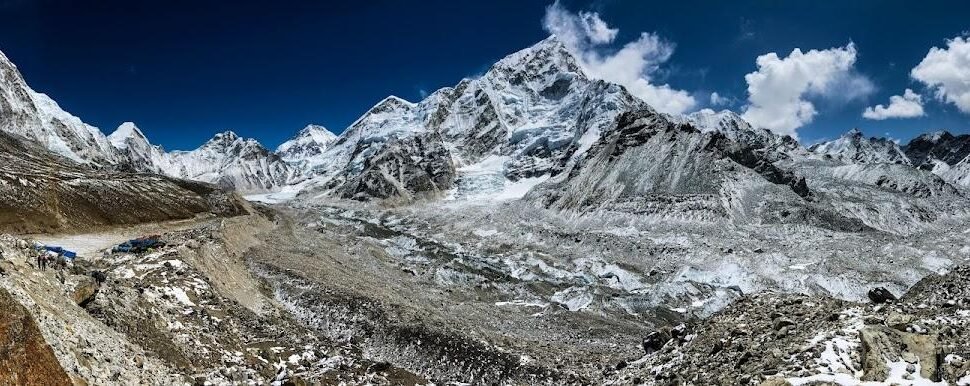
- Glacial recession: The Khumbu Glacier has receded significantly in the past 50 years. The Khumbu Icefall has become more unstable and dangerous as the glacier’s structure changes with warming temperatures.
- Glacial Lake Outburst Floods (GLOFs): As glaciers melt, they create moraine-dammed lakes at their margins. The Imja Tsho above Dingboche has been a particular concern, with engineering interventions installed in 2016 to lower its water level.
- Changing snowfall patterns: Sherpas report that the timing and amount of snowfall has changed, affecting traditional agricultural calendars and high-altitude pasture availability for yaks.
- Treeline movement: The upper treeline has moved upward as temperatures increase, affecting the visual character of the landscape.
- Water availability: Some streams and springs that were reliable year-round water sources have become seasonal, creating practical water management challenges for villages and teahouses.
How Tourism Has Changed Sherpa Culture
The transformation of the Khumbu by trekking and mountaineering tourism since the 1960s has been simultaneously economically beneficial and culturally disruptive. Tourism has provided cash income that raised living standards, reduced childhood mortality, and funded education. It has also brought deforestation from firewood demand, cultural commodification, social stratification between families with and without mountaineering connections, and significant plastic waste problems in a region with no organised waste management above Namche.
As a trekker, you can reduce the negative side of this balance sheet in practical ways. Carry a water filter rather than buying single-use plastic bottles. Carry your waste out. Tip guides and porters generously and directly. Buy handicrafts from Sherpa artisans. Stay in family-run teahouses rather than large lodges owned by outside investors. These choices direct more of your trekking expenditure to the community that maintains the trail and the landscape you came to experience.
Planning Your Cultural Engagement: A Practical Checklist
| Before You Go | On the Trail | At Monasteries | With Your Guide |
|---|---|---|---|
| Read at least one book about Sherpa history | Pass mani walls on the left | Remove shoes before entering | Ask your guide about their village and family |
| Learn 5–10 words of Nepali | Move to uphill side for yak trains | Walk clockwise around the interior | Ask your guide to explain religious objects you observe |
| Check Mani Rimdu festival dates | Ask before photographing people | Do not touch statues or thangkas | Discuss the history of the 1953 Everest ascent |
| Carry a reusable water bottle and filter | Do not give sweets or money to children | Make a small donation in the donation box | Ask about the nawa tradition and forest management |
| Research the Himalayan Trust and consider a donation | Carry all waste out of the national park | Sit quietly if you arrive during prayer | Tip your guide and porter directly and in cash |
The Sherpa Diaspora: A Global Community
The mountaineering and trekking industry created the conditions for one of the most geographically dispersed diaspora communities of any mountain people in the world. Beginning with Sherpas recruited to Darjeeling by British expeditions in the early 20th century, the Sherpa diaspora now spans multiple continents. In the United States, the Jackson Hole area of Wyoming and parts of Colorado have small Sherpa communities settled through mountaineering connections. New York City has a significant Nepali community that includes many Sherpas.
The diaspora has not weakened the cultural connection to the Khumbu. Many diaspora Sherpas return regularly for trekking season employment, family visits, and religious festivals. Remittances from diaspora Sherpas fund home construction, school fees, and monastery restoration in the Khumbu. And the international profile of the diaspora has created a wider platform for advocacy on issues ranging from Everest safety and fair guide pay to climate change and Khumbu conservation funding.
When you walk the Khumbu trail and interact with the community there, you are participating in a relationship between the outside world and this mountain people that stretches back a century. The quality of that relationship — whether built on mutual respect, genuine curiosity, and fair exchange — is something each trekker influences in a small but real way. Coming informed, coming respectful, and coming generous is the best contribution any individual visitor can make. For a well-organised cultural trek through the Khumbu, Everest Trek Company pairs all trekkers with knowledgeable local guides who bring this living culture to life throughout every day on trail.
Planning Your Everest Trek?
Get local expert advice on cost, itinerary and the best time to go.