The Everest Base Camp helicopter tour is entirely weather-dependent. The most expensive aircraft, the best pilot, and the clearest schedule mean nothing if you depart Kathmandu into cloud. Choosing the right time, the right month, the right week, and crucially the right time of day, is the most important planning decision for the helicopter tour experience.
Best Time for EBC Helicopter Tour: Quick Answer
| Best months | October and November (autumn); March and April (spring) |
| Best time of day | Dawn departure (4:30-6:00 am from Kathmandu) |
| Best specific window | Early October; first 10 days highly reliable |
| Worst months | June, July, August (monsoon season) |
| Clear flight probability (October) | 85-90% on any given morning |
| Cancellation rate (monsoon) | 50-70% of scheduled flights rescheduled |
Why Timing Matters So Much
The EBC helicopter tour involves flying to 5,500 m altitude in the Himalayan range. Cloud formation over the mountains happens predictably in the morning as temperatures rise. The flight window that consistently offers clear views is early morning before cloud builds. Tours that depart Kathmandu after 8am risk arriving at Kala Patthar into cloud even on days that started perfectly clear at ground level.
The month matters for a different reason: Nepal’s seasonal weather patterns determine whether morning windows exist at all. During the monsoon, even early morning departures frequently encounter cloud layers that prevent the helicopter reaching clear altitude. During the post-monsoon autumn, dry clear air extends from ground level to well above the peaks, and early morning departures consistently find clear conditions.
Month-by-Month Helicopter Tour Assessment
| Month | Success Rate | Views Quality | Crowds / Availability | Assessment |
|---|---|---|---|---|
| January | 75-85% | Outstanding clarity | Low demand; easy booking | Good; cold ground conditions at landing |
| February | 75-80% | Excellent clarity | Low demand | Good; very cold at altitude |
| March | 80-85% | Very good | Moderate demand | Very good; spring warming |
| April | 85-90% | Excellent | High demand; book 2-3 weeks ahead | Excellent; peak spring |
| May | 70-80% | Good (afternoon cloud risk) | Moderate | Good; early month best |
| June | 40-55% | Limited; monsoon cloud | Low demand | Poor; high cancellation rate |
| July | 30-45% | Unreliable | Low demand | Very poor; worst month |
| August | 45-60% | Improving late month | Low demand | Below average; late August better |
| September | 65-80% | Good; improving weekly | Moderate and growing | Good from mid-month onward |
| October | 85-92% | Exceptional | Very high; book 3-4 weeks ahead | Best month overall |
| November | 80-88% | Outstanding | Moderate to high demand | Excellent; less crowd than October |
| December | 78-85% | Very clear; winter light | Low to moderate | Very good; cold at landing point |
The Time-of-Day Rule
Depart Kathmandu between 4:30am and 6:30am. This is the most important operational rule for the EBC helicopter tour. Kathmandu valley cloud typically forms mid-morning. The helicopter must clear the valley before cloud closes in, fly across the Himalayan range while mountain conditions remain clear, and return before afternoon cloud builds around the peaks. Tours departing after 8am frequently experience disrupted views or forced returns.
This is why most reputable operators run their EBC helicopter tours as sunrise or very early morning departures. Yes, this means a 3:30am to 4am wake-up call in Kathmandu. The pre-dawn drive to the airport and 4:30am departure is entirely worth it when you arrive at Kala Patthar as the first light touches Everest’s summit.
Planning Your Everest Trek?
Get local expert advice on cost, itinerary and the best time to go.
The Sunrise Helicopter Tour: Gold Standard
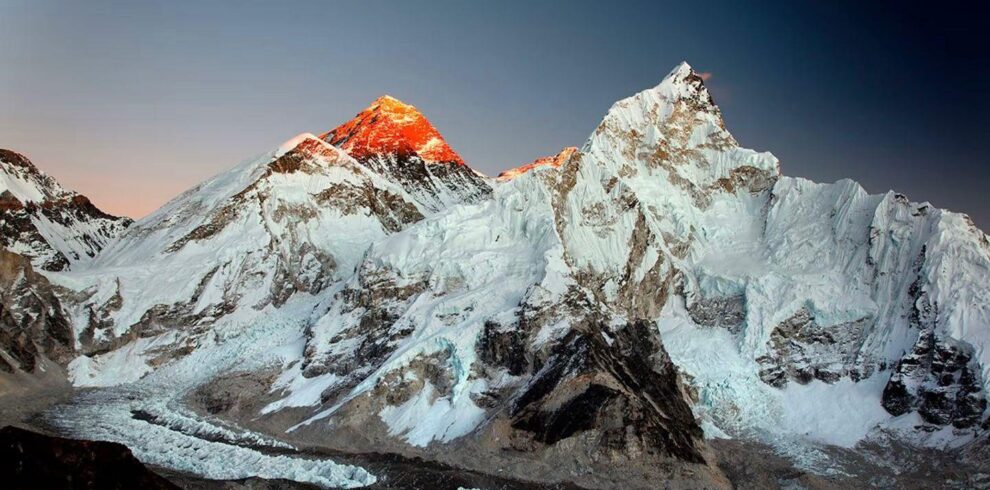
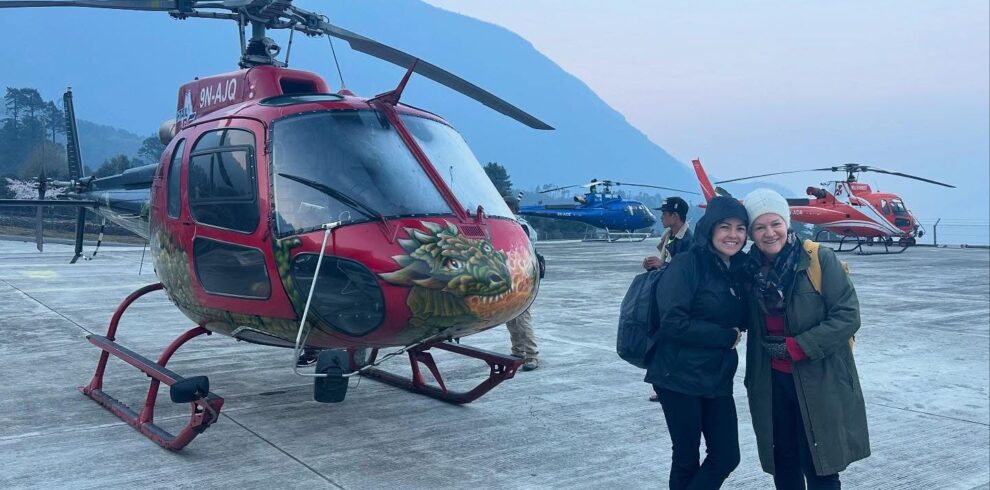
The sunrise EBC helicopter tour is the premium version of the experience. Departing before dawn from Kathmandu, the helicopter positions at Kala Patthar as the sun rises over Makalu and illuminates Everest’s south face in progressive orange and gold light. The same light that EBC trekkers wake at 3:30am and climb two hours in the dark to see. On the helicopter, you arrive at dawn with zero walking effort.
This tour runs October through April. October is the most reliable with the clearest air. November offers lower sun angle and longer golden hour periods which some photographers prefer. Advance booking of 2 to 4 weeks is essential in peak months.
Best Month by Specific Priority
Best for Absolute View Quality
October. Post-monsoon atmospheric clarity is the best of the year. The air over the Khumbu in October contains minimal particulates and moisture after the monsoon’s cleansing effect. Everest’s summit from Kala Patthar in October morning light is unmatched by any other month for clarity.
Best for Photography
November. The lower winter sun angle creates extended golden hour periods and more dramatic shadows on the mountain faces. Mountain photographers targeting the Everest South Face specifically choose November for the light quality. Clarity is near-identical to October but the light is different in character.
Best Value and Availability
January or February. Demand is very low, operators have availability, and the tour can often be booked with very short lead time. The views are excellent in both months. The trade-off is that landing at Kala Patthar (5,545 m) in January means stepping into -20C with wind. Dress appropriately for the brief outdoor time at altitude.
Best for Flexibility Around Work Schedule
March or April. The spring season offers good flight success rates (80 to 90%), reasonable booking lead times (1 to 3 weeks), and good conditions without the extreme October peak demand. April is the spring equivalent of October for helicopter tours.
Weather Monitoring and Backup Plans
Any reputable operator has a clear weather policy: if the tour cannot proceed due to conditions, it is postponed to the next available morning (not cancelled without rebooking). This requires building buffer days into your Kathmandu schedule. If departing the day after a helicopter tour, build in a minimum 24-hour buffer. If flying home on a fixed international ticket the next day, you have zero flexibility, choose your tour timing very carefully and consider the November or spring months with their lower cancellation rates.
Your everest trekking company monitors Khumbu-specific weather forecasts the morning of departure and will advise on whether conditions look flyable before you leave the hotel.
Frequently Asked Questions
What is the best month for an EBC helicopter tour?
October is the overall best month for flight success rate and view quality. November is excellent with outstanding mountain photography light. April is the best spring month. Avoid the monsoon season (June to August) for helicopter tours due to high cancellation rates.
What time of day should the helicopter tour depart?
Depart Kathmandu between 4:30am and 6:30am for the best conditions. Early morning clear air deteriorates as the sun heats the valley and cloud begins forming over the mountains. Sunrise tours departing at 4:30 to 5am typically have the highest success rates and best view quality.
Can the helicopter tour be cancelled due to weather?
Yes. Helicopter tours are weather-dependent and may be postponed on any given day. Reputable operators reschedule to the next available clear morning. Build at least one buffer day in your Kathmandu itinerary to accommodate a one-day postponement.
Month-by-Month Helicopter Tour Conditions
| Month | Weather | Flight Reliability | Views from Heli | Price Level | Rating |
|---|---|---|---|---|---|
| January | Clear, very cold | Very reliable | Outstanding | Low | 8/10 |
| February | Cold, clearing | Very reliable | Outstanding | Low | 8/10 |
| March | Good, mild | Reliable | Very Good | Moderate | 8/10 |
| April | Excellent | Very reliable | Very Good | High | 9/10 |
| May | Good early, cloud late | Good (morning only) | Good | High | 7/10 |
| June | Monsoon | Poor, many cancellations | Poor | Low | 3/10 |
| July | Monsoon peak | Very poor, daily cancellations | Very Poor | Lowest | 2/10 |
| August | Monsoon tapering | Poor to fair | Improving | Low | 3/10 |
| September | Post-monsoon improving | Good | Good to Very Good | Moderate | 7/10 |
| October | Outstanding | Excellent | Outstanding | Highest | 10/10 |
| November | Very Good | Excellent | Outstanding | Moderate-High | 9/10 |
| December | Good, cold | Very Reliable | Outstanding | Low-Moderate | 8/10 |
October vs November: Best Month for EBC Helicopter Tour
| Factor | October | November |
|---|---|---|
| View quality from helicopter | Outstanding | Outstanding (same quality) |
| Mountain clarity | Best of year | Equal or slightly sharper in clear winter air |
| Flight reliability | Excellent | Excellent |
| Availability | High demand, book weeks ahead | Good availability, easier to book |
| Price | Peak season, most expensive | 10-20% less than October |
| Temperature at EBC landing | Cold (-5 to -10C) | Very cold (-10 to -15C) |
| Overall recommendation | Best if viewing quality is the priority | Best balance of quality and value |
What to Know Before Booking a Helicopter Tour
| Important Factor | Details |
|---|---|
| All flights are weather-dependent | Even in October, flights can be delayed or rescheduled if mountain weather changes. Keep your schedule flexible. |
| Flights depart early morning | All EBC helicopter tours depart by 6-8am. Afternoon flights are not offered because mountain cloud builds from midday. |
| Weight limit per passenger | Most tours have a combined passenger + luggage weight limit of 80-100 kg per seat. Declare your weight honestly. |
| Altitude at landing point | Kala Patthar landing is at 5,545m. Even for a short landing (15-30 min), altitude effects can be felt. Some guests feel mild dizziness. |
| What to wear | Bring a heavy down jacket, gloves, and warm hat regardless of Kathmandu weather. It will be -10 to -20C at the landing point. |
| Photo equipment | Camera batteries drain fast in cold. Keep camera warm inside your jacket until ready to shoot. |
Helicopter Tour FAQ
Can I book an EBC helicopter tour on the same day?
Occasionally yes, if seats are available, but it is rare in peak months. October and April tours typically sell out days or weeks in advance. In off-season months (January, February, November) you may be able to arrange a tour within 24-48 hours notice. Always book in advance for peace of mind.
How long do I actually spend at EBC on a helicopter tour?
Most EBC helicopter tours include a 20-45 minute landing at Kala Patthar (5,545m). During this time you can walk around the landing area, take photos, and experience the altitude. Some tours offer a short walk from the landing point toward the EBC viewpoint. Total flight time from Kathmandu and back is 3-5 hours depending on the route.
What is the flight from Kathmandu to EBC like?
The flight from Kathmandu to EBC via helicopter is spectacular. You fly northeast from Kathmandu, passing over the low hills of the Kathmandu valley, then climbing as the terrain rises. The Himalayan peaks come into view as you approach the Khumbu region. The final approach to Kala Patthar with Everest looming directly above is one of the most dramatic approaches in aviation.
Is the EBC helicopter tour suitable for people with physical limitations?
The helicopter tour is one of the most accessible ways to experience Everest Base Camp for people who cannot trek. You must be able to board and exit a helicopter (usually 2-3 steps), walk on uneven rocky terrain for a short distance at the landing point, and tolerate brief altitude exposure. Consult your doctor if you have heart or lung conditions before booking any high-altitude activity.
Conclusion
The best time for an EBC helicopter tour is an early October or November morning, departing at sunrise from Kathmandu. These conditions maximise flight success probability and view quality simultaneously. If your schedule does not allow October or November, April mornings offer nearly identical reliability in the spring season. Whatever month you choose, the critical habit is a pre-dawn departure that positions you at Kala Patthar as Everest catches its first light. Book through an experienced everest trekking company, build in a buffer day, and set your alarm early.
Planning Your Everest Trek?
Get local expert advice on cost, itinerary and the best time to go.
Best Time for EBC Helicopter Tour: Month-by-Month Guide
The Everest Base Camp helicopter tour and EBC Trek with Helicopter Return experience are available year-round, but specific months deliver dramatically different flying conditions, visibility, and overall tour quality. Understanding the seasonal patterns of helicopter operations in the Khumbu helps you choose the optimal time for your helicopter experience.
October and November: Peak Season for Helicopter Tours
October and November are the most popular months for EBC helicopter tours for the same reasons they are the most popular trekking months: post-monsoon weather stability creates the clearest atmospheric conditions of the year, mountain visibility is at its annual best, and flight operations are most reliable. The post-monsoon high-pressure systems that clear the skies of cloud after the summer monsoon create the optimal combination of clear flight paths and exceptional aerial photography conditions.
October is the absolute peak month for helicopter operations in the Khumbu. Demand for both sightseeing tours and EBC trek heli returns is at its highest, and helicopter availability can be limited — booking at least 4–6 weeks in advance is essential for October helicopter tours with Everest Trekking Company. The reward: crisp, clear morning conditions with the Himalayan skyline emerging in perfect relief above the valley mist, and Base Camp visits with views that match or exceed the most famous EBC helicopter photographs.
November is excellent and somewhat easier to book than October. Slightly fewer helicopter tours mean better aircraft availability and more scheduling flexibility. Temperature at altitude is lower than October (-20°C+ at Gorak Shep on the ground), which affects the brief ground stop on helicopter tours but does not impact the flight itself. Visibility in November is frequently superior to October, particularly after any light snowfall has refreshed the mountain surfaces.
April and May: The Spring Helicopter Season
Spring (April–May) is the second peak season for EBC helicopter operations. The combination of reasonable weather (generally clear mornings with afternoon cloud development) and the unique spectacle of Everest expedition season at Base Camp makes spring helicopter tours genuinely distinct from their autumn counterparts. In April–May, helicopter tours passing over Base Camp see the expedition camps in their full operational phase — the colours, the activity, and the scale of the summit attempt preparation creates a completely different experience from the post-season Base Camp of autumn.
Spring helicopter visibility is generally good in the morning window (6–10 AM) and degrades as afternoon convective cloud develops. Most spring helicopter tours depart by 7–8 AM to maximise clear conditions. The pre-monsoon atmospheric haze that develops in May can slightly reduce the crystal clarity of mountain views compared to October, but the expedition season drama more than compensates for most visitors.
March: Early Season, Excellent Conditions
March is an excellent and underrated month for EBC helicopter tours. Winter’s clear high-pressure atmosphere is giving way to pre-spring conditions, but the air remains exceptionally clear and dry. Helicopter availability is good (lower demand than April–May), and the flight through the valley reveals the magnificent rhododendron forests beginning to bloom on the lower hillsides below 3,500 m — an aerial floral tapestry that neither autumn nor winter can provide.
December and January: Winter Clarity from the Air
The winter months of December and January offer the best atmospheric clarity of any time of year for aerial Himalayan photography. Mountain definition in winter air is at its sharpest — the absence of monsoon moisture, spring dust, and autumn post-monsoon haze creates a purity of air that experienced Himalayan photographers specifically target. The trade-off is cold: ground stops at Base Camp (5,364 m) in January can be genuinely brutal, with temperatures of -20°C to -25°C before wind chill. Helicopter cabin heaters manage this for the flight portion, but the ground stop requires full winter gear even for the brief 10–20 minute photography stop.
Winter helicopter demand is lower than peak season, offering good availability and occasionally better pricing. Everest Trekking Company operates winter helicopter tours and heli returns for trekkers completing winter EBC treks. Contact our team for winter-specific helicopter tour pricing and conditions.
Months to Avoid for EBC Helicopter Tours
June through mid-September — the monsoon season — is the most challenging period for EBC helicopter operations. Persistent cloud cover, reduced visibility, and active weather systems create conditions that cancel the majority of scheduled helicopter tours. While flights do operate on clear monsoon mornings (typically very early, before cloud builds), the reliability of monsoon helicopter schedules is low. For visitors with fixed monsoon-season travel dates who want the helicopter experience, Everest Trekking Company recommends targeting departure as early as 5:30–6:00 AM to maximise the brief morning clarity window.
September is the monsoon retreat month and conditions improve progressively from mid-September. By September 20–25, helicopter tour reliability is approaching autumn standards. Late September helicopter tours are generally reliable and offer good value with lower demand than October.
Book Your EBC Helicopter Experience with ETC
Whether you are booking a standalone EBC helicopter sightseeing tour or adding the EBC Trek with Helicopter Return as the return element of your EBC trek, Everest Trekking Company provides full helicopter booking support, CAAN-certified operator partnerships, and the local expertise to ensure your helicopter experience delivers maximum value and safety. Our operations team monitors weather conditions and flight status in real time, and we communicate with all clients promptly about any scheduling adjustments. Contact Everest Trekking Company at everesttrekkingcompany.com today to book your EBC helicopter experience or to discuss adding a helicopter return to your planned Everest Base Camp Trek.
Helicopter Tour vs. Trek: Choosing the Right EBC Experience
For potential visitors to the Khumbu who are debating between a helicopter tour and a full EBC trek, the decision comes down to three factors: time, physical condition, and depth of experience desired. Here is the honest comparison:
EBC helicopter sightseeing tour (4 hours total): Perfect for visitors with limited Nepal time (2–5 days in Kathmandu), those with physical conditions that preclude a 14-day high-altitude trek, and those who want the Everest visual experience without the commitment of a multi-week expedition. The helicopter tour delivers the view — the aerial approach to the Khumbu, the landing at Base Camp, the photographs — in a morning. What it cannot deliver is the cultural immersion, the teahouse community, the personal achievement, and the gradual revelation of the mountain landscape that the trek provides.
EBC Trek (14 days walking): For those who want to truly know the Khumbu, encounter its communities, test their physical limits at altitude, and earn the view from Kala Patthar step by step, the trek is irreplaceable. The helicopter version delivers the destination; the trek delivers the journey and the destination together.
The best of both — EBC Trek with Helicopter Return: Walk up, fly back. All the walking achievement and acclimatisation benefits of the full ascent. The extraordinary aerial perspective of the helicopter return. This is the option that most satisfies both camps — those who want the full trek experience and those who want the helicopter flight. Everest Trekking Company recommends this option to any trekker who has the time for the full ascent (12–13 trekking days) and wants to combine it with the helicopter return for an unforgettable final day on the mountain.
How the EBC Helicopter Experience Compares by Season: Detailed Month Guide
January: Winter clarity at its best. Air is driest and clearest of the year. Ground temperatures at Base Camp: -20°C to -25°C — bring full winter gear for the ground stop. Helicopter availability: good, low demand. Price: lower than peak season.
February: Similar to January, slightly warming. Excellent visibility, low demand, good availability. Jet stream wind can occasionally affect upper-valley helicopter operations — morning departures are safest.
March: Excellent conditions — clear air, warming temperatures, low helicopter demand. First rhododendron blooms visible from the air on lower hillsides. Recommended as excellent value alternative to April peak pricing.
April: Peak spring helicopter season. Expedition season at Base Camp visible from the air. Good morning conditions with afternoon cloud. High demand — book 4–6 weeks in advance. Best time for expedition spectacle aerial photography.
May: Early May good; late May increasing pre-monsoon cloud. Early morning departures essential. Expedition season still active in early May.
June: Monsoon begins. Heavy cloud and reduced visibility make helicopter tours unpredictable. Not recommended for Khumbu helicopter tours unless flexibility is high and expectations are adjusted accordingly.
July–August: Full monsoon. Helicopter operations unreliable. Not recommended for scheduled helicopter tours. Emergency helicopter operations continue in all weather as required.
September: Improves from mid-month. Late September (20 Sept onward) increasingly reliable. Good for budget-conscious helicopter tours in the pre-peak-season window.
October: Best month overall. Peak demand, highest prices, best conditions. Book months in advance for October helicopter slots with Everest Trekking Company.
November: Excellent and underrated. Post-peak-season quieter demand. Crystal clear conditions. Colder ground stop than October but outstanding aerial clarity. Excellent value relative to October.
December: Good winter conditions. Some teahouse services reduced at high altitude. Helicopter tours operational. Cold ground stop (full winter gear required). Lower demand, good availability.
Preparing for Your EBC Helicopter Experience
Even for the brief ground stop at Base Camp on a helicopter tour, some preparation improves the experience significantly. Dress in warm layers — the cabin is heated but the ground stop at 5,000+ m in any season is cold. Bring sunscreen and glacier sunglasses — UV radiation at 5,364 m is intense even on overcast days. Ensure your camera or phone is charged and easily accessible — the flight time is precious for photography and fumbling with equipment in the brief ground stop is frustrating. If you have any cardiovascular conditions or altitude sensitivity, discuss the brief high-altitude exposure with your doctor before booking a helicopter tour to Base Camp altitude.
For the EBC Trek with Helicopter Return, no additional helicopter-specific preparation is needed beyond the standard EBC trek preparation — you arrive at Gorak Shep fully acclimatised after 12 days of walking, making the helicopter departure from 5,164 m a comfortable and exhilarating experience rather than an altitude shock. Contact Everest Trekking Company to book the helicopter experience that is right for you — whether a standalone tour or as part of the complete Everest Base Camp Trek with helicopter return. Visit everesttrekkingcompany.com and let us take you to Everest by the route — or combination of routes — that makes the most sense for your specific adventure.
EBC Helicopter Tour Booking: Step-by-Step Process
Booking an Everest Base Camp helicopter tour with Everest Trekking Company follows a simple, transparent process designed to get you to the Khumbu with minimum bureaucratic friction:
Step 1 — Choose your tour type: Standalone EBC helicopter sightseeing tour (4 hours from Kathmandu), or the EBC Trek with Helicopter Return add-on to a full walking trek. Both are available year-round subject to seasonal conditions.
Step 2 — Choose your dates: Share your preferred dates and we will confirm helicopter availability for those dates. For October and April, book 6–8 weeks in advance. For other months, 2–4 weeks is usually sufficient. We can also accommodate last-minute bookings when helicopter seats are available.
Step 3 — Choose shared or charter: Shared helicopter tours (4–5 passengers) are most cost-efficient at USD 1,100–1,500 per person. Private charter flights are available from USD 4,500 for the full helicopter and suited to groups of 4–5 who want scheduling flexibility or privacy.
Step 4 — Confirm and deposit: Everest Trekking Company requires a deposit to secure your helicopter booking. Balance is due before departure. Full refund available if tour is cancelled due to weather on the day — helicopter tours are weather-dependent and we always prioritise passenger safety over schedule adherence.
Step 5 — Pre-tour briefing: The evening before your tour, our team briefs you on departure time (typically 06:00–07:00 from Kathmandu), departure point (Tribhuvan International Airport domestic terminal), what to bring, dress requirements, and weather status. We monitor weather forecasts overnight and confirm tour status by 05:00 on the morning of departure.
Step 6 — Tour day: Helicopter departs early morning to catch the optimal pre-cloud window. Scenic flight to Lukla, Namche, and Khumbu glacier. Ground stop at or near Base Camp. Return flight to Kathmandu. Total experience: 4–5 hours.
What to Photograph on Your EBC Helicopter Tour
The aerial photography opportunities on an EBC helicopter tour are extraordinary — but knowing what to look for and when helps you maximise the shots you bring home. Here is the photographic guide for the full Kathmandu-EBC-Kathmandu helicopter route:
Kathmandu Valley departure: Kathmandu city spread across its valley bowl, the Bagmati River, Boudhanath Stupa (visible as a white dome from above), and the first Himalayan foothills rising ahead.
Lamjura and Solu Khumbu valleys: Deep river gorges, terraced agricultural land, villages clinging to ridgelines, and the first distant Himalayan white peaks becoming visible.
Lukla approach: The dramatic cliff-edge runway of Tenzing-Hillary Airport coming into view — one of the most recognisable airport approaches on Earth from the air.
Namche Bazaar: The horseshoe amphitheatre of the Sherpa capital — hundreds of stone buildings arranged in tiers above the Dudh Koshi gorge, with Thamserku and Kangtega rising beyond.
Khumbu Glacier: The enormous river of ancient ice descending from the Khumbu Icefall, fractured into seracs and crevasses visible clearly from helicopter altitude.
Khumbu Icefall: The notorious icefall above Base Camp — a chaotic tumble of ice blocks, seracs, and crevasses that expedition climbers must navigate on every Everest summit attempt. From the helicopter, the full scale and complexity of the icefall is immediately apparent.
Everest, Lhotse, and Nuptse from the air: The south face trinity — Everest’s dark pyramid, Lhotse’s fluted ice wall, and Nuptse’s dramatic ridgeline — visible together in one frame from helicopter altitude in a way impossible from any ground position.
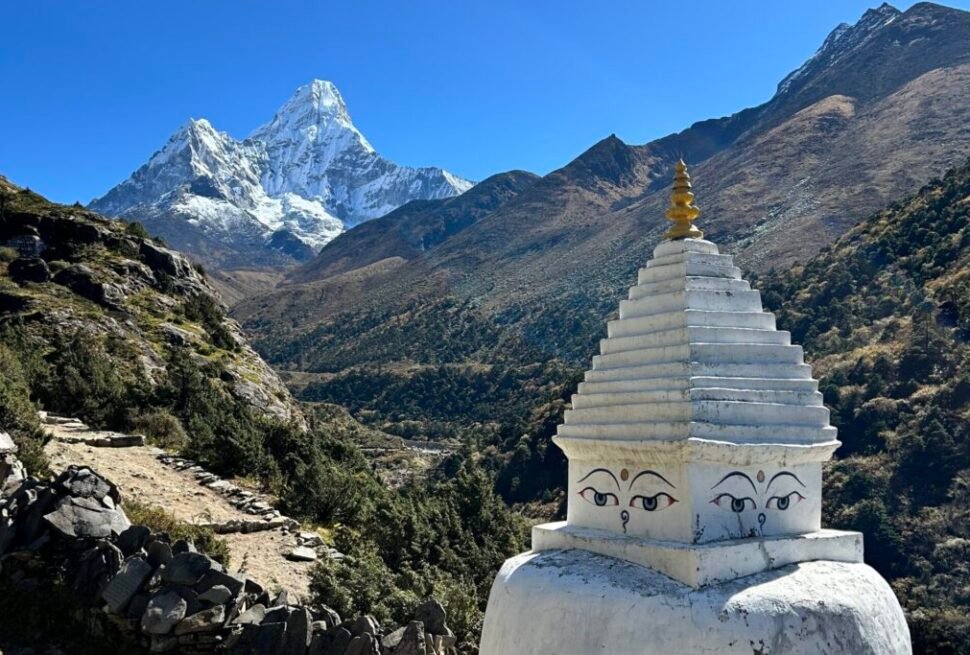
Ama Dablam: On the return flight, Ama Dablam’s extraordinary triple-peaked profile against blue sky is one of the most photographed Himalayan compositions in the world.
EBC Helicopter Tour FAQs
Is altitude sickness a risk on a helicopter tour? The brief ground stop at Base Camp altitude (5,364 m) is too short for serious altitude sickness to develop in most healthy adults. You may feel mild breathlessness or light-headedness for the few minutes on the ground. If you have a known severe altitude sensitivity or cardiovascular condition, consult your doctor before booking. The tour does not require the multi-day acclimatisation that walking trekkers need because the exposure duration is very brief.
Can children take the EBC helicopter tour? Children above approximately 7–8 years old can participate in the helicopter tour. Very young children should not be taken to extreme altitudes even briefly. Consult your paediatrician if you have questions about a specific child’s suitability.
What is the weight limit for helicopter tours? Most Khumbu helicopters used for sightseeing tours have a combined passenger payload limit. Individual passenger weight limits of approximately 90–100 kg are typical for shared seat bookings. Contact Everest Trekking Company for specific weight guidelines for your booked helicopter type.
Can I combine the helicopter tour with the Everest Base Camp Trek? Yes — this is the EBC Trek with Helicopter Return product. Walk the full trek up over 13 days, then fly back from Gorak Shep (5,164 m) to Lukla in approximately 10 minutes, and onward to Kathmandu. It is the most popular EBC helicopter add-on and delivers the best of both experiences.
Book your EBC helicopter tour today with Everest Trekking Company — the best Everest trek company for helicopter tours, trekking expeditions, and combined adventure experiences in the Khumbu. Visit everesttrekkingcompany.com now.
The best time to take the EBC helicopter tour is when the weather cooperates, the mountains are clear, and you are ready to experience one of the world’s great aerial adventures. Everest Trekking Company monitors conditions daily and books helicopter tours year-round for guests from over 50 countries. Contact us at everesttrekkingcompany.com to confirm availability for your preferred dates and let the Khumbu take your breath away.
Plan your Everest adventure with Everest Trekking Company — the trusted Everest base camp trek company for over a decade of safe, memorable Himalayan expeditions.
Planning Your Everest Trek?
Get local expert advice on cost, itinerary and the best time to go.