By Kiran Basnet — Licensed Trekking Guide, Everest Trekking Company, Kathmandu
People ask me some version of this question almost every week: “I’m not a mountaineer. Am I actually capable of trekking to Everest Base Camp?”
My honest answer is that most reasonably fit adults can complete the Everest Base Camp trek — but only with the right preparation, the right timeline, and an honest understanding of what “difficult” means in this context. The trek is not technically demanding in the way that climbing a mountain is. You do not need rope skills, crampons, or a high-altitude climbing permit. But it is a long, sustained physical effort at serious altitude, and altitude changes everything.
I have guided dozens of people to Base Camp over the years. Some were ultra-runners who found the pace almost meditative. Others were people in their sixties who had never trekked at altitude before and surprised themselves completely. The determining factor is almost never raw fitness. It is whether they listened to their body, followed the acclimatisation schedule, and stayed patient.
In this guide I want to give you a genuinely honest picture of how difficult the Everest Base Camp trek is — what the daily effort actually feels like, what altitude does to your body, where the trail is technical versus straightforward, and how to assess whether you are ready. I will also address the common questions people ask when comparing EBC to other well-known treks.
What Kind of Difficulty Are We Actually Talking About?
The Everest Base Camp trek is classified as moderate to challenging. That categorisation covers a wide range, so let me break it down into its component parts.
Physical Effort: Distance and Elevation Gain
The classic EBC route from Lukla covers approximately 130 kilometres round trip. On a standard 14-day itinerary, you walk 5 to 8 hours per day on most trekking days, covering 12 to 18 kilometres. The terrain is varied — stone steps carved by generations of Sherpa foot traffic, rocky paths across open hillsides, suspension bridges swaying above river gorges, and compacted dirt trails through rhododendron and pine forest.
You will gain and lose several hundred metres of altitude on most days. The trail does not go in a straight line upward; it undulates, drops into valleys, climbs ridgelines, and crosses glacial river gorges. The total elevation gain from Lukla (2,860m) to Everest Base Camp (5,364m) is around 2,500 metres over the full outbound route. But the actual cumulative elevation gain over the entire round trip — accounting for all the ups and downs on the trail — is considerably more than that single figure suggests.
This is a significant multi-day physical effort. But it is achieved over nearly two weeks with rest days built in, which makes it far more manageable than the raw numbers suggest.
How Many Days Does EBC Take?
A standard EBC itinerary covers 14 days from the first trekking day to the last. Within this, there are two full acclimatisation days (in Namche Bazaar at 3,440m and Dingboche at 4,410m) where the goal is a shorter excursion rather than a long trekking day. The most active trekking days involve 7 to 9 hours of movement. The shortest days are 3 to 5 hours. The body experiences this as a progressive build rather than a flat maximal effort sustained for two weeks.
The two weeks of sustained effort is probably the biggest difficulty for urban people who do not trek regularly. Your body has never experienced 14 consecutive days of substantial physical activity. Training for this specifically — doing consecutive days of walking, not just single long sessions — is one of the most important preparations you can make.
Altitude: The Variable That Changes Everything
Altitude is the defining difficulty of the EBC trek. At lower elevations, a long day of walking is tiring but recoverable. At 4,800 metres — which is where you spend several nights on the upper reaches of the trail — your body is working harder just to breathe. The reduced oxygen at altitude means your heart rate is elevated, sleep is often disrupted, and any exertion feels more demanding than it would at sea level.
Above 4,000 metres, most trekkers notice some combination of the following:
A persistent dull headache, particularly in the mornings. This is the most common altitude symptom and is normal at moderate levels.
Reduced appetite. Food becomes less appealing, particularly anything heavy. Dal bhat (Nepal’s lentil and rice staple) remains palatable for most people because it is light and familiar after several days.
Disrupted sleep. Sleeping above 3,500 metres often involves waking every hour or two, particularly in the first night at any new altitude. This is partly due to periodic breathing — a physiological response where your breathing rhythm changes during sleep to compensate for lower oxygen.
Breathlessness on steeper sections. Sections that would feel easy at sea level feel genuinely demanding above 4,500 metres. A 20-metre steep step on the trail near Lobuche takes noticeably more effort than it would anywhere lower.
A general sense of heaviness or fatigue. Even on rest days above 4,000 metres, many trekkers feel more tired than they would at home. This is the altitude cost — your body is working continuously to maintain adequate oxygenation.
These are normal responses to altitude and do not necessarily indicate altitude mountain sickness. The danger zone is when these symptoms intensify, particularly a headache that does not respond to hydration and rest, and symptoms that worsen rather than stabilise over 24 hours.
Technical Terrain: What Is the Trail Actually Like?
For the large majority of the EBC route, the trail requires no technical skills whatsoever. You are walking on established paths that have been used for decades and are well-marked. There are some sections with exposed rocky scrambling, particularly as you descend into the Dudh Koshi river gorge below Namche, on some of the lateral ridges above Dingboche, and on the moraine approaches to Lobuche. But none of this requires ropes, technical equipment, or any climbing experience.
The Khumbu Icefall — the dramatic, chaotic jumble of ice seracs and hidden crevasses you see in photographs of Everest — is part of the mountaineering route above Base Camp. Trekkers do not enter the Khumbu Icefall. The south-side Everest Base Camp is at the foot of the Icefall, not above it. You see it clearly from Base Camp; you do not walk into it.
The most genuine terrain difficulty on the standard EBC itinerary is the Kala Patthar ascent. Kala Patthar is a peak at 5,550 metres on the ridge above Gorak Shep, climbed for its unobstructed views of Everest’s south face. The upper section of Kala Patthar involves loose scree and some steeper scrambling over rocky outcrops. It is very much worth doing — it provides the best Everest views available to any non-climber — but it is the hardest terrain of the standard itinerary. The fact that we do this pre-dawn adds the challenge of navigating the upper section in darkness by headlamp, at altitude, after poor sleep at Gorak Shep.
Planning Your Everest Trek?
Get local expert advice on cost, itinerary and the best time to go.
How Fit Do You Need to Be for the Everest Base Camp Trek?
This is the question I find hardest to answer with a single number because the answer depends on factors beyond raw fitness — particularly altitude tolerance, which varies between individuals and cannot be fully predicted before you are actually at altitude.
What I can say with confidence is this: you need enough baseline fitness to walk 5 to 8 hours per day on consecutive days, carrying a daypack of 5 to 8kg. You do not need to be an athlete. You do not need a gym membership or impressive race times. But if you currently cannot walk for 3 hours without significant discomfort, you need to build to that level before your trek.
Gym fitness does not directly translate to trekking fitness. I have seen people who could bench press impressive weights struggle on sustained uphill at altitude. And I have seen people who would never describe themselves as “fit” complete the route steadily because they walked consistently and respected the pace.
The Best Training for EBC
The single most effective training for the Everest Base Camp trek is sustained hiking — specifically, multi-hour walks with elevation gain. If you live near hills, get out and walk uphill with a loaded pack every weekend for three to four months before your trek. If you live in a flat city, stairs and treadmill inclines help, though they are not as complete as varied outdoor terrain.
Cardiovascular fitness is important but it does not protect you from altitude effects. The body’s response to altitude has a significant genetic component. I have guided marathon runners who showed moderate AMS symptoms at Namche and needed extra rest days. I have guided trekkers who had never run a kilometre in their life who moved through the same altitude without any significant symptoms.
The best altitude preparation you can do from sea level is not physical — it is knowledge and commitment to the right behaviours.
Age and the EBC Trek
The Everest Base Camp trek does not have an upper age limit. Some of the most determined and successful trekkers I have guided have been in their sixties and seventies. Older trekkers often do better than younger ones in some respects — they tend to be more patient with pace, more willing to slow down when told, and better at listening to their body’s signals. They have usually done enough in life to understand that ego is dangerous at altitude.
The main considerations for older trekkers are pre-existing cardiovascular or respiratory conditions, which should be assessed by a doctor before booking. Knee health is also particularly relevant for the older demographic — the descent from Base Camp back to Lukla puts real stress on the knees over several consecutive days, and having good quad strength as a shock absorber matters.
Children below 12 are generally not recommended for the upper sections of EBC (above 4,000 metres) due to altitude risk. We have guided teenage trekkers on EBC successfully, but this requires careful assessment and medical clearance for the specific child.
The Hardest Days on the Everest Base Camp Trek
Not all days are equal. Some sections are genuinely more demanding than others, and knowing where they are helps with mental preparation.
Day 3: The Namche Bazaar Climb
The climb from Phakding to Namche Bazaar on day three of the standard itinerary is the first real test. You gain around 800 metres of elevation over the course of the day, with the final 3 kilometres a sustained steep ascent through rhododendron and pine forest to the Namche bowl at 3,440 metres.
The climb up to Namche is the point where the trail separates from the gentle river walk of the first two days. The gradient here is significant — not technical, but sustained. You are gaining altitude at a rate your body can feel. Most trekkers arrive in Namche feeling the full weight of the climb combined with the early effects of altitude. Headache on the first Namche evening is common and entirely normal.
On a clear day on the ridge just below Namche, you get your first view of Everest — just the very tip of the summit visible above the ridgeline. This tends to provide a considerable motivational boost for the final push.
Day 6: Dingboche and the Upper Khumbu Shift
After the relative shelter of Namche and the forest walk to Tengboche, day six moves into different territory. Dingboche at 4,410 metres sits on a high plateau above the treeline. The landscape is more open, more exposed, and the altitude is genuinely noticeable. Appetite typically drops on the first Dingboche evening. Sleep is disrupted. The environment feels markedly different from the lower sections.
The acclimatisation hike from Dingboche — typically up to 5,000 metres at Nangkartshang or Chhukung Ri — is the hardest acclimatisation day of the route. You are at altitude, carrying less oxygen per breath than anything you have experienced before, walking uphill on loose terrain. The view from the top — the entire Khumbu icefall visible, Island Peak directly across the valley, Makalu behind — is extraordinary. Coming down to sleep at 4,410 metres still feels like relief.
Day 8: Dingboche to Lobuche
The section from Dingboche (4,410m) to Lobuche (4,910m) passes through increasingly stark, exposed terrain. You climb through a high valley to the Thukla memorial ridge — rows of stone cairns and prayer flags dedicated to climbers who have died on Everest. The names on those cairns are often well-known: Anatoli Boukreev, Scott Fischer, Rob Hall. It is a sombre and moving section of the route that tends to quiet everyone.
From the memorial ridge, the trail follows the lateral moraine of the Khumbu Glacier up to Lobuche at 4,910 metres. The wind funnels down this valley with serious intent in the afternoon. Arriving at Lobuche, you are above most of the world’s mountains. The teahouses here are sparse and cold. You go to bed early.
Sleep at Lobuche is typically the worst of the trek. Most trekkers wake multiple times, breathe with effort, and feel noticeably unrested in the morning. This is normal at this altitude and does not indicate a problem.
Day 9: The Summit Day
The day from Lobuche to Gorak Shep to Everest Base Camp is the longest and most demanding of the route. You start the morning on inadequate sleep, add a 2 to 3-hour walk to Gorak Shep on rough moraine terrain, then continue for another 2 to 3 hours to Base Camp.
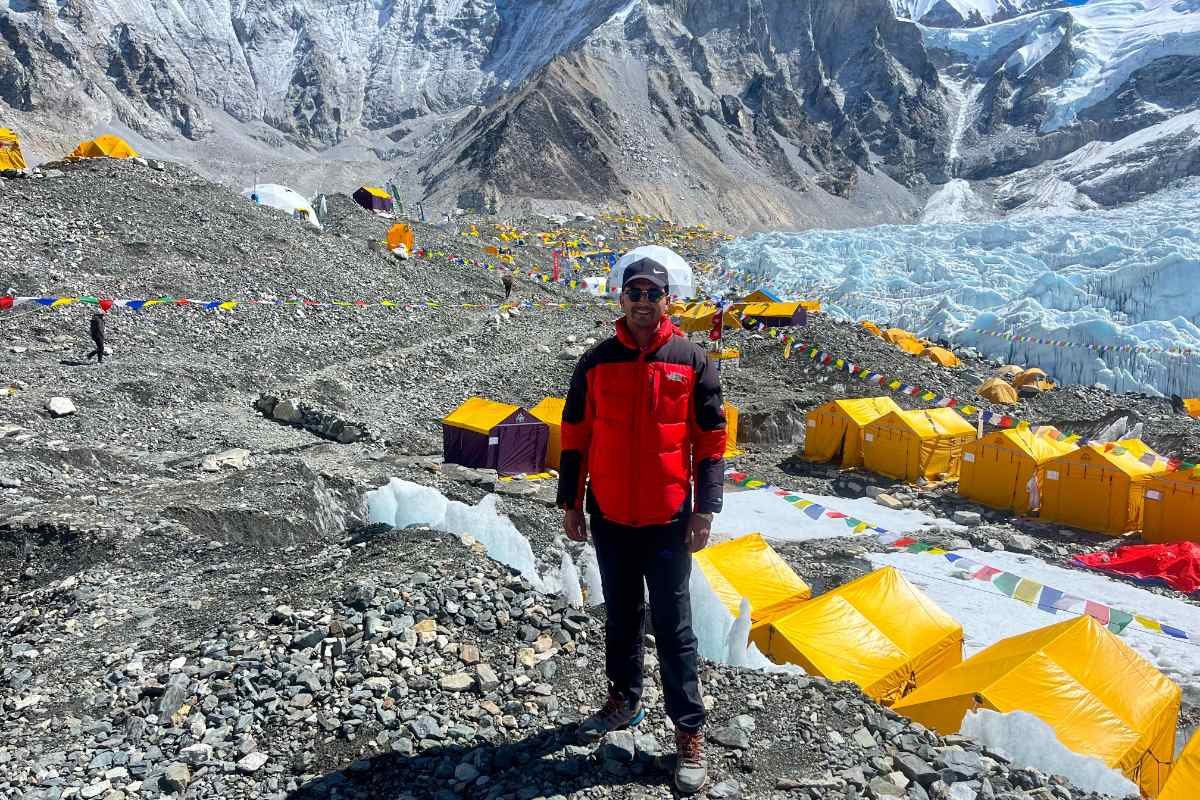
Everest Base Camp at 5,364 metres is not dramatic in the way many people expect. There are no facilities, no cafe, no dramatic view of the summit (the summit is hidden behind the West Ridge from this angle). In autumn, there are no expedition tents. It is a collection of rocks and glacial debris on the Khumbu Glacier with a few prayer flags. What is dramatic is what it took to get there, and the scale of the Khumbu Icefall visible from the camp’s edge.
The return to Gorak Shep after Base Camp typically takes 2 hours and the total day can run to 8 or 9 hours of actual movement. This is the hardest single day of the trek for most people.
Day 10: Kala Patthar Pre-Dawn, Then the Long Descent
The day begins at 3am to 4am. You are already tired from day nine. The temperature inside the lodge at Gorak Shep is probably minus 5 to minus 10°C. You layer up everything you have, drink hot tea by headlamp, and begin climbing in the dark.
The ascent of Kala Patthar (5,550m) takes 2 to 3 hours in normal conditions. The upper section — loose scree and rocky scrambling above 5,300 metres — is the hardest technical terrain of the standard itinerary. At altitude, in the dark, with a headlamp, every step requires focus.
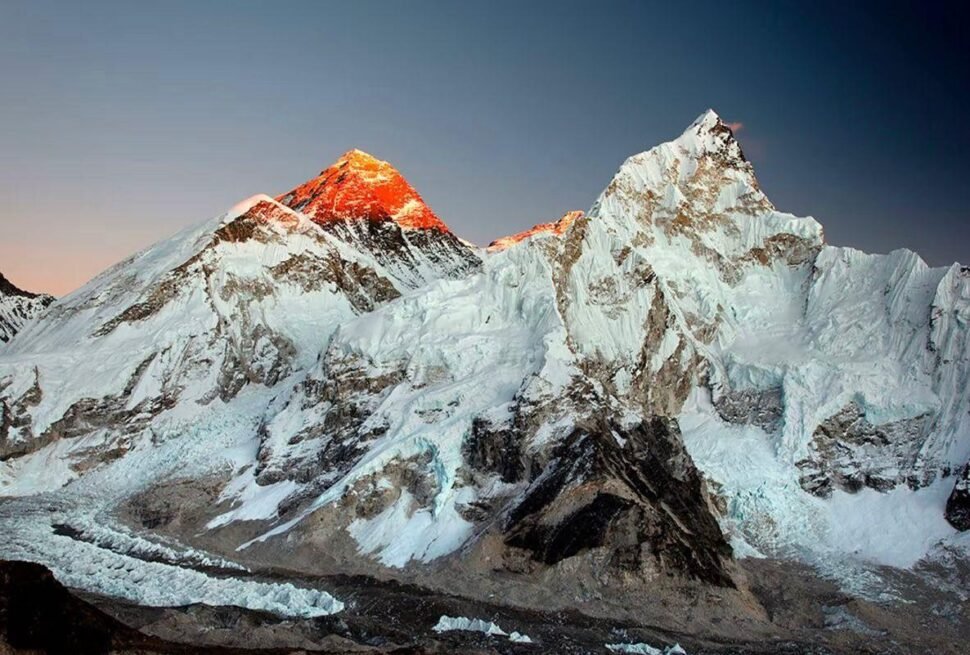
As the sky begins to lighten, the summit of Everest turns from black to gold. The south face — all three kilometres of it from base to summit — becomes visible as the sky brightens. This is the moment. This is what the previous 10 days were for.
After returning to Gorak Shep for breakfast, you descend to Pheriche (3,820m) — a drop of 1,320 metres over 5 to 6 hours. Your legs are tired from 10 days of trekking. The descent is the most physically demanding period for knees. Trekking poles and patience are the right tools.
Can Beginners Do the Everest Base Camp Trek?
Yes — with the right definition of “beginner.” If you have never trekked at altitude before, that does not disqualify you. If you have never walked more than a few kilometres in a day, that is something to address before you arrive.
The EBC trail is not the right place to begin your very first experience of multi-day hiking. But if you have done some walking, day hikes, or even consistent urban walking, and you are prepared to train properly for three to four months, you can absolutely do this trek.
The most important thing for first-time high-altitude trekkers is pace — specifically, keeping it slow. One of the most common reasons trekkers struggle on the trail is that they start too fast in the first two days when they feel fine. Altitude sickness does not discriminate based on fitness, and moving fast in the early days without adequate acclimatisation is the single biggest risk factor. A slower start and disciplined rest days mean a substantially higher chance of reaching Base Camp.
The trekkers I have seen struggle are not always the least fit. They are often the most confident — the ones who underestimate altitude and push when they should rest. The trekkers who succeed are the ones who move at the mountain’s pace, not their own.
How Altitude Affects Your Performance: A Day-by-Day Picture
From Lukla to Base Camp, here is how altitude progression typically affects trekkers:
Lukla to Phakding (2,860m to 2,640m): Easy walking, altitude effects minimal. The trail descends on day one. Most people feel fine.
Phakding to Namche (2,640m to 3,440m): First significant altitude gain. Some trekkers notice headache on arrival at Namche. This is normal and manageable.
Namche acclimatisation day: Hike to 3,880m and return. Typical reports include light-headedness on ascent and feeling better after rest. Sleep at Namche is often the first disrupted night.
Namche to Tengboche (3,440m to 3,860m): Steady gain through beautiful landscape. Most trekkers feel relatively strong after two nights in Namche. Appetite typically good.
Tengboche to Dingboche (3,860m to 4,410m): Altitude becomes more noticeably present. The first evening at Dingboche is where the upper route’s demands start to feel real.
Dingboche acclimatisation day (4,410m): The hike to 5,000m and return is the first time most trekkers really understand what altitude does. Headaches common, appetite reduced, the effort of uphill is much more than expected.
Dingboche to Lobuche (4,410m to 4,910m): Cold, exposed, increasingly demanding. Every uphill step requires more effort than it did below.
Lobuche to Base Camp via Gorak Shep (4,910m to 5,364m): The summit experience of the trek. Physically demanding beyond anything earlier. But also the most emotionally charged.
EBC vs Other Major Treks: How Does the Difficulty Compare?
Trekkers who have done other high-altitude experiences often ask me how EBC compares. Here is my honest assessment:
EBC vs Kilimanjaro
Kilimanjaro reaches 5,895 metres in 5 to 8 days — a much faster ascent rate than EBC. The speed means altitude sickness rates on Kilimanjaro are higher. On a standard 7-day Kilimanjaro itinerary, AMS rates can be significant. EBC’s longer 14-day approach gives the body more time to adjust.
On the other hand, Kilimanjaro is a defined summit push with a single objective. EBC is a longer sustained effort with more cumulative distance. Kilimanjaro has more technically demanding terrain on summit day (particularly Kibo’s scree slopes in the dark). I would describe them as comparably challenging overall but in different ways.
EBC vs Annapurna Circuit
The Annapurna Circuit crosses Thorong La at 5,416 metres. This single pass is a harder day than anything on standard EBC — you are crossing an alpine pass at high altitude in a single push. But the Annapurna Circuit’s lower sections are substantially gentler than EBC’s upper sections. Total altitude time is more sustained on EBC than on most Annapurna Circuit itineraries.
EBC vs Annapurna Base Camp
Annapurna Base Camp at 4,130 metres is a significantly lower destination than EBC. The trek is shorter (7 to 10 days) and does not reach the same altitude. For trekkers considering EBC as a step up from a previous experience, ABC is a useful prior trek that tests your altitude response at a lower commitment level.
EBC vs Manaslu Circuit
The Manaslu Circuit is less heavily trafficked, crosses Larkya La at 5,106 metres, and covers more remote terrain. Its altitude demands are similar to EBC in some respects but the route is longer and the teahouse infrastructure is less developed. In terms of raw difficulty, they are comparable.
Common Mistakes That Make EBC Harder Than It Needs to Be
Starting too fast
The first two days from Lukla feel easy. Altitude has not hit yet. The landscape is thrilling. Everyone wants to move. Trekkers who burn energy in the first days often hit a wall above Namche. Walk slow. Walk bistari bistari. The mountain is not going anywhere.
Skipping the acclimatisation activities
The acclimatisation days are not rest days. They require a “climb high, sleep low” excursion to give your body a controlled altitude stimulus. Staying in bed because you feel fine on acclimatisation day one is a mistake that often catches trekkers out two days later.
Dehydrating
At altitude, you lose more moisture through breathing. Drink 3 to 4 litres per day, consistently. Trekkers who do not drink enough feel dramatically worse at altitude than those who do. Thirst is not a reliable indicator at altitude — drink on schedule, not when thirsty.
Ignoring early symptoms
A persistent headache that does not improve after rest and hydration is a warning. Any symptom that worsens overnight is a warning. Tell your guide. The rule at altitude is: when in doubt, do not ascend and talk to your guide.
Over-packing your daypack
Carrying 15kg at 4,500 metres is a different experience from carrying 15kg at sea level. Hire a porter. Keep your daypack to 5 to 8kg.
Going too hard on the descents
The descent from Gorak Shep to Lukla is faster than the ascent but it is also where knees take the most punishment. Using trekking poles, taking your time on steep sections, and not rushing the descent protects your joints over the final days.
What Most People Do Not Tell You About EBC Difficulty
Here is something I notice that other guides and trekking companies rarely say directly: the difficulty of EBC is not constant. There are genuinely easy days. There are hard days. There are beautiful, flowing walking days where the landscape and the rhythm combine into something that feels effortless despite the altitude.
The trail to Tengboche on a clear morning with Ama Dablam directly ahead is one of the finest walking experiences I know of. The descent from Kala Patthar through the crisp morning air, with the mountain still visible behind you, is physically demanding and emotionally extraordinary at the same time.
The difficulty does not define the experience. It is part of the experience. And most trekkers, in my experience, would not remove it if they could.
Planning Your Everest Trek?
Get local expert advice on cost, itinerary and the best time to go.
Frequently Asked Questions About EBC Trek Difficulty
Is the Everest Base Camp trek difficult?
The EBC trek is moderate to challenging. The trail itself is not technically demanding but involves 5 to 8 hours of walking per day over 14 days at altitude up to 5,550 metres. The biggest challenge for most trekkers is the sustained effort at altitude rather than the technical difficulty of the terrain.
Can a complete beginner do the Everest Base Camp trek?
Yes, with adequate preparation. Trekkers with no high-altitude experience can complete EBC if they train consistently for 3 to 4 months before departure, follow the acclimatisation schedule, walk slowly, and use a licensed guide. Preparation and patience matter more than athletic ability.
How many hours a day do you walk on the Everest Base Camp trek?
On most trekking days you walk 5 to 8 hours. The longest days are around the lower Khumbu, where you cover more ground. The highest-altitude days are often shorter in distance but feel harder due to reduced oxygen.
What fitness level is needed for Everest Base Camp?
The ability to walk 5 to 8 hours per day with a 5 to 8kg daypack, on consecutive days, across varied terrain. Cardiovascular endurance, hiking stamina, and knee strength for the descent all matter. A 3 to 4-month training programme focused on long walks with loaded pack is the right preparation.
How hard is the last day to Base Camp?
The day from Lobuche to Base Camp via Gorak Shep is the hardest sustained day. You are at maximum altitude, on accumulated fatigue, crossing rough moraine terrain. It is challenging, memorable, and achievable.
Is altitude sickness common on the Everest Base Camp trek?
Mild altitude symptoms — headache, reduced appetite, disrupted sleep — are very common above 3,500 metres. Serious altitude mountain sickness requiring descent occurs in a smaller proportion of trekkers on well-managed itineraries with proper acclimatisation.
What is the most difficult part of the EBC trek?
Most trekkers report the pre-dawn Kala Patthar ascent as the hardest physical moment. The section from Lobuche to Base Camp via Gorak Shep is the hardest full day. The sustained two-week effort at altitude is the overarching challenge that requires the most preparation.
Is the EBC trek harder than Kilimanjaro?
They are differently difficult. Kilimanjaro’s faster ascent schedule means higher altitude sickness rates. EBC’s longer duration and sustained altitude demand endurance over a longer period. Most experienced trekkers describe them as comparable in overall challenge.
How dangerous is the Everest Base Camp trek?
Properly managed with a licensed guide, appropriate acclimatisation itinerary, and travel insurance covering evacuation, the EBC trek carries manageable risk. Altitude-related illness that requires evacuation occurs in a minority of trekkers. Deaths on the EBC trail are rare and almost always related to trekking without proper acclimatisation or safety protocols.
Conclusion: The Difficulty Is Part of the Reward
The Everest Base Camp trek is genuinely hard. Anyone who tells you otherwise is either very experienced at altitude, or has forgotten what it felt like to first stand at Kala Patthar on tired legs in the pre-dawn cold.
But the difficulty is precisely what gives the experience its meaning. The combination of sustained physical effort, altitude’s humbling effect on the body, and the scale of the landscape creates a kind of experience that cannot be replicated on easier terrain. The mountains earn the respect you give them on the way up, and they reward that respect on the summit day.
If you are wondering whether you can do this trek, the honest answer is: probably yes, if you prepare well, walk slowly, and trust your guide. The EBC trail has turned many self-described non-athletes into people who reached 5,550 metres and know they are capable of more than they thought.
At Everest Trekking Company, we work with trekkers of all fitness and experience levels. We assess your background, build an itinerary that fits your capabilities, and assign a guide who knows how to manage the altitude safely. If you want to talk through whether you are ready, or how to get ready, contact us. We are happy to give you an honest answer.
Kiran Basnet is a government-licensed trekking guide based in Kathmandu, Nepal, with nearly a decade of experience guiding trekkers in the Everest, Annapurna, and Manaslu regions.
Training Plan: How to Get Ready for EBC in 3 to 4 Months
This is what I tell every client who asks how to prepare physically. The most important thing to understand is that gym fitness and trekking fitness are not the same. Running on a treadmill at zero incline three times a week will not prepare your legs and joints for 14 days of loaded walking on variable terrain. You need to train specifically for the movement pattern you are going to repeat for two weeks.
Month One: Building the Foundation
In the first month, the goal is to establish a consistent weekly walking habit. Aim for at least four walking sessions per week. Two shorter sessions of 45 to 60 minutes are fine on weekdays. At the weekend, push to one longer walk of 2 to 3 hours on varied terrain if possible. If you have access to hills, use them. If not, load a backpack with 5 to 7kg and use stairs or an inclined treadmill.
Do not worry about speed in month one. Pace is irrelevant at this stage. You are training your body to sustain walking effort over time, and training your joints — particularly your ankles, knees, and hips — to handle the lateral variation of real trail terrain. Treadmills help with cardiovascular fitness but they do not replicate the constant micro-adjustments your joints make on uneven ground.
If you are also going to the gym, prioritise leg work: squats, lunges, step-ups, and calf raises. Strong quadriceps are your primary shock absorbers on steep descents, and weak quads are one of the main reasons people suffer knee pain on the way down from Kala Patthar.
Month Two: Extending Distance and Gaining Elevation
In month two, your weekend walks should extend to 4 to 6 hours. Start adding more elevation gain, even if that means repeating the same hill multiple times. The body needs to practise the uphill-downhill rhythm rather than flat sustained walking.
Begin doing back-to-back long days at the weekend — a long walk Saturday, another long walk Sunday. This is the most valuable training you can do for EBC because it teaches your body to recover overnight and perform again on day two. The cumulative fatigue of consecutive days is something single-session training simply does not simulate.
If you have the opportunity to do a multi-day trail walk or hiking trip during this month, take it. Even a 3-day guided walk in your home country will give you information about your feet (blister spots, boot performance), your sleep under physical stress, and your nutrition needs on the trail.
Month Three: Altitude Simulation and Volume Peaks
In month three, ramp the weekend walks to 6 to 8 hours. Carry the full weight you plan to carry on your daypack during the trek. Your legs should now be accustomed to consecutive days of effort.
If you have access to an altitude simulation facility — some sports centres in major cities offer altitude rooms — a few sessions above 3,000 metres equivalent can be useful. It gives you a controlled preview of the breathlessness and reduced performance at altitude. It will not fully prepare you because real altitude has additional stressors (cold, dryness, psychological pressure), but it is helpful information.
Yoga and mobility work are genuinely useful in this phase. Hip flexor flexibility, ankle mobility, and thoracic rotation all contribute to efficient, injury-free trekking. If you have time for one flexibility session per week, it is worth it.
The Final Two Weeks Before Departure
Do not attempt to cram more training into the two weeks before departure. Your fitness gains at this point are minimal compared to the risk of arriving injured. The last two weeks should involve light maintenance walking, plenty of sleep, good nutrition, and mental preparation.
Test all your gear during these final weeks. Wear your trek boots on your regular walks to confirm they fit and have no friction points. Test your sleeping bag in the cold if possible. Check your headlamp battery life. Break in your trekking poles.
Do not drink alcohol in the final week. Arrive in Kathmandu rested and hydrated. The trek begins before you reach Lukla.
What Guides Notice About Who Succeeds on EBC
After years of guiding people up this route, I have noticed certain patterns in who completes the trek without significant problems and who struggles. These patterns have almost nothing to do with age, nationality, or stated fitness level.
The trekkers who do well
They are typically consistent in pace — neither the fastest in the group nor the ones stopping to rest every 10 minutes, but steady movers who maintain a rhythm without pushing hard. They drink water regularly even when not thirsty. They eat something at every meal even when appetite is reduced. They ask questions and listen to the answers. When I tell them to slow down, they slow down without argument.
They also tend to have a healthy relationship with the possibility of not reaching Base Camp. The trekkers who have made peace with the idea that turning around is an acceptable outcome, if their body requires it, are paradoxically the ones who most often make it to the top. This is counterintuitive but it holds. When reaching the destination is not the only acceptable outcome, the pressure reduces and the body is less likely to push past warning signals in pursuit of a goal.
The trekkers who struggle
The trekkers I have most often seen have problems are the ones who start fast, do not hydrate adequately, and interpret every symptom as something to push through rather than pay attention to. Altitude is not something you can willpower your way through. The body’s response to low oxygen is physiological, not psychological.
Ego is a liability at altitude. The trekker who is embarrassed to be the slowest in the group, or who refuses to consider turning back because of the money spent, or who dismisses headache as weakness — these are the ones who end up needing helicopter evacuations or turning back from Namche rather than Kala Patthar.
I say this not to scare anyone, but because this knowledge is genuinely useful. The most dangerous thing on the EBC trail is overconfidence, and it is the difficulty we talk about least.
The Mental Side of EBC Difficulty
The physical challenge of EBC is the one people prepare for and discuss most. The mental challenge is less often acknowledged but equally real.
Fourteen days is a long time to be away from your normal comforts and routine. By day eight or nine, some trekkers start to feel a creeping tiredness that is not fully physical — a kind of mental fatigue that comes from sleeping in cold lodges, eating the same rotating menu, sharing cramped teahouse rooms with strangers, and experiencing persistent altitude symptoms.
Cold nights at Lobuche and Gorak Shep are genuinely uncomfortable. The lodges at the highest points on the route are sparse. The food is simple. You may have headaches. You are far from home, in a landscape that does not care about your comfort.
For many people, this discomfort turns out to be the thing they value most about the experience afterwards. Not despite it, but because of it. The constraints and the rawness of the environment remove the insulation of normal life and create a kind of clarity. People come back from EBC changed in ways they did not expect, and the mental difficulty is part of what produces that change.
But it requires some mental tools going in. Patience with pace. Acceptance of discomfort. The ability to be present in the day rather than focused entirely on the destination. These qualities make the EBC trek better. They are also, not coincidentally, the same qualities that tend to help people in the rest of life.
Planning Your Everest Trek?
Get local expert advice on cost, itinerary and the best time to go.