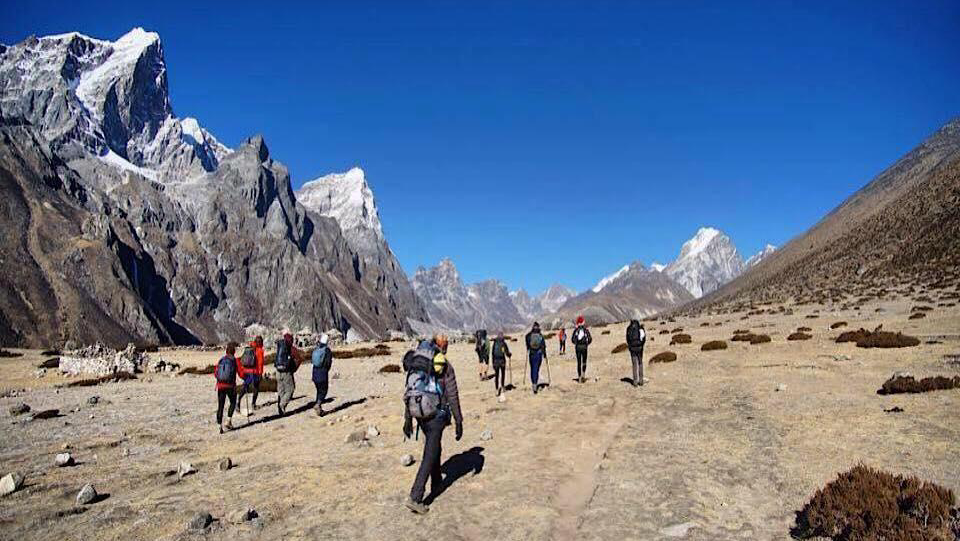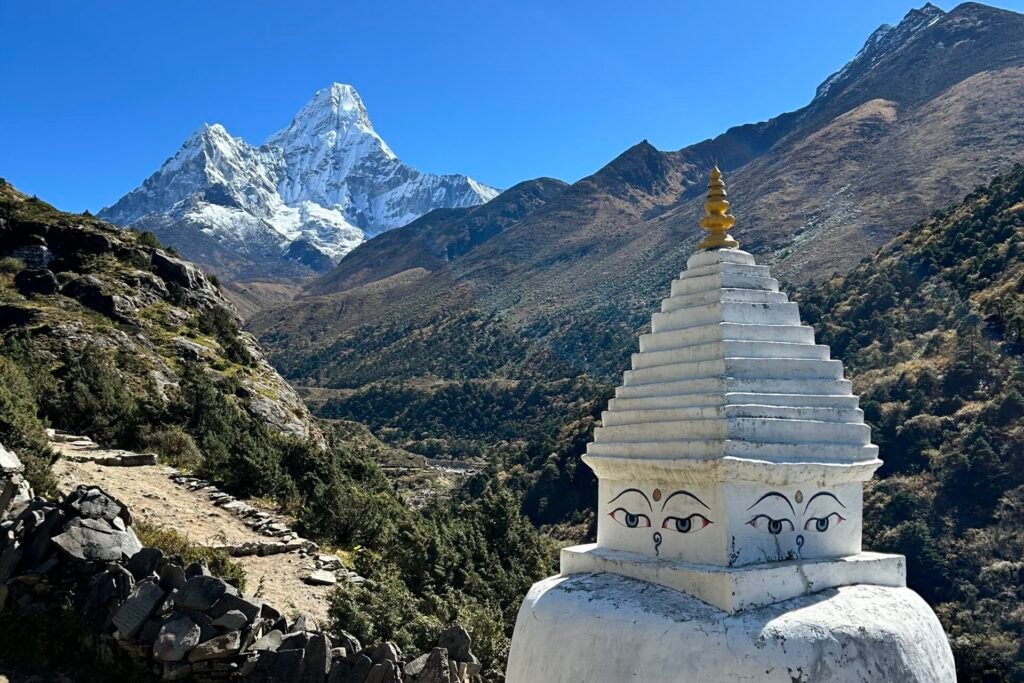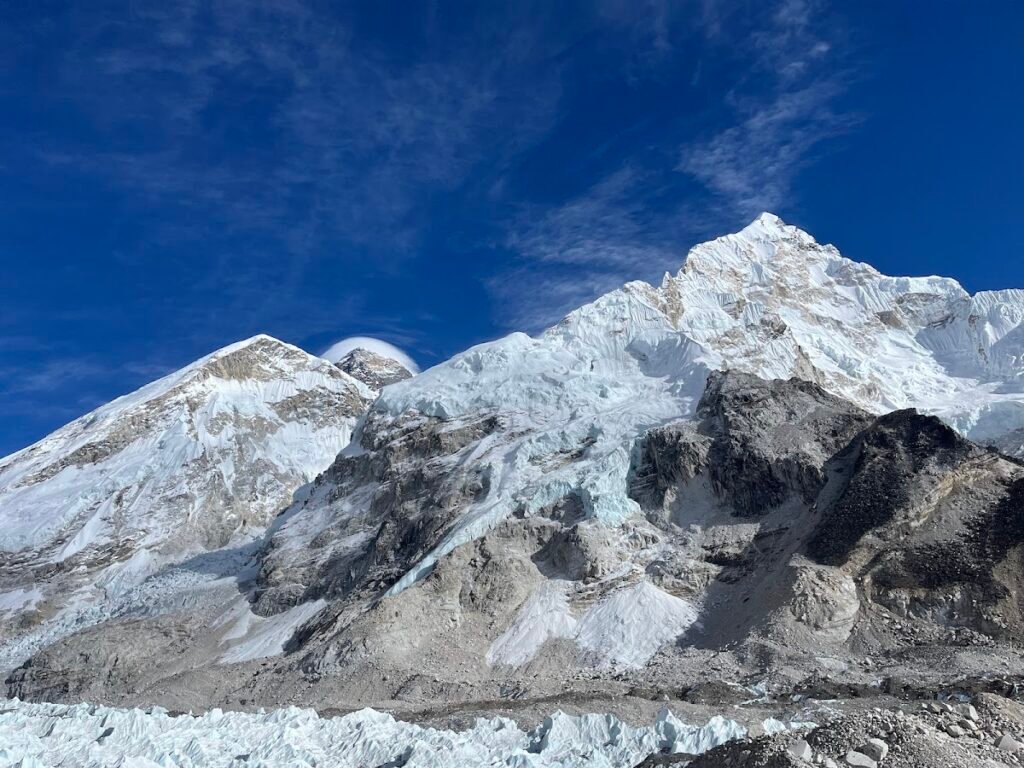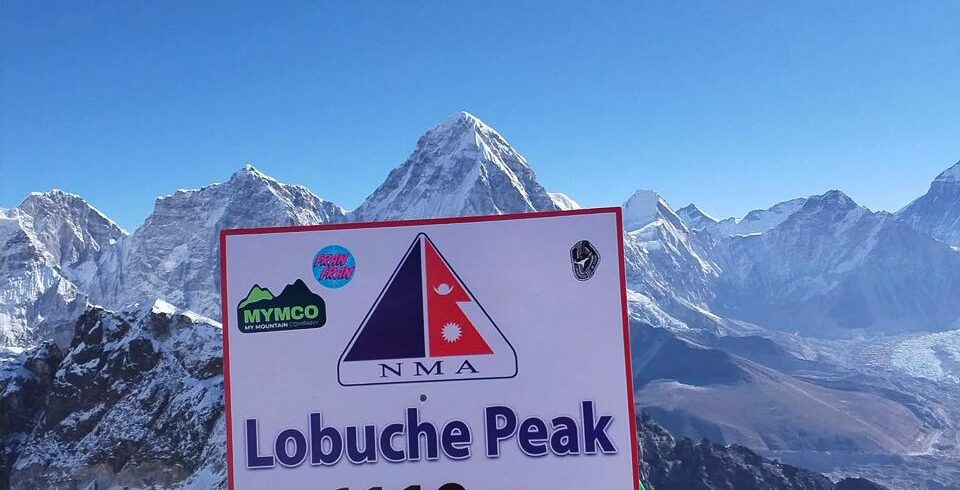
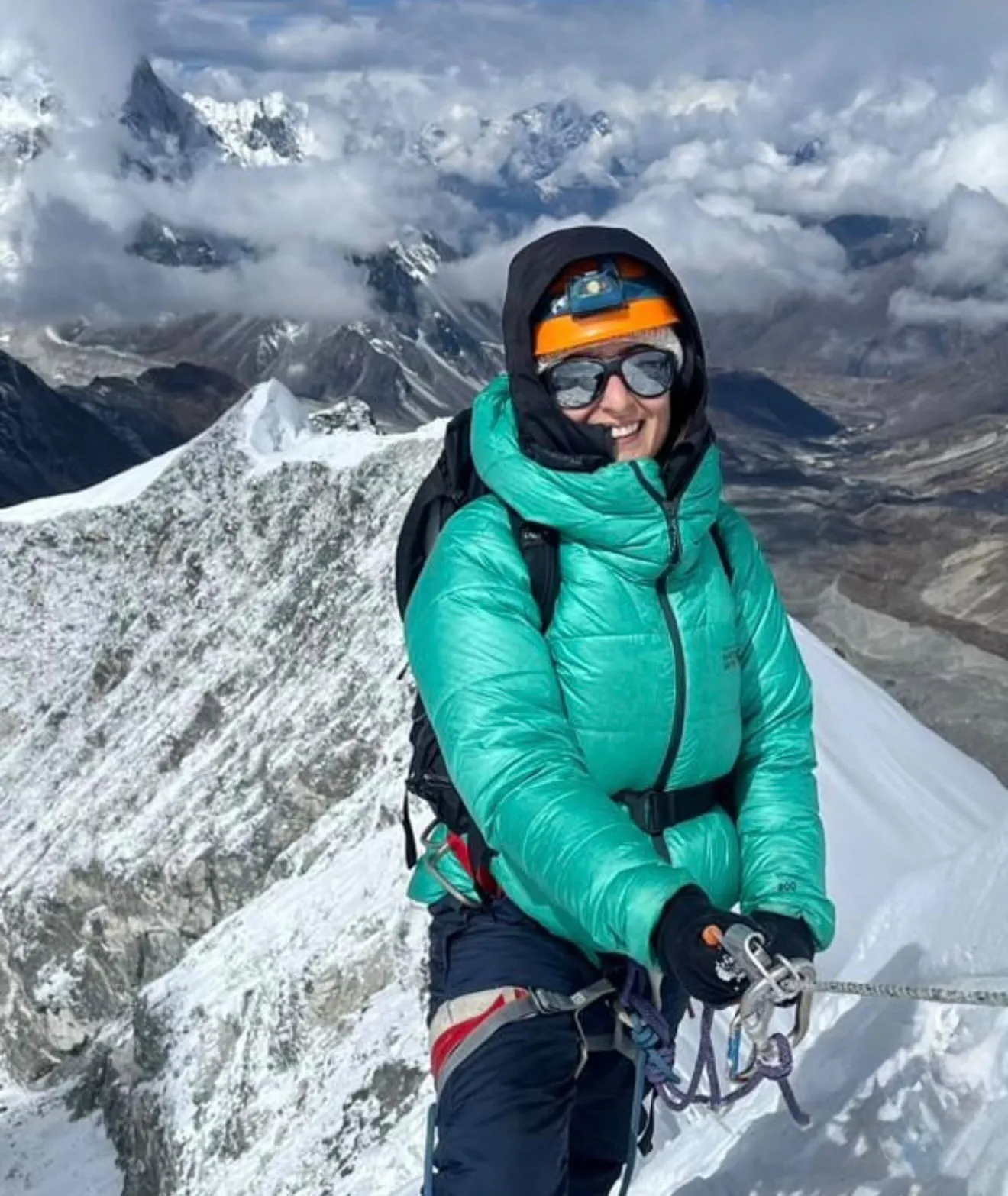
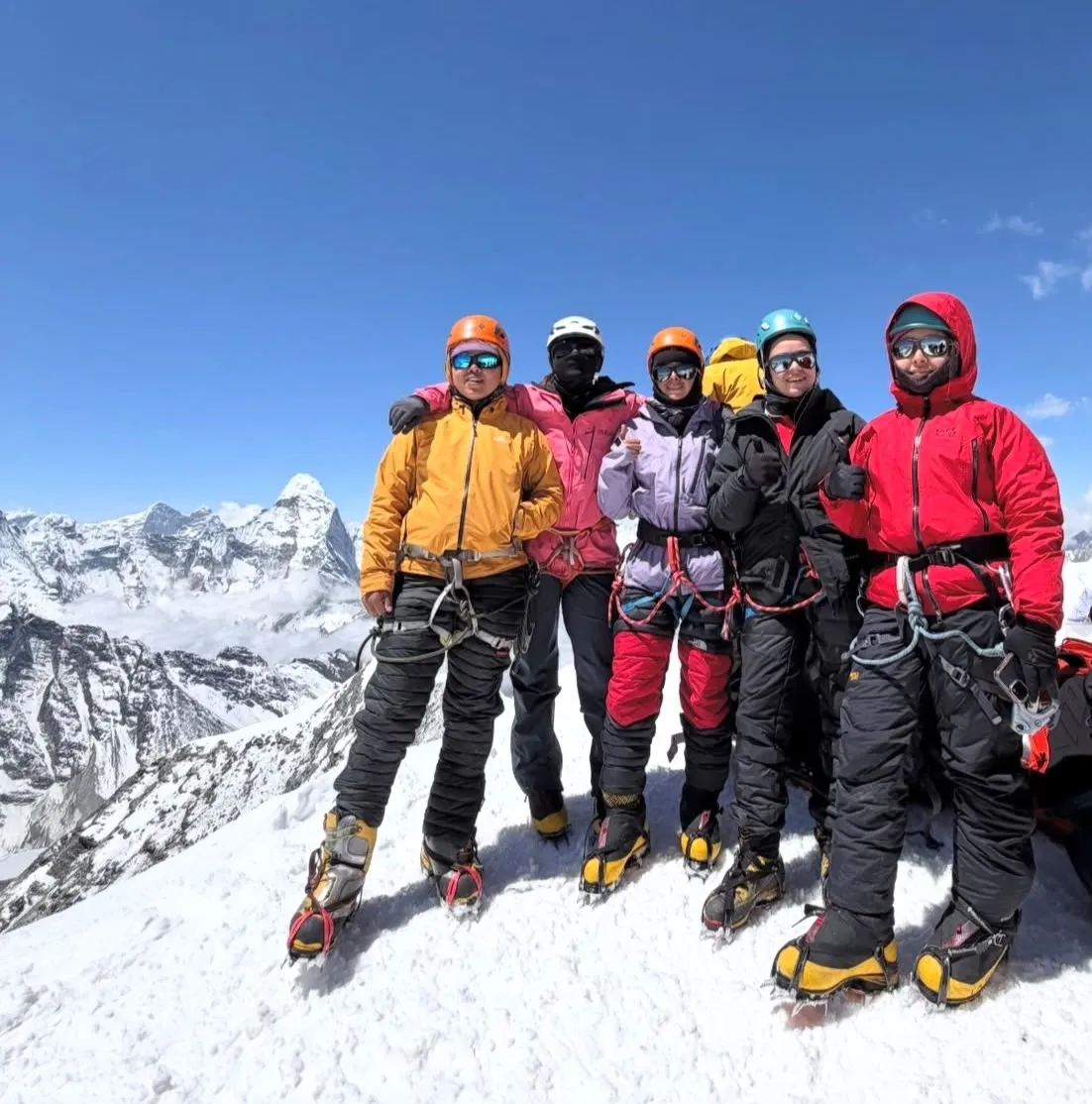
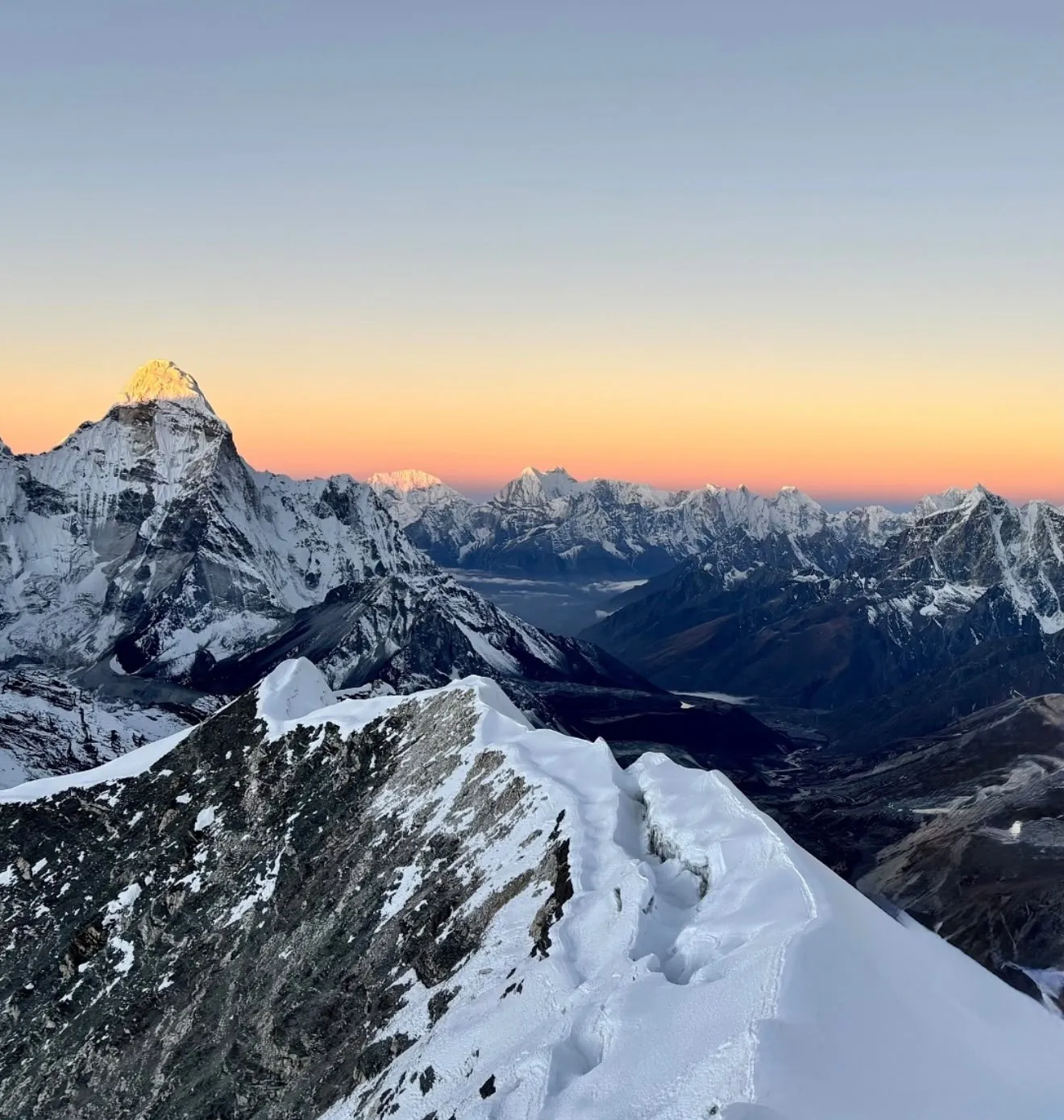
The Everest Base Camp Trek with Island Peak Climbing combines the world’s most famous trek with an ascent of one of Nepal’s most accessible trekking peaks. Island Peak, known locally as Imja Tse, stands at six thousand one hundred and eighty-nine meters and offers a genuine mountaineering experience that requires crampons, ice axes, and fixed rope climbing.
This nineteen-day itinerary follows the standard EBC route to Base Camp and Kala Patthar, then continues to Island Peak Base Camp at five thousand one hundred meters. The summit day involves a pre-dawn start, glacier travel, a steep snow and ice headwall, and an exposed ridge to the summit. From the top, you see the entire Everest massif, Lhotse, Makalu, and dozens of other peaks stretching across the horizon.
Island Peak is classified as a trekking peak by the Nepal Mountaineering Association, which means it does not require extensive technical climbing experience. However, it is a serious physical challenge at extreme altitude. A reputable Everest trek operator will provide climbing training before the summit attempt, teaching you the essential skills of crampon use, ice axe arrest, and fixed rope travel.
The climbing guide for Island Peak is typically a different specialist from your trekking guide, with specific mountaineering qualifications and experience. We provide all technical climbing equipment including harnesses, crampons, ice axes, helmets, and ropes. You need only bring your personal trekking gear and appropriate footwear.
This combination trek is ideal for trekkers who want more than the standard EBC experience. The sense of achievement from standing on a six-thousand-meter summit is profound, and the additional challenge transforms an already remarkable trek into a genuine mountaineering adventure.
Our EBC with Island Peak package includes domestic flights, trekking and climbing permits, all teahouse and camping accommodation, meals, experienced trekking guide, specialist climbing guide, porter service, and all technical climbing equipment. Contact Everest Trekking Company to discuss your fitness and experience for this challenging but rewarding expedition.
What Climbing Training Actually Involves
Before the summit attempt, every trekker on this itinerary completes a dedicated training day at Island Peak Base Camp, run by our qualified climbing guide. This training covers the essential technical skills the climb requires: how to walk efficiently in crampons on snow and ice, how to use an ice axe for balance and for a self arrest if you slip, how to move safely on a fixed rope using a jumar and safety carabiner, and how to work as part of a roped team across the glacier sections of the route. This training is genuinely thorough, and we do not take climbers to the summit attempt without confirming they are comfortable and competent with these core skills, since Island Peak’s technical sections, particularly the final headwall, are not the place to be learning fixed rope technique for the first time.
What Summit Day Genuinely Involves
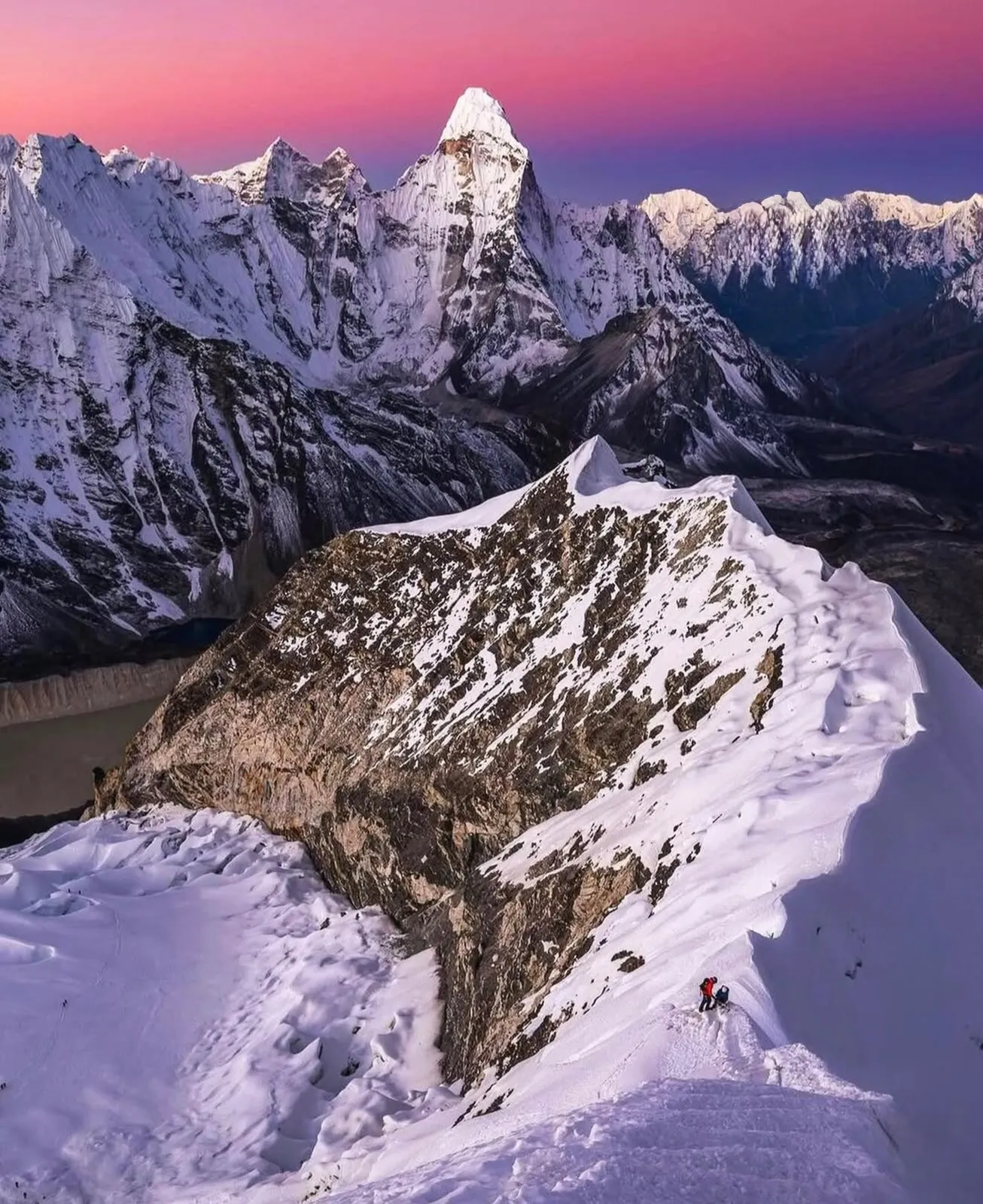
Summit day begins well before dawn, typically around midnight or one in the morning, so that climbers reach the summit and begin descending before the sun softens the snow and increases the risk of rockfall on the route. The climb from High Camp crosses a glacier requiring roped travel, before reaching the crux of the route, a steep snow and ice headwall protected by fixed ropes that climbers ascend using jumar technique. The final summit ridge is narrow and exposed, offering a genuine sense of real mountaineering rather than simply high altitude trekking. The full round trip from High Camp typically takes ten to twelve hours, making this a long and physically demanding day that caps off an already extensive nineteen day itinerary.
How This Differs From a Standard Everest Base Camp Trek
The trekking portion of this itinerary, from Lukla through Namche, Tengboche, Dingboche, and on to Everest Base Camp and Kala Patthar, follows the same acclimatization schedule as our standard fourteen day trek. What changes is everything that follows: after descending from Kala Patthar, the itinerary turns toward Chhukung and then Island Peak Base Camp, adding a genuine mountaineering objective on top of the trekking achievement most EBC trekkers are already satisfied with. This is a considerably more demanding and specialized trip than the standard trek, both physically and in terms of the technical skills involved, and it should be chosen deliberately by trekkers specifically seeking a summit climbing experience rather than simply a longer version of the standard route.
Fitness and Experience Genuinely Required
While Island Peak is classified as a trekking peak rather than a technical mountaineering objective, and does not require prior climbing certification, it is still a serious physical undertaking at extreme altitude. We recommend this itinerary for trekkers with strong cardiovascular fitness, ideally some prior high altitude trekking experience, and a genuine comfort with exposure and physically demanding, sustained effort. Trekkers do not need prior technical climbing experience, since our on site training covers everything required, but a reasonable comfort level with heights and physically strenuous activity in cold conditions makes the summit attempt considerably more manageable.
Equipment We Provide Versus What You Bring
All technical climbing equipment is included in this package: harness, crampons, ice axe, helmet, climbing rope, jumar, and the fixed rope hardware needed for the ascent. You are responsible for your personal trekking gear, including appropriate mountaineering boots rated for the technical sections (we can advise on specific requirements or rental options in Kathmandu), warm layering suitable for a pre dawn summit push in extreme cold, and personal items like gloves suited to handling metal climbing equipment at altitude. Our pre climb briefing covers exactly what personal gear you need well before you leave Kathmandu, so there are no surprises once you reach Island Peak Base Camp.
Booking the Everest Base Camp and Island Peak Climbing Trip
This itinerary requires advance coordination of both trekking and climbing permits, along with our specialist climbing guide’s availability, so we recommend booking at least three months ahead of your preferred departure. Reach out to our team to discuss your fitness level and any prior climbing or high altitude experience, and we will help you plan a summit attempt that fits your goals and gives you the best possible chance of a safe, successful climb.
Everest Base Camp and Island Peak Climbing Overview
The EBC Trek with Island Peak Climbing combines two objectives that most trekkers treat as separate expeditions. In 19 days we walk the full Everest Base Camp route to 5,364 m, summit Kala Patthar at 5,545 m, and then continue into the upper Imja Valley to climb Island Peak (Imja Tse) at 6,187 m. The summit of Island Peak delivers a 360-degree panorama of Ama Dablam (6,812 m), Lhotse (8,516 m), Makalu (8,485 m), and Baruntse (7,129 m) that no lower viewpoint in the Khumbu can match.Island Peak was named by Eric Shipton during the 1952 British reconnaissance expedition. Looking up from the Imja Valley, the mountain appeared to float like an island above a sea of ice, a description that has held for 70 years. The Sherpa name, Imja Tse, comes from the Imja Glacier it overlooks. At 6,187 m it sits just below Nepal Mountaineering Association’s Category A peak threshold, which means no expedition permit is required, only a trekking peak permit, which we handle for you. It is the most frequently climbed peak above 6,000 m in Nepal and the standard entry route for anyone moving toward larger Himalayan objectives.Why This Combination Works
The EBC route and Island Peak share the same approach corridor from Lukla to Namche Bazaar and Tengboche. The routes diverge at Dingboche, where EBC trekkers continue toward Lobuche and Gorak Shep while Island Peak climbers branch east through Chhukung. By completing EBC and Kala Patthar first, you arrive at Island Peak Base Camp with 17 days of high-altitude acclimatization already in your legs, the best possible preparation for a 6,000 m summit attempt.We include two acclimatization stops: Namche Bazaar at 3,440 m (Day 4) with a hike to the Everest View Hotel at 3,880 m, and Dingboche at 4,410 m (Day 7) with a hike to Nangkartshang Peak at 5,083 m. By the time you stand at Island Peak Base Camp at 5,240 m on Day 12, your body has already been above 5,000 m twice.Our certified high-altitude climbing Sherpa leads the Island Peak summit attempt. He provides a climbing skills briefing at base camp covering crampon technique, rope management, ascender use, and headwall protocols. Fixed ropes are placed on the summit headwall, the steepest section of the climb, for safety on both ascent and descent.Island Peak, Technical Details
Island Peak has three distinct sections. The approach from base camp to high camp crosses glacier moraines and a lower snowfield. The middle section is a moderate-angle snowfield at around 25 to 30 degrees where crampons and trekking poles are the primary tools. The summit headwall is the technical crux: a 50 to 60-degree ice wall approximately 150 metres high where fixed ropes and an ascender are required. Most fit, prepared climbers without prior technical experience complete this section in two to three hours.The summit itself is a narrow snow ridge at 6,187 m. In clear conditions you see the full Khumbu range from a perspective that is higher than Kala Patthar and deeper in the mountains. Lhotse’s south face fills the horizon to the north. Ama Dablam rises like a cathedral above the Imja Valley behind you. Makalu and Baruntse close out the eastern panorama.We leave base camp between midnight and 1:00 a.m. for the summit. The pre-dawn start is calculated to reach the headwall before the sun softens the ice, firm snow gives better crampon purchase and reduces rockfall risk from freeze-thaw loosening.The Full 19-Day Route
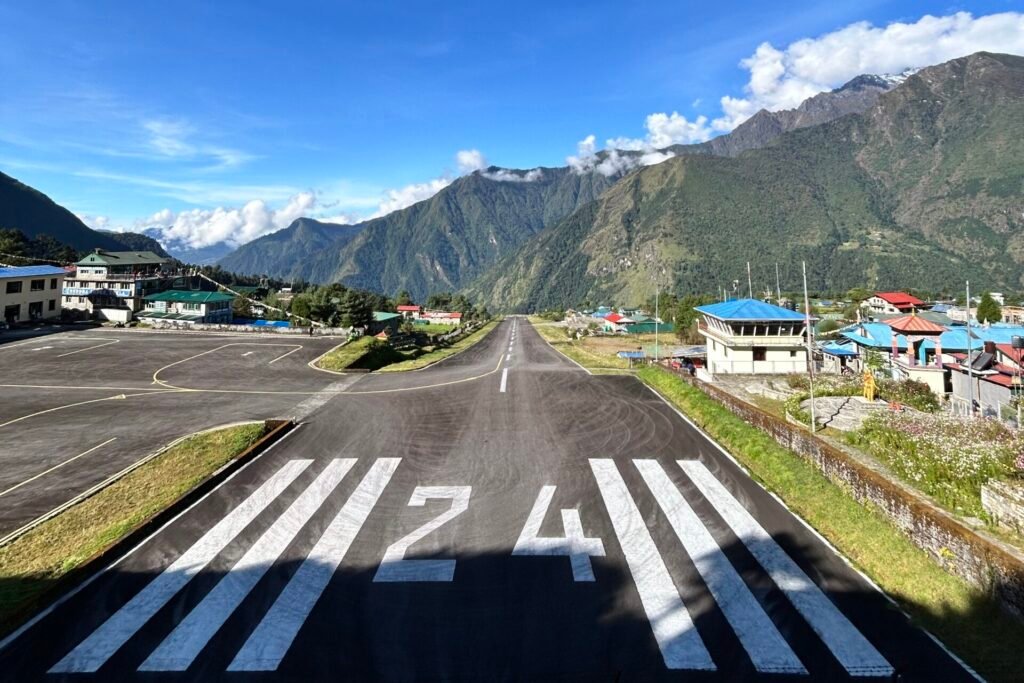
Days 1 and 2 are Kathmandu arrival and preparation. On Day 2 we fly to Lukla (2,860 m) and trek to Phakding (2,652 m). Days 3 to 5 bring us through Namche Bazaar (acclimatization) to Tengboche and Dingboche. Day 7 is the second acclimatization day at Dingboche with the Nangkartshang hike.Days 8 and 9 follow the classic EBC route via Lobuche to Gorak Shep and then to Everest Base Camp. Day 10 is Kala Patthar before dawn, then a long descent to Dingboche. Day 11 moves to Chhukung (4,730 m), the last settlement before Island Peak Base Camp. Day 12 is the trek to base camp. Day 13 is summit day, nine to ten hours round trip from base camp. Day 14 is a weather spare and recovery day. Days 15 to 18 descend via Chhukung, Tengboche, Namche, and Lukla for the return flight. Day 19 is departure from Kathmandu.Best Season
We run this expedition in spring (mid-March to late May) and autumn (late September to mid-November). October is the most reliable month: post-monsoon stability, excellent summit visibility, and Island Peak snow in ideal condition. April is the spring peak: slightly warmer temperatures and fewer crevasse hazards on the lower glacier. We do not run the Island Peak climb in monsoon or winter, the headwall becomes dangerously avalanche-prone in both conditions.Permits
This package requires four permits. The Sagarmatha National Park entry fee is USD 30, the TIMS card is USD 10, and the Khumbu Pasang Lhamu Rural Municipality fee is NPR 2,000. The Island Peak climbing permit from the Nepal Mountaineering Association costs USD 125 per person for the autumn season and USD 70 per person for spring. All four are included in your package price and handled by our Kathmandu office before departure.Trekking and Climbing with Everest Trekking Company
We have been operating in the Khumbu since 2004 and have led Island Peak summits every season since 2008. Our senior trek leader Susam Suywal has summited Island Peak more than 30 times and treats each departure with the same technical preparation as the first. Every climber on this package is assigned a dedicated certified high-altitude climbing Sherpa in addition to the trekking guide, one-to-one climbing support on the headwall is our standard, not an optional extra.We carry a full medical kit including a Gamow bag and pulse oximeters on every departure. Island Peak is demanding but it is achievable for any well-prepared trekker who completes the EBC acclimatization properly, we have the track record to show it.2026 Update: Lukla Flights and Permit Fees
Trekkers joining Everest Trekking Company in spring 2026 (March to May) should note that Lukla flights during the peak spring season often depart from Ramechhap airport rather than Kathmandu’s Tribhuvan International Airport. Ramechhap is approximately 3 hours by road from Kathmandu. We arrange shared jeep transfers for all groups departing from Ramechhap. Autumn departures (September to November) typically fly directly from Kathmandu.
Permit fees for 2026 remain: Sagarmatha National Park entry at NPR 3,000 (approximately USD 22) per person, and the Khumbu Pasang Lhamu Rural Municipality fee at NPR 3,000 (approximately USD 22) per person. Both are included in your Everest Trekking Company package price. A TIMS card (Trekkers Information Management System) is also included at NPR 2,000 (approximately USD 15).
EBC Trek with Island Peak Climbing Cost for 2026 and 2027
The cost of the EBC Trek with Island Peak Climbing ranges from USD 2,490 to USD 2,650 per person, depending on your group size. The larger the group, the lower the cost per person. Check the pricing table below and reach out via WhatsApp or email for a personalised quote.
| No. of Pax | Price Per Person | Inquiry |
|---|---|---|
| 1 | USD 2,650 | |
| 2 | USD 2,590 per person | |
| 3 | USD 2,550 per person | |
| 4 to 6 | USD 2,490 per person |
EBC and Island Peak Climbing Highlights
- Stand at Everest Base Camp (5,364 m) at the foot of the world's highest mountain
- Summit Kala Patthar (5,545 m) at dawn for the closest ground-level view of Everest's south face
- Climb Island Peak (Imja Tse, 6,187 m), Nepal's most popular 6,000 m peak with 360° summit panoramas
- See Ama Dablam (6,812 m), Lhotse (8,516 m), Makalu (8,485 m), and Baruntse (7,129 m) from the Island Peak summit
- Certified high-altitude climbing Sherpa on a one-to-one basis for the Island Peak headwall
- Two built-in acclimatization stops: Namche Bazaar (3,440 m) and Dingboche (4,410 m) with guided acclimatization hikes
- Nangkartshang Peak acclimatization hike (5,083 m), ideal preparation for high-altitude climbing
- Island Peak climbing permit, all four trek permits, climbing gear, and tented camp at base camp included
- Visit Tengboche Monastery (3,860 m), the cultural and spiritual centre of the Khumbu Sherpa community
- One spare day at base camp built in for weather, no itinerary pressure on summit day