- Season: Spring 2026 (April to May) and Autumn 2026 (October to November)
- Price: From USD 2,200 per person (includes climbing permit, technical gear and guide)
- Maximum group size: 8 climbers
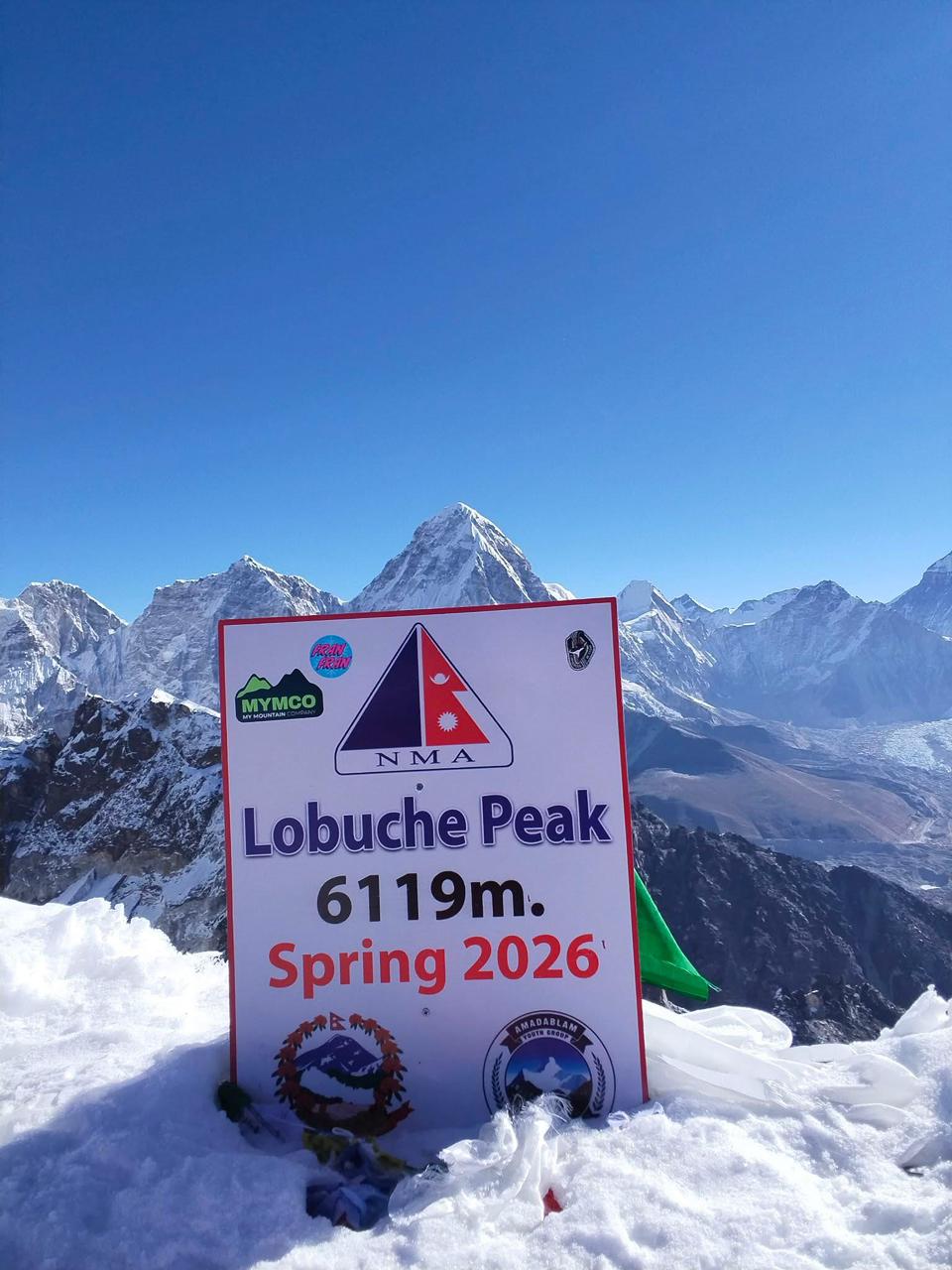
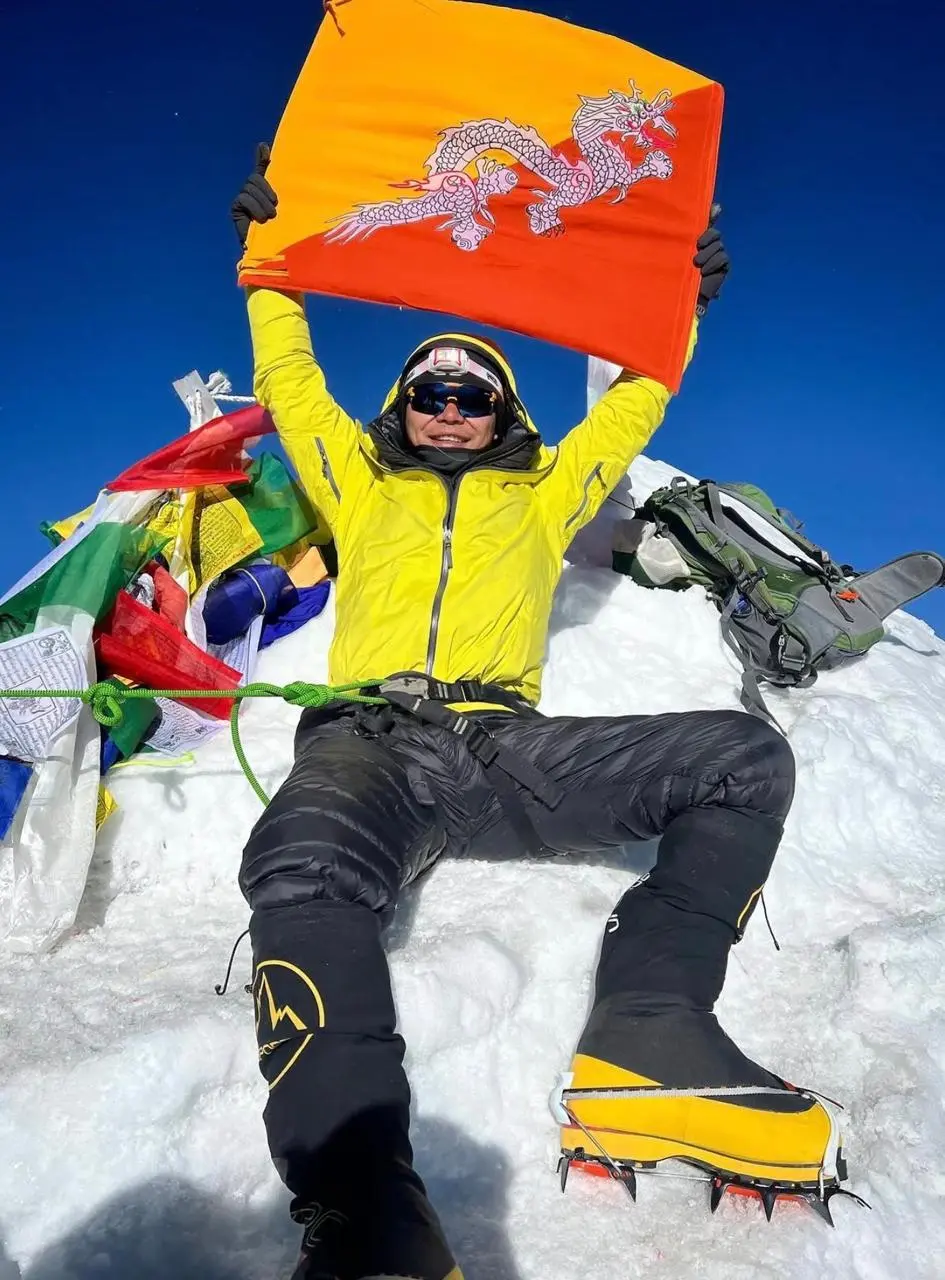
- Summit: Lobuche East at 6,119m, one of Nepal’s premier trekking peaks
- Experience required: Prior trekking above 5,000m; some scrambling experience helpful but not essential
- Lead guide: Ramsharan Pariyar, Trek Guide, 20 plus EBC completions
- Permits included: Sagarmatha National Park, Khumbu Pasang Lhamu fee, TIMS card, Lobuche Peak climbing permit
- Book or enquire: Contact our Kathmandu office
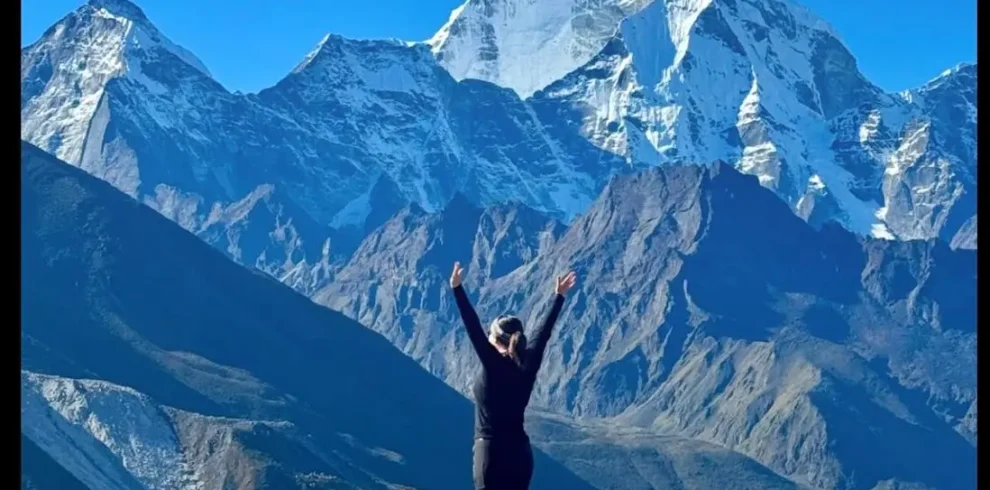
Lobuche East stands at 6,119 m directly above the Khumbu Glacier, visible from the trail for three days before you attempt it. Most trekkers walk past it on the way to Everest Base Camp without a second thought. The EBC Trek with Lobuche Peak combines the two objectives into a single 17-day itinerary: you reach Everest Base Camp at 5,364 m and Kala Patthar at 5,545 m, then pivot to Lobuche East for a summit attempt from a high camp at 5,400 m. The combination works because the EBC acclimatization builds exactly the altitude exposure the Lobuche summit requires. By the time you leave Lobuche High Camp at midnight for the summit push, you have already slept three nights above 5,000 m and stood at 5,545 m. The mountain respects that preparation.
About Lobuche East: The Peak Above the Memorial
Lobuche East was first climbed in 1984 by a German expedition team. The Nepal Mountaineering Association classifies it as a trekking peak, a designation that requires an NMA permit but not a full Himalayan expedition permit, making it one of the most technically serious peaks accessible to recreational mountaineers in Nepal. At 6,119 m it is higher than any point in the Alps and higher than the highest summit in the Western Hemisphere. The climbing route follows a snow and ice ridge from a fixed high camp at approximately 5,400 m to the summit, with one significant exposed section near the top where the ridge narrows to a corniced crest above a 600 m drop to the glacier below.
The mountain sits immediately west of the Khumbu Glacier and directly above Lobuche village at 4,940 m, which means the base area requires no additional approach days beyond what the standard EBC itinerary already covers. This is what makes the EBC and Lobuche East combination so efficient: there are no wasted travel days. You are already there. Our certified climbing Sherpa, who accompanies each group specifically for the Lobuche section, installs fixed ropes on the technical sections above high camp the day before the summit attempt. The NMA climbing permit at USD 250 per person for autumn season is included in our package price.
How the EBC Acclimatization Sets Up the Lobuche Summit
The sequencing of this 17-day trip is deliberate. By Day 9 you have visited Everest Base Camp at 5,364 m. By Day 10 you have stood on Kala Patthar at 5,545 m at sunrise. By Day 12 you are at Lobuche High Camp at 5,400 m. The body has had 12 days of progressive altitude exposure across three climbs above 5,000 m before the summit day. Our guide Susam Suywal, who has reached the Lobuche East summit 22 times in 14 years of guiding in the Khumbu, monitors SpO2 readings every morning from Day 4 onward and assesses individual readiness before committing to the high camp move on Day 12. If any trekker’s readings or condition indicate a risk, we adjust the plan rather than push forward.
The acclimatization hike to Nangkartshang Peak at 5,083 m on Day 7 is especially important for the Lobuche objective. It is the first time on the trip you are above 5,000 m and gives your body a controlled exposure to the oxygen levels you will be operating at on summit day, four days before you need to perform on the mountain. We take this day seriously, there is no rushing the Nangkartshang hike, no turning back early because you feel tired at 4,800 m. Getting to 5,083 m on Day 7 is part of the Lobuche preparation, not optional.
The Lobuche East Climbing Route in Detail
From Lobuche village at 4,940 m, the approach to high camp gains approximately 460 m across a mix of moraine, boulder, and snow terrain over three to four hours. High camp sits on a flat shelf at around 5,400 m on the west ridge of the mountain, with views across the Khumbu Glacier toward the Nuptse and Lhotse walls. The tents are fixed by our climbing Sherpa on the afternoon of Day 12 while the group rests at the base.
The summit day departure is at midnight or 1:00 a.m. from high camp. The route follows the west ridge northeast, gaining the main snow slope that leads to the upper ridge. The critical section is a 40 to 50-degree snow and ice slope below the summit crest where our climbing Sherpa has installed fixed ropes. Crampons and ascenders are used on this section, the technique is similar to Island Peak but the ridge beyond is narrower and more exposed. Total summit day time from high camp is eight to ten hours round trip. On descent we return to Lobuche village for the night, then begin the trek out the following morning.
Best Season, Weather, and Success Rate
October is the optimal month for the EBC and Lobuche East combination. Post-monsoon conditions bring stable high-pressure weather systems that typically last 10 to 14 days at a stretch, which is enough time to complete both objectives. The Lobuche East ridge in October carries firm, well-consolidated snow and ice, good crampon purchase, low avalanche risk. April is the second season with warmer temperatures but higher afternoon cloud probability on the summit ridge. We avoid November because post-monsoon cold fronts begin producing dangerous wind speeds on the upper ridge of Lobuche East, and the Khumbu Glacier approach deteriorates with early winter ice formation.
Operators with proper acclimatization programs and experienced guides report summit success rates of 70 to 80 percent on Lobuche East for parties that reach high camp in good condition. The main limiting factors are weather on summit day, individual acclimatization responses, and physical fatigue in the legs after 12 days of high-altitude trekking. We include a spare day at Lobuche (Day 13) to allow a second attempt if summit day conditions are unsafe. No refund is issued for a weather-prevented summit, this is the nature of high-altitude mountaineering, and we build the schedule to maximize the chance rather than guarantee the outcome.
Permits, Equipment, and What Is Included
Four permits are required for this trip: the Sagarmatha National Park entry permit (USD 30), the TIMS card (USD 10), the Khumbu Pasang Lhamu Rural Municipality fee (NPR 2,000), and the Nepal Mountaineering Association permit for Lobuche East (USD 250 per person for autumn season, USD 125 for spring). All four are included in the ETC package price. Technical climbing equipment, crampons, harness, locking carabiners, ascender, belay device, and climbing helmet, is also included. You need to supply or rent mountaineering boots suitable for crampons. Stiff-sole trekking boots may work on Lobuche East (unlike Island Peak, the angle is slightly less severe), but double plastic boots or telemark-style mountaineering boots are strongly preferred. Rentals are available in Kathmandu’s Thamel district for approximately USD 20 to 30 per day.
About Our Team
Susam Suywal leads all ETC Lobuche East departures. He holds a Nepal Tourism Board senior trekking guide license, an NMA-certified climbing guide qualification, and has reached the Lobuche East summit 22 times since 2012. All trekking guides and certified climbing Sherpas on ETC trips are registered with the Nepal Tourism Board, insured under Nepal government regulations, and paid at rates that meet or exceed the Trekking Agencies Association of Nepal recommended minimums. Our climbing Sherpa-to-client ratio on the Lobuche summit day is 1:2 maximum, ensuring each climber has direct support on the technical sections above high camp.
2026 Update: Lukla Flights and Permit Fees
Trekkers joining Everest Trekking Company in spring 2026 (March to May) should note that Lukla flights during the peak spring season often depart from Ramechhap airport rather than Kathmandu’s Tribhuvan International Airport. Ramechhap is approximately 3 hours by road from Kathmandu. We arrange shared jeep transfers for all groups departing from Ramechhap. Autumn departures (September to November) typically fly directly from Kathmandu.
Permit fees for 2026 remain: Sagarmatha National Park entry at NPR 3,000 (approximately USD 22) per person, and the Khumbu Pasang Lhamu Rural Municipality fee at NPR 3,000 (approximately USD 22) per person. Both are included in your Everest Trekking Company package price. A TIMS card (Trekkers Information Management System) is also included at NPR 2,000 (approximately USD 15).
Highlights
- Summit Lobuche East (6,119 m), the peak directly above the Khumbu Glacier, first climbed by a German expedition in 1984
- Reach Everest Base Camp (5,364 m) at the foot of the Khumbu Icefall, then Kala Patthar (5,545 m) for the finest Everest view without a climbing permit
- NMA climbing permit (USD 250 autumn), certified climbing Sherpa, all technical gear, and fixed ropes on the summit ridge, all included
- 17-day itinerary built around three nights above 5,000 m before the Lobuche summit attempt, the best acclimatization structure available
- Acclimatization hike to Nangkartshang Peak (5,083 m) on Day 7, controlled 5,000 m exposure four days before the Lobuche high camp
- Tengboche Monastery at 3,860 m with direct Ama Dablam (6,812 m) views from the courtyard
- Lobuche High Camp at 5,400 m on the west ridge, tented camp with full meals prepared by our kitchen crew
- Spare summit day on Day 13, if conditions prevent the Day 12 attempt, we wait and try again
- Climbing Sherpa to client ratio of 1:2 maximum on summit day, no queuing, no bottlenecks on the exposed upper ridge
- Fly Lukla to Kathmandu and farewell dinner on Day 16, the complete Khumbu climbing package in 17 days
Our team meets you at Tribhuvan International Airport and transfers you to your hotel in Thamel. The afternoon is free for rest and gear checks. In the evening we hold a pre-trip briefing: full 17-day route overview, permit confirmation, NMA climbing permit card distribution, emergency contact registration, and an introduction to the Lobuche East climbing section. Susam reviews the summit day plan and checks that all participants have valid travel insurance covering mountaineering to 6,200 m. Kathmandu sits at 1,400 m. Sleep early, the Lukla flight check-in is at 5:30 a.m.
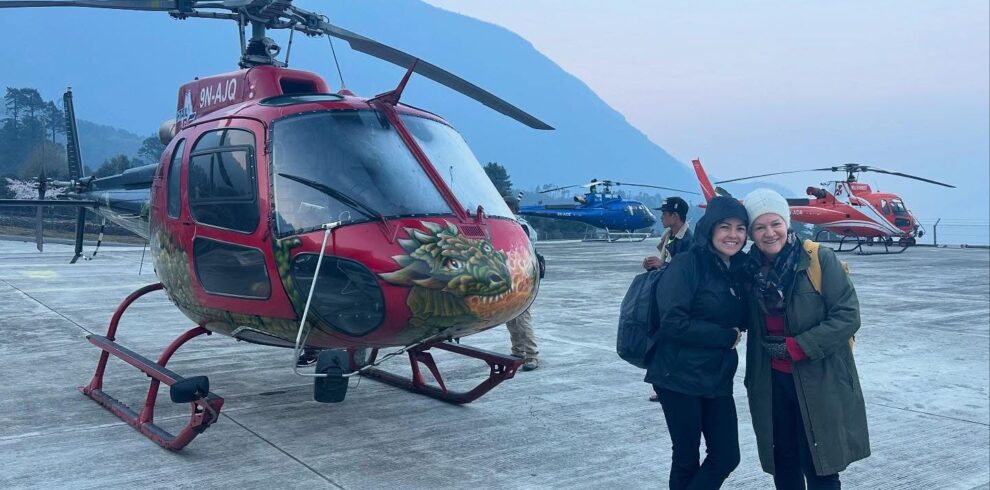
The 35-minute Lukla flight is one of the most dramatic in commercial aviation, the aircraft climbs from Kathmandu’s flat valley and within minutes is threading between ridgelines, with Everest, Lhotse, and the Khumbu Himal appearing through the right-side windows before landing on Lukla’s 527-metre runway. We meet our full crew in Lukla, organize loads, and walk south along the Dudh Kosi valley to Phakding at 2,610 m. The afternoon trail passes through small Sherpa settlements and rhododendron forest. We sleep at Phakding having barely descended from Lukla’s altitude, a gentle start.
The trail from Phakding follows the Dudh Kosi gorge through the Sagarmatha National Park gate at Monjo, where park entry permits and TIMS cards are checked. The gorge section crosses a series of high suspension bridges, the Hillary Suspension Bridge at 3,250 m sways under heavy foot traffic on busy October mornings. The final climb from the last river crossing to Namche is 45 minutes of sustained steep trail that ends abruptly at Namche’s amphitheater of stone teahouses. We check in, eat well, and sleep at 3,440 m for two nights.
The mandatory Namche rest day is spent actively rather than passively. We hike from Namche up to the Everest View Hotel at 3,880 m, the highest permanently staffed hotel in the world, built in 1971. From the terrace we get the first clear view of Everest (8,849 m), Lhotse (8,516 m), and Ama Dablam (6,812 m) together. Susam takes SpO2 readings for all group members at the hotel. We descend to Namche for lunch and the afternoon. The Sagarmatha National Park visitor center has a good permanent exhibition on Khumbu ecology and Everest expedition history worth an hour in the afternoon.
The trail contours high above the Dudh Kosi valley through Sanasa and Kyangjuma with continuous close-up views of Ama Dablam (6,812 m), Thamserku (6,618 m), and Kantega (6,685 m). The descent to the Imja Khola river and the climb back up to Tengboche covers 400 m of elevation change each way. Tengboche Monastery at 3,860 m has operated since 1916, destroyed by earthquake and fire and rebuilt twice. The late afternoon view of the monastery courtyard with Ama Dablam rising directly behind it is one of the most photographed scenes in Nepal. We sleep at 3,860 m.
The trail descends from Tengboche to Debuche and crosses the Imja Khola before climbing through Pangboche at 3,985 m, one of the oldest inhabited villages in the Khumbu. The trail continues up the Imja Valley through increasingly sparse vegetation and lunar moraine terrain to Dingboche at 4,410 m. Dingboche is the last large village before the high Khumbu and has well-stocked teahouses, a medical post, and reliable solar power. We sleep here for two nights.
The Nangkartshang hike is the most important preparation day for the Lobuche summit. The climb from Dingboche gains 673 m over approximately three hours, reaching a rocky ridge at 5,083 m where you are above 5,000 m for the first time on the trip. The sensation at this altitude, reduced air pressure, slower deliberate breathing, the weight of the mountain air on your chest, is exactly what you will experience on the Lobuche East approach. The view from Nangkartshang takes in the Imja Valley, Island Peak (6,187 m), Makalu (8,485 m), and the South Face of Lhotse. Susam takes SpO2 readings at the summit and again at dinner. We descend to Dingboche for a restful afternoon and early sleep.
The trail from Dingboche crosses the lateral moraine of the Khumbu Glacier and climbs north to Dughla at 4,620 m. Above Dughla the path climbs steeply to the Dughla Memorial at 4,830 m, a ridge of stone cairns and prayer flags commemorating climbers who have died on Everest, including memorials for Scott Fischer, Anatoli Boukreev, and the 16 Sherpa guides killed in the 2014 Khumbu Icefall avalanche. Lobuche at 4,940 m is a cluster of teahouses on a moraine shelf facing Lobuche East directly. You will sleep tonight with the summit above you, visible from the teahouse window on a clear evening.
We leave Lobuche early, following the Khumbu Glacier moraine north to Gorak Shep at 5,140 m. We drop packs and continue across the moraine for approximately 90 minutes to Everest Base Camp at 5,364 m, boulder fields, glacial streams, and occasional snow patches on the approach. Base Camp sits at the foot of the Khumbu Icefall: a chaotic cascade of seracs and ice towers that has been the technical crux of every Everest expedition since 1953. In October the camp is quiet, stone cairns and prayer flags where the expedition tents stood in spring. We spend time at Base Camp before returning to Gorak Shep for the night at 5,140 m.
We leave Gorak Shep at 4:30 a.m. with headlamps. Kala Patthar gains 405 m over 90 minutes on a rocky ridge directly above the glacier. The air at 5,545 m holds roughly half the oxygen of sea level. We arrive at the summit cairn at first light with the South Face of Everest (8,849 m) ahead, Lhotse (8,516 m) and Nuptse (7,861 m) framing it, and the Khumbu Icefall directly below. This is the highest point of the trek and the finest Everest view available without a climbing permit. We descend to Gorak Shep for breakfast and continue back to Lobuche village for the afternoon, resting, eating, and sleeping at 4,940 m before the high camp move tomorrow.
We use this day at Lobuche for a full climbing preparation session. Our climbing Sherpa conducts a two-hour skills clinic in the afternoon: crampon fitting on boots, harness adjustment and buckle check, ascender technique on a short fixed line, ice axe self-arrest position, and headlamp operation in gloves. This is not optional, everyone in the group goes through the clinic regardless of prior climbing experience. The morning is for rest and eating. A large, carbohydrate-heavy lunch and dinner are part of the high-camp preparation. In the afternoon our climbing Sherpa moves ahead to Lobuche High Camp (5,400 m) to install tents and begin fixing ropes on the technical sections above. We sleep at Lobuche at 4,940 m for an early start.
We leave Lobuche village at approximately 8:00 a.m. and move to High Camp at 5,400 m on the west ridge of Lobuche East, a three to four hour climb across moraine, boulders, and snow. We arrive at the tented camp, eat a hot lunch, rest in sleeping bags, and attempt to sleep from early afternoon. The summit departure is at midnight or 1:00 a.m. The route from High Camp follows the west ridge northeast, gaining the main snow slope that leads to the upper ridge. Our climbing Sherpa leads with the rope fixed on the 40 to 50-degree summit slope. Each climber uses crampons and ascender on the fixed line. The narrow corniced summit ridge above the slope requires careful movement, the exposure on both sides is significant at 6,100 m. Summit time varies between 5:00 a.m. and 8:00 a.m. depending on conditions. We descend to High Camp, pack tents, and return to Lobuche village by afternoon.
Day 13 is a built-in spare for the Lobuche summit. If weather or conditions were unsafe on Day 12, we attempt the summit today. If the summit was reached on Day 12, we descend from Lobuche village to Dingboche at 4,410 m, a 5-hour walk back through the Dughla Memorial, past the moraine, and down the Imja Valley to the warmth and better-stocked teahouses of Dingboche. The descent below 5,000 m feels immediate and noticeable, appetite returns, mood improves, and breathing deepens within an hour of dropping altitude. We eat well and sleep long at Dingboche.
The long descent from Dingboche passes through Pangboche, crosses the Imja Khola, re-ascends briefly to Tengboche for a lunch stop in the monastery courtyard, then drops through Debuche and the forest to the Dudh Kosi river crossing and the final climb to Namche Bazaar. The rhododendron forest below Tengboche feels intensely green after a week above the treeline. We arrive in Namche in the late afternoon, the bakery is open and the hot showers are earned.
The last walking day follows the Dudh Kosi valley south from Namche through Jorsale, Monjo, and Phakding to Lukla. The trail is familiar and the pace is relaxed, there is nothing left to conserve energy for. We arrive in Lukla in the late afternoon, check in to our teahouse, and gather with the other departing trekkers at the airstrip-end guesthouses. Susam confirms the next morning’s check-in time with our Kathmandu flight coordinator.
The morning Lukla flight returns us to Kathmandu in 35 minutes. We transfer to the hotel, check in, and use the afternoon for a shower, laundry, and the Thamel shops. The farewell dinner is in the evening with Susam and the full crew, a proper sit-down meal marking the completion of an EBC trek and a 6,119 m summit. This is the night to sit with what you did.
Our team transfers you to Tribhuvan International Airport for your international departure. The service ends at the airport drop-off. Trekkers extending their Nepal trip can arrange Chitwan National Park safaris, Pokhara lake and paragliding packages, or white-water rafting on the Trishuli River through our Kathmandu office. Let us know before Day 16 and we will organize the extension itinerary.
- Airport transfers on arrival (Day 1) and departure (Day 17) in Kathmandu
- 2 nights hotel accommodation in Kathmandu (3-star, twin sharing, bed and breakfast)
- Kathmandu to Lukla and Lukla to Kathmandu flights, both ticketed before departure
- 13 nights teahouse accommodation during the trek (twin sharing)
- 1 night tented high camp on Lobuche East west ridge (5,400 m)
- All meals on trek: breakfast, lunch, and dinner from Day 2 (Lukla) to Day 16 (Kathmandu farewell dinner)
- Kathmandu farewell dinner on Day 16
- Licensed senior trekking guide (English-speaking, Nepal Tourism Board certified, Susam Suywal-led team)
- Certified climbing Sherpa for the Lobuche summit section, 1 Sherpa per 2 climbers maximum
- One porter per two trekkers (carrying up to 25 kg per porter load)
- Nepal Mountaineering Association (NMA) Lobuche East climbing permit (USD 250 per person, autumn; USD 125, spring)
- Sagarmatha National Park entry permit (USD 30 per person)
- TIMS card, Trekkers' Information Management System (USD 10 per person)
- Khumbu Pasang Lhamu Rural Municipality entry fee (NPR 2,000 per person)
- All technical climbing equipment: crampons, harness, ascender, belay device, locking carabiners, climbing helmet
- Fixed rope installation on the Lobuche East technical sections above high camp
- High camp tent, sleeping tent, and mess tent at Lobuche High Camp (5,400 m)
- First-aid kit carried by guide including altitude medication and pulse oximeter
- Gamow bag (portable altitude chamber) available via our Namche base for emergencies
- ETC branded duffle bag (60 litres) for porter load
- Pre-trip briefing in Kathmandu with route map, permit check, and emergency contact registration
- All government taxes and service charges
- International flights to and from Kathmandu
- Nepal entry visa: USD 30 for 15 days, USD 50 for 30 days, available on arrival at Tribhuvan Airport
- Travel insurance: mandatory, must explicitly cover mountaineering to 6,200 m and helicopter evacuation
- Lunch and dinner in Kathmandu on Day 1 and Day 17
- Mountaineering boots suitable for crampons, stiff sole required; rent in Thamel for approximately USD 20 to 30 per day
- Ice axe, required for Lobuche East; rent in Thamel for approximately USD 5 to 8 per day
- Personal sleeping bag rated to minus 15°C minimum, essential for high camp (rent in Thamel for USD 4 to 6 per day)
- Guide tips: recommended USD 12 to 15 per day per group; climbing Sherpa tips: recommended USD 15 to 20 per day; porter tips: USD 8 to 10 per day
- Bottled water, hot drinks, snacks, and personal purchases on trail
- Hot shower at teahouses: approximately NPR 200 to 400 per shower above Namche
- Battery and device charging at teahouses: approximately NPR 100 to 300 per charge
- Personal medications and altitude sickness prevention medication (Diamox if prescribed by your physician)
- Costs from early departure due to illness, personal decision, or weather-related flight delay beyond the Day 13 buffer
Lobuche East stands at 6,119 m in the Khumbu region, directly above the Khumbu Glacier and the trail leading to Everest Base Camp. The Nepal Mountaineering Association classifies it as a trekking peak, requiring an NMA permit but not a full Himalayan expedition permit. The climbing route from High Camp at 5,400 m involves a 40 to 50-degree snow and ice slope below the summit crest and a narrow exposed ridge traverse at the top. It is more technically demanding than a standard glacier walk but less severe than Island Peak’s headwall. No prior mountaineering experience is required, but you must complete the pre-summit skills clinic at Lobuche and be comfortable with steep terrain and height exposure. Climbers with strong trekking fitness and good acclimatization consistently succeed on this route.
No prior technical mountaineering experience is required, but physical fitness and mental comfort with exposure are essential. Our certified climbing Sherpa conducts a full skills clinic at Lobuche on Day 11 covering crampon fitting, harness use, ascender technique on fixed ropes, ice axe position, and headlamp operation in gloves. The technical section on the upper ridge uses fixed ropes installed by our climbing Sherpa the day before the attempt. Every climber clips an ascender to the fixed line and is directly supported by the Sherpa team. The 1:2 Sherpa-to-client ratio ensures no one is left without direct assistance on the exposed sections.
ETC includes all technical climbing equipment in the package price: crampons, climbing harness, ascender, belay device, locking and non-locking carabiners, and climbing helmet. Fixed rope installation on the summit slope is also included. You need to supply or rent mountaineering boots suitable for steel crampons, stiff-sole trekking boots or, preferably, plastic double boots or telemark-style mountaineering boots. These are available to rent in Kathmandu’s Thamel district for approximately USD 20 to 30 per day. An ice axe is also required and available for rent in Thamel for USD 5 to 8 per day. A sleeping bag rated to minus 15 degrees Celsius is essential for High Camp at 5,400 m.
The Nepal Mountaineering Association (NMA) climbing permit for Lobuche East costs USD 250 per person for the autumn season (September to November) and USD 125 per person for the spring season (March to May). The permit is included in your ETC package price. Our Kathmandu office processes all four permits before departure: the Sagarmatha National Park entry permit (USD 30), TIMS card (USD 10), Khumbu Pasang Lhamu Rural Municipality fee (NPR 2,000), and the NMA Lobuche East climbing permit. All physical permit cards are distributed at the Day 1 briefing.
The 17-day itinerary is specifically sequenced for the Lobuche objective. By Day 7 you reach 5,083 m on the Nangkartshang acclimatization hike, your first time above 5,000 m. By Day 9 you visit EBC at 5,364 m. By Day 10 you stand on Kala Patthar at 5,545 m. By Day 11 you sleep at Lobuche village at 4,940 m. You arrive at Lobuche High Camp on Day 12 having already spent three days above 5,000 m over the previous five days. This cumulative altitude exposure is the best preparation available for a 6,119 m summit attempt. Our guide monitors SpO2 readings every morning from Day 4 onward and confirms individual readiness before the high camp move.
Operators with proper acclimatization programs and qualified guides report summit success rates of 70 to 80 percent for parties that reach Lobuche High Camp in good condition. The main limiting factors are weather on summit day, individual acclimatization responses, and leg fatigue after 12 days of high-altitude trekking. We include a spare day (Day 13) to allow a second summit attempt if Day 12 conditions are unsafe. If conditions remain unsuitable through Day 13, we descend without a summit. A weather-prevented summit is not covered by a refund, it is an inherent part of high-altitude mountaineering, and we strongly recommend travel insurance that covers expedition non-completion.
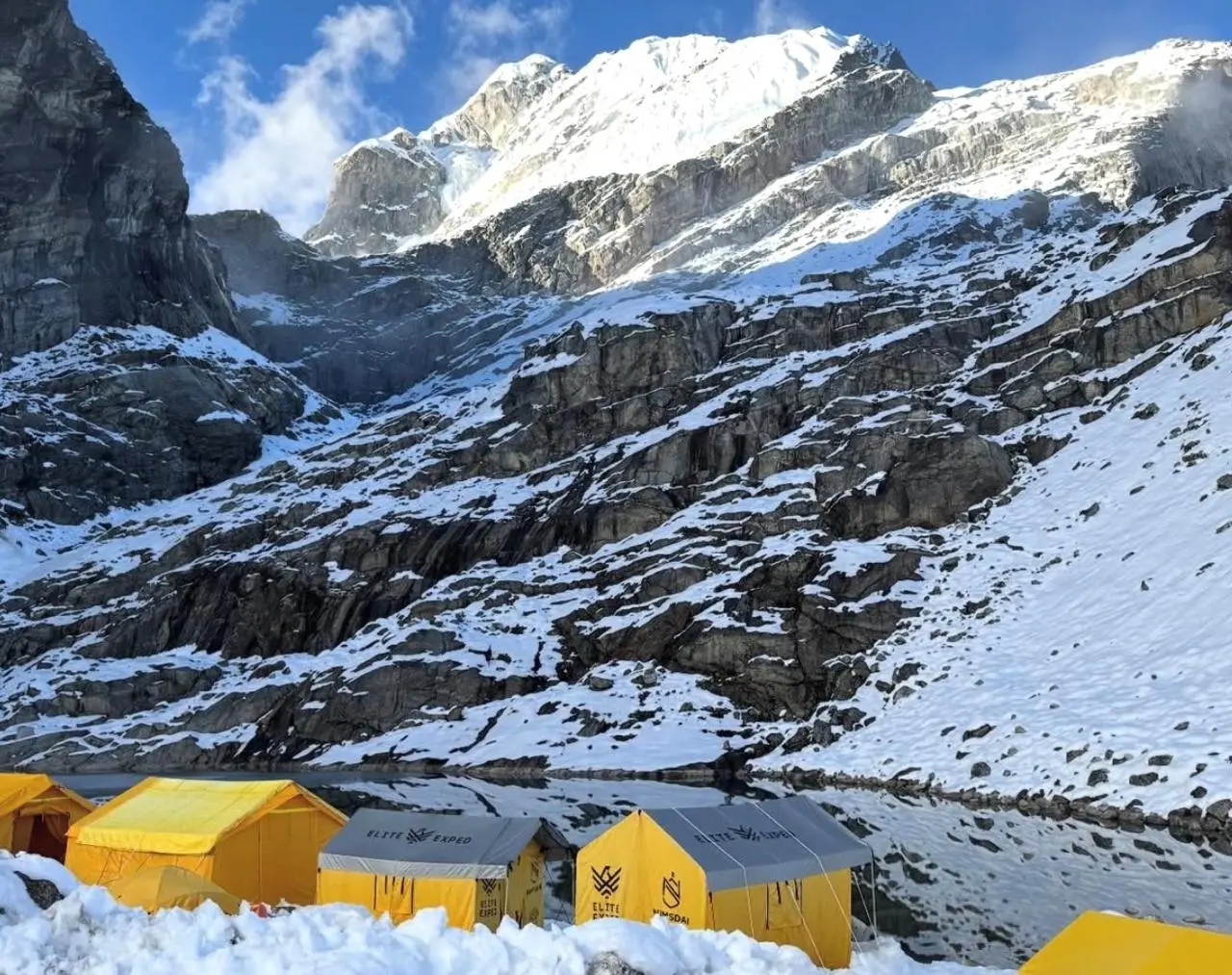
Lobuche High Camp is a tented camp on the west ridge of Lobuche East at approximately 5,400 m. Our climbing Sherpa sets up sleeping tents and a small mess area before the group arrives. Meals at High Camp are hot and prepared by the kitchen team, a substantial lunch on arrival and an early dinner before the midnight departure. Temperatures at 5,400 m in October drop to minus 15 to minus 20 degrees Celsius at night. A sleeping bag rated to minus 15 degrees Celsius minimum is required. The tent is supplied by ETC; you supply or rent your sleeping bag.
We include Day 13 as a built-in spare summit day. If conditions on Day 12 are unsafe, high wind, fresh snow on the upper ridge, or poor visibility, we wait at Lobuche and attempt again on Day 13. If conditions remain unsafe through Day 13, we descend without a summit attempt and continue the normal trek-out schedule. A failed summit due to weather does not entitle a refund of any portion of the package price. Travel insurance covering expedition non-completion due to weather or altitude illness is mandatory for all participants on this trip.
Travel insurance is mandatory for all participants. The policy must explicitly cover mountaineering or trekking peaks to 6,200 m elevation and must include emergency helicopter evacuation from altitude. Standard travel policies that exclude mountaineering above 4,000 m or 5,000 m are not sufficient. Bring a printed copy of your insurance certificate showing the policy number, altitude coverage, and the 24-hour emergency contact number to the Day 1 briefing. Our team records this in the rescue coordination file. Without valid insurance at the correct altitude, ETC reserves the right to exclude you from the Lobuche East section of the trip.
Lobuche East (6,119 m) and Island Peak (6,187 m) are the two most popular trekking peak objectives in the Khumbu. Island Peak has one very technical section, a 50 to 60-degree headwall that is steeper and more sustained than anything on Lobuche East. Lobuche East’s technical section is a 40 to 50-degree slope followed by an exposed ridge traverse that demands good balance and comfort with heights but is less arm-intensive than Island Peak’s headwall. In terms of overall difficulty, most guides consider Lobuche East and Island Peak broadly comparable, with Lobuche’s advantage being the exposed ridge and Island Peak’s challenge being the steeper headwall. Both peaks require the same permit and gear category.
October is optimal. Post-monsoon weather brings stable high-pressure systems that typically last 10 to 14 days, sufficient to complete both EBC and the Lobuche summit in good conditions. The summit ridge in October carries firm, consolidated snow and ice ideal for crampon use. April is the second season: warmer at lower elevations with rhododendron in bloom, but with higher afternoon cloud build-up on the upper ridge. We avoid November due to increasing cold-front wind speeds on Lobuche’s exposed summit ridge, and June through August due to monsoon precipitation destabilizing the glacier and upper snow slopes.
This is a demanding 17-day combination of high-altitude trekking and technical peak climbing. You need strong cardiovascular fitness, the endurance to walk 5 to 7 hours per day for 12 consecutive walking days, and sufficient upper and lower body strength for crampon climbing on a 40 to 50-degree slope. We recommend a minimum of 12 weeks of dedicated preparation: hiking 3 to 4 times per week with a loaded pack of 8 to 10 kg, plus running or cycling for cardiovascular conditioning. Prior experience above 4,000 m is beneficial but not required given the 17-day acclimatization structure. Age matters less than fitness and preparation, trekkers in their 40s to 60s complete Lobuche East every season.
ETC caps all Lobuche East departures at 10 participants. The 1:2 climbing Sherpa-to-client ratio on summit day means a group of 10 requires 5 climbing Sherpas, which is the maximum manageable team size for the narrow Lobuche East summit ridge. Larger groups create dangerous queuing on the exposed upper sections. Our trekking guide Susam leads the full group from Kathmandu; the climbing Sherpa team joins at Lobuche specifically for the summit section.
The USD 2,100 per person price includes airport transfers, 2 nights Kathmandu hotel, both Lukla flights, 13 nights teahouse accommodation, 1 night tented high camp at 5,400 m, all meals on trek and at high camp, farewell dinner, licensed senior trekking guide, certified climbing Sherpa at 1:2 ratio, one porter per two trekkers, all four permits including the NMA Lobuche East climbing permit, all technical climbing gear, fixed rope installation, high camp tents, first-aid kit with altitude medication, Gamow bag access, ETC duffle bag, and all government taxes. International flights, Nepal visa, travel insurance, mountaineering boots, ice axe, personal sleeping bag, and tips are not included.
Yes, a Lobuche East and EBC Trek with Island Peak Climbing combination is possible and is one of our most requested custom itineraries. It requires a minimum of 22 days to allow proper acclimatization for both summits and does not increase fatigue risk unduly if sequenced correctly, typically Lobuche East first on the way to EBC, then Island Peak on the return via Chhukung. Contact our Kathmandu office for custom pricing and scheduling for the combined two-peak itinerary.
Essential Info for EBC Trek with Lobuche Peak Climbing
This page covers the essential practical information for the EBC Trek with Lobuche Peak Climbing including the technical requirements of the Lobuche East summit, experience and fitness levels required, climbing permits, group size, and briefing day details at Everest Trekking Company.
Trek and Climb Difficulty
- This program is rated very challenging. Lobuche East at 6,119m is a more technically demanding peak than Island Peak and requires glacier travel, fixed rope technique, and a High Camp night at 5,600m before the summit push
- High Camp at 5,600m is the highest sleeping point of any standard ETC program. The night at High Camp before the 2am summit push is cold, oxygen poor, and physically demanding regardless of fitness level
- Prior high altitude trekking experience above 4,500m is strongly recommended. Prior technical peak climbing experience (Island Peak or similar) makes the Lobuche East experience significantly safer and more successful
- Summit day begins at approximately 2am from High Camp with crampons, ice axe, and harness on glaciated terrain and fixed rope sections above 5,500m
- Everest Trekking Company assigns only certified high altitude climbing guides to Lobuche Peak departures with specific Lobuche East ascent experience required for the lead guide role
Group Size and Guide Ratio for the Climbing Section
- Maximum 5 trekkers per Lobuche Peak departure due to the technical nature and High Camp logistics of this route
- Maximum 2 to 3 trekkers per climbing guide on the technical sections above base camp
- A base camp manager coordinates logistics at Lobuche Base Camp during the High Camp and summit rotation
- Everest Trekking Company carries expedition supplemental oxygen, Gamow bags, and full emergency medical kits to Lobuche Base Camp on every departure
Physical Preparation Guide for the Climbing Section
- Begin preparation 14 to 16 weeks before departure. Lobuche East requires the highest base fitness level of any standard ETC program
- Upper body and grip strength are critical for the fixed rope sections. Include pull ups, rope climbing, and resistance exercises in your weekly training program
- Specific leg power for the steep glaciated sections above High Camp: single leg exercises, step ups with a loaded pack, and stair intervals all build the targeted strength needed
- Prior crampon experience is strongly recommended before arrival. If you have not used crampons before, Everest Trekking Company can arrange a one day ice and glacier skills session in Kathmandu before departure at an additional cost
- Complete at least one 6 to 7 consecutive day trek with a loaded pack before departing for Nepal to build the cumulative stamina required for this 22 to 24 day itinerary
Permits Required
- Sagarmatha National Park Entry Permit: NPR 3,000 per person
- TIMS Card: NPR 2,000 per person for organized group trekkers
- Khumbu Pasang Lhamu Rural Municipality Entry Fee: NPR 2,000 per person
- Nepal Mountaineering Association (NMA) Climbing Permit: Required for the peak climb, fee varies by season. Everest Trekking Company arranges this permit on your behalf as part of the package
- All permits including the NMA climbing permit are arranged by Everest Trekking Company. You do not need to visit any office yourself
- Passport photocopies (minimum 4 copies) are required at checkpoints and permit offices. Bring printed copies from Kathmandu
Medical Requirements and Vaccinations
- No vaccinations are mandatory for entry to Nepal but Everest Trekking Company recommends being up to date on Hepatitis A, Hepatitis B, Typhoid, and Tetanus before travel
- A basic pre-trek medical check is recommended for all guests over 50 or with any history of heart, lung, or blood pressure conditions
- Inform Everest Trekking Company of any prescription medications, allergies, or medical conditions before departure so guides can be briefed and first aid kits stocked appropriately
- Travel insurance that covers helicopter evacuation above 5,000m is mandatory for all Everest Trekking Company EBC departures. Proof of insurance is checked at the pre-trek briefing
- Diabetic trekkers, trekkers with asthma, and trekkers on blood thinners should consult their doctor specifically about high altitude travel before booking
- Everest Trekking Company guides carry a first aid kit stocked with altitude medication, wound care, blister treatment, and emergency supplies on all departures
Pre-Trek Briefing Day in Kathmandu
- All Everest Trekking Company treks begin with a full briefing day in Kathmandu the day before departure
- The briefing covers the day by day itinerary, altitude sickness symptoms and protocols, equipment check, porter introduction, and permit review
- This is the day to raise any questions about gear, health, fitness, or itinerary adjustments before the trek begins
- Luggage storage at the ETC Kathmandu office is arranged on briefing day. Bring your trek bag and storage bag clearly separated and labelled
- If you need to rent or purchase any gear in Kathmandu, the briefing day allows time for a guided visit to the Thamel trekking shops with your guide
- Domestic flight or jeep transport arrangements for the following morning are confirmed and briefed on this day
Packing List for EBC Trek with Lobuche Peak Climbing
Packing the right gear is one of the most important steps in preparing for the EBC Trek with Lobuche Peak Climbing. Too much weight slows you down and adds unnecessary strain at altitude. Too little leaves you cold, wet, or unprepared when conditions change above 4,000m. This packing list is built from years of experience guiding trekkers through the Khumbu region and reflects exactly what Everest Trekking Company recommends every guest to carry. Items in this list are proven on the route and selected for weight, performance, and availability in Kathmandu if you prefer to buy or rent locally.
Daily Clothing
- Layered clothing system: lightweight moisture wicking base layers, thermal mid layers for warmth, and insulating outer layers for high camp nights
- Trekking pants: comfortable and quick drying synthetic fabric
- Long sleeve shirts for sun protection and short sleeve shirts for warmer lower valley sections
- Warm hat and insulated gloves for cold evenings and high altitude zones
- Waterproof hiking boots with ankle support, broken in for at least two weeks before the trek begins
- Camp shoes or light sandals for evenings inside tea houses and lodges
- Wool or synthetic hiking socks in several pairs as they dry slowly at altitude
- Neck gaiter or buff for wind protection and warmth above treeline
- Rain jacket or waterproof shell for unexpected weather at any elevation
Trekking Gear and Equipment
- Main backpack (50 to 60 liters) carried by your Everest Trekking Company porter, plus a day pack (20 to 25 liters) you carry yourself
- Trekking poles: very helpful for steep descents and river crossings throughout the Khumbu
- Sleeping bag rated to at least minus 15 degrees Celsius for cold nights at higher elevations
- Reusable insulated water bottle or hydration bladder, minimum 1 liter capacity
- Headlamp with spare batteries for early morning starts and lodge evenings with unreliable power
- Power bank with at least 20,000mAh capacity for charging camera, phone, and GPS between lodges
- Sunglasses with UV400 protection and side shields for intense high altitude sun and glacier glare
- Lightweight dry bags or waterproof pack liner to protect gear from rain and river crossings
- Gaiters for deep snow sections on the upper route above Dingboche in early or late season
Clothing and Garment Checklist
| Item | Details | Quantity |
|---|---|---|
| Underwear | Breathable synthetic, moisture wicking | 4 |
| Trekking socks | Wool or synthetic, thick hiking grade | 3 pairs |
| Liner socks | Thin synthetic liner for inside hiking socks | 2 pairs |
| Sports bra (if applicable) | Synthetic, supportive | 3 |
| Base layer pants | Merino wool or synthetic thermal | 1 |
| Base layer top | Merino wool long sleeve thermal | 2 |
| Trekking shirts | Synthetic lightweight, mix of long and short sleeve | 3 |
| Trekking pants | Synthetic quick drying, available to buy in Kathmandu | 2 |
| Rain pants | Lightweight waterproof and packable | 1 |
| Fleece or mid layer jacket | 100 to 200 weight fleece for layering under shell | 1 |
| Down jacket | 700 fill power or higher, required above 4,000m | 1 |
| Windbreaker or shell jacket | Waterproof, breathable, lightweight | 1 |
| Hiking boots | Waterproof with ankle support, broken in before trek | 1 pair |
| Camp shoes | Lightweight sandals or sneakers for lodge evenings | 1 pair |
| Thin gloves | Merino wool liner gloves | 1 pair |
| Insulated gloves | Waterproof outer shell with warm insulation inside | 1 pair |
| Sun hat or cap | Wide brim with neck protection for lower valleys | 1 |
| Warm beanie | Wool or fleece for high altitude camps | 1 |
| Neck gaiter or buff | Fleece lined for cold and wind above 4,000m | 1 |
Hygiene and Safety Items
- Biodegradable soap, shampoo, and personal hygiene products in small travel sizes
- Toothbrush and toothpaste
- High SPF sunscreen (SPF 50 or above) for intense UV exposure at altitude where sun is significantly stronger than at sea level
- Lip balm with SPF to prevent cracking in cold and dry high altitude air
- Insect repellent for the warmer lower sections of the trek below 3,000m in the monsoon adjacent seasons
- Personal first aid kit including blister treatment, antiseptic wipes, bandages, and all prescription medications
- Altitude medication if prescribed by your doctor: Diamox (Acetazolamide), ibuprofen, and paracetamol
- Water purification tablets or UV pen for treating water at remote tea houses above Namche
- Wet wipes and hand sanitizer for hygiene on days between shower access
- Small microfiber travel towel for lodges that do not provide them
Electronics and Documents
- Mobile phone with offline maps of the Khumbu region downloaded before leaving Kathmandu
- Camera and spare memory cards (most trekkers find a phone camera sufficient)
- Universal power adapter (Nepal uses Type C and Type D sockets in most tea houses)
- Power bank with at least 20,000mAh for multiple days of charging between reliable power sources
- Copies of your passport, travel insurance policy, and TIMS card and Sagarmatha National Park permit
- Emergency contact numbers including the Everest Trekking Company Kathmandu base operations number saved to your phone
- Travel insurance documents with your 24 hour emergency assistance number accessible offline
Equipment Rental and Purchase in Kathmandu
- Sleeping bags rated to minus 15 degrees Celsius are available for rent in Thamel, Kathmandu at reasonable daily rates
- Down jackets can be rented or purchased affordably from Thamel trekking shops
- Trekking poles and gaiters are available for rent or low cost purchase in Kathmandu
- Basic trekking clothing including pants, thermals, and base layers can all be found in Kathmandu at good quality and low cost
- Everest Trekking Company will help all guests source and rent any essential equipment they need during the pre-trek briefing day in Kathmandu before departure
Climbing Equipment for Lobuche East Peak
- 12-point step-in crampons compatible with your hiking boots (available for rent in Kathmandu)
- Standard mountaineering ice axe (available for rent in Kathmandu)
- Sit harness with leg loops for technical sections above Lobuche Base Camp
- Carabiners (minimum 3 locking) and an ascender (jumar) for fixed rope sections above 5,500m
- Lightweight mountaineering helmet
- Full length waterproof gaiters for glacier travel on the Lobuche East route
- High altitude overgloves or mitts for summit attempt starting around 2am at High Camp (5,600m)
- All climbing gear can be rented through Everest Trekking Company partners in Thamel and every item is checked for safety and fit by our guides before departure
Travel Note for EBC Trek with Lobuche Peak Climbing
The EBC Trek with Lobuche Peak Climbing reaches 6,119m at the Lobuche East summit, making it the second highest standard Everest Trekking Company program. This guide covers the specific practical preparation that a combined trekking and climbing itinerary at this altitude requires.
What Makes the EBC Trek with Lobuche Peak Climbing Different
- Lobuche East at 6,119m is a technical Himalayan peak requiring glacier travel, fixed rope technique, and overnight camping at High Camp (5,600m) before the summit push
- High Camp at 5,600m is the highest sleeping point of any standard ETC trip, a more demanding night than even the standard EBC trekkers experience at Gorakshep (5,140m)
- A Nepal Mountaineering Association climbing permit is required for Lobuche East and is arranged by Everest Trekking Company as part of the package
- The summit push on Lobuche East begins at approximately 2am to 3am from High Camp in deep cold with crampons, ice axe, and harness on glaciated terrain
- The combined itinerary also includes the full EBC approach to 5,364m and Kala Patthar at 5,645m, meaning trekkers spend more total time above 5,000m than on almost any other standard program in Nepal
- Everest Trekking Company assigns certified high altitude climbing guides to every Lobuche Peak departure with expedition oxygen, Gamow bags, and full emergency medical kits at base camp
- This is one step above Island Peak in technical demand and is recommended for trekkers who have prior experience on a lower technical peak or glacier
Cultural Highlights on the EBC and Lobuche Peak Route
- The Lobuche memorial chortens above Dughla pass are one of the most emotionally significant stops on any Khumbu trek, with memorials to Sherpa guides, climbers, and expedition members who have died on Everest over the decades
- Tengboche Monastery on the approach section is the cultural centrepiece of the lower route and provides an important spiritual context before the high altitude and climbing section begins
- Lobuche village itself is a modest but historically significant settlement that has served as the last supply and rest point for Everest expeditions for over 70 years
- Namche Bazaar acclimatization day includes the Everest Museum covering the full history of Everest summits and the role of Sherpa guides from the 1953 first ascent to the present day
- The approach to Lobuche Peak Base Camp passes directly below the Khumbu Glacier, one of the largest glaciers in Nepal and the route used by all Everest south side expeditions
Things Not to Do on the EBC Trek with Lobuche Peak Climbing
- Do not skip the High Camp rotation hike before the summit push. Acclimatization to 5,600m is absolutely necessary and cannot be replaced by extra rest days at lower elevation
- Do not underestimate the 2am departure from High Camp on summit day. Cold at 5,600m before dawn on Lobuche East is extreme. All warmest layers, balaclava, and expedition mitts must be ready the night before
- Do not attempt the Lobuche East summit without your crampons, ice axe, and harness properly fitted and tested by your Everest Trekking Company guide at base camp
- Do not book this itinerary as your first technical high altitude experience. A prior climb above 5,000m or a confirmed fitness assessment with Everest Trekking Company is strongly recommended
- Do not push for the summit against your guide’s advice. Everest Trekking Company climbing guides make summit decisions based on your SpO2, weather conditions, and physical state on the morning and their decision is final for your safety
- Do not walk past the Lobuche memorial chortens without pausing. They are a deeply significant cultural site and the history they represent is directly connected to the mountain you are about to climb
- Do not ascend more than 300 to 500 meters sleeping altitude per day on the trekking approach section
- Do not trek or climb without expedition level insurance covering technical climbing rescue above 6,000m
- Do not take sleeping pills at any point above 3,000m on this itinerary
Nepal Visa Information
- Nepal visa on arrival is available to citizens of most countries at Tribhuvan International Airport in Kathmandu
- Fees: USD 30 for 15 days, USD 50 for 30 days, USD 125 for 90 days, payable in cash in USD, EUR, or GBP at the airport counter
- Bring one passport size photo, a completed immigration form, and a passport with at least 6 months validity
- Pre register at nepalimmigration.gov.np before departure to save time at immigration on arrival
- Visa extensions available at the Department of Immigration in Maitighar, Kathmandu if the trek takes longer than planned
- Everest Trekking Company recommends a 30 day visa for most EBC itineraries to cover weather delay buffer time
International Flights to Kathmandu
- Kathmandu airport code is KTM (Tribhuvan International Airport), 6 kilometers from the Thamel trekking district
- From USA (New York, Los Angeles): connect via Doha on Qatar Airways, Dubai on Emirates, or Delhi on Air India, total 18 to 24 hours
- From Europe (London, Frankfurt, Amsterdam): connect via Doha, Dubai, or Istanbul where Turkish Airlines flies direct to KTM, total 12 to 16 hours
- From Australia (Sydney, Melbourne): connect via Singapore, Kuala Lumpur, or Bangkok, total 14 to 18 hours
- Book at least 6 to 8 weeks ahead for spring (March to May) and autumn (September to November) as peak season flights sell fast
- Arrive in Kathmandu at least one full day before your Everest Trekking Company pre-trek briefing to recover from long haul travel
Kathmandu to Lukla Domestic Flight
- The Lukla flight takes approximately 35 minutes on small propeller aircraft operated by Tara Air and Summit Air
- In peak spring season (March to May) flights depart from Manthali Airport in Ramechhap, requiring a 4 to 5 hour pre-dawn drive from Kathmandu starting at 2am to 3am
- Outside peak season flights depart from Kathmandu domestic terminal directly
- Luggage allowance on Lukla flights is 15kg checked plus 5kg carry on
- Flights are weather dependent. Everest Trekking Company monitors schedules and builds buffer days into all itineraries
Porter Weight Limits and Day Pack Guide
- Your Everest Trekking Company porter carries your main bag at a maximum of 20kg including the bag weight
- You carry your own day pack (5 to 8kg): water, snacks, rain jacket, camera, headlamp, sunscreen, medication, one warm layer
- All ETC porters receive proper trekking gear, rain equipment, warm jackets, and altitude insurance coverage
- Recommended porter tip: USD 8 to 10 per day, paid in cash at the end of the trek
Free Luggage Storage at Everest Trekking Company Office
- Leave your city clothes, laptop, extra shoes, and anything not needed on the trail at our Kathmandu office at no charge
- Your bags are stored securely and ready for collection on your return from the mountains
- Pack your trek bag and storage bag separately at home so handover on briefing day is quick
- Full storage instructions are given during your pre-trek briefing day in Kathmandu
Money, ATMs and Daily Budget
- ATMs available in Kathmandu (Thamel) and Namche Bazaar (3,440m) only before the high route
- Carry sufficient Nepali Rupees in cash from Namche upward. Most tea houses above Phakding do not accept cards
- Budget NPR 3,500 to 5,000 per day above Namche for accommodation, three meals, and incidentals
- Hot showers: NPR 200 to 500 extra. Wifi: NPR 200 to 500 per hour. Device charging: NPR 100 to 300 above Namche
- Lead guide tip recommendation: USD 15 to 20 per day paid in cash at trek end
Connectivity and SIM Cards
- Buy an Ncell SIM at Kathmandu airport or in Thamel. Bring your passport to register it
- 4G data works well in Kathmandu, Lukla, Namche, and Dingboche. Signal becomes patchy above Dingboche
- Download offline maps on Maps.me or Gaia GPS before leaving Kathmandu
- Tea house wifi above Namche is slow and charged separately. At Gorakshep it is satellite only and very unreliable
- Everest Trekking Company guides carry satellite phones and maintain daily contact with Kathmandu base operations
Altitude Sickness
The EBC Trek with Lobuche Peak Climbing reaches 6,119m at the Lobuche East summit, making it the second highest standard program in the Everest Trekking Company portfolio. A summit attempt on Lobuche East includes a night at High Camp at approximately 5,600m, which is the highest sleeping point of any standard ETC trip. Combined with nights at Gorakshep (5,140m) and the approach to EBC (5,364m), trekkers on this program spend more total time above 5,000m than on almost any other non-expedition Himalayan trek. Everest Trekking Company assigns only certified high altitude climbing guides to Lobuche Peak departures and carries expedition-grade oxygen and Gamow bags to base camp.
What Everest Trekking Company Guides Always Carry for Altitude Safety
- Portable oxygen cylinder: Every Everest Trekking Company guide carries supplemental oxygen above 4,000m and knows exactly when and how to administer it
- Calibrated pulse oximeter (SpO2 monitor): Used to measure blood oxygen saturation at every major stop and every morning and evening camp check
- Complete first aid kit: Stocked with altitude medicines, wound care, blister treatment, antiseptic, bandages, and emergency essentials
- Diamox (Acetazolamide): Carried for both prevention and treatment of acute mountain sickness and dispensed under guide supervision when indicated
- Dexamethasone: Emergency steroid for severe High Altitude Cerebral Edema (HACE), administered while rescue is being arranged
- Nifedipine: Emergency medication for High Altitude Pulmonary Edema (HAPE), reduces lung vessel pressure rapidly
- Gamow bag (portable altitude chamber): Available through Everest Trekking Company logistics network at key high altitude points, simulates a descent of 1,500m when helicopter rescue is delayed
- Satellite phone and radio: For direct contact with Everest Trekking Company Kathmandu base operations and certified helicopter rescue teams at any point on the route
What is Altitude Sickness?
- Altitude sickness, also called Acute Mountain Sickness (AMS), is the body’s reaction to reduced oxygen levels at high elevation
- At sea level, air contains about 21 percent oxygen at normal atmospheric pressure
- As you gain elevation, air pressure drops and each breath delivers less oxygen to your blood and organs
- At 3,440m (Namche Bazaar), oxygen availability is roughly 67 percent of what it is at sea level
- At 5,364m (Everest Base Camp), each breath delivers only about 50 percent of the oxygen you would get at sea level
- The human body needs time to produce more red blood cells and adapt to this lower oxygen environment
- When you ascend faster than your body can adjust, altitude sickness occurs
- Anyone can get altitude sickness regardless of fitness level, age, or previous trekking experience
- Being physically fit does not protect you from altitude sickness and does not speed up acclimatization
- Experienced trekkers who have had no issues before can be affected on a new trip
Why Does Altitude Sickness Happen?
- Lower air pressure at altitude means less oxygen enters the lungs with each breath
- Your blood carries less oxygen to vital organs including the brain, heart, and muscles
- The brain is particularly sensitive to reduced oxygen
- When oxygen levels drop too fast, blood vessels in the brain can leak fluid, causing swelling inside the skull
- Fluid can also build up inside the lungs in more severe cases, a condition called HAPE
- The body responds by breathing faster and increasing heart rate trying to compensate for the lower oxygen
- This compensation process takes days and sometimes up to two weeks to fully complete at each new altitude
- Dehydration at altitude makes the situation worse because blood becomes thicker and circulates less efficiently
- Cold, dry mountain air causes faster fluid loss through breathing than you would expect
- Poor sleep at altitude also slows the acclimatization process, which is why nights are often the hardest time
- Alcohol, strong sedatives, and sleeping pills suppress breathing and reduce blood oxygen during sleep, making acclimatization slower
When Does Altitude Sickness Start?
- Mild symptoms can begin as low as 2,500m in some people
- Most trekkers first notice symptoms around Namche Bazaar at 3,440m, usually on the evening of arrival or the following morning
- Symptoms typically appear 6 to 12 hours after arriving at a new elevation
- Symptoms often feel worse during the night and early morning hours when breathing naturally slows during sleep
- The risk increases significantly above 4,000m
- Dingboche at 4,360m and Lobuche at 4,940m are the zones where moderate to severe AMS becomes most likely on the EBC route
- On the standard itinerary, the greatest risk nights are those spent at Dingboche, Lobuche, and Gorakshep
- Even trekkers with no previous history of AMS can be affected on any given trip
- Speed of ascent is the most important factor. The faster you go up, the higher your risk
- People who have had AMS before are not necessarily more at risk, and those who have never had it are not necessarily protected
Altitude Risk Points on the EBC Trek with Lobuche Peak Climbing
- Namche Bazaar (3,440m): Acclimatization base before entering the high altitude climbing zone, rest day here builds the foundation for two weeks above 4,000m
- Dingboche (4,360m): Extended stay is used to prepare the body for the demanding days above 5,000m on Lobuche Peak
- Lobuche (4,940m): Primary base for Lobuche Peak operations, trekkers spend multiple nights here as part of the climbing schedule
- Lobuche Peak Base Camp (approximately 5,000m): Staging camp before the technical ascent begins, acclimatization hike above base camp is part of the preparation
- Lobuche East High Camp (approximately 5,600m): Highest sleeping point of any standard ETC program, a demanding night with severely reduced oxygen levels
- Lobuche East Summit (6,119m): Second highest point of any standard ETC trip, technical glacier climb with fixed ropes above 5,500m
- Gorakshep (5,140m) and Everest Base Camp (5,364m): The standard EBC section follows the peak climb and adds further days above 5,000m
- The combination of Lobuche East and EBC means more total hours above 5,500m than almost any other standard Himalayan trekking program
- Everest Trekking Company carries expedition-grade supplemental oxygen, Gamow bags, and emergency medical kits to Lobuche Base Camp on every departure
Symptoms of Altitude Sickness: Mild AMS
- Headache, often described as a dull pressure at the front or sides of the head
- Fatigue and general tiredness not explained by the day’s walking distance or effort
- Loss of appetite, especially for heavy or oily foods
- Nausea, sometimes with mild vomiting in the evenings
- Difficulty sleeping or very light, broken sleep with frequent waking
- Dizziness when standing up or changing position quickly
- Slight shortness of breath after minor exertion such as walking up stairs or a short slope
- A feeling of general unwellness that is hard to describe specifically
- Mild swelling of fingers noticed when removing rings or tightening watch straps
Symptoms of Altitude Sickness: Moderate AMS
- Persistent and worsening headache that does not improve with paracetamol or ibuprofen
- Significant nausea and repeated vomiting making it hard to keep fluids or medication down
- Severe fatigue where basic tasks like getting dressed or walking to the toilet feel exhausting
- Difficulty walking in a straight line, similar to the feeling of being off balance
- Shortness of breath that occurs even at rest, not just during activity
- Reduced urine output and noticeably dark yellow urine despite drinking fluids
- Visible swelling of the face, hands, or feet
- Dry cough that becomes more persistent through the day and night
- Inability to concentrate or follow simple conversation
- A worsening score on the Lake Louise AMS Assessment used by our guides
Symptoms of Altitude Sickness: Severe AMS, HACE and HAPE
- High Altitude Cerebral Edema (HACE) is swelling of the brain caused by fluid leaking from blood vessels at extreme altitude
- HACE symptoms include severe confusion, disorientation, and irrational behavior
- Loss of coordination and inability to walk without support are key warning signs of HACE
- Slurred speech and extreme drowsiness are serious signs that demand immediate action
- Severe headache that does not reduce with any medication is a red flag for HACE
- Loss of consciousness can occur in advanced cases if descent is delayed
- High Altitude Pulmonary Edema (HAPE) is the buildup of fluid inside the lungs and is the leading cause of death from altitude sickness
- HAPE symptoms begin with a persistent dry cough that progresses to producing pink or frothy mucus
- Extreme breathlessness even when lying still is the hallmark symptom of HAPE
- A crackling or gurgling sound can sometimes be heard in the chest when breathing
- Rapid heart rate, blue lips, and blue fingertips (cyanosis) indicate dangerous oxygen deprivation from HAPE
- Both HACE and HAPE require immediate descent of at least 500 to 1,000 meters along with emergency medication
How to Prevent Altitude Sickness
- Ascend slowly. Never gain more than 300 to 500 meters of sleeping altitude per day above 3,000m
- Follow the climb high, sleep low rule. Hike higher during the day but return to lower elevation to sleep
- Take all acclimatization rest days on your itinerary seriously. The ETC itinerary includes mandatory rest days at Namche and Dingboche for this reason
- Stay well hydrated. Drink 3 to 4 liters of clean water per day throughout the trek, more on heavy walking days
- Avoid alcohol during the first 2 to 3 days at each new altitude zone
- Avoid sleeping pills and strong sedatives above 3,000m as they suppress breathing during sleep
- Eat well even when your appetite is low. Small, frequent meals are easier to manage than large ones
- Avoid flying directly to high altitude without a gradual approach schedule
- Monitor urine color throughout the day. Pale yellow means you are well hydrated. Dark yellow means drink more
- Walk at a slow, steady pace. You should be able to hold a normal conversation while trekking without getting out of breath
- Rest as soon as you feel any symptoms rather than pushing on hoping they will pass
Medication for Altitude Sickness Prevention and Treatment
- Diamox (Acetazolamide) is the most widely used medication for altitude sickness prevention
- It works by stimulating faster and deeper breathing, which increases blood oxygen levels throughout the day and night
- Standard preventive dose is 125mg to 250mg twice daily, starting 24 hours before ascending to a new high altitude zone
- Common side effects include tingling in the fingers and toes, increased urination, and a strange taste with carbonated drinks
- Diamox is a sulfa family drug and must be avoided by anyone with sulfa drug allergy or aspirin sensitivity
- Always consult a doctor before starting Diamox as it requires a prescription in most countries
- Diamox does not mask symptoms. It genuinely helps the body acclimatize faster, unlike pain medication alone
- Ibuprofen 400mg every 8 hours has been shown in multiple clinical studies to reduce both headache and mild AMS severity
- Dexamethasone is a steroid used for emergency treatment of severe HACE and reduces brain swelling rapidly but is not a substitute for descent
- Nifedipine is used in emergency treatment of HAPE and reduces blood pressure in the lung vessels
- Everest Trekking Company guides carry Diamox, Dexamethasone, and Nifedipine on every trek above 3,000m
How Everest Trekking Company Monitors and Manages Altitude Sickness
- Every Everest Trekking Company guide is trained and certified in Wilderness First Aid including altitude illness management protocols
- All guides carry calibrated pulse oximeters to measure blood oxygen saturation (SpO2) at every stop and campsite
- A reading above 90 percent SpO2 is generally acceptable. A reading below 85 percent triggers immediate evaluation and action
- We carry emergency Diamox, Dexamethasone, Nifedipine, and supplemental oxygen cylinders in the first aid kit on every trek
- Portable altitude chambers (Gamow bags) are available through our logistics network at key high altitude points
- Every guest is given a full briefing on AMS symptoms, warning signs, and our response plan on day one before the trek begins
- We run a formal health check and SpO2 assessment at Namche Bazaar and again at Dingboche
- Our itinerary is built with safety buffer days so no trekker is ever pressured to push on when they are not feeling well
- Guides check SpO2 readings of every trekker each morning and evening and record the results
- Any reading that drops 10 or more percent compared to a trekker’s baseline triggers immediate investigation and close monitoring
- We use the Lake Louise Scoring System to objectively assess AMS severity rather than relying only on trekker self-reporting
- Guests showing even mild symptoms receive reduced activity, extra rest, increased fluids, and hourly monitoring
- No trekker is allowed to ascend further if they have a moderate or severe AMS score until the guide is satisfied they have recovered fully
Rescue Process When Altitude Sickness Becomes Serious
- If a trekker cannot descend safely on foot, our guide contacts Everest Trekking Company base operations in Kathmandu immediately via satellite phone or radio
- We work with certified helicopter rescue operators based in Lukla and Kathmandu with proven experience in high altitude rescue
- Rescue helicopters can reach most points on the EBC route within 30 to 90 minutes depending on weather and light conditions
- Our team contacts the helicopter company directly to avoid any delay in communication or response
- The helicopter lands at the nearest safe landing zone such as Pheriche, Dingboche, Namche, or Lobuche depending on where the guest is located
- While waiting for the helicopter, the guide administers emergency medication, Dexamethasone for HACE or Nifedipine for HAPE
- Supplemental oxygen is administered immediately if available from the local lodge or our kit
- If the helicopter is delayed more than 20 minutes and conditions are severe, the Gamow bag is inflated and the trekker placed inside
- A Gamow bag simulates a descent of approximately 1,500 meters by increasing the air pressure inside the sealed bag, giving immediate relief
- The trekker is kept warm, monitored continuously, and given small sips of fluid if conscious and able to swallow safely
- A guide or porter accompanies the trekker to the helicopter and if possible all the way to the hospital in Kathmandu
- Our Kathmandu operations team meets the helicopter and coordinates handover to hospital medical staff
- Full health records from the trek including SpO2 logs, symptom timeline, and medications given are provided to the hospital team
- Everest Trekking Company contacts the trekker’s emergency contact and travel insurance company as soon as evacuation is confirmed
- We assist with all insurance documentation and stay in contact with the trekker and their family through the full recovery process
Travel Insurance and Financial Preparation for Altitude Rescue
- Every trekker joining an Everest Trekking Company trip is required to carry travel insurance that covers helicopter evacuation above 5,000m
- Rescue helicopter flights typically cost between USD 3,000 and USD 6,000 per flight depending on the pick up location and operator
- Hospital treatment costs in Kathmandu vary depending on the severity of the illness and length of stay
- Our team helps coordinate insurance claims and provides all documentation required by the insurer
- Never attempt the Everest region without verified helicopter evacuation cover in your travel insurance policy
- Check that your policy specifically states coverage above 5,000m as many standard adventure policies have elevation limits of 4,000m or 4,500m
- Save your insurance policy number and the insurer’s 24 hour emergency number in your phone before the trek begins
- Everest Trekking Company can recommend verified travel insurance providers if you need guidance before booking your trek
Accommodation and Food
Kathmandu | Hotel Options
- Hotel Moonlight
- Hotel Cozy Heaven
- Hotel Surya Heritage
- Hotel Devine Kathmandu
- Attached bathroom with hot shower
- Clean bed sheets
- Electric sockets and wifi
- Coffee machine
- Full restaurant menu: Nepali, continental, Indian, Chinese dishes
- City-quality food and service
Phakding (2,610m) | Hotel Pine Forest
- Attached bathroom, upgraded facility with hot shower
- Clean bed sheets changed for each guest
- Electric sockets for charging
- Wifi available
- Coffee machine
- Enough bathrooms, well maintained
- Full food menu: dal bhat, momo, pasta, pizza, eggs, soup, hot drinks and more
- City-quality food variety and portion size
- Oxygen cylinder on site
Namche Bazaar (3,440m) | Hotel 8848
- Attached bathroom, upgraded facility with hot shower
- Clean bed sheets changed for each guest
- Electric sockets for charging
- Wifi available
- Coffee machine
- Enough bathrooms, well maintained
- Full food menu: pizza, pasta, steak, yak burger, dal bhat, momo, soup, sandwich, cake, espresso coffee
- City-quality food variety and portion size
- Oxygen cylinder on site
Tengboche (3,860m) | Hotel Himalaya / Hotel Good Luck
- Attached bathroom, upgraded facility with hot shower
- Clean bed sheets changed for each guest
- Electric sockets for charging
- Wifi available
- Coffee machine
- Enough bathrooms, well maintained
- Full food menu: dal bhat, momo, pasta, pizza, eggs, soup, hot drinks and more
- City-quality food variety and portion size
- Oxygen cylinder on site
Dingboche (4,410m) | Hotel Good Luck
- Attached bathroom, upgraded facility with hot shower
- Clean bed sheets changed for each guest
- Electric sockets for charging
- Wifi available
- Coffee machine
- Enough bathrooms, well maintained
- Full food menu: dal bhat, momo, pasta, pizza, eggs, soup, hot drinks and more
- City-quality food variety and portion size
- Oxygen cylinder on site
Lobuche (4,940m) | Hotel Altitude Home
- Attached bathroom, upgraded facility with hot shower
- Clean bed sheets changed for each guest
- Electric sockets for charging
- Wifi available
- Coffee machine
- Enough bathrooms, well maintained
- Full food menu: dal bhat, momo, pasta, pizza, eggs, soup, hot drinks and more
- City-quality food variety and portion size
- Oxygen cylinder on site
Lobuche High Camp (5,400m) | Mountain Tent Camp
- High mountain tent accommodation set up by the expedition team
- Sleeping bag and mat provided
- Hot meals and drinks prepared by cook team
- Oxygen cylinder and first aid kit on site
Gorakshep (5,164m) | Hotel Himalaya
- Shared bathroom facilities, hot shower available
- Clean bed sheets changed for each guest
- Electric sockets for charging
- Wifi available
- Coffee machine
- Enough bathrooms, well maintained
- Full food menu: dal bhat, soup, noodles, pasta, eggs, hot drinks
- City-quality food variety and portion size
- Oxygen cylinder on site
Dingboche (4,410m) | Hotel Good Luck
- Attached bathroom, upgraded facility with hot shower
- Clean bed sheets changed for each guest
- Electric sockets for charging
- Wifi available
- Coffee machine
- Enough bathrooms, well maintained
- Full food menu: dal bhat, momo, pasta, pizza, eggs, soup, hot drinks and more
- City-quality food variety and portion size
- Oxygen cylinder on site
Namche Bazaar (3,440m) | Hotel 8848
- Attached bathroom, upgraded facility with hot shower
- Clean bed sheets changed for each guest
- Electric sockets for charging
- Wifi available
- Coffee machine
- Enough bathrooms, well maintained
- Full food menu: pizza, pasta, steak, yak burger, dal bhat, momo, soup, sandwich, cake, espresso coffee
- City-quality food variety and portion size
- Oxygen cylinder on site

Write a Review