The Everest Base Camp Trek with Gokyo Lakes combines the classic EBC route with one of the most spectacular side valleys in the Himalaya. This seventeen-day itinerary takes you to Everest Base Camp, then crosses the Cho La Pass at five thousand four hundred and twenty meters to reach the Gokyo valley and its famous turquoise lakes.
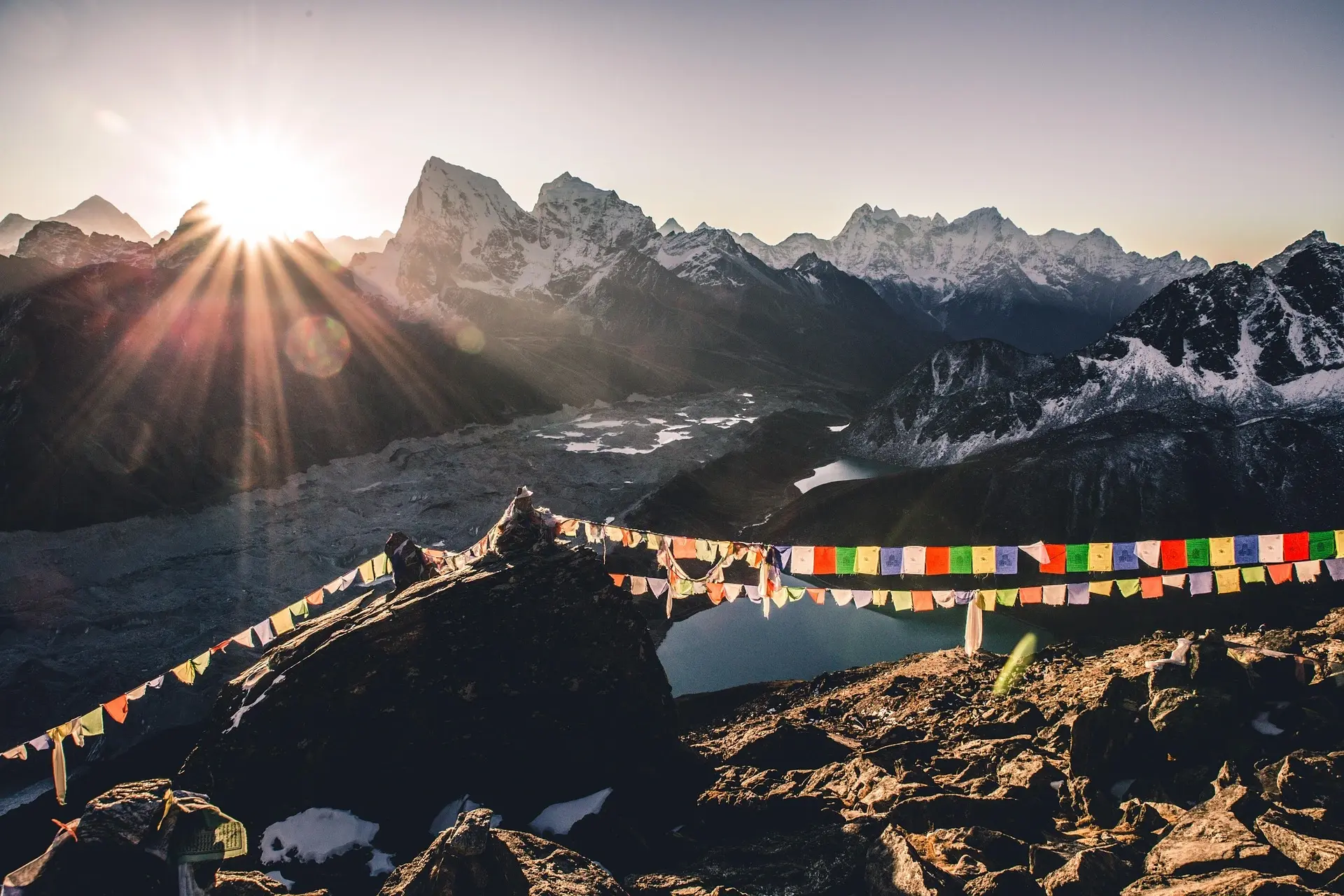
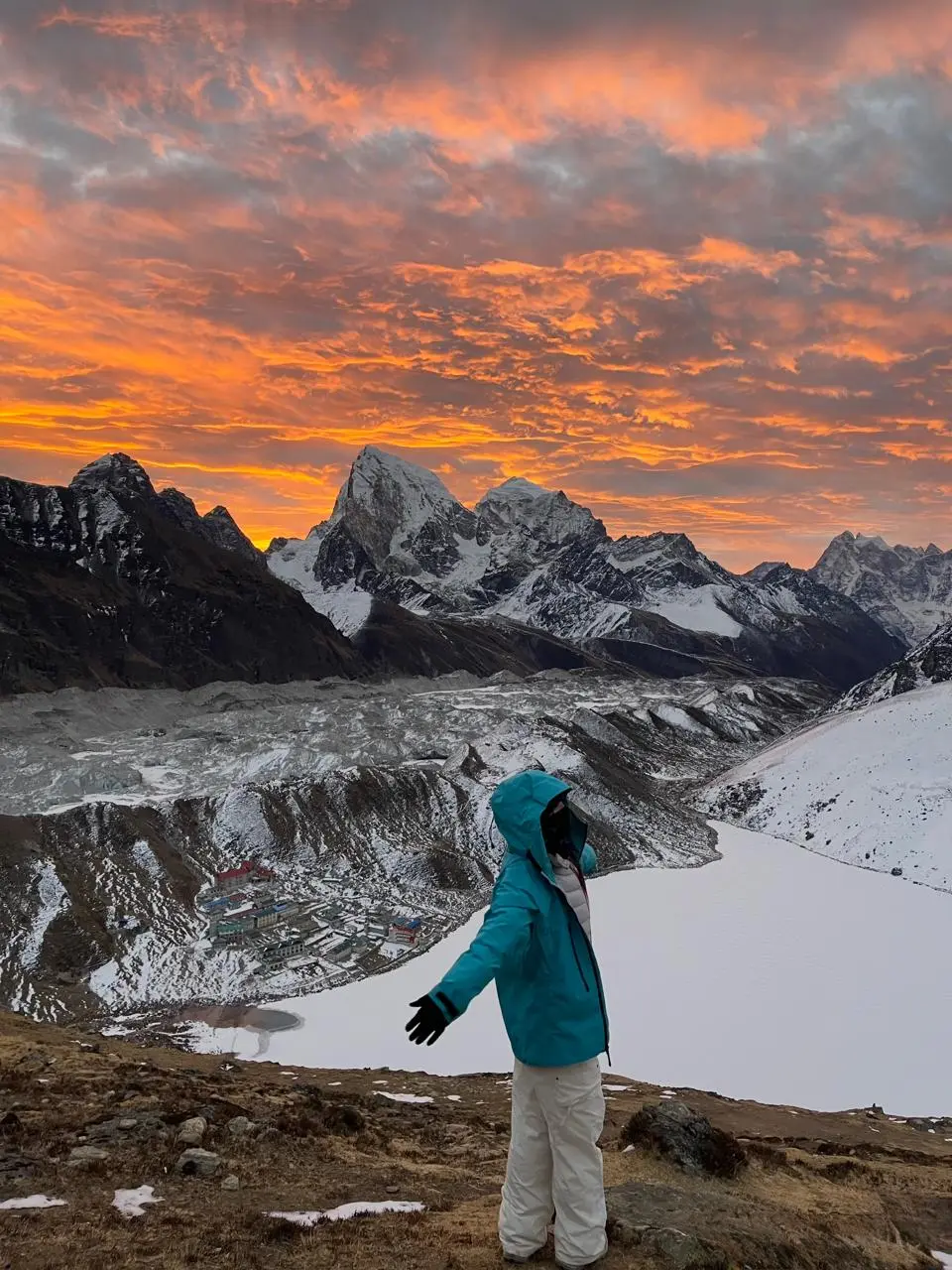
The Gokyo Lakes are a series of six glacial lakes at altitudes between four thousand seven hundred and five thousand meters. The third lake, where the village of Gokyo sits, is a remarkable shade of turquoise that photographs cannot fully capture. From Gokyo Ri at five thousand three hundred and fifty-seven meters, you see the finest panoramic view of the Everest massif available to non-climbers.
This extended itinerary requires more time and more fitness than the standard EBC trek. The Cho La Pass crossing involves some glacier walking and can be challenging in poor weather. A professional Everest trek operator will assess conditions carefully before committing to the crossing and will have alternative plans ready if the pass is not safe.
The acclimatization schedule on this trek is particularly important because you spend more time at high altitude. We build in extra rest days and monitor health indicators closely throughout the upper sections. The views and the variety of terrain make the extra effort genuinely worthwhile.
Trekkers who complete the EBC and Gokyo Lakes route consistently describe it as superior to the standard EBC trek. The variety of landscapes, the different perspectives on the mountains, and the sheer beauty of the lakes create a more rounded and memorable experience.
Our Everest Base Camp with Gokyo Lakes package includes all domestic flights, trekking permits including the Gokyo area, teahouse accommodation, meals, experienced guide, porter service, and glacier crossing equipment. Contact Everest Trekking Company for details and to assess your fitness for this extended route.
Everest Base Camp and Gokyo Lakes Trek Overview
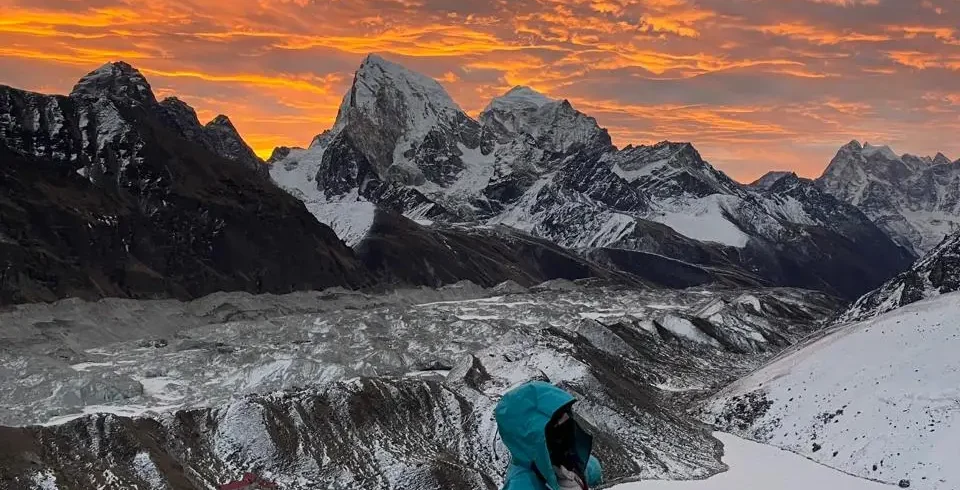
The Everest Base Camp and Gokyo Lakes Trek gives you both sides of the Khumbu in a single 17-day journey. Most trekkers choose between the classic EBC route and the quieter Gokyo Valley, this itinerary does not ask you to choose. We take you up to Gokyo Ri (5,357 m) for a panoramic view of all six Gokyo Lakes and the Ngozumpa Glacier, Nepal’s longest glacier at roughly 36 kilometres, and then cross Cho La Pass (5,420 m) to join the Everest trail at Lobuche. From there the route continues to Gorak Shep, Everest Base Camp at 5,364 m, and Kala Patthar at 5,545 m.We lead this trek every spring and autumn with a team of high-altitude Sherpa guides, most of whom have reached the summit of Everest multiple times. Our senior trek leader Susam Suywal has completed the Cho La crossing more than 25 times and knows exactly when the pass conditions are safe and when to adjust the schedule. Cho La carries a short glacier section that requires crampons and trekking poles, both of which we supply as part of your package.What Makes This Route Different
The standard EBC trek follows the Dudh Koshi valley all the way from Lukla to Gorak Shep. It is a fine route, but it covers only one part of the Khumbu. The Gokyo combination adds the upper Gokyo Valley, a less-trafficked area where teahouse density drops sharply above Dole, and where you spend two nights in Gokyo village beside the third, fourth, and fifth lakes.On the morning of Day 9 we climb Gokyo Ri before breakfast, reaching the 5,357 m summit in roughly two hours from the village. The view from the top puts four 8,000-metre peaks in front of you, Everest (8,849 m), Lhotse (8,516 m), Makalu (8,485 m), and Cho Oyu (8,188 m), alongside the full sweep of the Ngozumpa Glacier filling the valley below. The afternoon is free to walk along the lakeshore or visit the fourth and fifth lakes, which sit at 4,840 m and 4,990 m respectively.The Cho La Pass crossing on Day 11 is the technical centrepiece of the trek. We leave Thagnak early, cross a boulder field and a 200-metre glacier section, and reach the 5,420 m col before noon. The descent to Dzongla is steep but well-marked. In good autumn or spring conditions the crossing takes four to five hours. We carry crampons for every trekker and turn back if overnight snow has made the col unstable, safety on the glacier section is non-negotiable.The Full Route
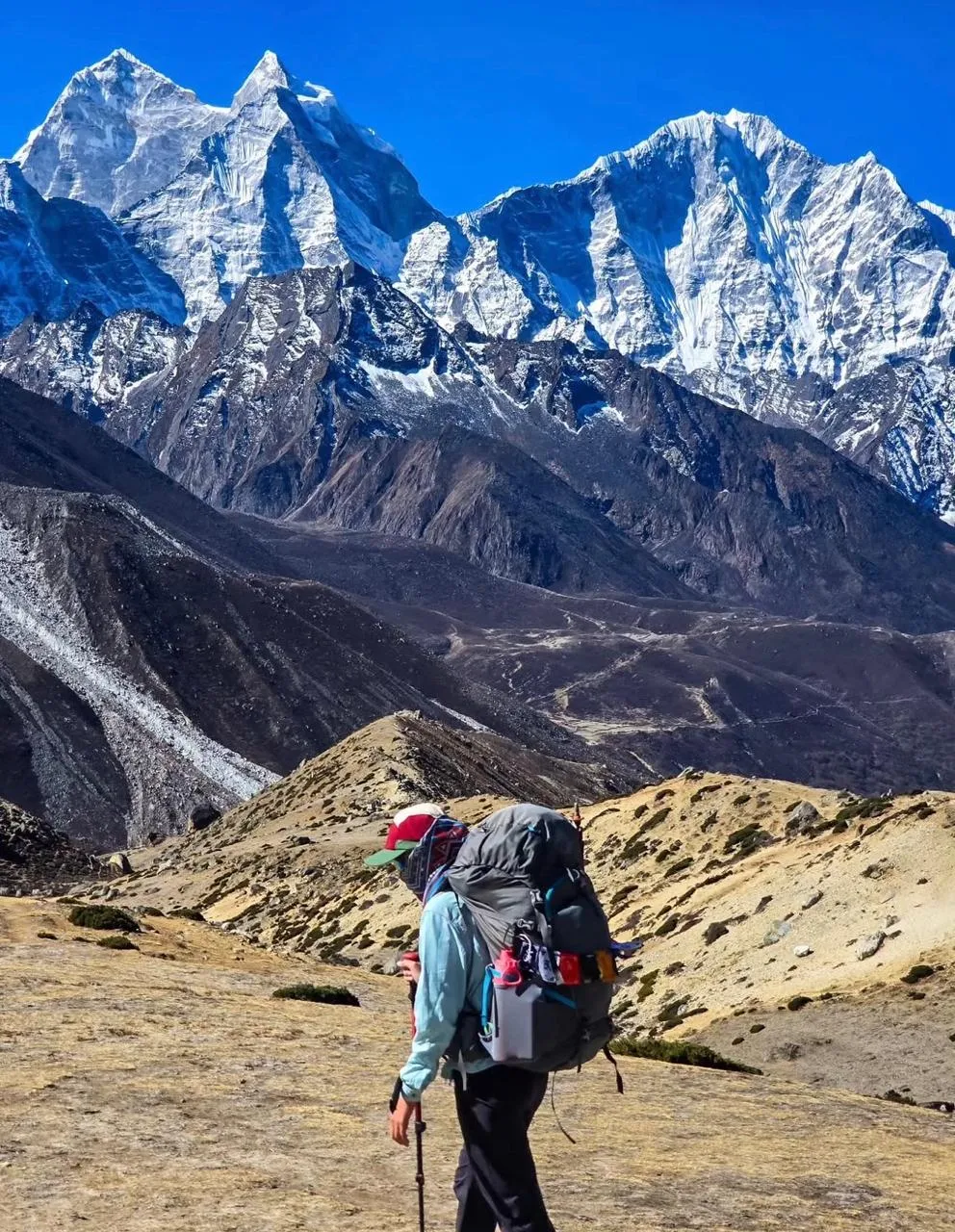
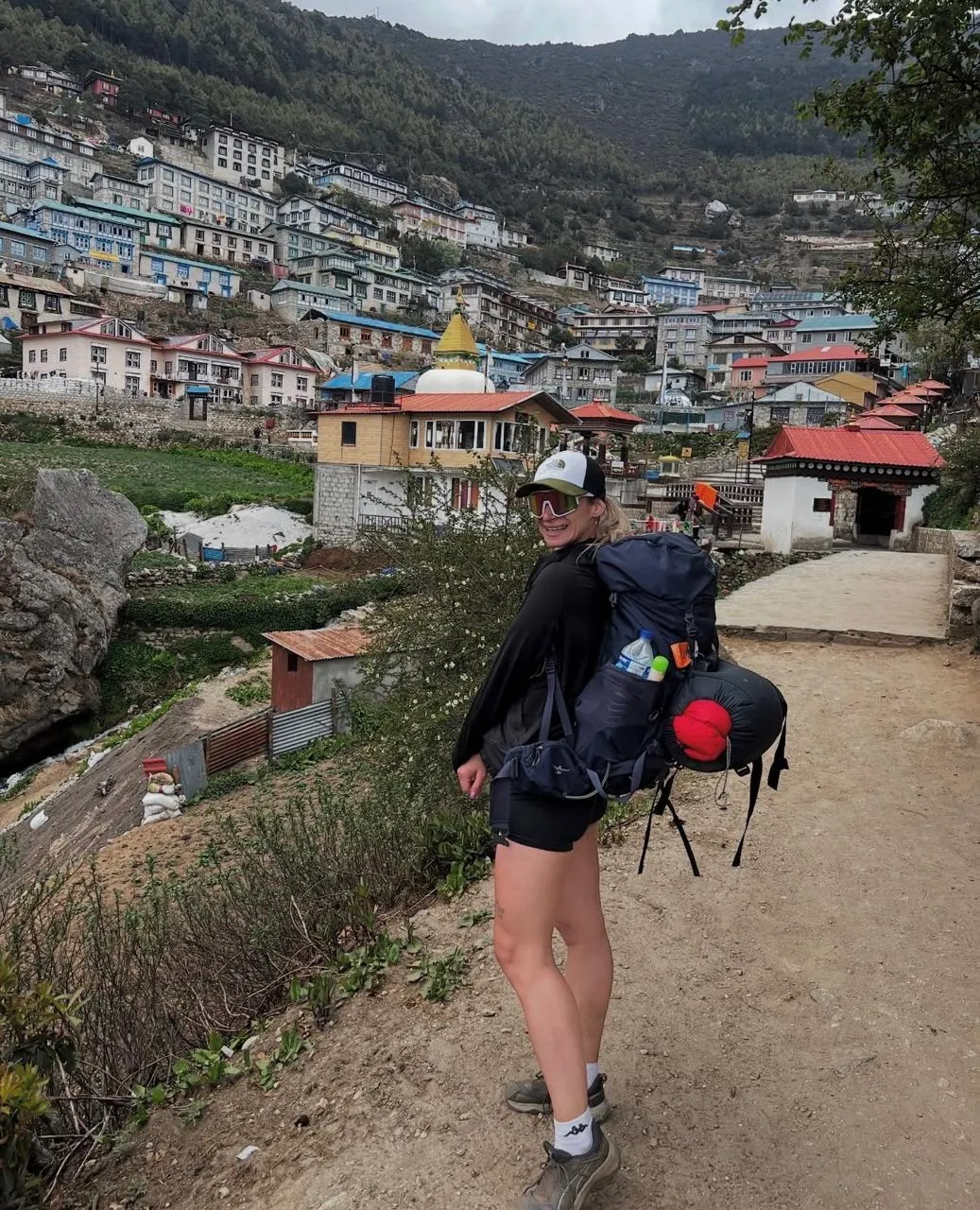
We fly from Kathmandu to Lukla (2,860 m) on Day 3, then follow the Dudh Koshi river upstream to Phakding and Namche Bazaar. Namche at 3,440 m is our first acclimatization stop, with a rest day that includes a hike to the Everest View Hotel at 3,880 m for an early look at Everest, Ama Dablam, and Thamserku.From Namche we leave the main EBC trail and head northwest toward the Gokyo Valley. The villages grow smaller above Dole (4,038 m), and by the time we reach Machhermo (4,470 m) and then Gokyo (4,790 m), the landscape opens into wide moraines and turquoise lake water. We spend two nights at Gokyo, one for arrival and rest, one for the Gokyo Ri climb.After the Gokyo Ri morning and an afternoon by the lakes, we move to Thagnak for Cho La preparation. The pass crossing puts us in Dzongla by mid-afternoon, then Lobuche the next day. At Gorak Shep on Day 13 we walk out to Base Camp in the afternoon. Day 14 starts before first light with the Kala Patthar climb, the 5,545 m highpoint of the entire trek, where we watch dawn colour the south face of Everest from roughly 300 metres above the standard EBC elevation.The descent from Kala Patthar to Pheriche takes most of the afternoon. Two more days of walking bring us down through Namche to Lukla for the return flight.Best Season to Trek
We run this trek in two seasons. The spring window runs from mid-March to late May. Rhododendrons cover the lower ridges in March and April, and Cho La conditions are generally stable by mid-April. The autumn window runs from late September to mid-November. October is the most popular month: clear skies, settled weather, and daytime temperatures at Gokyo around 5 to 10°C. November is colder but less crowded; Cho La can receive early snow by mid-November, which we monitor day by day.We do not run this combination in the monsoon months of June through August because the Cho La glacier becomes significantly more dangerous with wet snow and reduced visibility. A standard EBC-only route is possible in monsoon conditions, but the Gokyo addition is not a risk we take.Permits Required
This trek requires three permits. The Sagarmatha National Park entry fee is USD 30 per person, the Khumbu Pasang Lhamu Rural Municipality fee is NPR 2,000 (roughly USD 15), and the Trekkers’ Information Management System (TIMS) card costs USD 10. All three are included in our package price and handled by our Kathmandu office before departure.Trekking with Everest Trekking Company
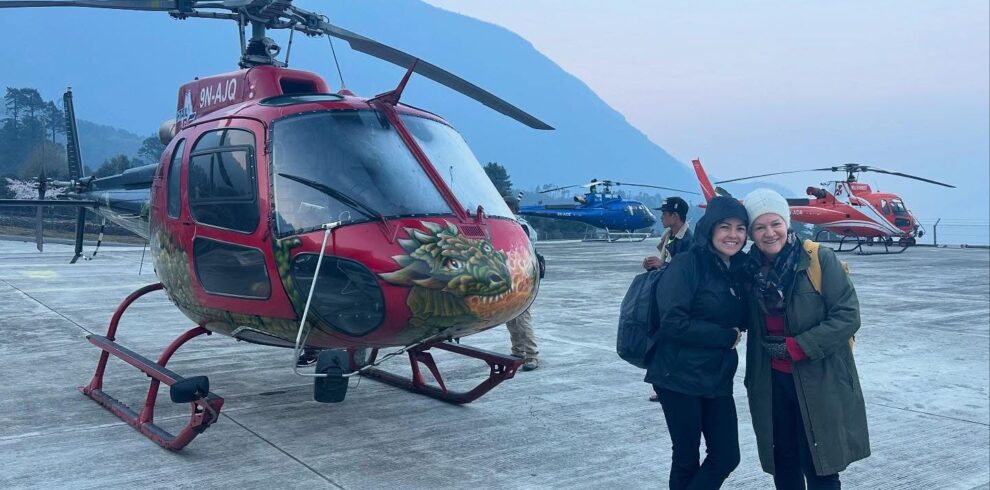
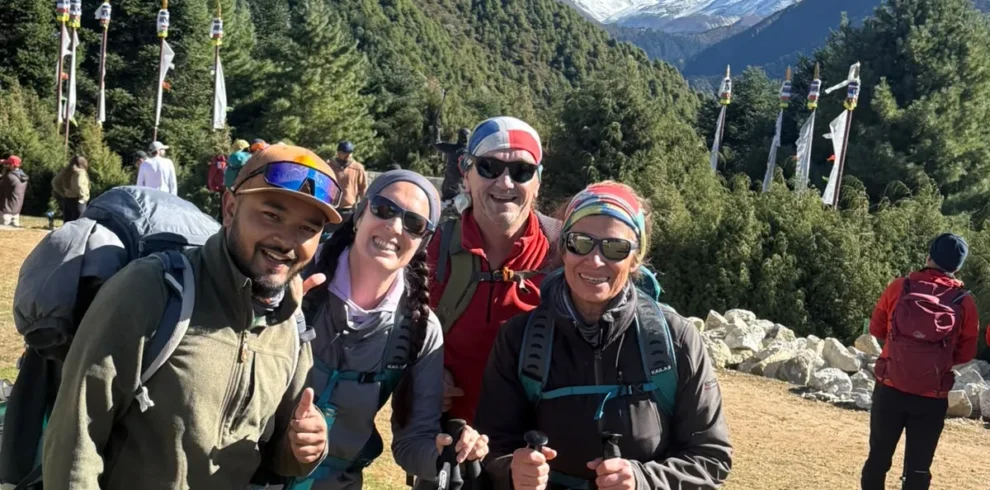
We have been running treks in the Khumbu since 2004 and have a permanent field team based in Namche Bazaar. Every trekker on this itinerary is assigned a licensed Sherpa guide with a minimum of five years of high-altitude experience. Our group size is capped at 12 trekkers to keep the teahouse experience manageable and allow our guides to give individual attention on technical sections like Cho La.We carry a first-aid kit with pulse oximeters on every departure and our guides are trained in wilderness first aid and high-altitude illness recognition. Emergency evacuation helicopter coordination is part of our rescue protocol, we have the contacts and the process, so you do not have to figure it out in a crisis.2026 Update: Lukla Flights and Permit Fees
Trekkers joining Everest Trekking Company in spring 2026 (March to May) should note that Lukla flights during the peak spring season often depart from Ramechhap airport rather than Kathmandu’s Tribhuvan International Airport. Ramechhap is approximately 3 hours by road from Kathmandu. We arrange shared jeep transfers for all groups departing from Ramechhap. Autumn departures (September to November) typically fly directly from Kathmandu.
Permit fees for 2026 remain: Sagarmatha National Park entry at NPR 3,000 (approximately USD 22) per person, and the Khumbu Pasang Lhamu Rural Municipality fee at NPR 3,000 (approximately USD 22) per person. Both are included in your Everest Trekking Company package price. A TIMS card (Trekkers Information Management System) is also included at NPR 2,000 (approximately USD 15).
Everest Base Camp and Gokyo Lakes Trek Cost for 2026 and 2027
The cost of the Everest Base Camp and Gokyo Lakes Trek ranges from USD 1,445 to USD 1,850 per person, depending on your group size. The larger the group, the lower the cost per person. Check the pricing table below and reach out via WhatsApp or email for a personalised quote.
| No. of Pax | Price Per Person | Inquiry |
|---|---|---|
| 1 | USD 1,850 | |
| 2 to 4 | USD 1,545 per person | |
| 5 to 8 | USD 1,445 per person |
EBC and Gokyo Lakes Trek Highlights
- Summit Gokyo Ri (5,357 m) for views of four 8,000 m peaks and the Ngozumpa Glacier
- Walk beside all six Gokyo Lakes, the highest freshwater lake system in the world
- Cross Cho La Pass (5,420 m) on a guided glacier crossing with crampons supplied
- Reach Everest Base Camp (5,364 m) and stand at the foot of the world's highest mountain
- Climb Kala Patthar (5,545 m) at dawn for the closest view of Everest's south face
- Acclimatize in Namche Bazaar (3,440 m) with a hike to the Everest View Hotel (3,880 m)
- Trek the quieter Gokyo Valley past Dole and Machhermo with far fewer trekkers than the main EBC trail
- Walk beside the Ngozumpa Glacier, Nepal's longest glacier at approximately 36 km
- Experience two distinct Khumbu regions, the Gokyo Valley and the classic EBC corridor, in one trip
- Expert Sherpa guides with Cho La Pass crossing experience on every departure